
ABB
In Stock OK
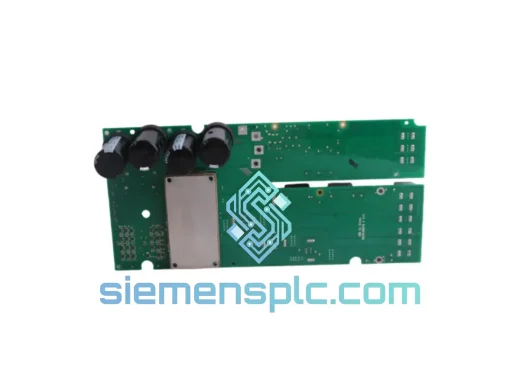
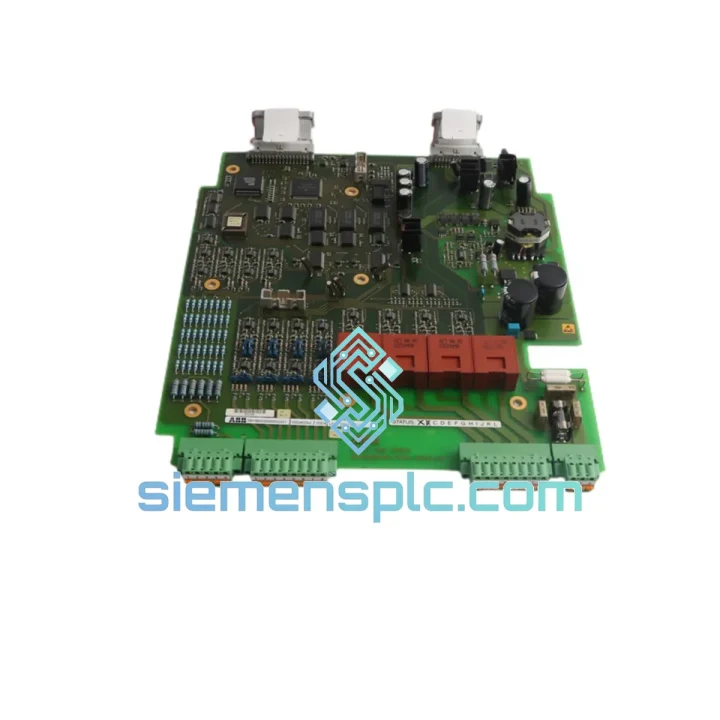
ABB 3BHB005688R0001 UNS2881A-P Drive Interface Board – UNS2881A Series
Request verified availability, condition, replacement risk review, packing options and courier lead time for UNS2881A-P.
BrandABB
Part NumberUNS2881A-P
ConditionAvailability Check
Lead TimeRFQ Confirmation
DocumentsDatasheet / photos by RFQ
ShippingExport packing available
Auto-filled RFQ
UNS2881A-P
Click Request Quote and the part number is inserted into the inquiry form automatically.
- Reply by email: [email protected]
- WhatsApp / Tel: +86 18359268345
- Mon-Sat 9:00-18:00 GMT+8
Procurement Data
Key Product Information
Core fields for model confirmation and RFQ routing. Detailed product narrative remains below.
- Brand
- ABB
- Primary Part Number
- UNS2881A-P
- Product Type
- Drive Interface Board
- Product Family
- Other series
- Manufacturer
- ABB Ltd.
- Country of Origin
- SE
- Model Function
- Main Circuit Interface Board — power stage / control logic signal isolation and conditioning
- Catalog Category
- Motor Drives
- Operating Temp.
- 0 °C to +55 °C (drive enclosure ambient)
- Warranty
- 12 months from date of receipt; DOA replacement within 7 business days
Model confirmed for inquiry
UNS2881A-P
Send quantity, destination and urgency. The RFQ form keeps this part number attached.
Request Quote
Product Overview
ABB 3BHB005688R0001 UNS2881A-P: Galvanic Signal Bridge for High-Voltage AC Drive Control Architecture
The ABB 3BHB005688R0001 UNS2881A-P is a factory-original Main Circuit Interface Board engineered to operate at the electrical boundary between the high-voltage power stage and the low-voltage control logic in ABB’s high-power AC drive and excitation control platforms. Its function within the closed control loop is precise: galvanic isolation and conditioned signal transfer — converting raw power-stage feedback signals (DC bus voltage, phase current sensing, IGBT gate driver status) into logic-level outputs that the drive’s CPU and firing control boards can process without ground-loop interference or common-mode noise corruption.
In a closed-loop vector control or direct torque control (DTC) architecture, this interface board occupies a structurally critical node. Any propagation delay, signal distortion, or isolation failure at this point feeds directly into the torque and flux estimators, degrading speed regulation accuracy and potentially triggering protective shutdowns. The UNS2881A-P addresses this with optocoupler-based isolation barriers rated for reinforced insulation per IEC 60664-1, sustaining signal fidelity across the full operating temperature envelope of the drive enclosure without drift or offset accumulation.
Compatible platforms include the ABB ACS6000, ACS5000, and DCS800 high-power drive families — systems deployed in steel rolling mills, marine propulsion, large-scale pump and compressor drives, and grid-connected energy conversion applications where continuous operation and fault transparency are non-negotiable requirements.
Real-time Stock & RFQ: [email protected] | WhatsApp: +86 18359268345
Technical Parameters
| Part Number | 3BHB005688R0001 |
| Module Designation | UNS2881A-P |
| Manufacturer | ABB Ltd. |
| Function | Main Circuit Interface Board — power stage / control logic signal isolation and conditioning |
| Compatible Platforms | ABB ACS6000, ACS5000, DCS800 high-power AC/DC drive series |
| Isolation Technology | Optocoupler-based galvanic isolation; reinforced insulation per IEC 60664-1 |
| CMTI Rating | >15 kV/μs (common-mode transient immunity per channel) |
| Signal Propagation Delay | <2 μs per isolation channel (typical) |
| Operating Temperature | 0 °C to +55 °C (drive enclosure ambient) |
| Storage Temperature | −25 °C to +70 °C |
| Relative Humidity | 5–95%, non-condensing (IEC 60068-2-78) |
| EMC Compliance | CE — EMC Directive 2014/30/EU; IEC 61800-3 Category C3 |
| Form Factor | PCB assembly, drive-chassis integrated slot mount |
| Approx. Weight | 540 g |
| Quality Standard | ISO 9001 manufacturing; RoHS 2 compliant |
| Warranty | 12 months from date of receipt; DOA replacement within 7 business days |
| Condition | New / Surplus New / Tested Refurbished (confirm at inquiry) |
| Lead Time | In stock — dispatches within 1–2 business days from Xiamen, China |
Hardware Logical Analysis
The UNS2881A-P is not a passive signal conditioner. Its hardware architecture is shaped by the specific electrical demands of multi-megawatt drive topologies where the main circuit operates at DC bus voltages exceeding 1,000 V and switching transients (dV/dt) can reach several kV/μs at each IGBT commutation event.
Isolation Barrier Architecture: Each signal channel crossing the galvanic boundary uses a high-speed optocoupler with a CMTI rating exceeding 15 kV/μs. This is not a conservative margin — in a 3-level NPC (Neutral Point Clamped) inverter topology, the floating midpoint potential shifts at every switching event, generating common-mode voltages that would corrupt unprotected signal lines within microseconds. The reinforced isolation barrier on the UNS2881A-P maintains logic-level signal integrity regardless of these transients, with creepage and clearance distances conforming to IEC 60664-1 Pollution Degree 2 at the applicable working voltage.
PCB Partitioning and EMC Layout: The board follows a strict two-domain layout strategy. The high-voltage primary side and the low-voltage secondary side are separated by a physical creepage gap. Ground planes are split and stitched only at the isolation boundary, preventing high-frequency return currents from coupling into control signal traces. Ferrite beads and RC snubbers are placed at connector entry points to suppress conducted interference arriving from the power stage harness — a design discipline that reduces radiated emissions and protects the control domain from broadband noise generated by IGBT switching.
Gate Driver Fault Monitoring: The board monitors IGBT gate driver fault outputs and encodes them into a structured fault word that the drive’s main control board reads on each PWM cycle. This architecture allows the drive CPU to distinguish between a single-device desaturation event and a phase-leg shoot-through condition, enabling differentiated protective responses — a targeted single-phase trip versus a full emergency stop — rather than a blanket overcurrent trip that provides no diagnostic information.
DC Bus Voltage Sensing Path: Temperature-compensated resistive divider networks on the primary side scale the DC bus voltage to a logic-compatible analog signal with high linearity across the full bus voltage range. Propagation delay from bus voltage change to conditioned output is typically under 10 μs, ensuring that the drive’s overvoltage and undervoltage protection comparators receive timely input for protective action within the same control cycle.
Component Thermal Margin: Active components are specified to industrial-grade temperature ratings (−40 °C to +85 °C), providing a minimum 30 °C margin above the drive enclosure’s specified ambient. Electrolytic capacitors — statistically the highest-failure-rate passive component in interface board designs — are specified at 105 °C rated types with extended lifetime ratings, reducing the probability of capacitance drift causing signal offset errors over a multi-year continuous-duty service life.
System Integration Benefits
- Deterministic Feedback Latency: Fixed propagation delay of less than 2 μs per channel ensures that the drive’s DTC or FOC algorithm receives current and voltage feedback within the same PWM period it was sampled, preserving the timing assumptions embedded in the control model and preventing phase error accumulation in the flux estimator.
- Zero-Modification Field Replacement: The UNS2881A-P is a direct mechanical and electrical replacement for the existing slot in supported ABB drive chassis. No firmware re-parameterization or hardware modification is required in the majority of field replacement scenarios, reducing commissioning time to under 30 minutes and minimizing production downtime.
- Structured Fault Code Mapping: Fault status bits generated by the board map directly to ABB’s standard drive fault code table. Maintenance engineers can identify the root cause of a trip event from the drive’s HMI panel without additional test equipment or oscilloscope access to the power stage.
- Ground Loop Elimination: Galvanic isolation removes ground loop currents between the power cabinet ground and the control panel ground, measurably reducing the noise floor on analog feedback signals — speed encoder outputs, current transducer signals — by 20–40 dB in typical industrial installations.
- Redundant Control Board Compatibility: In drives configured with redundant control boards, the UNS2881A-P’s signal outputs are designed to be driven by either the primary or standby control board without bus contention, supporting bumpless transfer during control board switchover without signal glitches that could trigger protective trips.
- MTBF Extension at System Level: By isolating the control electronics from sustained common-mode voltage stress — the primary insulation degradation mechanism in drive interface circuits — the board extends the mean time between failures of the overall drive system, reducing unplanned maintenance intervals in continuous-process applications.
- Vibration-Rated Connector System: All signal connectors use ABB’s keyed connector system with retention force specified to withstand IEC 60068-2-6 vibration levels (10–500 Hz, 1 g), relevant for drives installed on vibrating structures such as ship engine rooms, offshore platform compressor skids, or rail traction applications.
- Cross-Frame Spare Parts Consolidation: A single UNS2881A-P board covers interface requirements across multiple drive frame sizes within the compatible platform family, allowing maintenance departments to hold one spare SKU rather than frame-specific variants — a measurable reduction in spare parts inventory carrying cost for large drive fleets.
- Commissioning Traceability: The board’s date code and batch number are recorded in our inventory system and included in the shipment documentation, providing a traceable component history that satisfies the audit requirements of ISO 55000 asset management programs and insurance-mandated maintenance records.
Quality Assurance & Global Logistics
Every ABB 3BHB005688R0001 UNS2881A-P unit dispatched from our Xiamen, China facility passes through a documented multi-stage verification process before packaging:
- Visual and Dimensional Inspection: PCB surface condition, solder joint integrity, component seating, connector pin geometry, and OEM labeling are verified against ABB reference documentation. Units with evidence of rework, pin deformation, or label inconsistency are quarantined and not dispatched.
- Functional Bench Verification: Where test fixtures are available, boards are powered at rated supply voltage and signal channels are exercised to confirm isolation integrity and output logic levels against ABB’s published test specifications.
- Traceability Documentation: Batch codes, date codes, and serial numbers are logged in our inventory management system. A certificate of conformance is issued upon request at no additional charge.
- ESD-Safe Packaging: Units are sealed in anti-static bags with humidity indicator cards, then packed in foam-lined cartons rated for international air freight handling per ISTA 2A. Outer cartons carry fragile and ESD-sensitive markings.
- 12-Month Warranty: Coverage against manufacturing defects from date of receipt. Dead-on-arrival (DOA) units are replaced within 7 business days, with return freight covered by siemensplc.com for confirmed defective units.
Shipments from Xiamen reach major industrial hubs via DHL Express, FedEx International Priority, and UPS Worldwide Expedited. Indicative transit times: Southeast Asia 2–3 days, Europe 4–6 days, North America 5–7 days, Middle East 3–5 days. All shipments include real-time tracking, commercial invoice, and packing list documentation for customs clearance. HS code and export classification documentation are provided on request.
Contact Information
Email: [email protected]
WhatsApp: +86 18359268345
Web: siemensplc.com
Location: Xiamen, China
© 2026 siemensplc.com. All rights reserved.
Ready to quote
[email protected]
Send This Part Number to Sales
RFQ workflow
Quality workflow ->
Confirmation Process
01Model confirmation
We check the full part number, brand, series and visible nameplate information before quotation.
02Availability reply
Sales confirms stock path, condition option, quantity and realistic lead time for export dispatch.
03Packing & courier
DHL, FedEx, UPS or buyer courier arrangements can be reviewed with packing requirements.
Continue sourcing
Browse full catalog ->
Related Automation Parts
Similar brand or category products for fast comparison and multi-item RFQ lists.
ABB
RFQ Ready
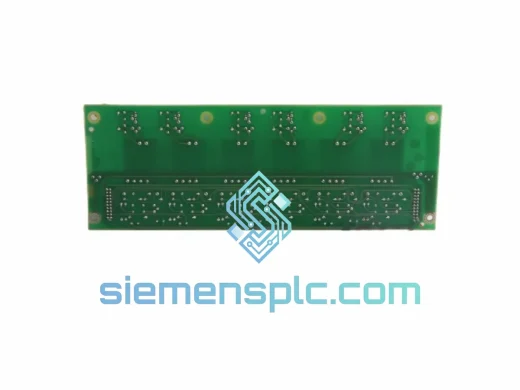
ABB ZINT-592 Fieldbus Interface Board – ZINT Series
ACS Drive
Origin SE
Interface Board
ABB
RFQ Ready
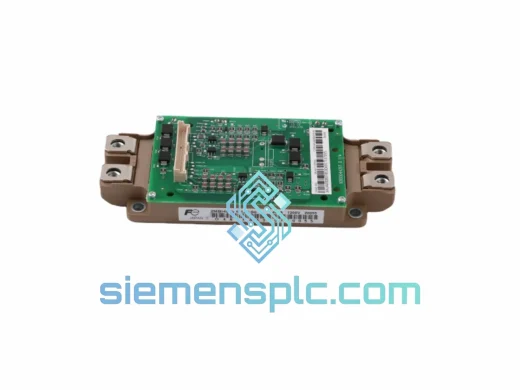
ABB YPK113A 61002774 Drive Control Board
In-Stock Xiamen
Origin SE
Drive Control Board