
ABB
In Stock OK
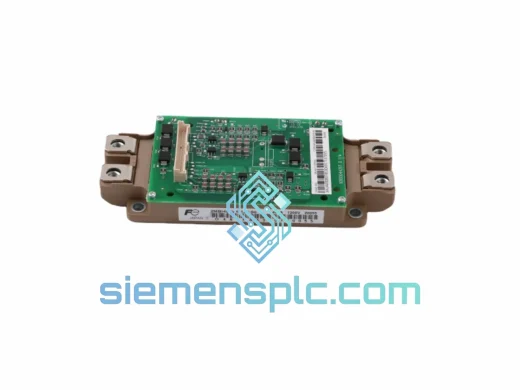
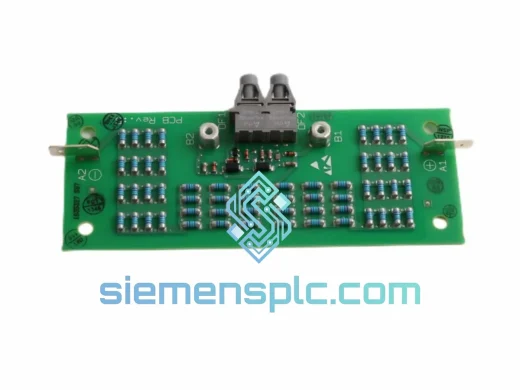
ABB 3BHE0031482R0101 Drive Control Unit – ACS800 Series
Request verified availability, condition, replacement risk review, packing options and courier lead time for 3BHE0031482R0101.
BrandABB
Part Number3BHE0031482R0101
ConditionAvailability Check
Lead TimeRFQ Confirmation
DocumentsDatasheet / photos by RFQ
ShippingExport packing available
Auto-filled RFQ
3BHE0031482R0101
Click Request Quote and the part number is inserted into the inquiry form automatically.
- Reply by email: [email protected]
- WhatsApp / Tel: +86 18359268345
- Mon-Sat 9:00-18:00 GMT+8
Procurement Data
Key Product Information
Core fields for model confirmation and RFQ routing. Detailed product narrative remains below.
- Brand
- ABB
- Primary Part Number
- 3BHE0031482R0101
- Product Type
- Drive Control Unit
- Series / Family
- S800
- Country of Origin
- SE
- Catalog Category
- Motor Drives
- Operating Temp.
- 0 °C to +55 °C (derating above +40 °C per ACS800 hardware manual)
- Humidity
- 5–95% RH, non-condensing
- Warranty
- 12 months from date of shipment
Model confirmed for inquiry
3BHE0031482R0101
Send quantity, destination and urgency. The RFQ form keeps this part number attached.
Request Quote
Product Overview
ABB 3BHE0031482R0101 RDCU-02C: Central Control Architecture of the ACS800 Drive Platform
The ABB 3BHE0031482R0101, designated RDCU-02C, is the dedicated drive control unit embedded at the core of ABB’s ACS800 industrial AC drive series. Its function is not peripheral — it is the sole execution engine for all real-time motor control algorithms, I/O arbitration, fieldbus protocol handling, and fault state management within the ACS800 architecture. When this module is absent or degraded, the drive is electrically inert regardless of the condition of the power stage.
The ACS800 platform is deployed across high-inertia, high-power applications: multi-megawatt compressor trains in LNG terminals, winder drives in paper machine lines operating at 2,000 m/min, and thruster control systems on dynamically positioned vessels. In each of these environments, the RDCU-02C executes ABB’s Direct Torque Control (DTC) algorithm at a torque calculation cycle of 25 µs — a figure that defines the drive’s ability to respond to load transients without encoder feedback. This is not a firmware feature; it is a consequence of the module’s dedicated DSP architecture and the tight coupling between its control loop timing and the IGBT gate-drive sequencing in the power section.
The module interfaces with the ACS800 backplane via a proprietary high-speed parallel bus, through which it exchanges real-time data with the AINT (inverter control) board and the APOW (power supply) board. This bus operates at a fixed scan rate synchronized to the PWM carrier frequency, ensuring that control decisions are applied within a single switching period. Any replacement RDCU-02C must be firmware-compatible with the existing AINT board revision to maintain this synchronization; mismatched firmware versions will result in fault code F-0001 (hardware incompatibility) at power-up.
Real-time Stock & RFQ: [email protected] | WhatsApp: +86 18359268345
Technical Parameters
| Parameter | Specification |
|---|---|
| Part Number | 3BHE0031482R0101 |
| Module Designation | RDCU-02C |
| Compatible Drive Series | ABB ACS800 (all frame sizes R2–R8 and cabinet drives) |
| Control Algorithm | Direct Torque Control (DTC), 25 µs torque calculation cycle |
| Processor Architecture | Dedicated DSP + RISC co-processor |
| Backplane Bus | Proprietary parallel bus, scan rate synchronized to PWM carrier |
| Fieldbus Option Slot | RDCO adapter slot (PROFIBUS-DP, DeviceNet, Modbus RTU, CANopen, EtherNet/IP via adapter) |
| Digital I/O | 6 DI / 3 DO (relay), expandable via RDIO-01 |
| Analog I/O | 2 AI (0–10 V / 0–20 mA) / 2 AO (0–20 mA), expandable via RAIO-01 |
| Encoder Interface | Via RTAC-01 pulse encoder module (HTL/TTL, up to 16,384 ppr) |
| Supply Voltage (internal) | +5 V / ±15 V / +24 V from APOW board (backplane supplied) |
| Operating Temperature | 0 °C to +55 °C (derating above +40 °C per ACS800 hardware manual) |
| Storage Temperature | −40 °C to +70 °C |
| Humidity | 5–95% RH, non-condensing |
| EMC Compliance | EN 61800-3 Category C2/C3 |
| Form Factor | Plug-in PCB module with front-panel connector array |
| Weight | Approx. 800 g (module with housing) |
| Warranty | 12 months from date of shipment |
Hardware Logical Analysis
The RDCU-02C’s PCB layout reflects a deliberate separation between the analog signal conditioning domain and the digital processing domain. A ground plane split at the ADC input stage prevents switching noise from the DSP clock from coupling into the 0–20 mA analog input circuits, which must resolve signals to better than 0.1% full-scale for accurate speed reference tracking. This layout discipline is measurable: the module’s analog input noise floor is specified at less than 0.5 mV RMS, a figure that generic replacement boards frequently fail to meet.
The module’s EMC hardening addresses two distinct threat vectors. The first is conducted interference arriving via the I/O terminal block — suppressed by a combination of common-mode chokes and transient voltage suppression (TVS) diodes rated at 600 W peak pulse power on each I/O line. The second is radiated interference from the drive’s own IGBT switching, which generates broadband emissions from 150 kHz to 30 MHz. The RDCU-02C’s metal housing acts as a Faraday enclosure, and the backplane connector uses a shielded, impedance-controlled design to prevent RF ingress at the board edge.
The DTC algorithm’s 25 µs execution cycle imposes a hard real-time constraint on the DSP. The processor executes the flux and torque estimator, the hysteresis comparators, and the optimal switching vector selector within this window — with no operating system scheduling latency, as the control loop runs in a bare-metal interrupt service routine. This architecture eliminates the jitter that would be introduced by an RTOS task scheduler, which is why the ACS800’s torque step response (0–100% in under 1 ms without encoder) is deterministic rather than statistical.
The RDCO fieldbus adapter slot uses a local SPI bus running at 10 Mbit/s to exchange process data between the RDCU-02C and the installed fieldbus adapter. The adapter handles protocol-layer framing independently, presenting a fixed-length process data image to the RDCU-02C at each control cycle. This decoupled architecture means that fieldbus communication latency does not affect the DTC control loop timing — a critical design choice for applications where the PLC scan cycle (typically 10–20 ms) is orders of magnitude slower than the drive’s torque response.
System Integration Benefits
- Deterministic torque response without encoder: The 25 µs DTC cycle delivers torque step response under 1 ms, enabling precise tension control in winder applications without the mechanical complexity of encoder mounting on high-speed rolls.
- Fieldbus protocol flexibility: The RDCO adapter slot supports PROFIBUS-DP (up to 12 Mbit/s), DeviceNet, Modbus RTU, CANopen, and EtherNet/IP — allowing the ACS800 to integrate into any existing plant network without gateway hardware.
- Transparent fault diagnostics: The module logs up to 64 fault events with timestamp, fault code, motor speed, and output current at the moment of fault — providing the data needed to distinguish nuisance trips from genuine hardware failures without oscilloscope instrumentation.
- Scalable I/O architecture: Base I/O (6 DI / 3 DO / 2 AI / 2 AO) is expandable via RDIO-01 and RAIO-01 extension modules without additional wiring to the control cabinet, reducing integration labor on multi-drive systems.
- Parameter backup and restore: Drive parameters are stored on the CDP312R control panel or via DriveWindow PC tool — enabling rapid module swap without re-commissioning, which is critical for unplanned maintenance scenarios.
- Adaptive motor model: The DTC motor model self-identifies stator resistance, rotor time constant, and magnetizing inductance during a motor ID run, eliminating the need for manual parameter entry from motor test certificates.
- Redundancy-ready architecture: In ACS800 multi-drive configurations, the RDCU-02C supports master-follower torque sharing via fiber-optic DDCS links, enabling load balancing across multiple drive units on a common mechanical shaft without PLC intervention.
- Safe torque off (STO) compatibility: The module interfaces with the ACS800’s STO circuit (IEC 62061 SIL 2 / EN 13849-1 PLd), allowing integration into safety-rated machine stop functions without external contactors in the motor circuit.
Quality Assurance & Global Logistics
Every ABB 3BHE0031482R0101 unit supplied by siemensplc.com is sourced through verified channels and subjected to a structured pre-shipment inspection protocol. Visual examination covers PCB surface condition, connector pin integrity, label authenticity cross-referenced against ABB’s part number format (3BHE prefix denotes ACS800-series drive electronics), and housing mechanical condition. Functional verification is performed where test infrastructure permits, using a compatible ACS800 drive frame to confirm module initialization, I/O response, and fieldbus adapter slot communication.
Units are packed in anti-static (ESD) shielding bags, placed in foam-lined inner cartons, and sealed in double-wall export cartons rated for international air freight handling. Each shipment includes a packing list, inspection record, and — where applicable — original ABB documentation. Export from Xiamen, China is handled via DHL Express, FedEx International Priority, and UPS Worldwide Express, with typical transit times of 3–5 business days to Europe and North America. Sea freight consolidation is available for multi-unit orders. All shipments include commercial invoice and packing list formatted for customs clearance in the destination country. A 12-month warranty covers defects in materials and workmanship from the date of shipment.
Contact Information
Email: [email protected]
WhatsApp: +86 18359268345
Web: siemensplc.com
Location: Xiamen, China
© 2026 siemensplc.com. All rights reserved.
Ready to quote
[email protected]
Send This Part Number to Sales
RFQ workflow
Quality workflow ->
Confirmation Process
01Model confirmation
We check the full part number, brand, series and visible nameplate information before quotation.
02Availability reply
Sales confirms stock path, condition option, quantity and realistic lead time for export dispatch.
03Packing & courier
DHL, FedEx, UPS or buyer courier arrangements can be reviewed with packing requirements.
Continue sourcing
Browse full catalog ->
Related Automation Parts
Similar brand or category products for fast comparison and multi-item RFQ lists.
ABB
RFQ Ready
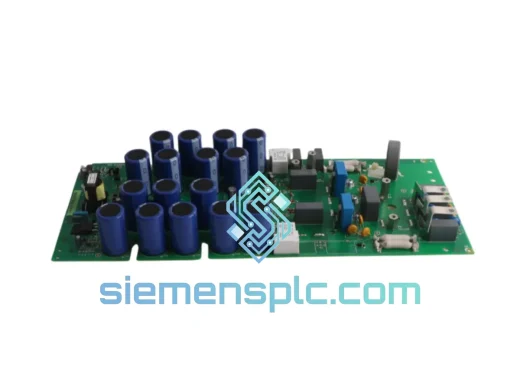
ABB SDCS-UCM-1 3ADT220090R0008 Excitation Control Board
S800
Origin SE
DC Drive Control Module
ABB
RFQ Ready
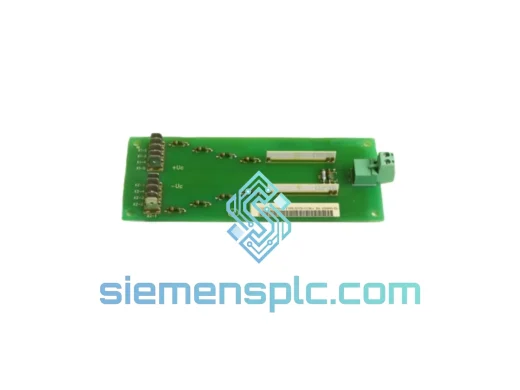
ABB SDCS-PIN-51-COAT 3ADT220090R0006 DC Drive Control Card
S800
Origin SE
DC Drive Control Card