
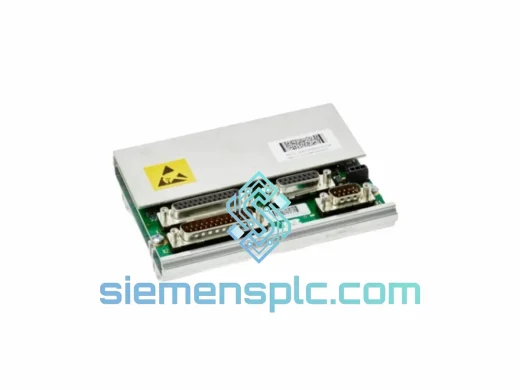
ABB
In Stock OK
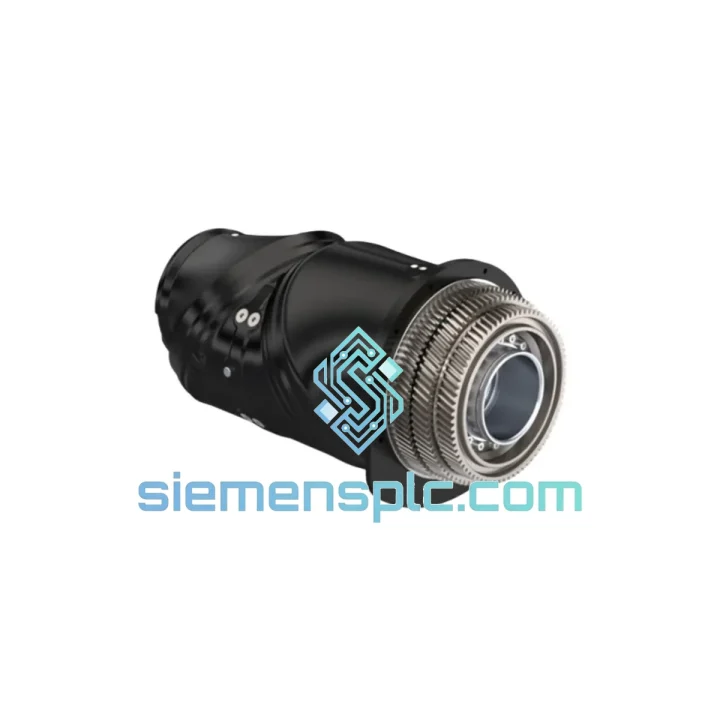
ABB 3HAC021731-1 Reduction Gear – IRB2400 IRB4400 IRB2600
Request verified availability, condition, replacement risk review, packing options and courier lead time for 3HAC021731-1.
BrandABB
Part Number3HAC021731-1
ConditionAvailability Check
Lead TimeRFQ Confirmation
DocumentsDatasheet / photos by RFQ
ShippingExport packing available
Auto-filled RFQ
3HAC021731-1
Click Request Quote and the part number is inserted into the inquiry form automatically.
- Reply by email: [email protected]
- WhatsApp / Tel: +86 18359268345
- Mon-Sat 9:00-18:00 GMT+8
Procurement Data
Key Product Information
Core fields for model confirmation and RFQ routing. Detailed product narrative remains below.
- Brand
- ABB
- Primary Part Number
- 3HAC021731-1
- Product Type
- Reduction Gear
- Product Family
- Other series
- Manufacturer
- ABB Robotics (OEM)
- Country of Origin
- SE
- Catalog Category
- Industrial Automation Spares
- Warranty
- 12 months against manufacturing defects
Model confirmed for inquiry
3HAC021731-1
Send quantity, destination and urgency. The RFQ form keeps this part number attached.
Request Quote
Product Overview
ABB 3HAC021731-1 / 3HAC5952-1 / 3HAC3696-1 / 3HAC028705-004 — Precision RV Reduction Gear for IRB2400, IRB4400 & IRB2600 Joint Drive Systems
The ABB reduction gear series covering part numbers 3HAC021731-1, 3HAC5952-1, 3HAC3696-1, and 3HAC028705-004 constitutes the primary rotary actuator interface between the servo motor output shaft and the robot arm joint structure in ABB’s IRB2400, IRB4400, and IRB2600 platforms. These are not generic industrial gearboxes — they are application-specific RV (Rotary Vector) reducers engineered to ABB’s joint-level torque, backlash, and thermal specifications. Each unit is a load-bearing, precision-ground component whose mechanical integrity directly determines the robot’s path accuracy, repeatability, and mean time between failures (MTBF) under production-cycle loading.
In a six-axis articulated robot, the reduction gear occupies the most mechanically stressed position in the kinematic chain. The servo motor operates at high rotational speed (typically 3,000–5,000 RPM) and low torque; the reduction gear converts this to low-speed, high-torque output at ratios commonly between 1:50 and 1:160, depending on the axis. The RV architecture used in these ABB units employs a two-stage compound reduction: a first-stage involute spur gear set followed by a second-stage cycloidal disc mechanism. This dual-stage design achieves near-zero backlash (typically <1 arc-minute under rated preload), high torsional stiffness, and shock-load absorption capacity that a single-stage worm or helical gear cannot match.
Procurement of a non-genuine or dimensionally mismatched reducer introduces angular positioning error that accumulates across all downstream axes, degrading TCP (Tool Center Point) accuracy below the robot’s rated ±0.02–0.04 mm repeatability envelope. For welding, dispensing, or precision assembly applications, this degradation is operationally unacceptable. Genuine ABB part numbers guarantee dimensional conformance to the original design tolerances and preserve the calibration baseline stored in the IRC5 controller’s axis parameter tables.
Real-time Stock & RFQ: [email protected] | WhatsApp: +86 18359268345
Technical Parameters
| Parameter | Specification |
|---|---|
| Manufacturer | ABB Robotics (OEM) |
| Primary Part Number | 3HAC021731-1 |
| Cross-Reference SKUs | 3HAC5952-1 | 3HAC3696-1 | 3HAC028705-004 |
| Compatible Robot Platforms | IRB2400 (all variants), IRB4400 (all variants), IRB2600 (all variants) |
| Reducer Architecture | Two-stage RV (Rotary Vector) cycloidal |
| Reduction Ratio Range | 1:50 – 1:160 (axis-dependent; confirm at RFQ) |
| Rated Output Torque | Up to 1,960 N·m (axis-specific; refer to ABB joint data sheet) |
| Backlash (no-load) | <1 arc-minute under rated preload |
| Torsional Stiffness | ≥450 N·m/arc-min (axis-dependent) |
| Lubrication | ABB-specified grease (pre-packed; do not substitute) |
| Operating Temperature | -10 °C to +60 °C ambient; peak joint temp ≤80 °C |
| IP Rating (installed) | IP54 (robot body-level; gearbox sealed per ABB spec) |
| Service Life (rated load) | ≥20,000 operating hours |
| Mounting Interface | ABB-proprietary flange pattern; axis-specific bolt circle |
| Weight | Axis-dependent (range: 2.1 kg – 8.4 kg) |
| Condition | New OEM / Surplus New (specify at inquiry) |
| Warranty | 12 months against manufacturing defects |
| Compliance | CE / RoHS per original ABB manufacturing standards |
Hardware Logical Analysis
RV Cycloidal Stage — Backlash Elimination Mechanism: The second-stage cycloidal disc in the RV reducer engages multiple output pins simultaneously — typically 60–70% of available pins are in contact at any given rotational position. This distributed load-sharing geometry eliminates the point-contact stress concentration inherent in involute gear teeth and produces a near-zero lost-motion characteristic. Under dynamic reversal (direction change during path interpolation), the IRC5 controller issues a torque pre-load command to the servo amplifier before the axis reverses, maintaining contact force on the cycloidal disc and preventing any angular float. This hardware-software co-design is why ABB’s path accuracy specification holds across the full velocity range, not just at quasi-static speeds.
EMC Design Considerations: The reduction gear housing is manufactured from high-strength cast aluminum alloy with a hard-anodized surface treatment. This construction provides a continuous conductive enclosure around the gear mesh, functioning as a Faraday shield against radiated EMI from the servo motor’s PWM switching currents (typically 4–16 kHz carrier frequency). The housing is bonded to the robot arm structure via the mounting flange, establishing a low-impedance ground path that prevents common-mode current from circulating through the joint bearing — a failure mode that causes electrolytic pitting of bearing races in poorly grounded installations.
Thermal Management Architecture: The RV reducer’s cycloidal stage generates heat primarily through viscous shear in the grease film between the disc and output pins. ABB’s grease specification for these units is formulated with a base oil viscosity matched to the operating speed range of each axis — lower-speed, higher-torque axes (Axis 1, 2, 3) use a higher-viscosity base to maintain film thickness under load, while higher-speed axes (Axis 4, 5, 6) use lower-viscosity formulations to reduce churning losses. Substituting with a generic NLGI-2 grease disrupts this thermal balance and accelerates wear. The aluminum housing’s thermal conductivity (≈160 W/m·K) conducts heat to the robot arm casting, which acts as a passive heat sink — no active cooling is required under standard duty cycles.
Preload and Stiffness Calibration: Each ABB reduction gear is assembled with a defined preload on the output bearing set, measured and recorded during factory assembly. This preload value determines the torsional stiffness figure entered into the IRC5 axis parameter file (PROC_MECH_UNIT). If a replacement reducer is installed without re-running ABB’s axis calibration routine (using the Calibration Pendulum or LoadID procedure), the controller’s dynamic model will operate with incorrect inertia and stiffness parameters, producing overshoot and oscillation at path corners. Genuine ABB parts ship with the preload within the tolerance band that the standard calibration procedure is designed to accommodate.
System Integration Benefits
- Preserved IRC5 Axis Parameter Compatibility: Genuine 3HAC021731-1 / 3HAC5952-1 / 3HAC3696-1 / 3HAC028705-004 units maintain the mechanical stiffness and inertia values that the IRC5 controller’s motion planner uses for feedforward torque calculation. No parameter re-tuning is required beyond the standard post-replacement calibration procedure.
- TCP Repeatability Retention: The sub-arc-minute backlash specification ensures that the robot’s TCP repeatability remains within the factory-rated ±0.02–0.04 mm envelope after replacement, without requiring a full kinematic re-calibration of the robot cell.
- Deterministic Cycle Time: Because the RV reducer’s torsional stiffness is consistent across units (within ABB’s manufacturing tolerance), the IRC5 path planner’s acceleration and deceleration ramps produce predictable settling times at each waypoint. This determinism is critical for synchronized multi-robot cells where cycle time variance causes collision risk.
- Servo Drive Load Matching: The ABB DSQC series servo amplifiers are configured with current limits and torque constants matched to the specific gear ratio of each axis. A genuine replacement with the correct ratio ensures the servo drive operates within its linear torque-speed region, avoiding saturation events that trigger fault codes (e.g., 50071 Joint Torque Limit).
- Diagnostic Transparency via SMB: After installation, the ABB Serial Measurement Board (SMB) retains resolver offset data per axis. Running the UpdateCounts routine re-synchronizes the resolver zero position to the new reducer’s mechanical zero, restoring full diagnostic visibility of joint position in RobotStudio and the FlexPendant without requiring a full system re-mastering.
- Grease Compatibility with Existing Joint Seals: The OEM grease pre-packed in these units is chemically compatible with the NBR and FKM lip seals used in the IRB2400/IRB4400/IRB2600 joint housings. Incompatible lubricants cause seal swelling and grease leakage within 500–1,000 operating hours — a failure mode that contaminates the work envelope and triggers unplanned downtime.
- Warranty Compliance for Robot System: Installing genuine ABB part numbers preserves the robot system’s warranty status where applicable and satisfies the documentation requirements of ISO 10218-1 (Robot Safety) maintenance records, which specify OEM-equivalent parts for safety-critical joint components.
- Reduced Re-commissioning Time: Because the mechanical interface dimensions are identical to the original factory-installed unit, no shimming, adapter plates, or custom tooling are required. A trained technician can complete the replacement and calibration within the standard ABB-published maintenance window (typically 4–8 hours per axis, depending on robot model and axis position).
Quality Assurance & Global Logistics
Every unit dispatched from our Xiamen, China facility undergoes a structured pre-shipment verification sequence. Physical inspection covers housing surface integrity, flange face flatness (checked against a reference surface plate), input shaft runout, and output flange runout — both measured with a dial indicator to confirm they fall within ABB’s published assembly tolerances. Label verification cross-references the part number, date code, and ABB traceability markings against the manufacturer’s documentation database. Where original ABB packaging is available, units ship in factory-sealed cartons with desiccant packs to prevent moisture ingress during transit.
Our Xiamen location provides direct access to major international freight gateways, including Xiamen Gaoqi International Airport (XMN) for air freight and Xiamen Port for sea freight consolidation. Standard export documentation — commercial invoice, packing list, certificate of origin, and HS code classification (HS 8483.40 for reduction gears) — is prepared for every shipment. DHL Express and FedEx International Priority are the primary carriers for urgent single-unit orders, with typical transit times of 3–5 business days to Europe, 4–6 days to North America, and 2–4 days to Southeast Asia. For multi-unit orders, LCL sea freight options are available with full customs clearance support.
All units carry a 12-month warranty against manufacturing defects from the date of dispatch. Warranty claims are processed with a replacement-first policy — we ship a verified replacement unit before requiring return of the defective part, minimizing production downtime for our customers.
Contact Information
Email: [email protected]
WhatsApp: +86 18359268345
Web: siemensplc.com
Location: Xiamen, China
© 2026 siemensplc.com. All rights reserved.
Ready to quote
[email protected]
Send This Part Number to Sales
RFQ workflow
Quality workflow ->
Confirmation Process
01Model confirmation
We check the full part number, brand, series and visible nameplate information before quotation.
02Availability reply
Sales confirms stock path, condition option, quantity and realistic lead time for export dispatch.
03Packing & courier
DHL, FedEx, UPS or buyer courier arrangements can be reviewed with packing requirements.
Continue sourcing
Browse full catalog ->
Related Automation Parts
Similar brand or category products for fast comparison and multi-item RFQ lists.
ABB
RFQ Ready
ABB 3HAC9330-1 Robot Speed Reducer – IRB6640-205/2.7
lRB240046 RB460
Origin SE
Robot Speed Reducer
ABB
RFQ Ready
ABB YT204001-JJ Speed Measurement Board
Ready to Ship
Origin SE
Speed Measurement Board