
ABB
In Stock OK
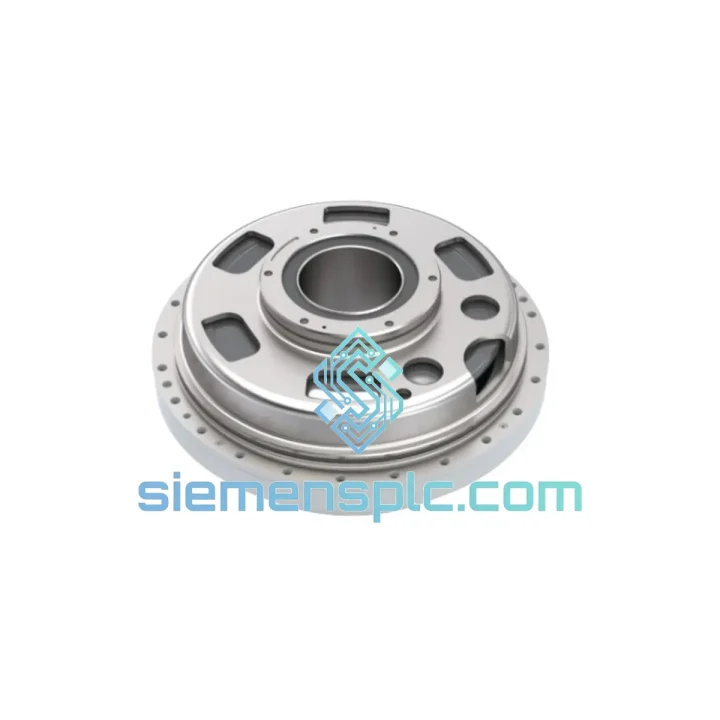
ABB 3HAC022279-001 -002 -003 -007 Robot Reducer – IRB660 Series
Request verified availability, condition, replacement risk review, packing options and courier lead time for 3HAC022279-001.
BrandABB
Part Number3HAC022279-001
ConditionAvailability Check
Lead TimeRFQ Confirmation
DocumentsDatasheet / photos by RFQ
ShippingExport packing available
Auto-filled RFQ
3HAC022279-001
Click Request Quote and the part number is inserted into the inquiry form automatically.
- Reply by email: [email protected]
- WhatsApp / Tel: +86 18359268345
- Mon-Sat 9:00-18:00 GMT+8
Procurement Data
Key Product Information
Core fields for model confirmation and RFQ routing. Detailed product narrative remains below.
- Brand
- ABB
- Primary Part Number
- 3HAC022279-001
- Product Type
- Robot Reducer
- Product Family
- Other series
- Manufacturer
- ABB Robotics
- Country of Origin
- SE
- Catalog Category
- Industrial Automation Spares
- Warranty
- 12 months from shipment date
Model confirmed for inquiry
3HAC022279-001
Send quantity, destination and urgency. The RFQ form keeps this part number attached.
Request Quote
Product Overview
ABB 3HAC022279-001 / -002 / -003 / -007 — Precision Joint Reducer Assembly for IRB660 High-Payload Palletizing Robots
The ABB 3HAC022279 reducer family constitutes the primary torque-transmission interface between the servo motor output shaft and the structural arm of the IRB660 robot platform. The IRB660 is a four-axis palletizing robot rated for payloads up to 250 kg at a reach of 3,150 mm, deployed in high-throughput end-of-line palletizing, press-tending, and heavy-material-transfer cells. The four suffix variants — -001, -002, -003, and -007 — correspond to distinct axis positions (J1 through J4), each engineered to specific gear ratio, output torque rating, and mounting interface geometry dictated by the kinematic chain of the IRB660 arm structure. Selecting the correct suffix is mandatory; axis-position mismatch results in incorrect gear ratio loading on the IRC5 controller’s axis model, producing torque saturation faults and path deviation errors that cannot be resolved through software tuning alone.
Each reducer in this series is a compound gearbox assembly — strain-wave or multi-stage planetary architecture depending on axis position — manufactured to ABB Robotics’ internal mechanical tolerance class. The output flange interface conforms to ABB’s proprietary bolt-circle pattern, enabling zero-modification drop-in replacement on any IRB660 variant currently in production or field service. Backlash is held below 1 arc-minute at rated load, a specification that directly governs the TCP (Tool Center Point) repeatability of ±0.1 mm across the robot’s full working envelope. Reducers that exceed this backlash threshold — a common failure mode in refurbished or counterfeit units — introduce systematic positional error that accumulates across all downstream kinematic joints, degrading layer-pattern accuracy in palletizing applications where end-effector position must be repeatable to within ±2 mm at the pallet face.
Real-time Stock & RFQ: [email protected] | WhatsApp: +86 18359268345
Technical Parameters
| Manufacturer | ABB Robotics |
| Part Numbers | 3HAC022279-001 / 3HAC022279-002 / 3HAC022279-003 / 3HAC022279-007 |
| Compatible Robot Platform | ABB IRB660 — all mechanical variants (110/3.15, 250/3.15) |
| Component Classification | Robot Joint Reducer / Precision Gearbox Assembly |
| Axis Coverage | J1 (−001), J2 (−002), J3 (−003), J4 (−007) |
| Gear Architecture | Multi-stage planetary / strain-wave hybrid (axis-dependent) |
| Backlash at Rated Load | < 1 arc-minute |
| Output Flange Runout (TIR) | ≤ 0.02 mm |
| TCP Repeatability (system level) | ±0.1 mm |
| Max Robot Payload | 250 kg |
| Max Robot Reach | 3,150 mm |
| Operating Temperature | +5 °C to +45 °C standard; −10 °C to +55 °C (foundry/clean-room option) |
| Protection Class | IP67 (axis-dependent; per ABB IRB660 product specification) |
| Lubrication | Factory-filled grease; sealed for service life; relubrication interval 10,000 hr (standard duty) |
| Mounting Interface | ABB proprietary bolt-circle flange; zero-modification fit |
| Housing Material | High-tensile aluminum alloy with anodized bore surfaces |
| Condition | New, Original OEM — factory-sealed packaging |
| Country of Origin | Sweden |
| HS Code (reference) | 8483.40 — Gears and gearing; gear boxes and other speed changers |
| Warranty | 12 months from shipment date |
Hardware Logical Analysis
The 3HAC022279 series is built around a compound gear architecture that prioritizes torsional rigidity over gear ratio range. At the J1 axis — the base rotation joint carrying the full arm inertia — the reducer must absorb both the dynamic torque impulse during acceleration and the sustained static load during dwell phases of a palletizing cycle. ABB addresses this through a multi-stage planetary arrangement with hardened, ground-tooth gearing, where the ring gear is press-fit into a rigid housing to eliminate the micro-deflection that causes premature wear in lower-grade assemblies. The tooth contact pattern is verified at the factory under loaded conditions, not merely at zero-load assembly, ensuring the gear mesh geometry remains within specification under the actual operating stress state.
EMC design is integrated at the mechanical level. The reducer housing is electrically bonded to the robot arm structure via a defined grounding path, preventing the accumulation of induced charge on the output shaft — a failure mode observed in high-cycle welding and press-tending environments where stray currents from welding power supplies or servo drive switching transients can erode bearing races through electrolytic pitting. The anodized aluminum housing provides a low-impedance ground return path without adding mass to the distal arm segments, maintaining the arm’s inertia budget within the IRC5 controller’s axis model parameters.
Thermal management is passive but deliberate. The reducer body acts as a heat sink for the adjacent servo motor, with machined exterior geometry increasing surface area for convective dissipation. In continuous-duty palletizing cycles — typically 1,200 to 1,800 cycles per hour — this thermal path prevents grease viscosity from dropping below the minimum film-thickness threshold, which would otherwise accelerate surface fatigue on the gear flanks. ABB specifies a grease relubrication interval of 10,000 operating hours under standard duty, extendable to 20,000 hours in low-cycle or intermittent-duty applications. The factory-filled grease formulation is matched to the operating temperature range and gear surface finish; substituting an incompatible lubricant during field service causes emulsification and phase separation, collapsing the protective film within a fraction of the rated service interval.
The output flange runout tolerance is held to ≤ 0.02 mm TIR (Total Indicator Reading). This specification directly governs TCP drift over the robot’s service life. A reducer exceeding this tolerance introduces a systematic positional error that propagates through all downstream kinematic joints, degrading path accuracy in layer-pattern palletizing where end-effector position must be repeatable to within ±2 mm at the pallet face. The shaft seal dimensions are matched to the housing bore tolerance to maintain IP67 integrity; aftermarket seals with wider dimensional tolerances compromise the ingress protection rating, exposing the gear mesh to coolant mist and swarf in machining-cell environments.
System Integration Benefits
- Axis model parameter continuity: OEM-matched gear ratios preserve the IRC5 controller’s pre-configured axis model, eliminating re-commissioning and axis calibration after replacement — a process that can consume 4–8 hours of engineering time per axis on a production robot.
- Deterministic cycle time recovery: Factory-specified backlash ensures the motion planner’s velocity and acceleration profiles remain valid post-replacement, restoring programmed cycle times without manual trajectory re-tuning.
- Servo drive load model integrity: The inertia and friction coefficients of the OEM reducer match the values stored in the IRC5 drive firmware. A non-OEM unit with different inertia characteristics forces re-identification of the motor model, adding commissioning time and introducing uncertainty into the drive’s current-loop tuning.
- SafeMove torque-deviation threshold validity: The IRC5 controller’s SafeMove safety module monitors joint torque and position deviation in real time. OEM reducer stiffness values are required for the torque-deviation thresholds to remain valid, preventing nuisance faults or — more critically — missed fault detection in collaborative or guarded-space applications.
- Grease compatibility assurance: Factory-filled grease is chemically compatible with ABB’s recommended relubrication grease (LGEP 2 or equivalent), preventing the emulsification and phase separation that occurs when incompatible lubricants are mixed during field service.
- IP67 seal integrity: OEM shaft seals are dimensioned to the exact housing bore tolerance, maintaining the IP67 rating required in food-grade, washdown, and machining-cell environments where ingress of coolant or cleaning agents causes accelerated gear wear.
- Predictable maintenance scheduling: Known OEM service intervals (10,000 / 20,000 hours) allow maintenance planners to align reducer service with planned production shutdowns, avoiding unscheduled downtime and the associated production loss costs.
- Multi-axis consolidated sourcing: All four suffix variants (-001, -002, -003, -007) are available from a single supplier in one shipment, reducing customs entries, freight cost, and incoming inspection workload for maintenance teams managing multiple IRB660 cells.
- Traceability and warranty coverage: Each unit is supplied with full OEM packaging authentication and a 12-month warranty from shipment date, providing a documented quality chain for ISO 9001-compliant maintenance records.
Quality Assurance & Global Logistics
Every 3HAC022279 unit supplied through siemensplc.com is sourced via verified industrial distribution channels and arrives in original ABB factory packaging with intact tamper-evident seals. Pre-shipment inspection covers OEM packaging authentication (label font, part number format, date code structure), physical housing inspection for casting marks and anodizing consistency, shaft runout spot-check where tooling permits, and documentation cross-reference against ABB’s published part number matrix. Units that fail any inspection criterion are quarantined and not dispatched.
Logistics operations are based in Xiamen, China — a primary export hub with direct access to international express carriers and consolidated freight forwarders. Standard dispatch is within 1–3 business days of order confirmation. Express air freight via DHL, FedEx, or UPS delivers to most destinations in Europe, North America, Southeast Asia, and the Middle East within 3–7 business days. Sea freight (LCL/FCL) is available for bulk orders. All shipments include a commercial invoice, packing list, certificate of origin, and HS code declaration (8483.40) to support smooth customs clearance. Export compliance documentation is prepared as standard; additional certifications such as FORM E for ASEAN preferential tariff treatment are available on request. A 12-month warranty covers manufacturing defects and OEM specification non-conformance from the shipment date, with warranty claims processed against full traceability records.
Contact Information
Email: [email protected]
WhatsApp: +86 18359268345
Web: siemensplc.com
Location: Xiamen, China
© 2026 siemensplc.com. All rights reserved.
Ready to quote
[email protected]
Send This Part Number to Sales
RFQ workflow
Quality workflow ->
Confirmation Process
01Model confirmation
We check the full part number, brand, series and visible nameplate information before quotation.
02Availability reply
Sales confirms stock path, condition option, quantity and realistic lead time for export dispatch.
03Packing & courier
DHL, FedEx, UPS or buyer courier arrangements can be reviewed with packing requirements.
Continue sourcing
Browse full catalog ->
Related Automation Parts
Similar brand or category products for fast comparison and multi-item RFQ lists.
ABB
RFQ Ready
ABB 3HAC9330-1 Robot Speed Reducer – IRB6640-205/2.7
lRB240046 RB460
Origin SE
Robot Speed Reducer
ABB
RFQ Ready
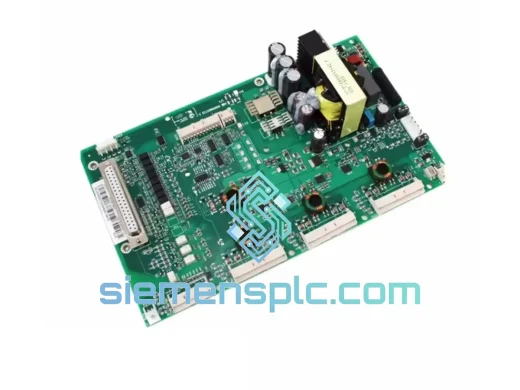
ABB YT204001-JJ Speed Measurement Board
Ready to Ship
Origin SE
Speed Measurement Board