
ABB
In Stock OK
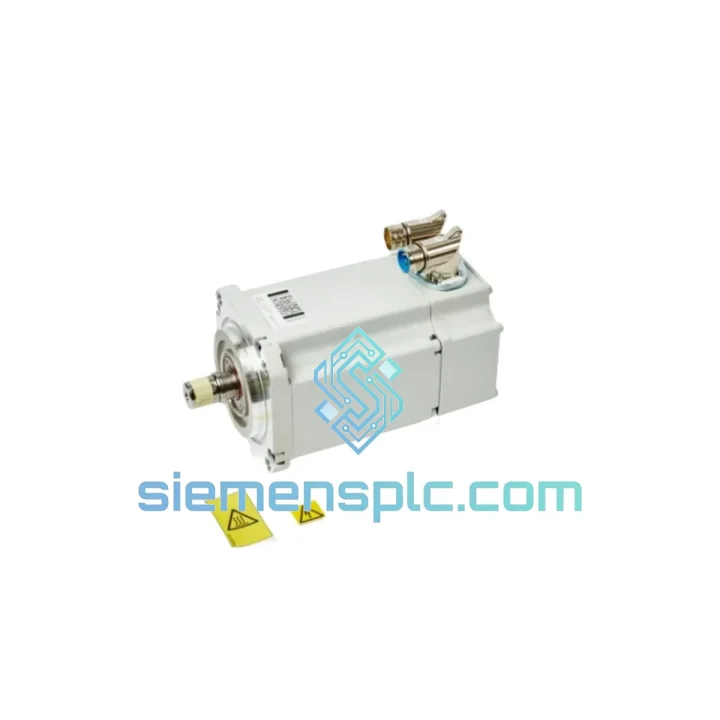
ABB 3HAC044513-001 Servo Motor Assembly – IRB Series
Request verified availability, condition, replacement risk review, packing options and courier lead time for 3HAC044513-001.
BrandABB
Part Number3HAC044513-001
ConditionAvailability Check
Lead TimeRFQ Confirmation
DocumentsDatasheet / photos by RFQ
ShippingExport packing available
Auto-filled RFQ
3HAC044513-001
Click Request Quote and the part number is inserted into the inquiry form automatically.
- Reply by email: [email protected]
- WhatsApp / Tel: +86 18359268345
- Mon-Sat 9:00-18:00 GMT+8
Procurement Data
Key Product Information
Core fields for model confirmation and RFQ routing. Detailed product narrative remains below.
- Brand
- ABB
- Primary Part Number
- 3HAC044513-001
- Product Type
- Servo Motor Assembly
- Series / Family
- IRC5
- Manufacturer
- ABB Robotics (Sweden / Germany)
- Country of Origin
- SE
- Catalog Category
- Industrial Automation Spares
- Warranty
- 12 months from date of shipment (manufacturing defects)
Model confirmed for inquiry
3HAC044513-001
Send quantity, destination and urgency. The RFQ form keeps this part number attached.
Request Quote
Product Overview
ABB 3HAC044513-001 Pinion-Integrated Servo Motor: Joint-Level Torque Transmission in IRB Articulated Robot Platforms
The ABB 3HAC044513-001 is a factory-matched servo motor and pinion gear subassembly engineered for direct installation into the joint drive train of ABB IRB-series articulated industrial robots. This unit is cross-referenced under part numbers 3HNA026409-001 and 3HAC157541-004 — all three designations refer to the same electromechanical assembly, differentiated only by procurement catalog context. The component occupies the torque-generation node in the robot’s axis kinematic chain: it receives a three-phase PWM voltage waveform from the IRC5 drive module, converts electrical energy into shaft torque via a permanent magnet synchronous motor (PMSM) topology, and transmits that torque through the pre-assembled pinion gear directly to the joint ring gear. Position feedback is returned to the IRC5 axis computer via an absolute encoder, closing the servo loop at the hardware level.
In multi-axis robot architectures, each joint motor operates as a node in a cascaded control hierarchy. The IRC5 motion planner decomposes Cartesian path commands into per-axis angular position setpoints, which are then tracked by individual axis computers running velocity and current control loops. The 3HAC044513-001 sits at the bottom of this hierarchy — it is the physical actuator that must faithfully execute the current commands issued by the drive module. Any degradation in motor winding insulation, encoder signal integrity, or pinion gear mesh geometry propagates upward through the control hierarchy as position tracking error, ultimately manifesting as TCP deviation, protective stops, or axis fault codes in the IRC5 event log. Maintaining this component in OEM specification is therefore a prerequisite for sustained robot accuracy and uptime.
Applicable robot platforms include the IRB 1600, IRB 2400, IRB 4400, and IRB 6600 families, with axis assignment dependent on the specific robot model and revision. Procurement teams should verify the axis number and robot serial number against ABB’s spare parts catalog prior to ordering to confirm applicability.
Real-time Stock & RFQ: [email protected] | WhatsApp: +86 18359268345
Technical Parameters
| Primary Part Number | 3HAC044513-001 |
| Cross-Reference Numbers | 3HNA026409-001 / 3HAC157541-004 |
| Manufacturer | ABB Robotics (Sweden / Germany) |
| Component Classification | Brushless AC Servo Motor with Integrated Pinion Gear |
| Motor Topology | Permanent Magnet Synchronous Motor (PMSM), three-phase |
| Target Robot Platforms | ABB IRB 1600 / 2400 / 4400 / 6600 (axis-dependent) |
| Controller Compatibility | ABB IRC5 (primary); S4C+ (legacy, interface-compatible) |
| Feedback Device | Absolute Encoder (multi-turn, battery-backed position retention) |
| Servo Cycle Rate (IRC5) | 250 µs (4 kHz axis computer update rate) |
| Current Control Loop Rate | 4–8 kHz (drive module PWM switching frequency) |
| Pinion Assembly Method | Factory-pressed and keyed to motor shaft; no field alignment required |
| Insulation Class | Class F — 155°C continuous thermal rating |
| Thermal Protection | PTC thermistor embedded in stator winding, monitored by IRC5 |
| Ingress Protection | IP54 — dust-protected, splash-resistant per IEC 60529 |
| Mounting Interface | Flange-mount to robot joint housing; direct pinion mesh to joint ring gear |
| Approximate Weight | 800 g |
| Compliance | CE Marking; RoHS 2011/65/EU |
| Country of Origin | Sweden |
| Warranty | 12 months from date of shipment (manufacturing defects) |
Hardware Logical Analysis
The 3HAC044513-001 operates within a three-tier closed-loop control structure: an outer position loop managed by the IRC5 axis computer, an intermediate velocity loop, and an inner current (torque) loop executed by the drive module’s DSP at 4–8 kHz. The PMSM topology is selected for this application because it delivers high torque density relative to motor volume — a critical constraint in robot joint packaging — and eliminates brush wear as a maintenance variable. The permanent magnet rotor generates a fixed air-gap flux, allowing the drive to control torque precisely by regulating only the stator current vector magnitude and angle via field-oriented control (FOC) algorithms.
The absolute encoder is the component that distinguishes this motor from general-purpose servo motors. Unlike incremental encoders, which lose position reference on power loss, the absolute encoder retains multi-turn position data through a battery-backed memory circuit. This means the IRC5 axis computer can read the exact joint angle at power-up without executing a homing sequence. In production environments where unplanned shutdowns occur — due to E-stop events, power interruptions, or safety system activations — this capability eliminates the restart overhead of re-homing all six axes, which can consume 5–15 minutes per incident in conventional robot systems.
The factory-integrated pinion gear addresses a specific mechanical failure mode inherent to field-assembled motor-pinion configurations. When a pinion is pressed onto a motor shaft in the field, the interference fit quality depends on tooling calibration, operator technique, and shaft surface condition. Under cyclic torsional loading — characteristic of robot joint operation with frequent direction reversals — a sub-optimal interference fit develops micro-fretting at the shaft-bore interface. This fretting generates metallic debris that migrates into the gear mesh, accelerating tooth wear and eventually producing backlash that exceeds the robot’s positional accuracy specification. The 3HAC044513-001 eliminates this failure mode by performing the press-fit operation under factory-controlled conditions with calibrated hydraulic tooling and 100% torque verification after assembly.
EMC integrity is maintained through the motor’s shielded cable interface and the IRC5 drive module’s common-mode filtering on the motor output stage. The motor housing is bonded to the robot arm’s structural ground plane, providing a low-impedance return path for high-frequency common-mode currents generated by PWM switching transients. Without this ground bond, common-mode currents would return through the encoder cable shield, inducing noise on the differential encoder signal lines. The resulting encoder signal corruption manifests as sporadic position errors — a fault mode that is difficult to diagnose because it is intermittent and does not produce a consistent fault code pattern in the IRC5 event log.
Thermal management is passive at the motor level. The Class F winding insulation provides a 155°C continuous rating, with the robot arm’s aluminum housing acting as the primary heat sink through conduction at the motor flange interface. The PTC thermistor in the stator winding provides a non-linear resistance signal that the IRC5 monitors continuously. If winding temperature approaches the protection threshold, the IRC5 executes a controlled deceleration ramp rather than an instantaneous power cut. This controlled stop prevents shock torque events at the joint gear mesh — a mechanical stress that, if repeated, accelerates gear tooth fatigue and bearing race wear.
System Integration Benefits
- Single-Assembly Replacement Procedure: The factory-integrated pinion eliminates the need for gear mesh measurement instruments, torque wrenches calibrated to pinion press-fit specifications, or post-installation backlash verification. A maintenance technician installs the 3HAC044513-001 as a single unit, reducing MTTR from multi-hour procedures to under 60 minutes in most IRB axis configurations.
- Power-Cycle Position Retention: The absolute encoder’s battery-backed multi-turn memory preserves joint angle data through unplanned shutdowns. The IRC5 reads valid position data at power-up, bypassing the homing sequence and allowing the robot to resume production within the normal startup time window.
- Three-Reference Procurement Flexibility: Verified interchangeability across 3HAC044513-001, 3HNA026409-001, and 3HAC157541-004 allows procurement teams to source against any of the three catalog references without risk of receiving a dimensionally or electrically incompatible variant. This is particularly relevant for facilities that maintain spare parts lists derived from multiple ABB documentation revisions.
- IRC5 Diagnostic Data Integration: The motor’s PTC thermistor and encoder health signals feed directly into the IRC5 event log and condition monitoring system. Maintenance engineers can trend motor thermal data over time to identify bearing degradation signatures — rising thermal resistance at a given duty cycle indicates increased bearing friction — before the degradation causes an unplanned stop.
- Dual-Generation Controller Compatibility: The motor’s electrical interface is compatible with both the IRC5 (current generation) and S4C+ (legacy) ABB robot controllers. Facilities operating mixed-generation robot fleets can maintain a single spare part number for this motor across all applicable robot models, reducing spare parts inventory complexity and carrying cost.
- OEM Torque and Resolution Parity: All electrical parameters — rated torque, peak torque, encoder resolution, and thermal class — match ABB’s original design specification. There is no derating relative to the motor installed at the time of robot manufacture. This is relevant for applications where the robot’s rated payload and path accuracy are fully utilized, leaving no margin for a derated replacement motor.
- High-Cycle Mechanical Durability: The motor’s bearing specification and winding thermal class are selected for continuous-duty industrial cycles. In automotive body shop applications running three-shift operations at 400+ weld cycles per hour, the bearing and winding design supports multi-year service intervals under normal thermal and mechanical loading conditions.
- Controlled Thermal Shutdown Prevents Secondary Damage: The IRC5’s PTC-based thermal protection executes a controlled deceleration ramp on over-temperature detection, rather than an abrupt power cut. This prevents shock torque at the joint gear mesh and protects the workpiece from positional errors caused by an uncontrolled stop — a consideration in precision assembly and machining tending applications where workpiece rejection due to robot fault is a measurable cost.
Quality Assurance & Global Logistics
Each 3HAC044513-001 unit supplied through siemensplc.com is sourced via verified industrial distribution channels with documented part number traceability to ABB’s manufacturing records. Intake inspection covers physical integrity assessment, part number label authentication, connector pin condition, and encoder connector seating. Units exhibiting evidence of prior installation — wear marks on the flange face, paint overspray on the motor body, or label adhesive residue inconsistent with factory application — are rejected at intake and not offered for sale.
Export packaging follows IEC 60068-2 transport protection guidelines. The motor assembly is sealed in an anti-static polyethylene bag to prevent electrostatic discharge to the encoder electronics, cushioned with closed-cell polyethylene foam inserts sized to the motor geometry, and enclosed in a double-wall corrugated export carton rated for international air freight drop and vibration profiles. Gross weight, dimensional data, and HS code are printed on the shipping label to support automated customs pre-clearance processing at destination airports.
Shipments originate from Xiamen, China — a primary international logistics hub with scheduled air freight services to Frankfurt (FRA), Amsterdam (AMS), Los Angeles (LAX), Dubai (DXB), and Singapore (SIN). Standard delivery to Europe and North America is 3–5 business days via DHL Express or FedEx International Priority. Sea freight consolidation is available for multi-unit orders where lead time permits. Complete export documentation — commercial invoice, packing list, certificate of origin, and HS code declaration — accompanies every shipment to support customs clearance in the destination country without additional document requests.
Warranty coverage is 12 months from the date of shipment. Claims are processed on submission of photographic evidence of the failed unit and IRC5 fault log data confirming the failure mode. Replacement units are dispatched within 3 business days of claim approval. Warranty does not cover damage resulting from installation error, operation outside rated parameters, or mechanical impact.
Contact Information
Email: [email protected]
WhatsApp: +86 18359268345
Web: siemensplc.com
Location: Xiamen, China
© 2026 siemensplc.com. All rights reserved.
Ready to quote
[email protected]
Send This Part Number to Sales
RFQ workflow
Quality workflow ->
Confirmation Process
01Model confirmation
We check the full part number, brand, series and visible nameplate information before quotation.
02Availability reply
Sales confirms stock path, condition option, quantity and realistic lead time for export dispatch.
03Packing & courier
DHL, FedEx, UPS or buyer courier arrangements can be reviewed with packing requirements.
Continue sourcing
Browse full catalog ->
Related Automation Parts
Similar brand or category products for fast comparison and multi-item RFQ lists.
ABB
RFQ Ready
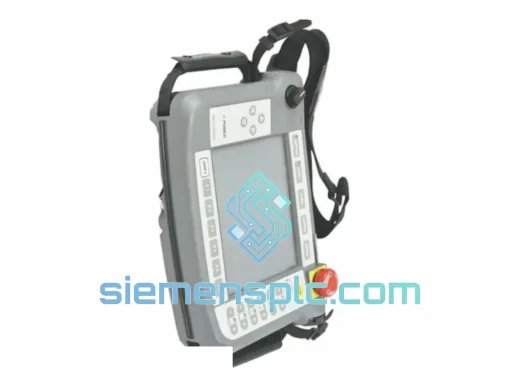
ABB TA8412N7600E912 3HNA021184-001 Servo Power Regulation Unit
IRC5
Origin SE
Servo Power Regulation Unit
ABB
RFQ Ready
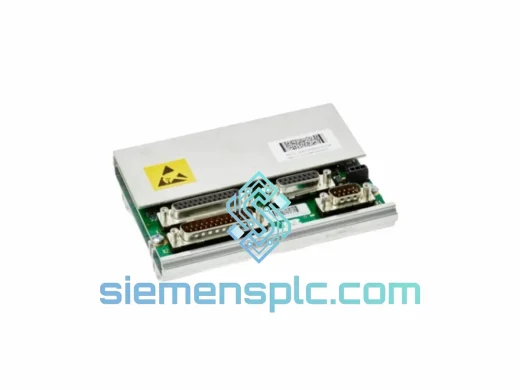
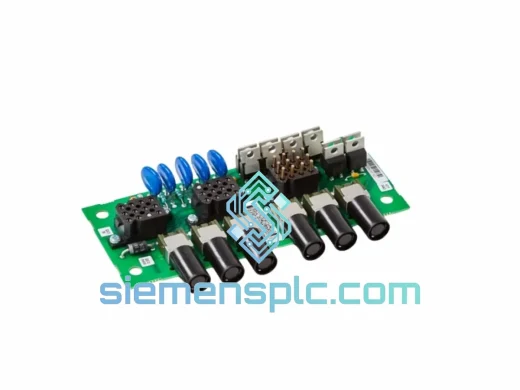
ABB DSQC561 3HAC048550-001 Serial Measurement Board
IRC5
Origin SE
PLC / Robot Controller Module
ABB
RFQ Ready
ABB 3HNA023200-001/00 TPPB-02 LCD Display
IRC5
Origin SE
Robot Teach Pendant Components