ABB
In Stock OK
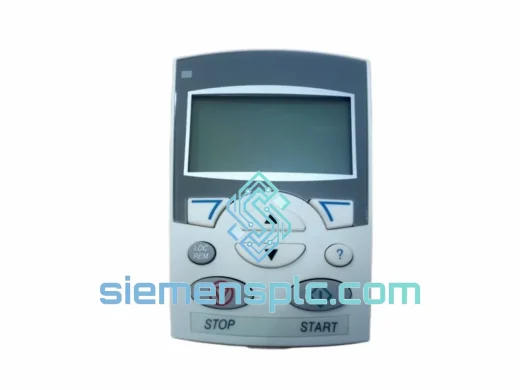
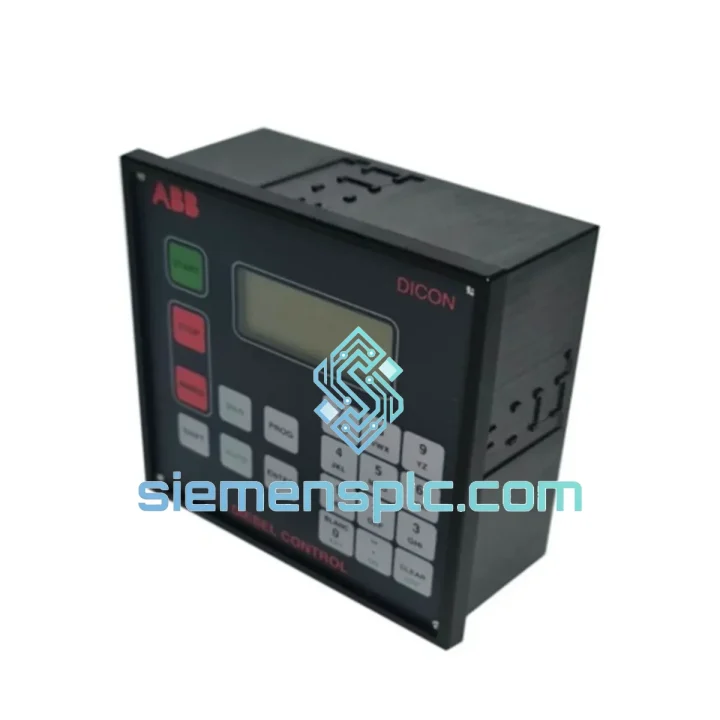
ABB CMA112 3DDE300013 Operator Interface Module – CMA Series
Request verified availability, condition, replacement risk review, packing options and courier lead time for CMA112 3DDE300013.
BrandABB
Part NumberCMA112 3DDE300013
ConditionAvailability Check
Lead TimeRFQ Confirmation
DocumentsDatasheet / photos by RFQ
ShippingExport packing available
Auto-filled RFQ
CMA112 3DDE300013
Click Request Quote and the part number is inserted into the inquiry form automatically.
- Reply by email: [email protected]
- WhatsApp / Tel: +86 18359268345
- Mon-Sat 9:00-18:00 GMT+8
Procurement Data
Key Product Information
Core fields for model confirmation and RFQ routing. Detailed product narrative remains below.
- Brand
- ABB
- Primary Part Number
- CMA112 3DDE300013
- Product Type
- Operator Interface Module
- Product Family
- Other series
- Manufacturer
- ABB
- Country of Origin
- SE
- Catalog Category
- HMI Panels
- Operating Temp.
- −10 °C to +55 °C
- Warranty
- 12 months from confirmed shipment date
Model confirmed for inquiry
CMA112 3DDE300013
Send quantity, destination and urgency. The RFQ form keeps this part number attached.
Request Quote
Product Overview
ABB CMA112 3DDE300013 — Supervisory Operator Interface for Diesel Engine Control Architectures
The ABB CMA112, carrying part number 3DDE300013, is a purpose-engineered operator interface module designed to occupy the human-machine boundary layer within ABB’s Control and Monitoring Architecture (CMA) for diesel engine management systems. Its deployment scope covers commercial marine main propulsion plants, offshore platform diesel generator sets, and land-based standby power installations where structured alarm management, real-time process variable display, and hardware-confirmed operator acknowledgement are defined functional requirements — not optional features.
Unlike general-purpose industrial HMI panels adapted for engine room use, the CMA112 is co-designed with the CMA backplane bus protocol. Its hardware architecture, firmware execution model, and mechanical form factor are derived directly from the functional requirements of the diesel supervisory control loop. The module occupies the operator interface node on the CMA backplane, receiving process variable data — shaft speed in RPM, lube oil pressure in bar, jacket water temperature in degrees Celsius, fuel rack position as a percentage, and per-cylinder exhaust gas temperature — from the governor CPU module via the token-passing backplane protocol. Data is presented at refresh intervals governed by the CPU scan cycle, not by the display module’s internal polling rate, ensuring that the operator view reflects the current control loop state rather than a buffered or interpolated snapshot.
The alarm acknowledgement path is implemented as a hardwired two-wire dry-contact circuit, physically independent of the backplane bus. This hardware-level path allows the CPU to gate interlock sequences on verified human awareness — a structural requirement for functional safety assessments under IEC 61511 in manned engine rooms. A firmware fault or bus communication error in the display module cannot mask an unacknowledged alarm at the CPU, because the acknowledgement signal bypasses the display module’s firmware execution path entirely.
📦 Real-time Stock & RFQ: [email protected] | WhatsApp: +86 18359268345
Technical Parameters
| Parameter | Specification |
|---|---|
| Manufacturer | ABB |
| Part Number | CMA112 / 3DDE300013 |
| Product Series | CMA — Control and Monitoring Architecture |
| Module Function | Diesel Engine Supervisory Operator Display |
| Supply Voltage | 24 V DC nominal; operating range 18–32 V DC |
| Power Consumption | ≤ 15 W at rated operating load |
| Display Technology | Alphanumeric LCD with integral backlight |
| Backplane Interface | CMA proprietary bus — token-passing arbitration |
| Alarm Acknowledge Output | Hardwired two-wire dry-contact, CPU interlock-capable |
| Node Addressing | Physical DIP switch — no software commissioning required |
| Operating Temperature | −10 °C to +55 °C |
| Storage Temperature | −25 °C to +70 °C |
| Relative Humidity | 5–95% RH, non-condensing |
| Front Panel Ingress Protection | IP54 — water spray and oil mist resistant |
| Rear Terminal Ingress Protection | IP20 |
| Vibration Compliance | IEC 60068-2-6: 5–50 Hz, 0.35 mm peak displacement |
| EMC Immunity Standards | EN 61000-4-2 (ESD), EN 61000-4-4 (EFT/burst), EN 61000-4-5 (surge), EN 61000-4-6 (conducted RF) |
| Mounting Configuration | Panel-mount, front-access installation |
| Approximate Unit Weight | 700 g |
| Warranty | 12 months from confirmed shipment date |
Hardware Logical Analysis
The CMA112’s internal PCB architecture partitions the backplane bus interface from the display driver and keypad input subsystem through a dedicated data latch stage. This partition decouples the timing domains of the two functional blocks: the backplane interface operates on the token-passing bus clock, while the display refresh cycle and keypad scan run on an independent internal oscillator. The practical consequence is that display refresh activity cannot introduce timing jitter into the bus arbitration sequence, and bus contention events cannot corrupt the display state register or cause keypad input loss.
Token-Passing Bus Architecture and Scan Cycle Determinism: Each node on the CMA backplane — including the CMA112 — is assigned a fixed token window within the bus frame. The display module holds bus access exclusively during its assigned window and releases the token to control-critical nodes on schedule. This structural arrangement means the display module’s data requests impose zero additional latency on the CPU’s closed-loop speed control scan cycle. In diesel governor applications where the speed regulation loop executes at 10–50 ms intervals, non-deterministic bus contention from peripheral nodes is a documented contributor to governor instability and speed droop. The token-passing scheme eliminates this failure mode at the architecture level.
EMC Design for Engine Room Interference Profiles: Diesel engine rooms generate broadband electromagnetic interference from ignition transients, alternator field switching, and high-current DC cable runs, typically spanning 150 kHz to 30 MHz. The CMA112 addresses this through a multi-layer PCB with dedicated inner-layer ground planes, ferrite bead filtering on all external I/O lines, and optocoupler isolation on the alarm acknowledge input circuit. The membrane keypad overlay is bonded to chassis ground via a conductive adhesive layer, preventing capacitive coupling of external RF fields into the input logic. This achieves EN 61000-4-3 radiated immunity compliance without relying on an external shielding enclosure — a practical advantage in panel installations where enclosure space is constrained.
Power Supply Conditioning and Cranking Transient Tolerance: The module’s internal DC-DC converter incorporates an LC input filter with a cutoff frequency below 10 kHz, attenuating switching noise from the 24 V DC supply rail before it reaches the display driver and logic circuits. The 18–32 V DC input range accommodates voltage sag during diesel engine cranking — a transient that can pull a 24 V battery bus below 20 V for 2–5 seconds depending on battery state and starter motor load. Modules with narrower input voltage tolerances reset during this transient, generating spurious alarm log entries and requiring operator intervention before the engine reaches governed speed. The CMA112 maintains continuous operation through the cranking transient without reset or data loss.
Hardwired Acknowledge Circuit — Firmware-Independent Safety Path: The two-wire acknowledge output is driven directly by the membrane keypad’s acknowledge key through a discrete hardware path, wired to the CPU module’s digital input independently of the backplane bus. Alarm acknowledgement is confirmed at the CPU’s hardware input level regardless of the display module’s firmware execution state. A firmware fault, watchdog reset, or bus communication error in the display module cannot mask an unacknowledged alarm at the CPU — a structural requirement for functional safety compliance in applications assessed under IEC 61511 as part of the basic process control system layer.
System Integration Benefits
- Single-scan-cycle process variable delivery: The token-passing bus architecture delivers updated process variable data to the display within one CPU scan cycle. No protocol bridge, intermediate buffer, or data conversion layer introduces additional latency. Operators view current engine state during transient events such as load rejection or emergency shutdown initiation — not cached values from a previous scan.
- DIP switch node addressing eliminates workstation dependency during replacement: The CMA112 is identified on the backplane via physical DIP switch address settings. Replacement units are recognized by the CPU immediately upon power-up without requiring an engineering workstation connection, firmware download, or address programming step. This reduces corrective maintenance time in remote, offshore, or unmanned installations.
- Alarm severity classification at the operator interface: Active alarms are presented with severity classification — shutdown, slowdown, pre-alarm — directly on the display. Operators assess fault severity and select the correct response procedure without consulting separate alarm documentation during a time-critical event, reducing cognitive load on watch-keeping personnel.
- Interlock-capable hardware acknowledge path supports procedural safety compliance: The hardwired acknowledge circuit allows the CPU to hold interlock sequences — such as delaying automatic shutdown bypass activation — until operator acknowledgement is confirmed at the hardware input level. This supports procedural safety requirements in manned engine rooms where unacknowledged alarm bypass is a reportable event under classification society rules.
- IEC 60068-2-6 vibration compliance without secondary isolation hardware: Connector retention, PCB solder joint integrity, and display legibility are maintained under the vibration profiles generated by diesel engine foundations — 5–50 Hz with 0.35 mm peak displacement — without requiring vibration-damping mounts or secondary mechanical isolation hardware. This simplifies panel installation and reduces mechanical components subject to fatigue failure.
- Cranking transient immunity eliminates start-cycle nuisance alarms: The 18–32 V DC input range prevents module reset during engine start sequences. Each prevented reset eliminates a spurious alarm log entry and the associated operator acknowledgement step, reducing the alarm management burden on watch-keeping personnel during routine start operations.
- IP54 front panel sealing without secondary enclosure cost: Water spray and oil mist protection is integral to the module’s front panel construction. Direct panel-mount installation in engine rooms is supported without the cost, space, and installation complexity of a secondary sealed enclosure around the display assembly.
- OEM-identical drop-in replacement with immediate service entry: Units carrying part number 3DDE300013 are dimensionally and electrically identical to the original factory-installed module. No firmware reconfiguration, address reprogramming, or system restart is required after replacement. The module enters service immediately upon power-up, minimizing engine downtime during corrective maintenance.
- Front-panel alarm history access without external workstation: The module retains a timestamped alarm log accessible via the front panel keypad. Post-event analysis of alarm sequence and operator response timing is available to maintenance personnel without requiring connection to an external engineering workstation or data extraction from the CPU module.
Quality Assurance & Global Logistics
Every ABB CMA112 3DDE300013 unit dispatched from our Xiamen, China facility undergoes a structured pre-shipment verification protocol. Physical inspection covers housing integrity, connector pin geometry and plating condition, label authenticity markers cross-referenced against ABB’s published part number documentation, and internal visual inspection where non-destructive access permits. Units presenting evidence of remarking, non-OEM internal assemblies, counterfeit labeling, or connector pin damage are rejected at intake and excluded from inventory. This intake screening is applied to every unit regardless of source, not selectively to flagged batches.
Our Xiamen location provides direct access to DHL Express, FedEx International Priority, TNT, and consolidated sea freight services to all major global ports. Standard in-stock orders are processed and dispatched within 1–3 business days of payment confirmation. Each shipment is accompanied by a complete export documentation package: commercial invoice, packing list, certificate of origin, and HS code classification guidance to support customs clearance at the destination country. All electronic modules are packed in anti-static bags within foam-lined cartons rated for the vibration and shock profiles of international air freight handling per ISTA 2A standards. A unique shipment tracking reference is assigned to each order for end-to-end traceability from Xiamen to the delivery address.
The 12-month warranty from confirmed shipment date covers defects in materials and workmanship. Replacement or credit is processed at the supplier’s cost upon verification of the reported defect, without requiring the customer to bear return freight costs for confirmed warranty claims.
Contact Information
📧 Email: [email protected]
📱 WhatsApp: +86 18359268345
🌐 Web: siemensplc.com
📍 Location: Xiamen, China
© 2026 siemensplc.com. All rights reserved.
Ready to quote
[email protected]
Send This Part Number to Sales
RFQ workflow
Quality workflow ->
Confirmation Process
01Model confirmation
We check the full part number, brand, series and visible nameplate information before quotation.
02Availability reply
Sales confirms stock path, condition option, quantity and realistic lead time for export dispatch.
03Packing & courier
DHL, FedEx, UPS or buyer courier arrangements can be reviewed with packing requirements.
Continue sourcing
Browse full catalog ->
Related Automation Parts
Similar brand or category products for fast comparison and multi-item RFQ lists.