ABB
RFQ Ready
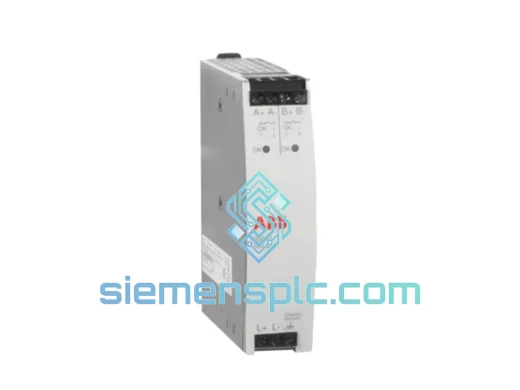
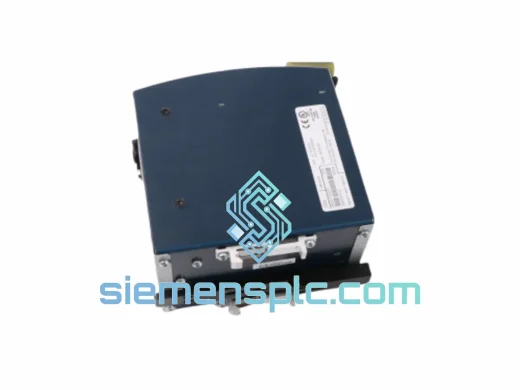
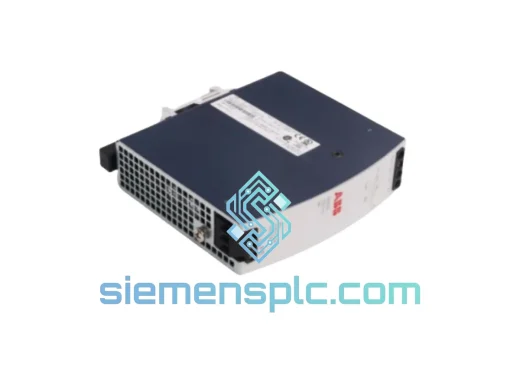
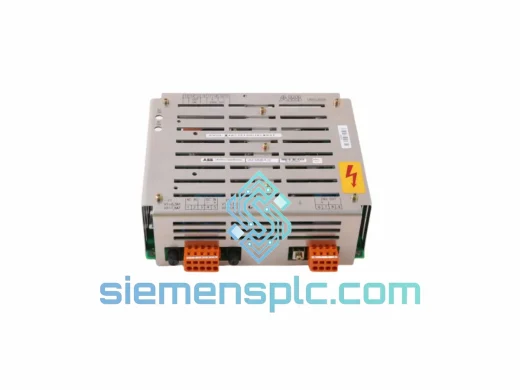
ABB UNS0868B-P V2 3BHE013940R0002 Excitation Power Supply
UNITROL
Origin SE
Excitation Power Supply Board
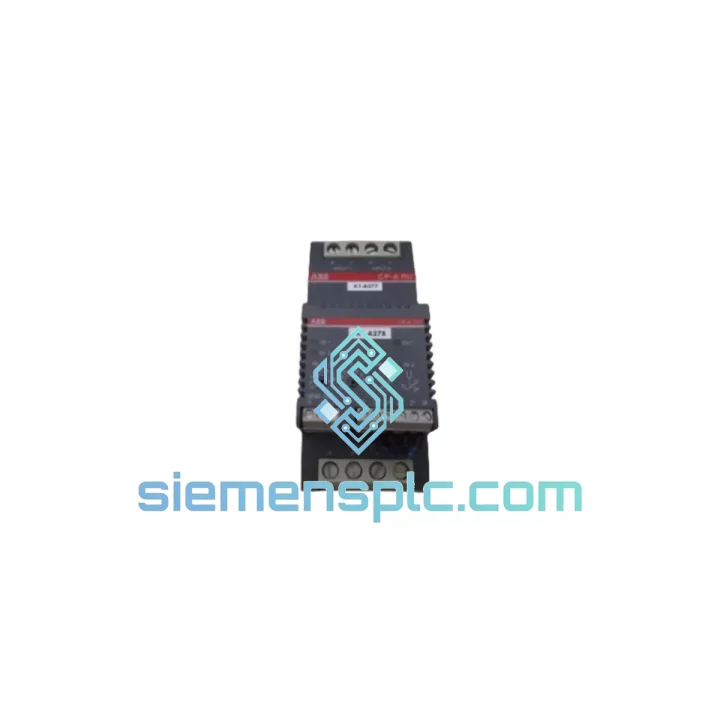
Request verified availability, condition, replacement risk review, packing options and courier lead time for CP-A RU 1SVR427071R0000.
Click Request Quote and the part number is inserted into the inquiry form automatically.
Core fields for model confirmation and RFQ routing. Detailed product narrative remains below.
In any automation system, the 24VDC supply rail is not a peripheral component — it is the foundation on which every I/O module, fieldbus coupler, safety relay, and sensor loop depends. Voltage instability at this layer does not produce a clean fault; it produces intermittent, difficult-to-diagnose behavior across the entire control system. The ABB CP-A RU 1SVR427071R0000 is a single-phase switched-mode power supply (SMPS) engineered specifically for this role. It accepts a universal AC input of 100–240 VAC (50/60 Hz) and a DC input of 110–300 VDC, converts to a tightly regulated 24VDC output, and does so with the electrical characteristics — low ripple, fast transient response, active current sharing — that industrial control infrastructure requires.
The CP-A RU platform sits within ABB’s CP Range, a product family developed for continuous-duty deployment in machine control panels, process automation cabinets, and distributed I/O enclosures. The 1SVR427071R0000 is not a general-purpose PSU adapted for industrial use; it is designed from the ground up for the electrical environment of an industrial panel, where conducted interference from VFDs, inductive switching transients from contactors, and ground potential differences between subsystems are routine operating conditions rather than edge cases.
Real-time Stock & RFQ: [email protected] | WhatsApp: +86 18359268345
| Parameter | Specification |
|---|---|
| Part Number | 1SVR427071R0000 |
| Commercial Designation | CP-A RU |
| Product Series | CP Range — ABB |
| Manufacturer | ABB (ASEA Brown Boveri) |
| Output Voltage (Nominal) | 24 VDC regulated |
| Output Voltage (Adjustable) | 22.5–28 VDC via front-panel potentiometer |
| Output Ripple & Noise | ≤ 150 mVpp (bandwidth: 20 MHz) |
| AC Input Range | 100–240 VAC, single-phase, 50/60 Hz |
| DC Input Range | 110–300 VDC |
| Power Factor (Active PFC) | ≥ 0.95 at nominal load |
| Conversion Efficiency | ≥ 89% at full load, 230 VAC input |
| Inrush Current | < 20 A peak, < 1 ms duration (NTC-limited, 230 VAC cold start) |
| DC OK Signal | Potential-free relay contact; closes at Vout ≥ 22.5 VDC |
| Parallel Operation | Supported — active current sharing, no external ORing diode required |
| Galvanic Isolation | 3 kVAC / 1 min (input to output) |
| Protection Class | IP20 per IEC 60529 |
| Operating Temperature | −25°C to +70°C (linear derating above 60°C) |
| Storage Temperature | −40°C to +85°C |
| Relative Humidity | 5–95% RH, non-condensing |
| Mounting Standard | DIN rail EN 60715 TH35 (35 mm) |
| MTBF | > 500,000 hours at 25°C, 230 VAC, full load |
| Certifications | CE, UL, cUL, GL, DNV |
| HS Code | 850440 |
| Country of Origin | Germany |
| Unit Weight | ~400 g |
| Warranty | 12 months from date of dispatch |
| Stock Status | ✔ Available — Xiamen Warehouse |
The 1SVR427071R0000 implements a two-stage power conversion topology. The first stage is an active Power Factor Correction (PFC) boost converter. Its function is dual: it shapes the input current waveform to track the AC voltage sinusoid — achieving PF ≥ 0.95 and reducing harmonic injection into the supply network — and it simultaneously elevates the intermediate DC bus to approximately 380–400 VDC. This elevated, stabilized intermediate rail is the key architectural feature that decouples the second conversion stage from AC line voltage variation. Whether the incoming supply is 100 VAC or 240 VAC, the second stage sees a near-constant input, which is why the output regulation is tight across the full input range without requiring range-switching or manual tap selection.
The second stage is a high-frequency isolated DC/DC converter — typically a resonant or phase-shifted full-bridge topology — with galvanic isolation provided by a ferrite-core transformer rated for 3 kVAC dielectric withstand. This isolation is not incidental; it is a functional requirement in panel designs where the 24VDC bus must float relative to the AC supply earth, or where multiple PSUs feed a common bus from different AC phases. Output rectification uses low-forward-drop diodes, contributing directly to the ≥ 89% efficiency figure and reducing the thermal load inside the enclosure.
EMC compliance is achieved through a multi-stage LC filter network at the AC input. This filter attenuates conducted emissions to EN 55011 Class B limits — the more stringent residential/light-industrial classification — which means the unit exceeds the Class A requirements applicable to most industrial panel environments. In practical terms, this filter provides > 40 dB attenuation across the 150 kHz–30 MHz conducted emission band, which is the frequency range where VFD switching noise and contactor arc suppression circuits generate the majority of their interference energy. A PSU without this filter level will couple that interference directly onto the 24VDC bus and into every device powered from it.
The DC OK relay contact is implemented as a hardware voltage comparator circuit, operating independently of the main PWM control loop. It monitors the output rail directly and closes the relay contact when Vout ≥ 22.5 VDC. The response time to an undervoltage event is sub-10 ms — deterministic and not subject to firmware execution latency or communication stack delays. This architecture is correct for safety-critical alarm integration: the DC OK contact wires directly to a PLC digital input and provides a hardware-level supply health signal that the PLC can act on within one scan cycle.
Thermal management is passive — natural convection over an internal aluminum heatsink. The derating curve above 60°C ambient is linear, reaching approximately 70% rated output at 70°C. For sealed enclosures without forced ventilation, this derating must be included in the panel thermal budget calculation. The unit’s narrow DIN rail footprint preserves convection channels between adjacent devices when standard 10 mm spacing is maintained.
Every ABB CP-A RU 1SVR427071R0000 dispatched from siemensplc.com is sourced through verified supply channels with traceability to ABB’s manufacturing and serialization records. Pre-dispatch inspection protocol covers: ABB holographic security label verification; serial number format validation against ABB factory coding structure; terminal block and connector condition assessment; and functional output voltage measurement under a resistive test load at both minimum and maximum output adjustment positions. Units that do not pass all inspection criteria are quarantined and not dispatched under any circumstances.
Packaging is ESD-safe throughout. Where original ABB cartons are available, they are used. For surplus stock, units are individually sealed in anti-static polyethylene bags, cushioned with closed-cell polyethylene foam inserts, and packed in double-wall corrugated cartons rated for international air freight handling per ISTA 2A. Each shipment includes a commercial invoice, packing list, and HS code 850440 customs declaration prepared for the destination country. Certificate of Conformance (CoC) is available on request for regulated industries including rail, marine, and process safety applications.
Logistics operations are based in Xiamen, Fujian Province. Xiamen Gaoqi International Airport provides direct freight connections to major hub airports in Europe, the Middle East, Southeast Asia, and North America, supporting same-day uplift on DHL Express and FedEx International Priority for orders confirmed before 14:00 CST on business days. Typical door-to-door transit: Southeast Asia 1–3 business days; Europe 3–5 business days; North America 3–5 business days; Middle East 2–4 business days. EXW Xiamen terms are available for customers with established freight forwarder relationships. All shipments are fully insured and tracked from dispatch to delivery confirmation.
Email: [email protected]
WhatsApp: +86 18359268345
Web: siemensplc.com
Location: Xiamen, China
© 2026 siemensplc.com. All rights reserved.
We check the full part number, brand, series and visible nameplate information before quotation.
Sales confirms stock path, condition option, quantity and realistic lead time for export dispatch.
DHL, FedEx, UPS or buyer courier arrangements can be reviewed with packing requirements.
Similar brand or category products for fast comparison and multi-item RFQ lists.