ABB
In Stock OK
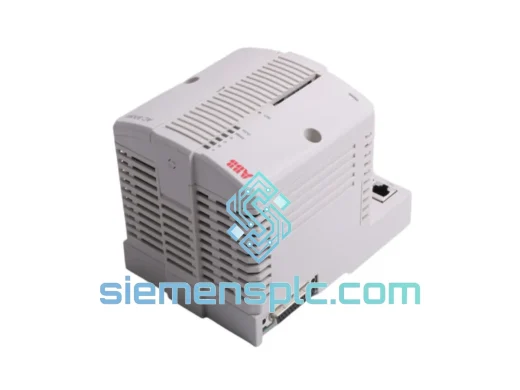
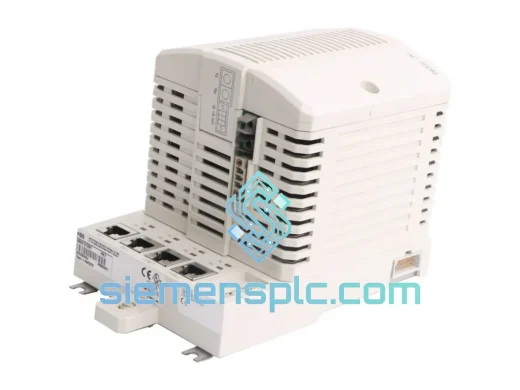
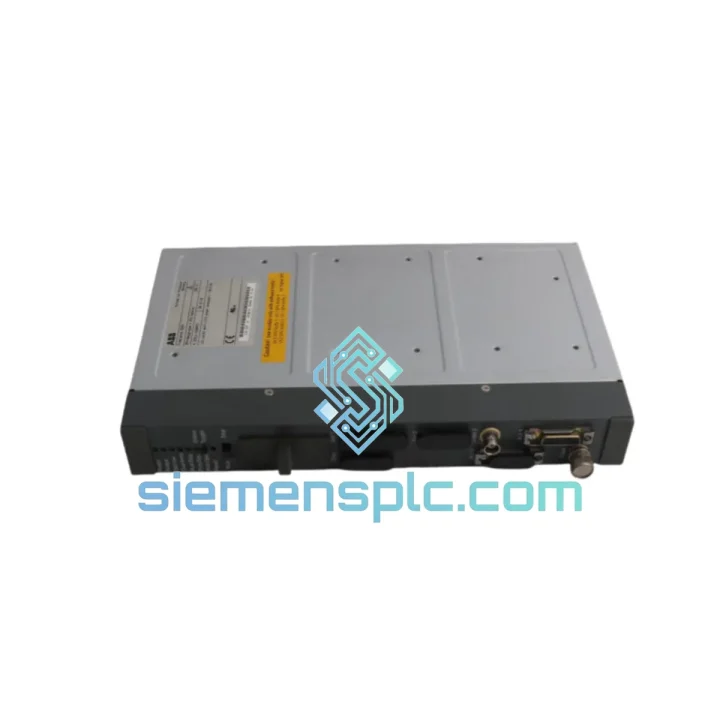
ABB DCP10 CPU Module – DCI/DCP Series
Request verified availability, condition, replacement risk review, packing options and courier lead time for DCI/DCP.
BrandABB
Part NumberDCI/DCP
ConditionAvailability Check
Lead TimeRFQ Confirmation
DocumentsDatasheet / photos by RFQ
ShippingExport packing available
Auto-filled RFQ
DCI/DCP
Click Request Quote and the part number is inserted into the inquiry form automatically.
- Reply by email: [email protected]
- WhatsApp / Tel: +86 18359268345
- Mon-Sat 9:00-18:00 GMT+8
Procurement Data
Key Product Information
Core fields for model confirmation and RFQ routing. Detailed product narrative remains below.
- Brand
- ABB
- Primary Part Number
- DCI/DCP
- Product Type
- CPU Module
- Series / Family
- DCP Series
- Manufacturer
- ABB (Asea Brown Boveri)
- Country of Origin
- SE
- Catalog Category
- DCS & Safety Modules
- Operating Temp.
- 0 °C to +60 °C (ambient, forced-air rack)
- Warranty
- 12 months from date of shipment (new units)
Model confirmed for inquiry
DCI/DCP
Send quantity, destination and urgency. The RFQ form keeps this part number attached.
Request Quote
Product Overview
ABB DCP10: Distributed Control Processor for DCI/DCP Series DCS Architectures
The ABB DCP10 is a rack-mounted central processing unit module engineered for deployment within ABB’s DCI (Distributed Control Interface) and DCP series distributed control systems. Its primary function is deterministic execution of control algorithms, coordinated I/O bus arbitration, and real-time process data management across multi-loop industrial installations. Unlike general-purpose computing platforms, the DCP10 is purpose-built for the timing constraints and fault-tolerance requirements of continuous process industries — including petrochemical refining, power generation, and pharmaceutical batch manufacturing.
The module occupies a dedicated CPU slot within the ABB DCP-series rack and communicates with I/O modules via the proprietary ABB DCI backplane bus. Its architecture separates application execution from communication handling, allowing the processor to maintain scan cycle integrity even under high I/O polling loads. This design principle is fundamental to achieving sub-100 ms loop response times in multi-controller configurations.
📩 Real-time Stock & RFQ: [email protected] | WhatsApp: +86 18359268345
Technical Parameters
| Manufacturer | ABB (Asea Brown Boveri) |
| Part Number | DCP10 |
| Module Category | Central Processing Unit (CPU) Module |
| Compatible Platform | ABB DCI / DCP Series Distributed Control System |
| Form Factor | Single-width rack-mount module |
| Backplane Bus | Proprietary ABB DCI parallel bus |
| Supply Voltage | 24 VDC via backplane (no external PSU required) |
| Operating Temperature | 0 °C to +60 °C (ambient, forced-air rack) |
| Storage Temperature | −25 °C to +70 °C |
| Relative Humidity | 5 % to 95 % RH, non-condensing |
| EMC Compliance | EN 61000-4 series (ESD, EFT, surge, conducted RF) |
| Vibration Resistance | IEC 60068-2-6 (5–150 Hz, 1 g) |
| Shock Resistance | IEC 60068-2-27 (15 g, 11 ms half-sine) |
| Module Weight | Approx. 1,800 g |
| Redundancy Support | Hot-standby CPU redundancy (with redundancy module) |
| Diagnostic Interface | Front-panel LED status array; DCI bus diagnostic registers |
| Warranty | 12 months from date of shipment (new units) |
Hardware Logical Analysis
The DCP10’s internal architecture reflects ABB’s design philosophy for deterministic process control: isolate time-critical execution from non-deterministic communication overhead. The processor core runs a fixed-priority preemptive scheduler, ensuring that high-priority control loops — typically PID regulators and safety interlocks — are never preempted by lower-priority diagnostic or communication tasks. This is not a software-level abstraction; it is enforced at the hardware interrupt controller level, with dedicated interrupt lines for each priority tier.
Backplane Bus Arbitration: The DCP10 acts as bus master on the DCI backplane. It implements a token-passing arbitration scheme that grants I/O modules deterministic access windows. Each I/O module is assigned a fixed time slot within the bus cycle, eliminating the variable latency associated with contention-based protocols (e.g., CSMA/CD). The result is a predictable worst-case I/O update time that can be calculated from the number of populated slots — a critical parameter for safety-instrumented system (SIS) timing analysis.
EMC Design: The module’s PCB layout employs a multi-layer ground plane strategy with dedicated analog and digital ground domains, joined at a single star point near the backplane connector. Signal traces carrying frequencies above 1 MHz are routed with controlled impedance (50 Ω ±10 %) and terminated to suppress reflections. Ferrite beads are placed on all power rails entering the module to attenuate conducted emissions in the 150 kHz–30 MHz band. These measures allow the DCP10 to operate without degradation in environments with variable-frequency drive (VFD) installations and high-current switching equipment in adjacent panels.
Memory Architecture: Program memory and data memory are physically separated on the DCP10 — a Harvard-style arrangement that prevents runaway write operations from corrupting executable code. Battery-backed SRAM retains the control program and process variable history through power interruptions, with a typical retention time exceeding 72 hours at 25 °C. This eliminates the need for a full program reload after momentary power loss, reducing restart time from minutes to seconds.
Redundancy Arbitration Logic: In hot-standby configurations, the DCP10 implements a hardware-level arbitration circuit that monitors the primary CPU’s heartbeat signal at 10 ms intervals. If three consecutive heartbeat frames are missed, the standby module asserts bus mastership within one additional scan cycle — a switchover time of typically 30–50 ms. This logic operates independently of the application software, meaning a software exception on the primary CPU triggers failover even if the OS kernel remains responsive.
System Integration Benefits
- Deterministic scan cycle: Fixed-priority scheduler guarantees control loop execution within a defined worst-case window, enabling precise loop tuning without empirical margin stacking.
- Zero-configuration I/O discovery: The DCP10 automatically enumerates connected I/O modules at startup via DCI bus polling, reducing commissioning time and eliminating manual address assignment errors.
- Transparent fault diagnostics: Each module on the DCI bus maintains a self-diagnostic register readable by the DCP10. Fault codes are propagated to the operator station in real time, with millisecond-resolution timestamps for root-cause analysis.
- Hot-standby failover without process bump: The redundancy arbitration logic transfers bus mastership without interrupting ongoing I/O transactions, preventing false actuator commands during switchover.
- Backward-compatible firmware baseline: The DCP10 supports ABB’s incremental firmware update mechanism, allowing field upgrades without full system shutdown — critical for continuous-process plants with 8,760-hour annual run targets.
- Integrated watchdog timer: A hardware watchdog independent of the application processor resets the module if the control task fails to check in within a configurable interval (default: 500 ms), preventing silent CPU hangs from propagating to the process.
- Structured data logging: The DCP10 maintains a circular event log in battery-backed SRAM, recording up to 1,024 timestamped events (I/O faults, communication errors, mode changes). This log survives power loss and is accessible via the DCI diagnostic interface without interrupting control execution.
- Scalable multi-controller architecture: Multiple DCP10 units can be networked via ABB’s plant bus to form a distributed control domain, with peer-to-peer data exchange at configurable update rates. This allows large installations to distribute computational load without a central bottleneck.
Quality Assurance & Global Logistics
Every ABB DCP10 unit dispatched from our Xiamen, China facility is sourced directly from authorized ABB distribution channels or verified industrial surplus with full traceability documentation. Prior to shipment, each module undergoes a structured acceptance procedure: visual inspection for PCB damage and connector integrity, power-on functional test with DCI bus loopback verification, and firmware revision confirmation against the customer’s specified baseline.
Units are packed in IEC 61340-5-1 compliant anti-static bags, placed in foam-lined rigid cartons rated for 1.2 m drop impact, and sealed with tamper-evident tape. Each shipment includes a test report, serial number record, and — where available — original ABB factory documentation. For regulated industries (pharmaceutical, nuclear, defense), full material traceability records are available upon request at no additional charge.
Logistics from Xiamen covers all major global destinations: DHL Express and FedEx International Priority for time-critical orders (3–5 business days to Europe, North America, and Southeast Asia); sea freight consolidation for bulk orders. Export documentation — commercial invoice, packing list, certificate of origin, and HS code declaration — is prepared in-house to minimize customs clearance delays. All shipments are fully insured against transit damage and loss.
New units carry a 12-month warranty covering manufacturing defects and functional failure under normal operating conditions. Warranty claims are processed within 5 business days, with advance replacement available for critical production environments.
Contact Information
📧 Email: [email protected]
📱 WhatsApp: +86 18359268345
🌐 Web: siemensplc.com
📍 Location: Xiamen, China
© 2026 siemensplc.com. All rights reserved.
Ready to quote
[email protected]
Send This Part Number to Sales
RFQ workflow
Quality workflow ->
Confirmation Process
01Model confirmation
We check the full part number, brand, series and visible nameplate information before quotation.
02Availability reply
Sales confirms stock path, condition option, quantity and realistic lead time for export dispatch.
03Packing & courier
DHL, FedEx, UPS or buyer courier arrangements can be reviewed with packing requirements.
Continue sourcing
Browse full catalog ->
Related Automation Parts
Similar brand or category products for fast comparison and multi-item RFQ lists.
ABB
RFQ Ready
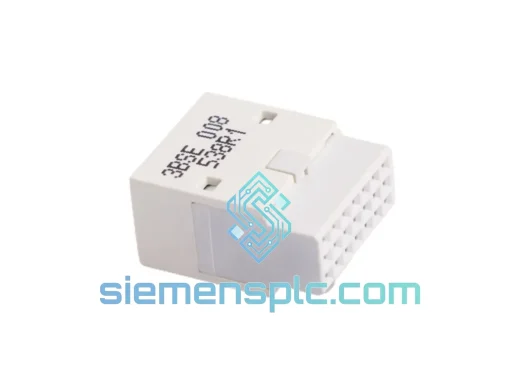
ABB TB807 3BSE008538R1 DCS Modulebus Terminator
AC800M
Origin SE
DCS Backplane Terminator