
ABB
In Stock OK
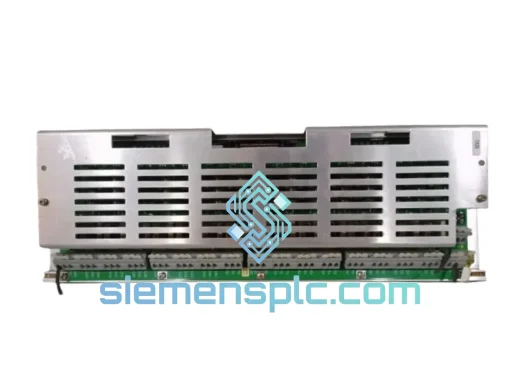
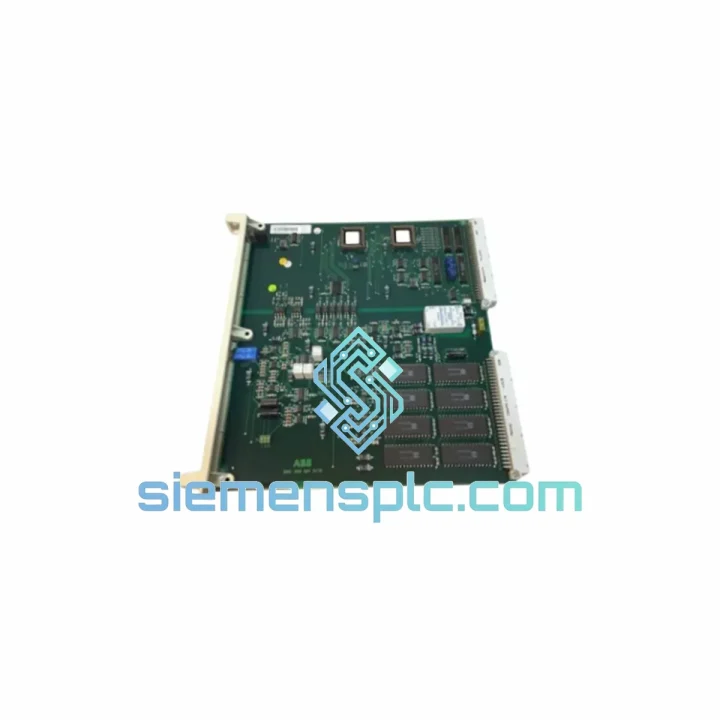
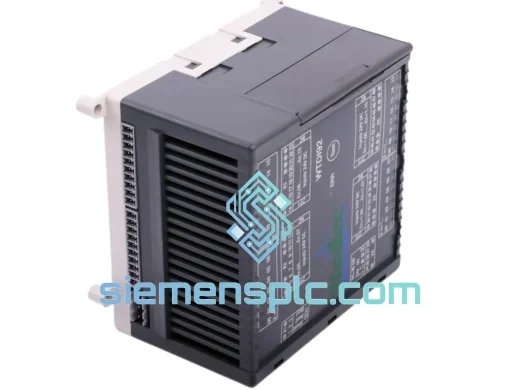
ABB DSAI146 Analog Input Module – Advant DCS
Request verified availability, condition, replacement risk review, packing options and courier lead time for DSAI146.
BrandABB
Part NumberDSAI146
ConditionAvailability Check
Lead TimeRFQ Confirmation
DocumentsDatasheet / photos by RFQ
ShippingExport packing available
Auto-filled RFQ
DSAI146
Click Request Quote and the part number is inserted into the inquiry form automatically.
- Reply by email: [email protected]
- WhatsApp / Tel: +86 18359268345
- Mon-Sat 9:00-18:00 GMT+8
Procurement Data
Key Product Information
Core fields for model confirmation and RFQ routing. Detailed product narrative remains below.
- Brand
- ABB
- Primary Part Number
- DSAI146
- Product Type
- Analog Input Module
- Series / Family
- Advant
- Manufacturer
- ABB
- Country of Origin
- SE
- Catalog Category
- I/O Modules
- Operating Temp.
- 0°C to +55°C
- Warranty
- 12 months against manufacturing defects
Model confirmed for inquiry
DSAI146
Send quantity, destination and urgency. The RFQ form keeps this part number attached.
Request Quote
Product Overview
ABB DSAI146 16-Channel Analog Input Module — Signal Acquisition Architecture in Advant Distributed Control Systems
The ABB DSAI146 is a 16-channel analog input module engineered for deployment within ABB’s Advant and AC500 distributed control system (DCS) platforms. Operating on the S100 I/O bus, this module occupies a defined slot in the Advant rack assembly and delivers multiplexed analog signal acquisition with 12-bit A/D resolution across all 16 channels. Its role in the control loop is to convert field-level process variables — pressure transmitter outputs, thermocouple conditioned signals, flow meter 4–20 mA loops — into digital engineering values that the Advant Controller (AC450 or AC410) can process within its scan cycle. Without a correctly functioning analog input front-end, the controller’s PID algorithms and cascade control strategies operate on stale or absent process data, making the DSAI146 a load-bearing component in any Advant-based process automation architecture.
Each channel on the DSAI146 accepts either a 4–20 mA current loop signal or a 0–10 V voltage input, selectable via hardware jumper configuration on the module’s PCB. The 12-bit successive approximation A/D converter provides 4,096 discrete quantization levels, yielding a theoretical resolution of 0.024% of full scale — sufficient for the majority of process variable measurements in refinery, chemical, and power generation environments where transmitter accuracy typically sits in the ±0.1% to ±0.5% range. The module’s multiplexer sequentially samples all 16 channels, with a total scan time that remains within the deterministic timing budget of the S100 bus cycle.
Real-time Stock & RFQ: [email protected] | WhatsApp: +86 18359268345
Technical Parameters
| Parameter | Specification |
|---|---|
| Manufacturer | ABB |
| Part Number / SKU | DSAI146 |
| Module Classification | Analog Input Unit |
| Compatible Platform | ABB Advant (AC450 / AC410 / AM series), AC500 DCS hybrid |
| Communication Bus | S100 I/O Bus |
| Number of Input Channels | 16 (multiplexed) |
| Input Signal Types | 4–20 mA current loop; 0–10 V DC voltage (jumper-selectable per channel) |
| A/D Conversion Resolution | 12-bit (4,096 levels) |
| Full-Scale Resolution | ≈ 0.024% of span |
| Supply Voltage | 24 V DC (from rack backplane) |
| Power Consumption | Approx. 5 W (typical, all channels active) |
| Operating Temperature | 0°C to +55°C |
| Storage Temperature | −25°C to +70°C |
| Relative Humidity | 5% to 95% non-condensing |
| Form Factor | Standard Advant S100 rack-mount card |
| Weight | Approx. 800 g |
| Protection Class | IP20 (within enclosed rack) |
| Warranty | 12 months against manufacturing defects |
Hardware Logical Analysis
The DSAI146’s analog front-end employs a differential input topology on each channel, which rejects common-mode noise introduced by long field cable runs — a practical necessity in industrial environments where signal cables may run parallel to power conductors for tens of meters. The common-mode rejection ratio (CMRR) of the differential amplifier stage suppresses induced 50/60 Hz interference that would otherwise corrupt low-amplitude process signals, particularly in 0–10 V voltage mode where the signal-to-noise margin is narrower than in current loop mode.
Channel isolation on the DSAI146 is implemented at the multiplexer level rather than per-channel galvanic isolation. The analog multiplexer IC sequentially connects each field input to the shared A/D converter, with settling time between channel switches designed to allow the sample-and-hold circuit to stabilize before conversion is triggered. This architecture reduces per-unit cost and physical footprint compared to individually isolated channel designs, while remaining adequate for process applications where field transmitters are themselves loop-powered and referenced to a common plant ground.
The S100 bus interface logic on the module handles address decoding, data framing, and handshake signaling with the Advant Controller’s I/O processor. The backplane connector carries both the parallel data bus and the module’s 24 V DC supply, eliminating the need for separate field power wiring to the module itself. The module’s onboard microcontroller manages the conversion sequencing, stores channel configuration parameters in non-volatile memory, and handles fault flagging — reporting channel overrange, underrange, or wire-break conditions (in 4–20 mA mode, a signal below 3.6 mA triggers a wire-break diagnostic) back to the controller via the S100 bus status registers.
EMC design on the DSAI146 follows ABB’s standard Advant hardware guidelines: decoupling capacitors are placed at the backplane connector to suppress high-frequency transients from the bus, and the PCB layout routes analog signal traces away from digital clock lines to minimize capacitive coupling. The module’s metal front panel provides a degree of shielding continuity when installed in a grounded Advant rack enclosure.
System Integration Benefits
- Deterministic scan-cycle compatibility: The DSAI146’s S100 bus transaction completes within the fixed I/O scan window of the Advant Controller, ensuring that all 16 channel values are refreshed synchronously with the controller’s execution cycle — a prerequisite for closed-loop PID control with predictable derivative action.
- Wire-break detection on current loops: In 4–20 mA mode, the module flags any channel reading below 3.6 mA as a wire-break fault, allowing the controller application program to substitute a safe fallback value or trigger an alarm rather than acting on a spurious zero-signal reading.
- Dual signal-type flexibility: Per-channel jumper selection between current and voltage input modes allows a single module type to serve both transmitter-driven 4–20 mA loops and voltage-output sensors (e.g., potentiometric position transducers), reducing the number of distinct spare module types required in a plant’s maintenance inventory.
- Rack-level hot-swap support: Within supported Advant rack configurations, the DSAI146 can be replaced without powering down the entire rack, minimizing process downtime during corrective maintenance — a significant operational advantage in continuous-process industries where unplanned shutdowns carry high economic cost.
- Transparent channel diagnostics: Overrange and underrange conditions on any channel are reported as discrete status bits accessible to the controller’s application logic, enabling the control program to distinguish between a genuine process excursion and a sensor or wiring fault without requiring manual field inspection.
- Standardized form factor for inventory consolidation: The S100 rack-mount card format is shared across the Advant I/O family, allowing plants to maintain a unified rack infrastructure while mixing analog input, analog output, and digital I/O modules according to process requirements — simplifying spare parts management and rack utilization planning.
- 12-bit resolution adequate for regulatory-grade measurement: At 4,096 quantization levels across a 16 mA span (4–20 mA), each LSB represents approximately 3.9 µA — well within the accuracy requirements of most process transmitters rated to ±0.1% or better, ensuring that the A/D stage does not become the limiting factor in measurement chain accuracy.
- Non-volatile channel configuration retention: Channel configuration parameters stored in onboard non-volatile memory survive power cycling without requiring re-download from the engineering station, reducing commissioning time after planned maintenance shutdowns and eliminating configuration loss as a failure mode.
Quality Assurance & Global Logistics
Every ABB DSAI146 unit supplied by siemensplc.com is sourced through verified supply channels and subjected to a structured pre-shipment inspection protocol. Physical examination covers PCB condition, connector integrity, label authenticity, and housing for any indicators of non-genuine origin. Functional verification confirms power-on behavior and channel response against ABB factory specifications. Firmware revision and hardware version are documented and cross-referenced with the target system’s compatibility matrix. Serial number traceability records are retained and available to customers upon request.
Logistics operations are based in Xiamen, China, with established carrier partnerships covering express and freight forwarding services to destinations across North America, Europe, Southeast Asia, the Middle East, and Africa. In-stock units typically ship within 1–3 business days of order confirmation. Available freight options include DHL Express, FedEx International Priority, UPS Worldwide Express, and sea freight consolidation for bulk orders. Full export documentation — commercial invoice, packing list, and certificate of origin — is provided with each shipment. The applicable HS code for this module is 8537.10, and our logistics team can assist with import documentation requirements for specific destination countries.
All units are covered by a 12-month warranty against manufacturing defects. Verified defective units are replaced or refunded in full. Units are shipped in anti-static packaging with appropriate cushioning to protect the PCB and connector pins during transit.
Contact Information
Email: [email protected]
WhatsApp: +86 18359268345
Web: siemensplc.com
Location: Xiamen, China
© 2026 siemensplc.com. All rights reserved.
Ready to quote
[email protected]
Send This Part Number to Sales
RFQ workflow
Quality workflow ->
Confirmation Process
01Model confirmation
We check the full part number, brand, series and visible nameplate information before quotation.
02Availability reply
Sales confirms stock path, condition option, quantity and realistic lead time for export dispatch.
03Packing & courier
DHL, FedEx, UPS or buyer courier arrangements can be reviewed with packing requirements.
Continue sourcing
Browse full catalog ->
Related Automation Parts
Similar brand or category products for fast comparison and multi-item RFQ lists.
ABB
RFQ Ready
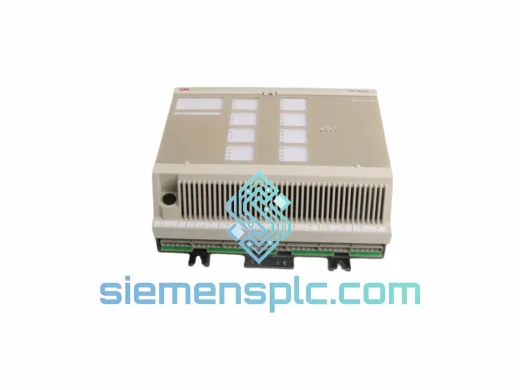
ABB DSAX452 Analog I/O Module – Advant Controller 450 Series
Advant
Origin SE
Analog I/O Module
ABB
RFQ Ready
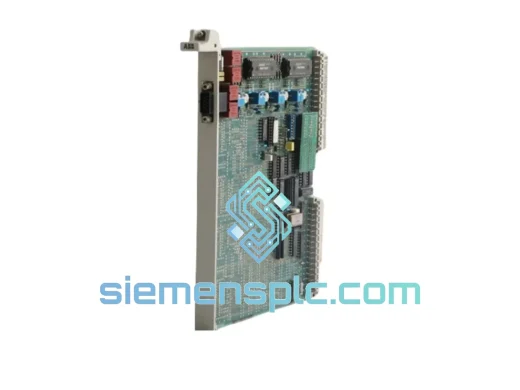
ABB GJR5143200R0001 35EK91 Analog Output Module – AC31 Advant Series
Advant
Origin SE
Analog Output Module
ABB
RFQ Ready
ABB 07DI92 GJR5252400R4101 Digital Input Module
Advant
Origin SE
PLC Digital Input Module