
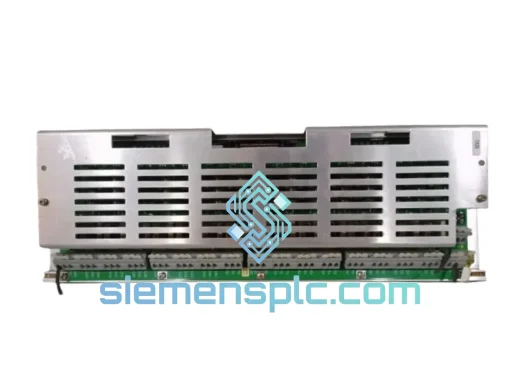
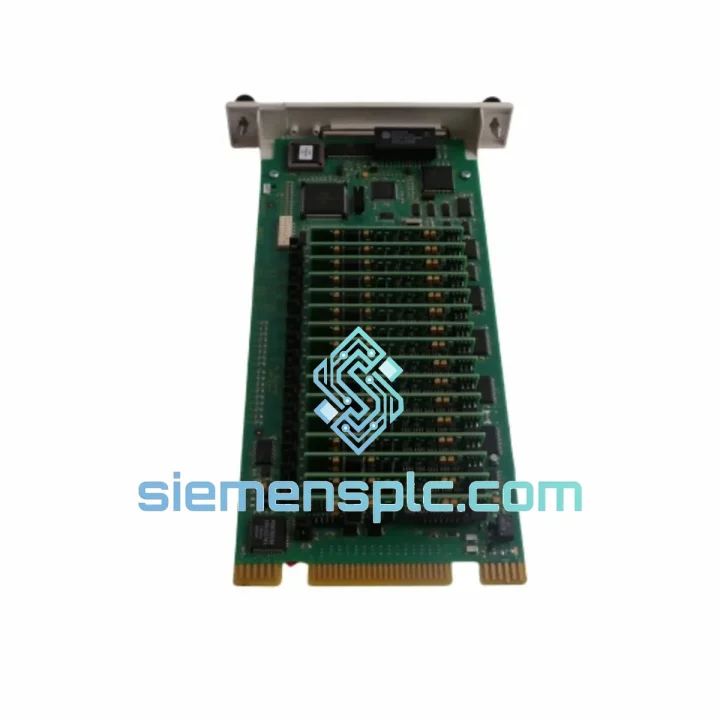
ABB
In Stock OK
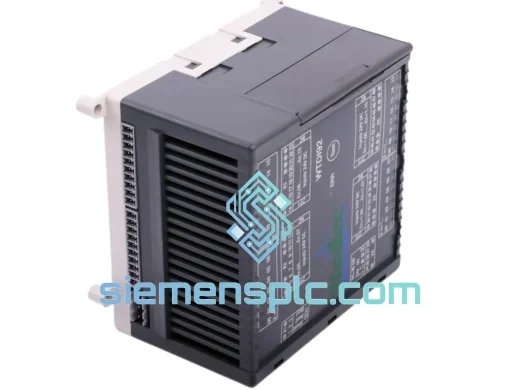
ABB SPASI23 Analog Input Module – Advant OCS
Request verified availability, condition, replacement risk review, packing options and courier lead time for SPASI23.
BrandABB
Part NumberSPASI23
ConditionAvailability Check
Lead TimeRFQ Confirmation
DocumentsDatasheet / photos by RFQ
ShippingExport packing available
Auto-filled RFQ
SPASI23
Click Request Quote and the part number is inserted into the inquiry form automatically.
- Reply by email: [email protected]
- WhatsApp / Tel: +86 18359268345
- Mon-Sat 9:00-18:00 GMT+8
Procurement Data
Key Product Information
Core fields for model confirmation and RFQ routing. Detailed product narrative remains below.
- Brand
- ABB
- Primary Part Number
- SPASI23
- Product Type
- Analog Input Module
- Series / Family
- Advant
- Manufacturer
- ABB
- Country of Origin
- SE
- Catalog Category
- I/O Modules
- Operating Temp.
- 0°C to +55°C
- Warranty
- 12 months from date of shipment
- Compliance
- CE, IEC 61131-2, EMC Directive 2014/30/EU
Model confirmed for inquiry
SPASI23
Send quantity, destination and urgency. The RFQ form keeps this part number attached.
Request Quote
Product Overview
ABB SPASI23 – Multi-Channel Analog Input Module for Advant OCS and MOD 300 Distributed Control Systems
The ABB SPASI23 is a multi-channel analog input module engineered for deployment within ABB’s Advant OCS and MOD 300 Distributed Control System (DCS) platforms. Its primary function is the acquisition, conditioning, and digitization of field-level process signals — including 4–20 mA current loops and 0–10 V voltage inputs — and their transmission across the SATT bus to the host controller for closed-loop process regulation. In continuous-process industries where signal fidelity directly governs product quality and plant safety, the SPASI23 occupies a structurally critical position in the I/O subsystem.
Unlike general-purpose analog front-ends, the SPASI23 is designed around the timing and arbitration constraints of the Advant controller backplane. Each scan cycle, the module presents conditioned digital values to the controller’s process image table with deterministic latency, enabling the AC70 through AC450 controller family to execute PID and cascade control algorithms against real-time field data. This determinism is not incidental — it is a product of the module’s hardware architecture, described in detail below.
Real-time Stock & RFQ: [email protected] | WhatsApp: +86 18359268345
Technical Parameters
| Parameter | Specification |
|---|---|
| Part Number | SPASI23 |
| Manufacturer | ABB |
| Series | Advant OCS / MOD 300 DCS |
| Module Category | Analog Input Module |
| Input Signal Range | 4–20 mA (current loop); 0–10 V (voltage, configuration-dependent) |
| Number of Channels | Multi-channel (8 differential analog input channels) |
| Resolution | 12-bit ADC per channel |
| Conversion Accuracy | ±0.1% of full scale at 25°C |
| Input Impedance (Voltage Mode) | >1 MΩ |
| Input Impedance (Current Mode) | 250 Ω (internal shunt) |
| Channel Isolation | Opto-isolated, channel-to-bus; 500 V AC isolation barrier |
| Bus Interface | SATT bus (ABB Advant proprietary fieldbus) |
| Backplane Compatibility | Advant OCS AC70, AC110, AC160, AC410, AC450; MOD 300 series |
| Operating Temperature | 0°C to +55°C |
| Storage Temperature | -40°C to +70°C |
| Relative Humidity | 5–95% RH, non-condensing |
| Power Consumption | ≤3.5 W (from backplane 24 V DC rail) |
| Module Weight | 360 g |
| Mounting | Advant controller rack backplane slot |
| Compliance | CE, IEC 61131-2, EMC Directive 2014/30/EU |
| Country of Origin | Germany |
| Warranty | 12 months from date of shipment |
Hardware Logical Analysis
The SPASI23’s internal architecture is organized around three functional stages: signal conditioning, analog-to-digital conversion, and bus interface logic. Understanding each stage clarifies why the module performs reliably in electrically noisy industrial environments.
Opto-Isolation Architecture: Each of the eight input channels passes through a dedicated opto-isolator before reaching the ADC stage. The isolation barrier is rated at 500 V AC, which is sufficient to block ground-loop currents common in large-scale process plants where field instruments and control panels share separate earthing systems. The opto-isolators are arranged in a channel-parallel topology — meaning a fault or transient on one channel does not propagate to adjacent channels or to the SATT bus. This is a deliberate design choice that limits fault propagation scope and simplifies root-cause analysis during maintenance.
12-Bit Successive Approximation ADC: Signal digitization is performed by a 12-bit successive approximation register (SAR) ADC. At 4096 discrete levels across the full input span, the SPASI23 resolves a 4–20 mA signal to approximately 3.9 µA per LSB — adequate for process variables such as differential pressure, flow, and temperature where sensor accuracy itself is typically in the 0.1–0.5% range. The SAR architecture is preferred over delta-sigma in this application because it offers fixed, predictable conversion time per channel, which is essential for maintaining deterministic scan cycle behavior on the SATT bus.
EMC Design and Shielding: The module’s PCB layout follows a split-ground plane strategy: the analog signal ground and the digital logic ground are separated and joined at a single star point near the power supply decoupling capacitors. This prevents high-frequency switching noise from the bus interface logic from coupling into the analog front-end. Additionally, the module housing provides electrostatic shielding, and the backplane connector includes filtered power pins to attenuate conducted emissions from the 24 V DC supply rail.
SATT Bus Interface Logic: The SATT bus interface is implemented via a dedicated ASIC that handles bus arbitration, module addressing, and data framing. The module responds to controller poll cycles with a fixed latency, placing its digitized channel data into the controller’s process image table within one scan cycle. The ASIC also implements a watchdog function: if the module does not receive a valid poll from the controller within a configurable timeout window, it asserts a hardware fault flag on the backplane, triggering a controller-level diagnostic alarm. This fail-safe behavior prevents silent data loss in the event of bus communication degradation.
Open-Circuit and Over-Range Detection: The SPASI23 includes per-channel open-circuit detection for 4–20 mA inputs. A current below 3.6 mA (below the live-zero threshold) is flagged as a wire-break condition and reported to the controller as a channel fault, distinct from a process low-range value. This distinction is critical in safety-instrumented systems where a zero-current reading must be unambiguously identified as either a genuine process low or a field wiring fault.
System Integration Benefits
- Native SATT Bus Compatibility: The SPASI23 requires no protocol converters or gateway devices when installed in Advant OCS or MOD 300 racks. It is recognized natively by ABB Advant Builder and MOD 300 engineering workstations, eliminating configuration overhead during commissioning.
- Deterministic Scan Cycle Contribution: Because the module’s ADC conversion time is fixed and its bus response latency is bounded, the SPASI23 does not introduce jitter into the controller’s scan cycle. This is a prerequisite for stable PID tuning in fast-response control loops such as flow and pressure regulation.
- Per-Channel Diagnostic Transparency: Each channel independently reports its status — normal, open-circuit, over-range, or under-range — to the controller’s diagnostic data area. Maintenance personnel can isolate a faulty field instrument to a specific channel without interrupting the remaining seven channels or taking the module offline.
- Hot-Swap Capable Rack Architecture: When installed in Advant racks equipped with hot-swap backplanes, the SPASI23 can be replaced without de-energizing the rack. The controller detects module removal, suspends the affected channel data, and resumes normal operation upon re-insertion and re-initialization — minimizing process downtime during corrective maintenance.
- Scalable I/O Expansion: Multiple SPASI23 modules can be installed in the same controller rack, each occupying a separate slot address. The SATT bus supports up to 32 I/O modules per controller node, allowing analog input capacity to be scaled incrementally as process requirements grow without architectural changes to the control system.
- Firmware-Transparent Operation: The module’s firmware version is managed by the controller’s operating system. No separate firmware update procedure is required for the SPASI23 itself; compatibility is maintained through the controller’s software revision management, reducing the risk of version mismatch during system upgrades.
- Reduced Wiring Complexity: The module’s 8-channel density reduces the number of I/O modules required per controller rack compared to lower-density alternatives, which directly reduces backplane slot consumption, inter-module wiring, and the associated termination labor cost during installation.
- Long-Term Installed Base Support: The Advant OCS and MOD 300 platforms remain operational in thousands of process plants globally. The SPASI23’s continued availability through authorized surplus channels ensures that plants can maintain their existing control architecture without undertaking a full DCS migration — a project that typically requires 18–36 months of engineering and commissioning effort.
Quality Assurance & Global Logistics
Every SPASI23 unit supplied by siemensplc.com undergoes a structured pre-shipment verification process. Units are visually inspected against ABB’s original part marking standards to confirm authenticity — label format, date codes, and PCB revision markings are cross-referenced against known-good reference units. Functional verification is performed by powering the module and confirming SATT bus enumeration and channel response across all eight inputs using calibrated signal sources. A functional test report is available upon request for all tested units.
New-in-box units are supplied with original ABB packaging and documentation where available. Refurbished and pull-out units are clearly identified by condition grade at the time of quotation, with no ambiguity between new and used stock.
Shipment is executed from our warehouse in Xiamen, China, via DHL Express, FedEx International Priority, or UPS Worldwide Expedited, depending on destination and urgency. Standard export documentation — commercial invoice, packing list, and certificate of origin — is prepared for all international shipments. For destinations requiring additional customs documentation (e.g., EUR.1 movement certificate, FORM A), please advise at the time of order placement. In-stock units typically ship within 2–3 business days of order confirmation. Sourced units carry a lead time of 7–21 business days depending on supply channel availability.
All units are covered by a 12-month replacement warranty from the date of shipment. Warranty claims are processed by advance replacement: a replacement unit is dispatched upon receipt of the returned defective module, minimizing plant downtime. Warranty does not cover damage resulting from incorrect installation, over-voltage events beyond the module’s rated isolation barrier, or unauthorized modification.
Contact Information
Email: [email protected]
WhatsApp: +86 18359268345
Web: siemensplc.com
Location: Xiamen, China
© 2026 siemensplc.com. All rights reserved.
Ready to quote
[email protected]
Send This Part Number to Sales
RFQ workflow
Quality workflow ->
Confirmation Process
01Model confirmation
We check the full part number, brand, series and visible nameplate information before quotation.
02Availability reply
Sales confirms stock path, condition option, quantity and realistic lead time for export dispatch.
03Packing & courier
DHL, FedEx, UPS or buyer courier arrangements can be reviewed with packing requirements.
Continue sourcing
Browse full catalog ->
Related Automation Parts
Similar brand or category products for fast comparison and multi-item RFQ lists.
ABB
RFQ Ready
ABB DSAX452 Analog I/O Module – Advant Controller 450 Series
Advant
Origin SE
Analog I/O Module
ABB
RFQ Ready
ABB GJR5143200R0001 35EK91 Analog Output Module – AC31 Advant Series
Advant
Origin SE
Analog Output Module
ABB
RFQ Ready
ABB 07DI92 GJR5252400R4101 Digital Input Module
Advant
Origin SE
PLC Digital Input Module