
ABB
In Stock OK
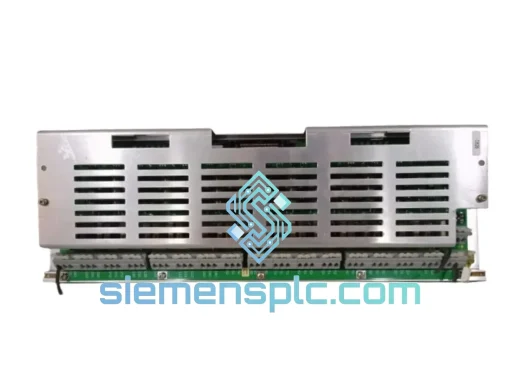
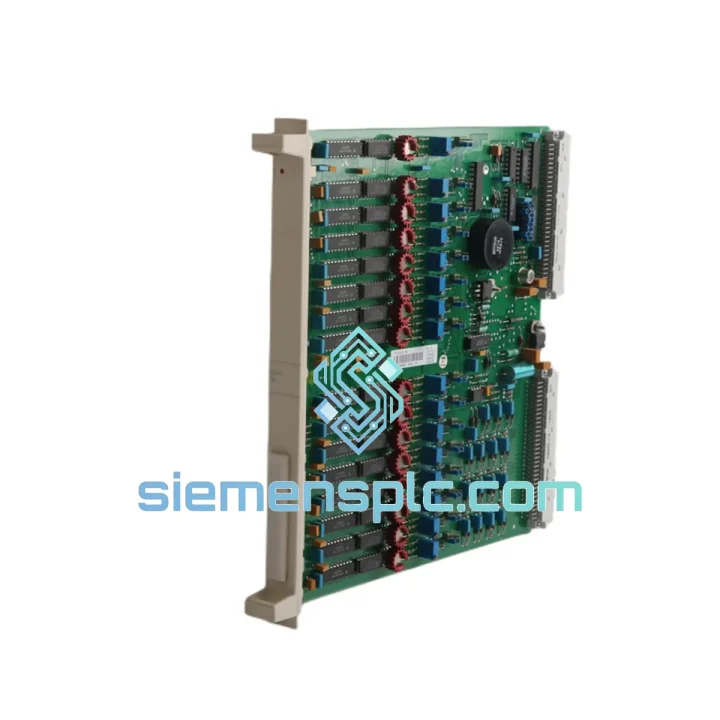
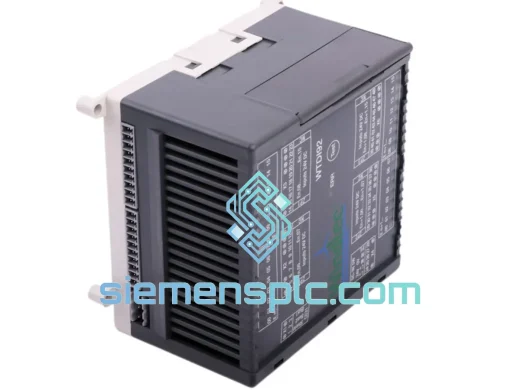
ABB DSAO130 57210001-FG Analog Output Module
Request verified availability, condition, replacement risk review, packing options and courier lead time for 57210001-FG.
BrandABB
Part Number57210001-FG
ConditionAvailability Check
Lead TimeRFQ Confirmation
DocumentsDatasheet / photos by RFQ
ShippingExport packing available
Auto-filled RFQ
57210001-FG
Click Request Quote and the part number is inserted into the inquiry form automatically.
- Reply by email: [email protected]
- WhatsApp / Tel: +86 18359268345
- Mon-Sat 9:00-18:00 GMT+8
Procurement Data
Key Product Information
Core fields for model confirmation and RFQ routing. Detailed product narrative remains below.
- Brand
- ABB
- Primary Part Number
- 57210001-FG
- Product Type
- DCS Analog Output Module
- Series / Family
- ADVANT
- Manufacturer
- ABB
- Country of Origin
- SE
- Catalog Category
- I/O Modules
Model confirmed for inquiry
57210001-FG
Send quantity, destination and urgency. The RFQ form keeps this part number attached.
Request Quote
Product Overview
ABB DSAO130 57210001-FG: Stop the Bleed — Get Your Analog Outputs Back Online Before the Next Shift
A dead analog output board in an ADVANT rack is not a maintenance ticket. It is a production crisis. The moment your AC110 or AC160 controller loses communication with the DSAO130, sixteen control loops go blind. Valve positioners freeze. VFD speed references drop to zero. Operators switch to manual and start burning through their margin of error. Every hour that board stays out of the rack is money leaving the plant.
We stock the ABB DSAO130 (P/N 57210001-FG) in Xiamen, physically on the shelf, inspected and ready for same-day dispatch. Not a lead-time quote. Not a “we can source it” response. In stock. Ships today.
⚡ URGENT REQUIREMENT? Contact: [email protected] | WhatsApp: +86 18359268345
Quick Technical Datasheet
| Manufacturer | ABB |
| Part Number | DSAO130 |
| Order Code | 57210001-FG |
| Series | ADVANT / Master DCS |
| Module Type | 16-Channel Analog Output Board |
| Output Modes | 4–20 mA current loop / 0–10 V voltage — jumper-selected per channel |
| Resolution | 12-bit D/A (4,096 steps per channel) |
| Channel Isolation | Galvanic, channel-to-backplane |
| Compatible Controllers | AC70, AC80, AC110, AC160 |
| Backplane Power | Supplied via ADVANT rack — no external PSU |
| Operating Temp | 0 °C to +55 °C |
| Storage Temp | −40 °C to +70 °C |
| Vibration | IEC 60068-2-6 tested |
| PCB Coating | Conformal — moisture and particulate resistant |
| Weight | 440 g |
| Country of Origin | China |
| Stock Status | ✔ Ready to Ship — Same-Day Dispatch Before 15:00 CST |
Troubleshooting & Replacement Tips
Ten years of field calls on ADVANT systems teaches you that the DSAO130 fails in predictable ways. Knowing the pattern before you pull the card cuts your diagnostic time from two hours to fifteen minutes.
Pattern A — One channel locked at 0 mA or 20 mA, rest normal: The D/A converter for that channel has failed hard. The remaining fifteen channels are unaffected. If the locked channel drives a non-critical loop, you can temporarily reassign the signal to a spare channel in the engineering tool. If it controls a feed valve or a critical ratio — swap the board now. Do not wait for a planned window.
Pattern B — All 16 channels simultaneously collapse to 0 mA: This is a power rail failure, not a channel failure. Measure the 24 V backplane bus voltage at the rack terminal block before condemning the board. If bus voltage is within spec (23.5–25.5 V), the board’s internal regulator has failed. There is no field repair for this — the board must be replaced.
Pattern C — Slow output drift, 0.3–0.8 mA creep across multiple channels: Electrolytic capacitor degradation on the voltage reference circuit. This failure is age-driven and temperature-accelerated. Boards that have run 8–12 years in enclosures above 40 °C ambient are the primary candidates. The drift is gradual enough to be misattributed to field instrument calibration error for weeks. If your calibration records show a consistent upward correction trend on AO channels, suspect the board — not the instruments.
Pattern D — Controller logs “AO Module Fault” or “Slot Communication Error”: Before ordering a replacement, re-seat the board. ADVANT backplane connectors develop contact resistance over years of thermal cycling. Extract fully using both ejector levers, inspect the gold-plated edge connector for oxidation, clean with IPA and a lint-free swab, re-insert with firm even pressure. If the fault clears and returns within 48 hours, the board’s communication interface has failed — replace it.
Step-by-Step Replacement Procedure:
- Coordinate with the control room. All 16 AO channels will transition to their configured fail-safe state during the swap. Confirm manual overrides are staged for any loop that cannot tolerate a bump to fail-safe output.
- In the ADVANT engineering tool, force all active AO channels to their current live process values before extraction. This minimizes the output bump when the replacement board initializes.
- Extract the faulty board using both ejector levers simultaneously and with equal force. Uneven extraction bends backplane connector pins — use both levers, pull straight out.
- Before inserting the replacement, verify jumper positions JP1–JP16 against your loop schedule. Each jumper selects mA or V output mode for its corresponding channel. A single mismatched jumper is the leading cause of “replaced the board, same fault” callbacks. Take 90 seconds. Check every jumper.
- Insert the replacement with firm, even pressure until the backplane connector fully seats. Confirm the board’s status LEDs illuminate green within 5 seconds of insertion.
- Release forced outputs in the engineering tool. Verify each channel’s live readback against the expected process value. Walk the loop physically on any critical channel — do not rely solely on the HMI readback.
- Log the replacement: board serial number, rack slot address, date, technician ID. ADVANT systems on legacy firmware do not auto-log hardware changes. If you do not log it, it did not happen.
Configuration note: The DSAO130 carries no embedded firmware. No firmware version matching, no software download, no license key. Slot addressing is automatic via the ADVANT backplane — no DIP switch or rotary address setting is required on this board revision. For redundant AO configurations, execute the ADVANT redundancy switchover sequence before extraction to prevent output bumps on the redundant channel pair.
Reliability in Harsh Conditions
The DSAO130 was not designed for a climate-controlled server room. It was designed for the floor of a refinery, a pulp mill, a power station — environments where temperature, humidity, and vibration are variables, not constants.
The conformal PCB coating provides a physical barrier against moisture condensation, airborne particulates, and mild chemical vapor — the conditions found near cooling towers, chemical dosing stations, and steam headers. It is not a hermetic seal, but it meaningfully extends board life in environments that would corrode an uncoated PCB within months of installation.
Galvanic isolation between each output channel and the backplane bus is the board’s most critical protection feature from a system-integrity standpoint. A ground fault on a field cable — caused by insulation damage, a flooded junction box, or a cable nicked during maintenance — generates a fault current that is contained at the channel boundary. It does not propagate into the backplane bus. It does not cascade into adjacent I/O boards or the controller. In a non-isolated design, a single field wiring fault can take down an entire DCS node. The DSAO130’s isolation architecture prevents that scenario.
IEC 60068-2-6 vibration compliance means the board has been tested against sinusoidal vibration profiles representative of compressor skids, pump stations, and turbine halls — not just a shipping drop test. Through-hole and surface-mount components are selected and soldered to withstand sustained mechanical stress over years of continuous operation.
The +55 °C operating ceiling covers the majority of industrial panel installations. For enclosures in high-ambient locations — tropical climates, furnace proximity, outdoor installations in summer — ensure the rack enclosure maintains forced-air cooling. Component life degrades measurably above 45 °C sustained ambient; plan your thermal management accordingly.
Every unit dispatched from our Xiamen facility passes a pre-shipment physical inspection. Boards showing thermal stress (discolored PCB, bulged capacitors), corrosion on the backplane connector, or mechanical damage to the faceplate or ejector levers are rejected and not offered for sale. What you receive is a board in serviceable condition, ready to go directly from the carton into the rack.
Global Express Logistics
Xiamen is one of China’s primary export hubs, with direct daily freight connections to DHL Express, FedEx International Priority, and UPS Worldwide Express. When your plant is down and you need a board on the next available flight, proximity to the airport matters.
Orders confirmed and paid before 15:00 CST ship the same business day. Orders received after 15:00 CST ship the following morning. There is no minimum order quantity — a single board ships with the same dispatch priority as a pallet order.
Typical transit times from Xiamen: Europe (Germany, Netherlands, UK, France) 2–3 business days via DHL Express. Middle East (UAE, Saudi Arabia, Kuwait) 2–3 business days. Southeast Asia (Singapore, Thailand, Malaysia, Indonesia) 1–2 business days. North America (USA, Canada) 3–5 business days. Australia and New Zealand 3–4 business days.
Export documentation — commercial invoice, packing list, and certificate of origin — is prepared the same day as dispatch. We do not mark shipments as “gift” or undervalue for customs. All documentation reflects the actual transaction value. HS code 8537.10 applies to most shipments of this board type; confirm the applicable import code with your broker for your jurisdiction.
Tracking: an airway bill number is provided within 2 hours of dispatch, with a direct carrier tracking link. You will know exactly where your board is at every point in transit — no chasing, no “please allow 24 hours for tracking to update.”
Packaging: anti-static bag, foam-lined rigid carton, fragile and electronic handling labels on all exterior surfaces. The board arrives in condition to go directly from the carton into the rack — not loose in bubble wrap inside a soft mailer.
If your facility is experiencing an active production outage, state that clearly when you contact us. We will confirm dispatch timing before you commit to payment and move your order to the front of the pick queue.
Contact Information
Email: [email protected]
WhatsApp: +86 18359268345
Web: siemensplc.com
© 2026. All rights reserved.
Ready to quote
[email protected]
Send This Part Number to Sales
RFQ workflow
Quality workflow ->
Confirmation Process
01Model confirmation
We check the full part number, brand, series and visible nameplate information before quotation.
02Availability reply
Sales confirms stock path, condition option, quantity and realistic lead time for export dispatch.
03Packing & courier
DHL, FedEx, UPS or buyer courier arrangements can be reviewed with packing requirements.
Continue sourcing
Browse full catalog ->
Related Automation Parts
Similar brand or category products for fast comparison and multi-item RFQ lists.
ABB
RFQ Ready
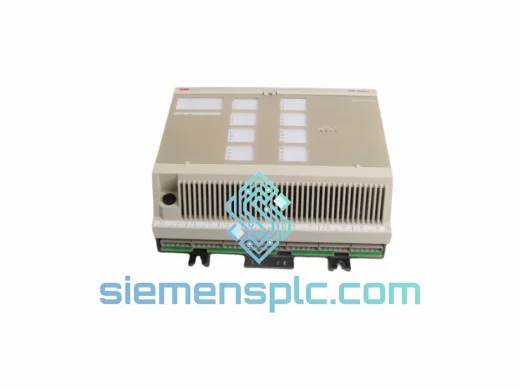
ABB DSAX452 Analog I/O Module – Advant Controller 450 Series
Advant
Origin SE
Analog I/O Module
ABB
RFQ Ready
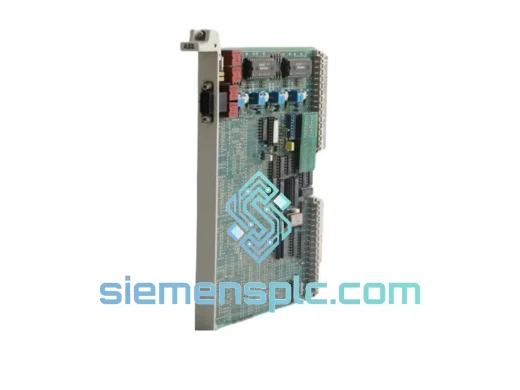
ABB GJR5143200R0001 35EK91 Analog Output Module – AC31 Advant Series
Advant
Origin SE
Analog Output Module
ABB
RFQ Ready
ABB 07DI92 GJR5252400R4101 Digital Input Module
Advant
Origin SE
PLC Digital Input Module