ABB
In Stock OK
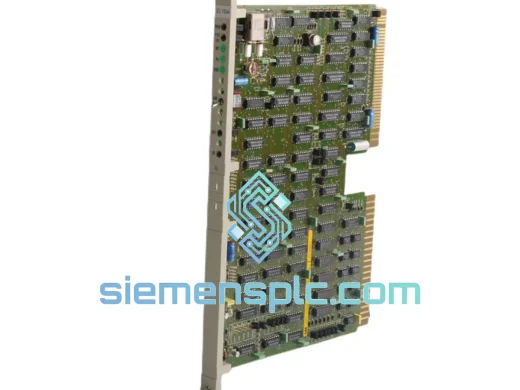
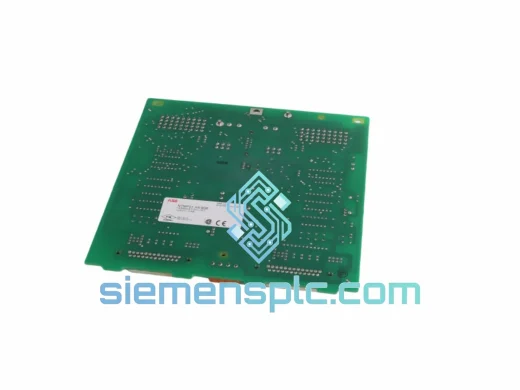
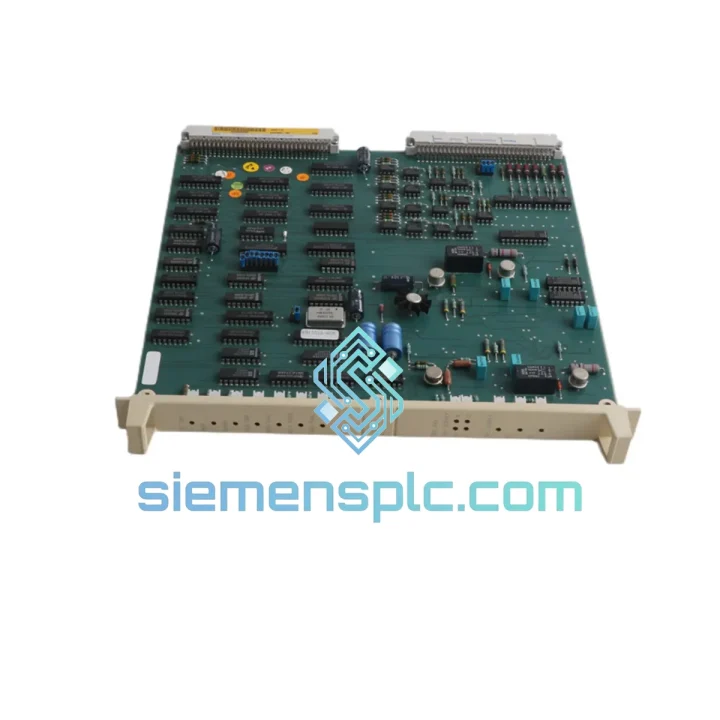
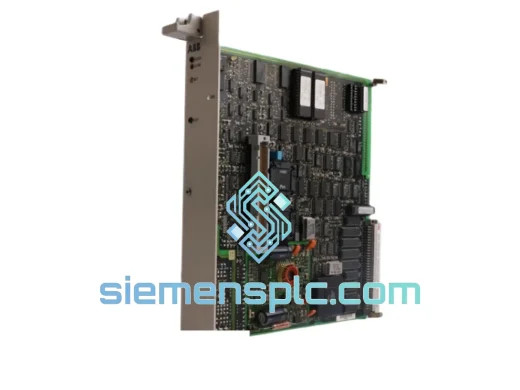
ABB DSBC172 57310001-KD Bus Repeater Module – ADVANT OCS
Request verified availability, condition, replacement risk review, packing options and courier lead time for 57310001-KD.
BrandABB
Part Number57310001-KD
ConditionAvailability Check
Lead TimeRFQ Confirmation
DocumentsDatasheet / photos by RFQ
ShippingExport packing available
Auto-filled RFQ
57310001-KD
Click Request Quote and the part number is inserted into the inquiry form automatically.
- Reply by email: [email protected]
- WhatsApp / Tel: +86 18359268345
- Mon-Sat 9:00-18:00 GMT+8
Procurement Data
Key Product Information
Core fields for model confirmation and RFQ routing. Detailed product narrative remains below.
- Brand
- ABB
- Primary Part Number
- 57310001-KD
- Product Type
- Bus Repeater Module
- Series / Family
- ADVANT
- Manufacturer
- ABB (Asea Brown Boveri)
- Country of Origin
- SE
- Model Function
- Bus signal regeneration, re-timing, and segment extension
- Catalog Category
- DCS & Safety Modules
- Operating Temp.
- 0°C to +55°C (contact us for extended-range variants)
- Warranty
- 12 months from shipment date
Model confirmed for inquiry
57310001-KD
Send quantity, destination and urgency. The RFQ form keeps this part number attached.
Request Quote
Product Overview
ABB DSBC172 57310001-KD Bus Repeater Module – Signal Integrity Architecture in ADVANT OCS Distributed Control Networks
In a distributed control system, the communication bus is the nervous system of the entire process loop. Every scan cycle, every setpoint write, every alarm acknowledgment depends on the physical integrity of that bus. When signal amplitude degrades across extended cable runs — whether from capacitive loading, impedance mismatch, or accumulated EMI — the consequences are not gradual: nodes drop off-scan, I/O modules stop responding, and the controller loses deterministic visibility of the field. The ABB DSBC172 57310001-KD Bus Repeater Module is the hardware answer to this failure mode. It regenerates the RCOM bus signal at the electrical level, restoring full voltage swing and timing margins before the signal enters the next segment, ensuring that every node downstream receives a clean, correctly-timed data frame regardless of the physical distance or topology complexity upstream.
Within the ABB ADVANT OCS (Open Control System) architecture, the DSBC172 is not a peripheral — it is a structural component of the backplane communication network. Control engineers specify it wherever bus segment lengths approach the RCOM cable distance limit, wherever multi-drop topologies introduce stub reflections, or wherever industrial environments impose electromagnetic interference levels that erode noise margins on passive bus runs. Its role is analogous to a signal repeater in a fiber-optic trunk: invisible during normal operation, but the single point of failure that brings down an entire segment when absent or degraded. For plants running ADVANT OCS installations built in the 1990s and 2000s, the DSBC172 remains one of the most consistently demanded spare parts in the global DCS aftermarket — precisely because its failure mode is catastrophic rather than graceful.
📩 Real-time Stock & RFQ: [email protected] | WhatsApp: +86 18359268345
Technical Parameters
| Manufacturer | ABB (Asea Brown Boveri) |
| Part Number | DSBC172 |
| Order Code | 57310001-KD |
| Module Classification | Bus Repeater Module |
| Compatible Platform | ABB ADVANT OCS (Open Control System) |
| Bus Protocol | RCOM (Remote Communication Bus) |
| Function | Bus signal regeneration, re-timing, and segment extension |
| Mounting | ADVANT OCS rack-mount, direct backplane insertion |
| Operating Temperature | 0°C to +55°C (contact us for extended-range variants) |
| Storage Temperature | -40°C to +70°C |
| Relative Humidity | 5% to 95% non-condensing |
| Power Supply | Supplied via ADVANT OCS backplane (no external PSU required) |
| Weight | 360 g |
| EMC Compliance | Designed to ABB industrial EMC standards for DCS environments |
| Condition Available | New / Tested-Refurbished / New-Old-Stock — specify on inquiry |
| Warranty | 12 months from shipment date |
| Origin | Germany (ABB manufacturing) |
Hardware Logical Analysis
The DSBC172 operates at the physical layer of the RCOM bus, performing three distinct hardware functions that passive bus couplers cannot replicate.
Signal Regeneration Architecture: The module samples the incoming RCOM differential signal, reconstructs the data frame using an internal clock recovery circuit, and retransmits a fully conditioned output with restored amplitude and edge timing. This is not passive signal boosting — it is active re-clocking. The practical consequence is that jitter accumulated across the upstream segment does not propagate downstream. Each segment behind a DSBC172 starts with a clean timing reference, independent of the electrical history of the cable run before it.
EMC and Noise Immunity Design: The DSBC172 incorporates differential signal processing throughout its receive path. Common-mode noise — the dominant interference mechanism in industrial environments with variable-frequency drives, contactors, and high-current switching loads nearby — is rejected at the input stage before the signal reaches the clock recovery circuit. The module’s PCB layout follows ABB’s shielding and ground-plane practices for DCS hardware, with the backplane connector providing a low-impedance ground reference that ties the module’s signal ground directly to the rack chassis. This architecture maintains noise immunity margins even in environments where conducted and radiated EMI levels exceed standard industrial thresholds.
Segment Isolation Logic: Each DSBC172 creates a hard electrical boundary between the bus segment it terminates and the segment it drives. A fault condition on the downstream segment — whether a short circuit, a failed node pulling the bus low, or a cable break — does not back-propagate through the repeater to corrupt the upstream segment. This isolation behavior is not a software feature; it is implemented in the hardware output driver topology, which includes current-limiting and fault-detection circuitry that disables the output stage under overload conditions while maintaining the upstream segment in normal operation.
Backplane Interface Timing: The DSBC172 interfaces with the ADVANT OCS backplane through a defined slot assignment that the rack controller recognizes during its initialization scan. The module presents itself as a transparent bus extension to the processor — no configuration parameters, no address assignment, no firmware download. The processor’s bus master logic sees a single logical bus regardless of how many DSBC172 repeaters are inserted in the physical topology, which simplifies system commissioning and eliminates the configuration errors that plague more complex bus extension approaches.
System Integration Benefits
- Extended Physical Bus Reach: Enables ADVANT OCS installations to span cable distances beyond the base RCOM specification, supporting large-footprint plants where control rooms and field I/O racks are separated by hundreds of meters.
- Deterministic Scan Cycle Preservation: By eliminating signal degradation as a source of communication retries, the DSBC172 ensures that the processor’s scan cycle executes within its configured period without bus-error-induced delays — a prerequisite for closed-loop control of fast processes.
- Fault Containment and Segment Isolation: Electrical faults on one bus segment do not propagate to adjacent segments, limiting the blast radius of a cable fault or failed node to a single segment rather than the entire network.
- Zero-Configuration Deployment: No DIP switches, no address configuration, no firmware parameters. The module is inserted into the designated rack slot and the bus topology is immediately extended — commissioning time is measured in minutes, not hours.
- Diagnostic Transparency: The ADVANT OCS processor’s bus diagnostics continue to report node status across the repeater boundary without modification. Engineers monitoring the system from the operator station see a single logical bus with full node visibility, regardless of the number of physical segments.
- Multi-Drop Topology Support: In installations where multiple I/O racks branch from a common bus trunk, the DSBC172 provides the signal conditioning necessary to maintain adequate noise margins at each branch point, preventing the stub reflections that degrade signal quality in passive multi-drop configurations.
- Compatibility with Legacy ADVANT OCS Revisions: The DSBC172 is backward-compatible with multiple generations of ADVANT OCS rack hardware, making it a viable spare for installations spanning different build years without requiring rack-level hardware upgrades.
- Reduced Unplanned Downtime Risk: Stocking a DSBC172 as a critical spare eliminates the lead-time risk associated with sourcing an obsolete module during a plant-down event. A failed bus repeater with no spare on hand can idle an entire production line for days while a replacement is located and shipped.
- Support for Redundant Bus Architectures: In ADVANT OCS configurations with redundant bus paths, the DSBC172 can be deployed on both primary and secondary bus segments, maintaining the redundancy architecture across extended physical distances.
- Long-Term Plant Asset Protection: As ABB has discontinued the ADVANT OCS product line, maintaining functional bus repeater modules in the installed base extends the operational life of the control system without requiring a full DCS migration — deferring capital expenditure while preserving process continuity.
Quality Assurance & Global Logistics
Every DSBC172 57310001-KD unit supplied by siemensplc.com undergoes a structured verification process before shipment. Physical inspection covers connector integrity, PCB condition, component seating, and label authenticity against known-good reference units. Functional verification is performed using ADVANT OCS-compatible test equipment to confirm bus signal regeneration performance at both input sensitivity limits and output drive levels. Units that do not meet ABB’s original performance specifications are rejected — not downgraded or sold as-is.
Sourcing is conducted exclusively through documented channels: OEM authorized surplus, verified industrial decommissions with traceable asset histories, and new-old-stock from original ABB distribution. Each unit ships with a test record and sourcing documentation available on request. Anti-static packaging with moisture barrier protection is standard for all international shipments.
Logistics operations are based in Xiamen, China — a major export hub with direct access to DHL Express, FedEx International Priority, and UPS Worldwide Express services. Standard international transit times to Europe and North America are 3–5 business days from confirmed order. Expedited same-day dispatch is available for orders confirmed before 14:00 CST. Full export documentation — commercial invoice, packing list, certificate of origin, and HS code declaration — is provided with every shipment to support customs clearance in all major import jurisdictions. All units carry a 12-month warranty against manufacturing defects and functional failure from the date of shipment.
Contact Information
📧 Email: [email protected]
💬 WhatsApp: +86 18359268345
🌐 Web: siemensplc.com
📍 Location: Xiamen, China
© 2026 siemensplc.com. All rights reserved.
Ready to quote
[email protected]
Send This Part Number to Sales
RFQ workflow
Quality workflow ->
Confirmation Process
01Model confirmation
We check the full part number, brand, series and visible nameplate information before quotation.
02Availability reply
Sales confirms stock path, condition option, quantity and realistic lead time for export dispatch.
03Packing & courier
DHL, FedEx, UPS or buyer courier arrangements can be reviewed with packing requirements.
Continue sourcing
Browse full catalog ->
Related Automation Parts
Similar brand or category products for fast comparison and multi-item RFQ lists.
ABB
RFQ Ready
ABB HESG448230R1/G 216EA61b DCS Processor Module
Advant
Origin SE
PLC / DCS Processor Module