ABB
In Stock OK
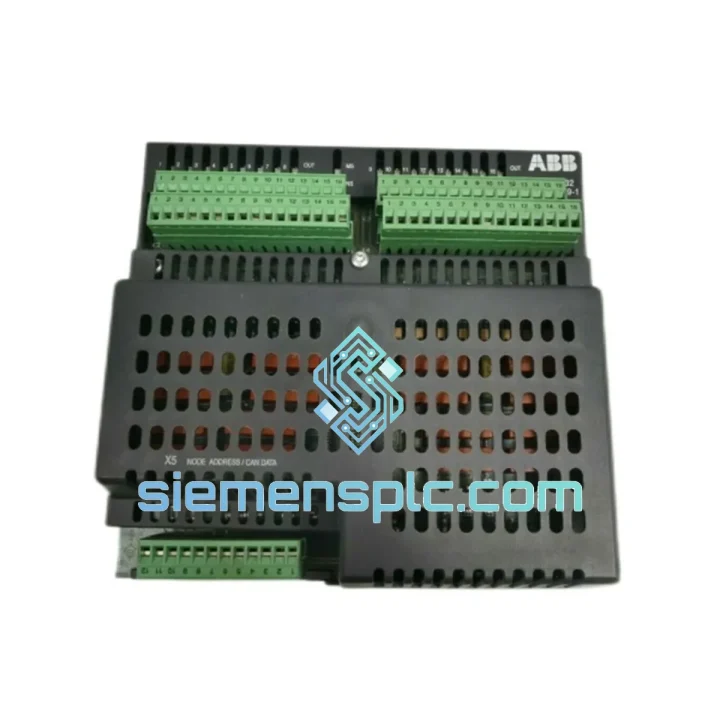
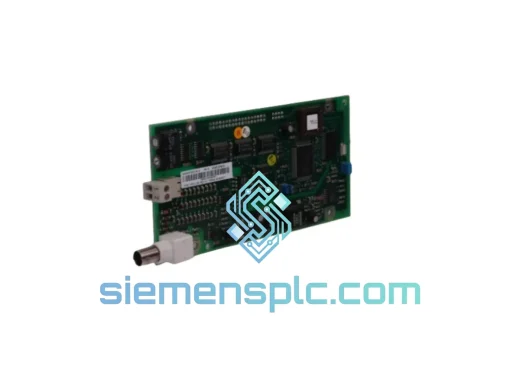
ABB DSQC332 Digital Relay I/O Module
Request verified availability, condition, replacement risk review, packing options and courier lead time for DSQC332.
BrandABB
Part NumberDSQC332
ConditionAvailability Check
Lead TimeRFQ Confirmation
DocumentsDatasheet / photos by RFQ
ShippingExport packing available
Auto-filled RFQ
DSQC332
Click Request Quote and the part number is inserted into the inquiry form automatically.
- Reply by email: [email protected]
- WhatsApp / Tel: +86 18359268345
- Mon-Sat 9:00-18:00 GMT+8
Procurement Data
Key Product Information
Core fields for model confirmation and RFQ routing. Detailed product narrative remains below.
- Brand
- ABB
- Primary Part Number
- DSQC332
- Product Type
- Robot Controller I/O Module
- Series / Family
- IRC5
- Manufacturer
- ABB Robotics
- Country of Origin
- SE
- Catalog Category
- I/O Modules
- Operating Temp.
- 0°C to +55°C
- Warranty
- 12 months from shipment date
Model confirmed for inquiry
DSQC332
Send quantity, destination and urgency. The RFQ form keeps this part number attached.
Request Quote
Product Overview
ABB DSQC332 — Stop the Clock on Your IRC5 Downtime
Every minute an IRC5 robot cell sits idle, the cost accumulates: missed production targets, idle labor, delayed shipments, and contractual penalties. The ABB DSQC332 Digital Relay I/O Module is the component that sits between your controller logic and your field devices — and when it fails, nothing moves. This page exists for one reason: to get a verified, tested DSQC332 into your hands before the next shift starts.
The DSQC332 handles digital relay output switching within the IRC5 controller cabinet. Its relay architecture provides galvanic isolation between the controller’s 24 VDC logic side and the field-side loads — motor contactors, solenoid valves, safety relays, and signal lamps. When relay contacts weld, coils open-circuit, or the module loses communication with the IRC5 main computer, the robot halts and fault codes appear on the FlexPendant. Identifying the DSQC332 as the failed component is step one. Getting a replacement on-site is step two. We handle step two.
URGENT REQUIREMENT? Contact: [email protected] | WhatsApp: +86 18359268345
Quick Technical Datasheet
| Parameter | Specification |
|---|---|
| Part Number | DSQC332 |
| Manufacturer | ABB Robotics |
| Module Function | Digital Relay Output I/O Module |
| Compatible Platform | ABB IRC5 Robot Controller |
| Output Type | Relay contact (galvanically isolated) |
| Logic Supply Voltage | 24 VDC (via IRC5 backplane) |
| Field-Side Voltage Range | Up to 250 VAC / 30 VDC (relay contact rating) |
| Communication Interface | IRC5 internal DeviceNet / backplane bus |
| Operating Temperature | 0°C to +55°C |
| Storage Temperature | -25°C to +70°C |
| Protection Class | IP20 (cabinet-mounted) |
| Certifications | CE, UL (production batch dependent) |
| Warranty | 12 months from shipment date |
| Stock Status | ✅ Ready to Ship — Xiamen, China |
Troubleshooting & Replacement Tips
Common Fault Codes Pointing to DSQC332 Failure:
- 20252 / 20253 — I/O Unit Unreachable: The IRC5 main computer (DSQC562 or DSQC639) has lost communication with the DSQC332 over the internal bus. First check the DeviceNet node address set on the module’s rotary switch — a mis-set address after a previous swap is a frequent cause. Confirm the address matches the RobotWare I/O configuration under Control Panel → I/O → Units.
- 20256 — I/O Unit Not Responding: Module is powered but not responding to polling. Check the 24 VDC supply rail on the X1 connector. Measure voltage at the module terminal; if supply is present but the module is unresponsive, the internal relay driver IC has likely failed.
- Relay Contact Welding: Occurs when inductive loads (contactors, solenoids) are switched without adequate arc suppression. Inspect field wiring for missing RC snubbers or varistors across load coils. Replace the DSQC332 and add suppression before re-energizing.
- Intermittent Output Dropout: Often caused by connector oxidation on the X2/X3 field-side terminal blocks. Clean contacts with isopropyl alcohol before condemning the module — this saves unnecessary replacement in humid environments.
Step-by-Step Replacement Procedure:
- Safe State First: Execute a controlled stop (STOP mode, not E-stop) and switch the IRC5 main switch to OFF. Lock out / tag out per your site LOTO procedure. Wait 60 seconds for capacitors to discharge.
- Document the Node Address: Before removing the failed DSQC332, photograph or record the rotary address switch setting (typically labeled SW1 on the module face). The replacement must be set to the identical address — mismatch causes immediate fault 20252 on restart.
- Label All Field Wiring: The X2 and X3 terminal blocks carry field-side relay wiring. Label each wire before disconnecting. The DSQC332 does not have a keyed connector — incorrect rewiring will cause output mis-mapping and potential safety hazards.
- Seat the Module Firmly: The DSQC332 slides into the IRC5 I/O carrier rail. Confirm the backplane connector is fully engaged — a partially seated module will power up but fail bus communication, generating misleading fault codes.
- Set Node Address on Replacement: Rotate SW1 to match the documented address. Double-check before powering on.
- Power On and Verify: Switch the IRC5 main switch to ON. Navigate to Control Panel → I/O → Units and confirm the DSQC332 unit status shows Connected. Manually activate each relay output from the I/O debug panel and verify field-side continuity with a multimeter.
- Run a Dry Cycle: Execute the robot program in manual reduced speed (MRS) mode for at least one full cycle before returning to automatic production. Monitor the event log for any recurrence of I/O faults.
Firmware Note: The DSQC332 does not carry user-upgradeable firmware. RobotWare recognizes it by hardware ID at boot. No firmware flashing is required after replacement — the module is plug-and-configure, not plug-and-flash.
Reliability in Harsh Conditions
IRC5 controllers are deployed in environments that would destroy consumer-grade electronics within weeks. The DSQC332 is engineered to operate continuously under conditions that define industrial reality:
- Vibration Resistance: The module’s PCB uses through-hole relay components with wave-soldered joints — not surface-mount — specifically because through-hole construction withstands the continuous low-frequency vibration transmitted through robot cell floors and press shop structures. Relay coil assemblies are potted or mechanically secured to prevent resonance-induced failure.
- Thermal Cycling Tolerance: IRC5 cabinets in automotive paint shops and foundry environments experience daily temperature swings from cold startup to sustained 45–55°C operating temperatures. The DSQC332’s relay contacts and PCB substrate are rated for this thermal cycling without delamination or contact drift.
- EMC Hardening: Relay output modules are inherently susceptible to conducted interference from inductive switching transients. ABB’s design incorporates transient voltage suppression (TVS) diodes on the logic supply rail and common-mode chokes on the bus interface to maintain signal integrity in high-EMI environments such as arc welding cells and servo drive enclosures.
- Humidity and Condensation: The module’s conformal coating on the PCB provides protection against condensation events — common in facilities where cabinet doors are opened during cold weather. This coating prevents dendritic growth between PCB traces that would otherwise cause leakage currents and spurious relay actuation.
- Connector Retention: Terminal block connectors on the DSQC332 use screw-clamp termination with vibration-resistant locking — not spring-cage — ensuring wire retention under sustained mechanical vibration without periodic re-torquing.
Global Express Logistics
Our dispatch operation is based in Xiamen, China — a major international freight hub with direct DHL and FedEx gateway access. When you confirm an order, the following process begins immediately:
- Same-Day Dispatch: Orders confirmed before 14:00 CST are packed and handed to the carrier the same business day. Orders confirmed after 14:00 CST ship the following morning.
- Carrier Options: DHL Express (1–3 business days to Europe, North America, Southeast Asia), FedEx International Priority (equivalent transit times), and EMS for destinations where express carriers have coverage gaps.
- Export Documentation: Commercial invoice, packing list, and country-of-origin certificate are prepared for every shipment. For EU imports, we can provide EUR.1 movement certificates where applicable. HS code 8537.10 is used for I/O modules to ensure correct customs classification and minimize clearance delays.
- Real-Time Tracking: Tracking numbers are sent via email within 2 hours of carrier pickup. For urgent shipments, we provide direct WhatsApp updates at each transit milestone.
- Packaging Standard: Each DSQC332 is wrapped in anti-static poly bag, placed in foam-lined rigid carton, and double-boxed for international transit. Drop-test rated to 1.2 m per ISTA 2A protocol.
- Customs Clearance Support: For shipments to the EU, US, and Australia, we provide pre-shipment HS code confirmation and can prepare additional documentation (ECCN classification, RoHS declaration) on request to prevent customs holds.
Contact Information
Email: [email protected]
WhatsApp: +86 18359268345
Web: siemensplc.com
Location: Xiamen, China
© 2026 siemensplc.com. All rights reserved.
Ready to quote
[email protected]
Send This Part Number to Sales
RFQ workflow
Quality workflow ->
Confirmation Process
01Model confirmation
We check the full part number, brand, series and visible nameplate information before quotation.
02Availability reply
Sales confirms stock path, condition option, quantity and realistic lead time for export dispatch.
03Packing & courier
DHL, FedEx, UPS or buyer courier arrangements can be reviewed with packing requirements.
Continue sourcing
Browse full catalog ->
Related Automation Parts
Similar brand or category products for fast comparison and multi-item RFQ lists.
ABB
RFQ Ready
ABB DSQC327A 3HAC17971-1 / DSQC431 Digital I/O Module
IRC5
Origin SE
Digital I/O Module