ABB
RFQ Ready
ABB DSQC327A 3HAC17971-1 / DSQC431 Digital I/O Module
IRC5
Origin SE
Digital I/O Module
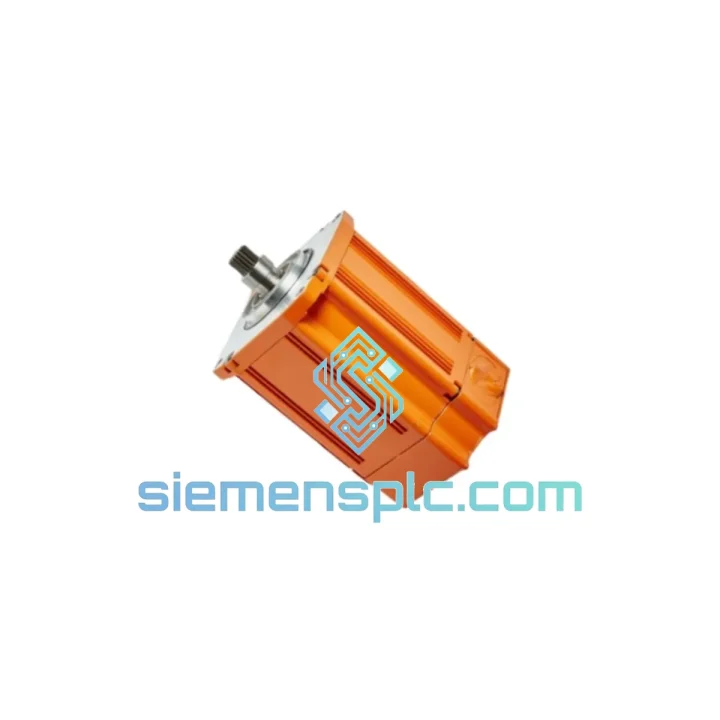
Request verified availability, condition, replacement risk review, packing options and courier lead time for IODSQC653 3HAC025918-001.
Click Request Quote and the part number is inserted into the inquiry form automatically.
Core fields for model confirmation and RFQ routing. Detailed product narrative remains below.
The ABB IODSQC653, catalogued under part number 3HAC025918-001, is a dedicated digital input/output unit engineered for deployment within the ABB IRC5 and S4C+ robot controller platforms. Within a robot cell’s control loop, this module occupies the critical interface layer between the controller’s main computer (DSQC 639 or equivalent) and field-level actuators and sensors. Its primary function is deterministic signal conditioning: translating 24 V DC field signals into logic-level data streams that the IRC5’s motion control kernel can process within a single interpolation cycle, typically 4 ms on standard IRC5 hardware.
Unlike generic I/O expansion cards, the IODSQC653 is designed around ABB’s internal DeviceNet-based backplane protocol. Each I/O transaction is time-stamped at the module level, allowing the IRC5 main computer to reconstruct signal chronology with sub-millisecond resolution. This architecture eliminates the jitter accumulation that occurs in polled I/O systems, making the IODSQC653 suitable for high-cycle applications such as spot welding gun control, servo gripper feedback, and safety interlock chains where signal latency directly affects process repeatability.
The module provides 16 digital inputs and 16 digital outputs in a single compact housing. Input channels are rated for 24 V DC nominal with a threshold window of 11–30 V DC for logic HIGH, ensuring reliable detection even under supply voltage fluctuations common in large panel installations. Output channels are transistor-sourced (PNP), rated at 500 mA per channel with collective current limiting to protect the backplane power rail. Each output channel incorporates an individual short-circuit protection circuit with automatic reset, removing the need for external fuse arrays on the field wiring side.
The IODSQC653 mounts directly onto the IRC5 controller’s internal DIN rail and connects to the system via a dedicated 10-pin DeviceNet connector. Node addressing is configured via a rotary switch on the module face, supporting up to 63 addressable nodes on a single DeviceNet segment. This allows multi-module expansion without software reconfiguration of the main computer — a significant advantage during maintenance replacement scenarios where minimizing controller downtime is a priority.
From a signal integrity standpoint, the module’s input circuitry employs optical isolation with a minimum isolation voltage of 500 V DC between field wiring and the internal logic bus. This galvanic barrier suppresses common-mode noise injected by variable-frequency drives, servo amplifiers, and inductive loads operating in the same cabinet or cable tray. The output stage uses a separate 24 V DC supply rail, further decoupling field-side transients from the controller’s logic supply.
Thermal management is passive: the module’s aluminum alloy housing acts as a heat spreader, rated for continuous operation across an ambient temperature range of 0 °C to +55 °C. Storage temperature tolerance extends to −25 °C / +70 °C, consistent with ABB’s standard for controller-mounted electronics. Mean Time Between Failures (MTBF) data published in ABB’s IRC5 hardware documentation places the IODSQC653 class of modules above 150,000 hours under rated conditions.
siemensplc.com maintains verified stock of the ABB IODSQC653 (3HAC025918-001) sourced through established industrial distribution channels. Each unit is inspected prior to dispatch and ships with a 12-month warranty against manufacturing defects.
Real-time Stock & RFQ: [email protected] | WhatsApp: +86 18359268345
| Manufacturer | ABB Robotics |
| Part Number | 3HAC025918-001 |
| Model / SKU | IODSQC653 |
| Compatible Platform | ABB IRC5 / S4C+ Robot Controller |
| I/O Configuration | 16 Digital Inputs / 16 Digital Outputs |
| Input Voltage (Nominal) | 24 V DC |
| Input Logic HIGH Threshold | 11 – 30 V DC |
| Output Type | Transistor PNP (sourcing) |
| Output Current (per channel) | 500 mA max |
| Short-Circuit Protection | Per-channel, auto-reset |
| Isolation Voltage | 500 V DC (field to logic bus) |
| Communication Interface | DeviceNet (internal backplane) |
| Node Addressing | Rotary switch, 0–63 |
| Operating Temperature | 0 °C to +55 °C |
| Storage Temperature | −25 °C to +70 °C |
| Mounting | DIN rail, internal IRC5 cabinet |
| Housing Material | Aluminum alloy |
| Weight | Approx. 900 g |
| MTBF | >150,000 hours (rated conditions) |
| Country of Origin | Sweden / ABB Global Manufacturing |
| Warranty | 12 months from date of shipment |
The IODSQC653’s internal architecture reflects ABB’s design philosophy of distributing intelligence to the I/O layer rather than centralizing all signal processing in the main computer. Three hardware design decisions are particularly significant for system engineers:
Optical Isolation Architecture: Each input channel uses a dedicated optocoupler rather than a shared isolation barrier. This per-channel isolation topology prevents a fault on one input — such as a wiring short to a high-voltage rail — from propagating crosstalk or ground shift to adjacent channels. The 500 V DC isolation rating exceeds the IEC 61131-2 requirement of 500 V AC for Class II I/O modules, providing margin for installations where cable routing passes near high-voltage servo drive output stages.
EMC Suppression on Output Stage: The PNP transistor outputs incorporate transient voltage suppression (TVS) diodes across each output terminal. When an inductive load (relay coil, solenoid valve) is de-energized, the resulting back-EMF spike is clamped at the TVS breakdown voltage before it can reach the transistor junction. This eliminates the need for external freewheeling diodes on most standard field devices and reduces the radiated emission profile of the output wiring harness — a measurable benefit in installations subject to EN 55011 Class A radiated emission limits.
Backplane Power Decoupling: The module’s internal DC/DC converter isolates the field-side 24 V supply from the DeviceNet backplane supply. A 100 µF bulk capacitor on the field supply input provides hold-up time of approximately 8 ms at full output load, bridging momentary supply dips caused by large inductive loads switching simultaneously. This prevents spurious output de-energization events that would otherwise trigger robot safety stops and require manual restart sequences.
Diagnostic Register Architecture: The IODSQC653 maintains a 32-bit status register accessible via DeviceNet explicit messaging. Bits 0–15 reflect real-time input states; bits 16–31 encode output status including short-circuit flags, supply undervoltage detection, and communication timeout indicators. The IRC5 main computer polls this register at the system scan rate, making fault data available to the RAPID program within one interpolation cycle of the fault event — enabling application-level fault handling without relying on the controller’s generic hardware fault interrupt.
Every ABB IODSQC653 (3HAC025918-001) dispatched by siemensplc.com is an original ABB-manufactured unit. ABB’s IRC5 hardware is produced under ISO 9001-certified manufacturing processes, and each module carries ABB’s own serial number and production traceability markings. siemensplc.com does not supply remanufactured, relabeled, or grey-market units.
Pre-shipment inspection covers visual examination of the housing, connector pins, PCB labeling, and anti-counterfeit markings. Units with any evidence of prior installation damage, pin deformation, or label tampering are quarantined and not offered for sale. A 12-month warranty against manufacturing defects is provided from the date of shipment, covering failure under rated operating conditions.
Logistics operations are based in Xiamen, China — a major export hub with direct access to international express carriers and sea freight consolidators. Standard export documentation (commercial invoice, packing list, certificate of origin) is prepared for every shipment. DHL Express and FedEx International Priority are the primary carriers for single-unit and small-batch orders, with typical transit times of 3–5 business days to Europe, 4–6 days to North America, and 2–4 days to Southeast Asia. Bulk orders can be routed via sea freight with full container load (FCL) or less-than-container load (LCL) options. Export classification and HS code documentation are available on request for customs clearance purposes.
Email: [email protected]
WhatsApp: +86 18359268345
Web: siemensplc.com
Location: Xiamen, China
© 2026 siemensplc.com. All rights reserved.
We check the full part number, brand, series and visible nameplate information before quotation.
Sales confirms stock path, condition option, quantity and realistic lead time for export dispatch.
DHL, FedEx, UPS or buyer courier arrangements can be reviewed with packing requirements.
Similar brand or category products for fast comparison and multi-item RFQ lists.