ABB
RFQ Ready
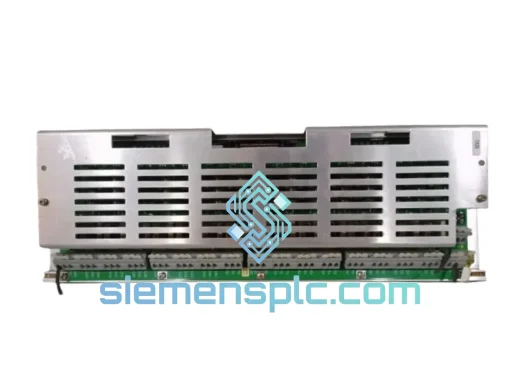
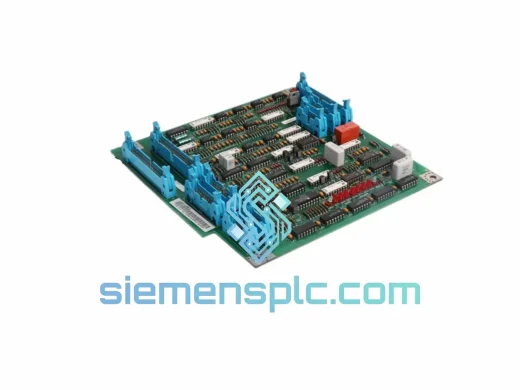
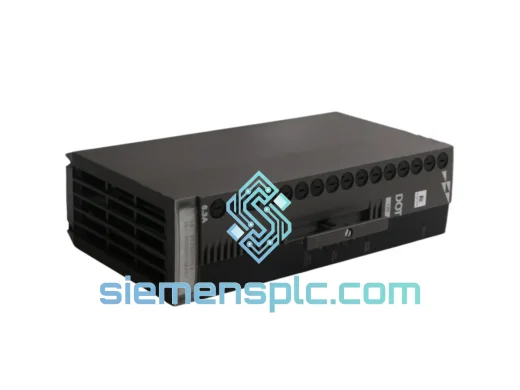
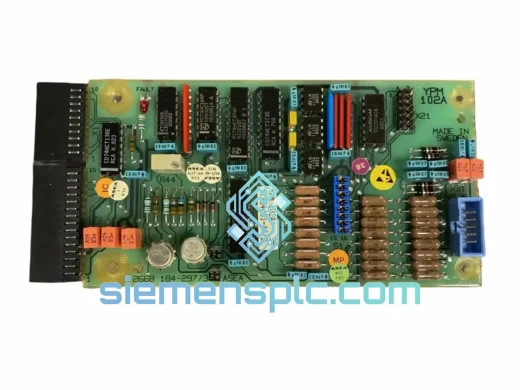
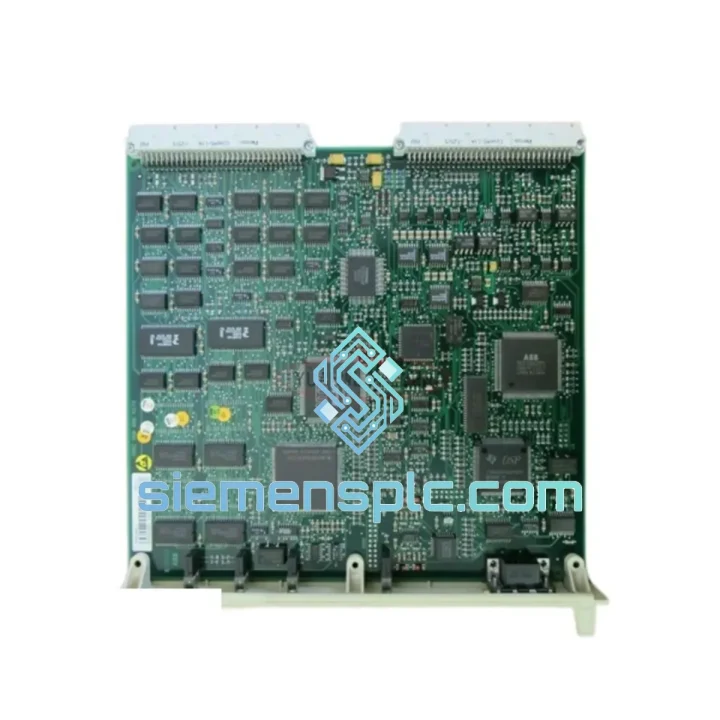
ABB YPM102A YT204001-AA Analog Output Module – AC 800M S800 I/O
S800
Origin SE
Analog Output Module
Request verified availability, condition, replacement risk review, packing options and courier lead time for S4/S4C.
Click Request Quote and the part number is inserted into the inquiry form automatically.
Core fields for model confirmation and RFQ routing. Detailed product narrative remains below.
Within ABB’s S4 and S4C robot controller architecture, the DSQC363 functions as the primary I/O interface and communication arbitration board. It sits between the main CPU module and the external field devices — managing discrete signal routing, handshaking with drive units, and coordinating interrupt-driven I/O cycles that underpin deterministic robot motion. Without a fully operational DSQC363, the controller cannot establish a coherent I/O map, and the robot arm will fault out at initialization. This is not a peripheral component; it is a structural element of the control loop.
The S4/S4C platform remains one of ABB’s most widely deployed controller generations, with active installations across automotive body shops, foundry press-tending cells, electronics assembly lines, and palletizing stations globally. The DSQC363 is a mandatory spare for any maintenance team responsible for uptime on this platform. Its failure mode is typically abrupt — a single damaged trace or failed optocoupler on the isolation barrier can render the entire controller inoperable.
Real-time Stock & RFQ: [email protected] | WhatsApp: +86 18359268345
| Parameter | Value |
|---|---|
| Part Number | DSQC363 |
| Manufacturer | ABB Robotics |
| Compatible Platform | ABB S4 / S4C Robot Controller |
| Board Function | I/O Interface & Communication Arbitration |
| Signal Isolation | Optocoupler-based galvanic isolation on digital I/O channels |
| Bus Interface | ABB proprietary backplane bus (S4/S4C internal rack) |
| Digital Inputs | Multiple channels, 24 VDC nominal, active-high logic |
| Digital Outputs | Relay and transistor output configurations depending on revision |
| Operating Temperature | 0°C to +55°C (controller cabinet ambient) |
| Storage Temperature | -25°C to +70°C |
| Humidity | 5% to 95% RH, non-condensing |
| Weight | Approx. 1,900 g (board with mounting hardware) |
| Condition Available | New OEM / Tested Refurbished |
| Warranty | 12 months from date of shipment |
| Origin | Germany (ABB Robotics manufacturing) |
The DSQC363 implements a layered signal conditioning architecture that addresses three distinct engineering challenges common to industrial robot controllers: electrical noise immunity, signal timing determinism, and fault containment.
Optocoupler Isolation Architecture: Each digital input channel passes through a dedicated optocoupler stage before reaching the board’s internal logic. This galvanic barrier prevents ground loop currents — common in welding cells where weld spatter and high-current return paths create significant common-mode noise — from corrupting the logic-level signals seen by the CPU. The isolation voltage rating of the optocoupler stage provides protection against transient overvoltages that would otherwise latch or destroy CMOS input stages.
Backplane Bus Arbitration: The DSQC363 interfaces with the S4/S4C internal backplane using a time-multiplexed bus protocol. The board’s onboard bus controller manages slot arbitration, ensuring that I/O read/write cycles do not collide with CPU memory fetch cycles. This design keeps I/O latency bounded — a prerequisite for the deterministic motion interpolation that ABB’s S4 controller performs at its standard 4 ms interpolation cycle.
EMC Design Measures: The PCB layout employs ground plane segmentation to isolate the high-frequency digital switching domain from the analog signal conditioning domain. Decoupling capacitors are placed at each IC power pin to suppress supply rail noise generated by bus transceiver switching. The board’s edge connector uses a defined pin assignment that separates power, ground, and signal lines to minimize crosstalk at the backplane interface.
Fault Containment Logic: Output driver circuits incorporate current-limiting resistors and transient voltage suppression (TVS) diodes on each channel. This prevents a shorted field device from propagating damage back into the board’s output stage — a failure mode that, without protection, would require full board replacement rather than a simple field device swap.
Every DSQC363 unit dispatched from our Xiamen, China facility undergoes a structured pre-shipment process. Visual inspection covers solder joint integrity, component seating, connector pin condition, and PCB surface for signs of thermal stress or contamination. Functional verification is performed using compatible S4/S4C controller hardware where stock condition permits. Units sourced as new OEM are verified against original ABB packaging and label authenticity markers before acceptance into inventory.
Packaging follows ESD-safe protocols: anti-static bag, foam-lined inner box, and reinforced outer carton rated for international air and sea freight handling. Shipments from Xiamen reach major industrial hubs on the following typical transit schedules: Southeast Asia 2–4 days, Europe 5–8 days, North America 5–9 days, Middle East 4–7 days. Express courier options (DHL, FedEx, UPS) are available for breakdown-critical orders. All shipments include full tracking and commercial invoice documentation compliant with customs requirements in the destination country.
The 12-month warranty covers manufacturing defects and functional failure under normal operating conditions. Warranty claims are processed with a defined RMA procedure — no arbitrary rejection. Test reports and condition certificates are available upon request for quality-critical procurement processes.
Email: [email protected]
WhatsApp: +86 18359268345
Web: siemensplc.com
Location: Xiamen, China
© 2026
We check the full part number, brand, series and visible nameplate information before quotation.
Sales confirms stock path, condition option, quantity and realistic lead time for export dispatch.
DHL, FedEx, UPS or buyer courier arrangements can be reviewed with packing requirements.
Similar brand or category products for fast comparison and multi-item RFQ lists.