
ABB
In Stock OK
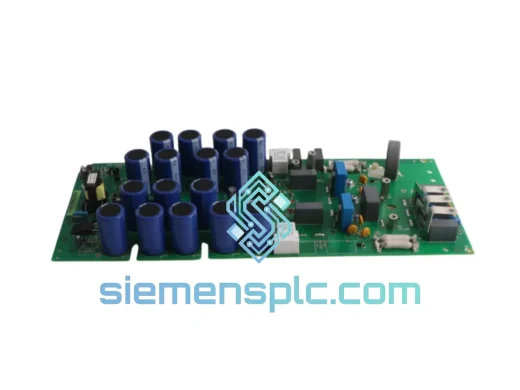
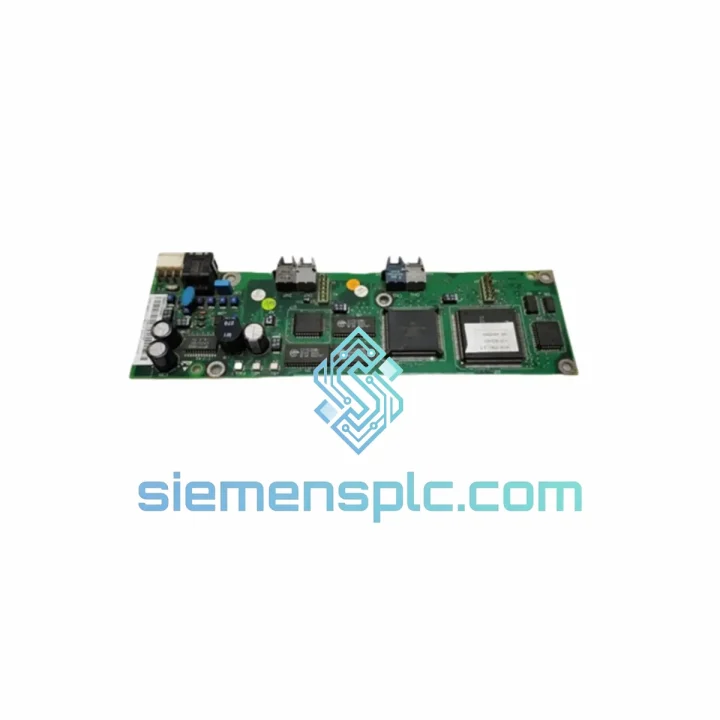
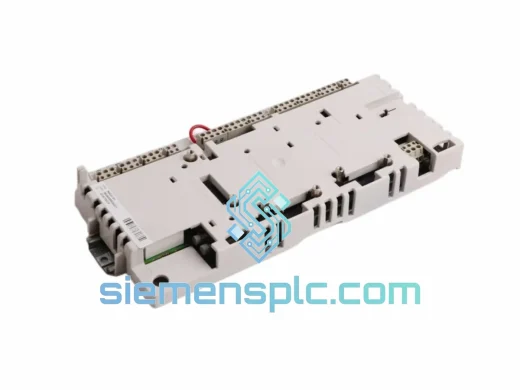
ABB NAMC-11C AC Drive Control Board – ACS800 Series
Request verified availability, condition, replacement risk review, packing options and courier lead time for NAMC-11C.
BrandABB
Part NumberNAMC-11C
ConditionAvailability Check
Lead TimeRFQ Confirmation
DocumentsDatasheet / photos by RFQ
ShippingExport packing available
Auto-filled RFQ
NAMC-11C
Click Request Quote and the part number is inserted into the inquiry form automatically.
- Reply by email: [email protected]
- WhatsApp / Tel: +86 18359268345
- Mon-Sat 9:00-18:00 GMT+8
Procurement Data
Key Product Information
Core fields for model confirmation and RFQ routing. Detailed product narrative remains below.
- Brand
- ABB
- Primary Part Number
- NAMC-11C
- Product Type
- AC Drive Control Board
- Series / Family
- S800
- Manufacturer
- ABB Ltd.
- Country of Origin
- SE
- Catalog Category
- Motor Drives
- Operating Temp.
- 0 °C to +55 °C (drive ambient)
- Humidity
- 5–95% RH, non-condensing
- Warranty
- 12 months against manufacturing defects
Model confirmed for inquiry
NAMC-11C
Send quantity, destination and urgency. The RFQ form keeps this part number attached.
Request Quote
Product Overview
ABB NAMC-11C — Main Application Control Board for ACS800 Series AC Drives
The NAMC-11C (New Application Motor Control, revision C) is the central processing and application management board installed across the ABB ACS800 single-drive product family. Mounted directly onto the drive’s control section backplane, this board assumes full responsibility for closed-loop motor control execution, parameter non-volatile storage, I/O signal arbitration, and fieldbus protocol coordination. Its architecture reflects ABB’s Direct Torque Control (DTC) philosophy: deterministic torque and flux estimation without encoder feedback, executed at a 40 µs control cycle. Understanding the NAMC-11C’s internal design is essential for engineers specifying replacements, planning preventive maintenance, or integrating ACS800 drives into distributed control architectures.
Real-time Stock & RFQ: [email protected] | WhatsApp: +86 18359268345
Technical Parameters
| Parameter | Specification |
|---|---|
| Part Number | NAMC-11C |
| Manufacturer | ABB Ltd. |
| Compatible Drive Series | ACS800-01, -04, -07, -11, -17, -31, -37 |
| Compatible Frame Sizes | R2, R3, R4, R5, R6, R7, R8 |
| Drive Power Range | 0.55 kW – 5,600 kW (frame-dependent) |
| Control Cycle Time | 40 µs (DTC torque/flux loop) |
| Processor Architecture | Dual DSP + RISC application processor |
| Non-volatile Memory | Flash (parameter set + firmware image) |
| DDCS Fiber-optic Channels | CH1 (master link), CH2 (follower/I/O extension) |
| Fieldbus Adapter Slot | 1× slot (RPBA-01, RCAN-01, RLON-01, RDCO-01/02/03/04) |
| I/O Extension Support | IOEC-01 / -02 / -03 / -04 via DDCS CH2 |
| Analog Inputs (onboard) | 2× differential, ±10 V / 0–20 mA, 12-bit resolution |
| Digital Inputs (onboard) | 6× 24 VDC, optically isolated, 5 ms filter |
| Relay Outputs (onboard) | 3× Form C, 250 VAC / 30 VDC, 2 A |
| Encoder Interface | Via RTAC-01 pulse encoder module (optional) |
| Supply Voltage (board) | +5 VDC, +15 VDC, −15 VDC from APOW board |
| Operating Temperature | 0 °C to +55 °C (drive ambient) |
| Storage Temperature | −40 °C to +70 °C |
| Humidity | 5–95% RH, non-condensing |
| EMC Compliance | EN 61800-3, Category C2/C3 |
| Weight (board only) | Approx. 0.35 kg |
| Warranty | 12 months against manufacturing defects |
Hardware Logical Analysis
The NAMC-11C implements a two-tier processor architecture. The primary DSP core executes the DTC algorithm at a fixed 40 µs interrupt period, computing air-gap torque and stator flux magnitude from measured phase currents and DC-link voltage without relying on a shaft encoder. This sensorless estimation loop feeds the IGBT gate-pulse generator on the AINT power interface board via a high-speed parallel bus, maintaining torque step response below 5 ms under rated load conditions — a figure that conventional V/Hz drives cannot approach.
The secondary RISC application processor handles all non-time-critical tasks: parameter read/write to Flash, serial communication with the APOW board’s watchdog circuit, DDCS token-ring arbitration, and execution of the loaded application macro (Standard, System, or Position Control). This separation of real-time and application layers means a fieldbus communication fault or parameter write operation cannot introduce jitter into the torque control loop — a critical design discipline for process-critical installations.
Optical isolation is applied at every external signal boundary. The six digital inputs pass through 5 ms RC-filtered opto-couplers rated at 24 VDC nominal, providing galvanic separation of at least 500 V between field wiring and the board’s logic ground. The two analog input channels use instrumentation-grade differential receivers with a common-mode rejection ratio (CMRR) exceeding 60 dB at 50/60 Hz, suppressing ground-loop interference common in long cable runs across industrial plant floors.
The DDCS (Distributed Drives Communication System) fiber-optic interface eliminates conducted EMI coupling between the drive and external controllers entirely. Plastic optical fiber (POF) links operating at 10 Mbit/s carry the token-ring protocol between the NAMC-11C and up to 12 IOEC extension modules or a master controller (e.g., AC80 or AC800M PLC). The fiber medium provides inherent immunity to the high dV/dt transients generated by IGBT switching, which can reach 5–10 kV/µs on the DC bus — a noise environment that would corrupt conventional copper-based communication without extensive shielding.
Parameter storage uses a wear-leveled Flash memory scheme. ABB’s firmware implements a dual-bank write strategy: a new parameter set is written to the inactive bank and verified before the active bank pointer is updated. This prevents parameter corruption during a power interruption mid-write — a failure mode that can render a drive inoperable and is frequently overlooked in competing designs that use single-write EEPROM.
System Integration Benefits
- Deterministic DTC torque response: The 40 µs control cycle delivers torque step response under 5 ms, enabling tight speed regulation in winder, hoist, and extruder applications where load transients are abrupt and frequent.
- Sensorless operation across full speed range: DTC flux estimation maintains stable torque control from near-zero speed (0.5 Hz) to maximum output frequency without encoder hardware, reducing mechanical complexity and eliminating encoder cable failure as a fault mode.
- Transparent fault diagnostics: The NAMC-11C logs up to 64 fault and event records with timestamps referenced to the drive’s internal real-time clock. Each record captures the fault code, active parameter values, and motor current at the moment of fault — data directly accessible via DriveWindow or the fieldbus without requiring physical access to the drive cabinet.
- Fieldbus protocol flexibility: A single adapter slot accepts PROFIBUS-DP (RPBA-01), CANopen (RCAN-01), LonWorks (RLON-01), or DDCS fiber (RDCO-01 through -04), allowing the same drive hardware to integrate into Siemens, Rockwell, Schneider, or ABB PLC architectures without board replacement.
- Scalable I/O via DDCS extension: Up to four IOEC boards can be chained on DDCS CH2, adding 16 digital inputs, 8 digital outputs, 4 analog inputs, and 2 analog outputs per module — all managed by the NAMC-11C’s application processor with deterministic 5 ms I/O scan time.
- Application macro portability: Parameter sets saved via DriveWindow can be cloned to replacement NAMC-11C boards in under 10 minutes, minimizing unplanned downtime during board swap maintenance events.
- Adaptive motor model: The NAMC-11C executes an automatic motor identification run (ID Run) that characterizes stator resistance, leakage inductance, and magnetizing inductance of the connected motor. This model is stored in Flash and used to compensate for motor temperature drift, maintaining torque accuracy within ±2% across the operating temperature range.
- Redundancy-ready architecture: In multi-drive cabinet configurations (ACS800-17/37), the NAMC-11C supports master-follower torque sharing via DDCS CH1, enabling load-balanced operation of parallel inverter modules with automatic follower re-synchronization after a transient fault.
Quality Assurance & Global Logistics
Every NAMC-11C unit supplied through siemensplc.com is sourced from verified ABB authorized distribution channels and certified industrial surplus inventories with full traceability documentation. Each board carries ABB’s original date code, hardware revision marking, and factory serial number — attributes that allow cross-referencing against ABB’s production records and confirm authenticity before installation.
Pre-shipment inspection covers visual examination of all connector pins, PCB surface condition, and component seating. Boards showing evidence of rework, flux residue, or pin deformation are rejected. Functional verification is performed where test fixtures are available for the specific revision.
Packaging follows IEC 61340-5-1 ESD protection requirements: each board is sealed in a conductive moisture-barrier bag with desiccant, placed in anti-static foam, and enclosed in a double-wall corrugated carton rated for international air freight. Shipments originate from our Xiamen, China warehouse and are dispatched via DHL Express, FedEx International Priority, or UPS Worldwide Expedited — all with door-to-door tracking and commercial invoice documentation for customs clearance. Transit time to most destinations in Europe, Southeast Asia, and the Americas is 3–7 business days. Expedited next-flight-out arrangements are available for critical plant shutdowns.
A 12-month warranty covers all units against manufacturing defects and latent component failures. Warranty claims are processed with a target replacement dispatch within 48 hours of fault confirmation, minimizing production impact for our industrial customers.
Contact Information
Email: [email protected]
WhatsApp: +86 18359268345
Web: siemensplc.com
Location: Xiamen, China
© 2026 siemensplc.com. All rights reserved.
Ready to quote
[email protected]
Send This Part Number to Sales
RFQ workflow
Quality workflow ->
Confirmation Process
01Model confirmation
We check the full part number, brand, series and visible nameplate information before quotation.
02Availability reply
Sales confirms stock path, condition option, quantity and realistic lead time for export dispatch.
03Packing & courier
DHL, FedEx, UPS or buyer courier arrangements can be reviewed with packing requirements.
Continue sourcing
Browse full catalog ->
Related Automation Parts
Similar brand or category products for fast comparison and multi-item RFQ lists.
ABB
RFQ Ready
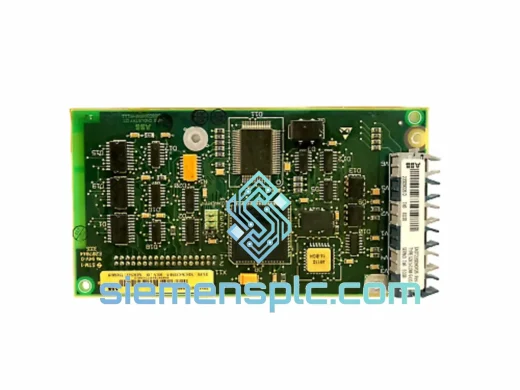
ABB SDCS-COM-5 3BSE006567R1 Fieldbus Communication Module
S800
Origin SE
Fieldbus Communication Module
ABB
RFQ Ready
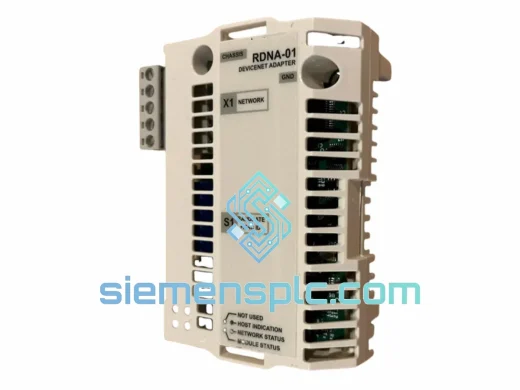
ABB RDNA-01 DeviceNet Adapter Module – ACS800 ACS600
S800
Origin SE
Fieldbus Communication Module
ABB
RFQ Ready
ABB RDCU-12C 3AUA0000036521 Drive Control Unit
S800
Origin SE
PLC & Drive Control Module