
ABB
In Stock OK
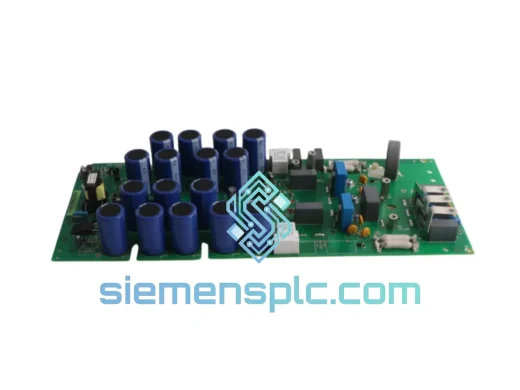
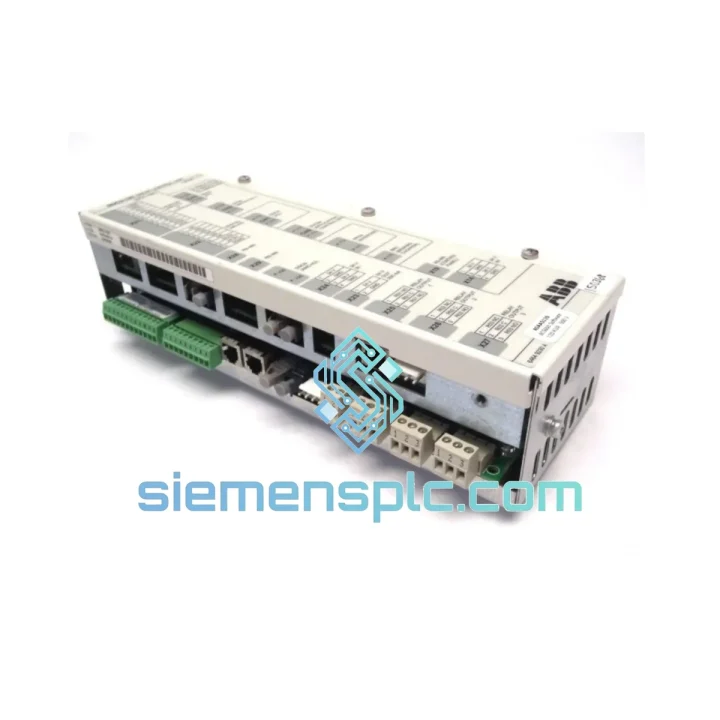
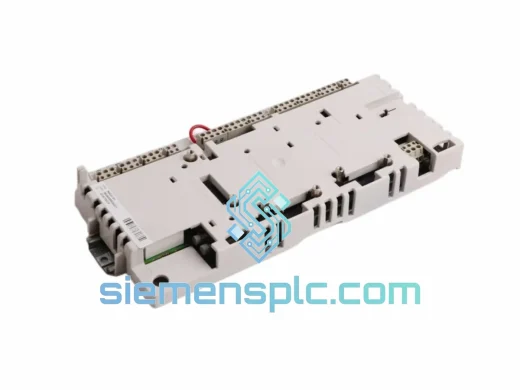
ABB NDCU-12C Drive Control Unit – ACS800 Series
Request verified availability, condition, replacement risk review, packing options and courier lead time for NDCU-12C.
BrandABB
Part NumberNDCU-12C
ConditionAvailability Check
Lead TimeRFQ Confirmation
DocumentsDatasheet / photos by RFQ
ShippingExport packing available
Auto-filled RFQ
NDCU-12C
Click Request Quote and the part number is inserted into the inquiry form automatically.
- Reply by email: [email protected]
- WhatsApp / Tel: +86 18359268345
- Mon-Sat 9:00-18:00 GMT+8
Procurement Data
Key Product Information
Core fields for model confirmation and RFQ routing. Detailed product narrative remains below.
- Brand
- ABB
- Primary Part Number
- NDCU-12C
- Product Type
- Drive Control Unit
- Series / Family
- S800
- Manufacturer
- ABB
- Country of Origin
- SE
- Catalog Category
- Motor Drives
- Operating Temp.
- 0°C to +55°C ambient
- Warranty
- 12 months from date of shipment
Model confirmed for inquiry
NDCU-12C
Send quantity, destination and urgency. The RFQ form keeps this part number attached.
Request Quote
Product Overview
ABB NDCU-12C: Drive Control Unit Architecture and Role in ACS800 Variable-Speed Drive Systems
The ABB NDCU-12C is the central processing and control board within the ACS800 multi-drive and single-drive platform. It executes ABB’s proprietary Direct Torque Control (DTC) algorithm at a 40 µs torque calculation cycle, delivering torque step response times below 1–2 ms without requiring shaft encoder feedback. In a typical ACS800 drive cabinet, the NDCU-12C interfaces directly with the inverter IGBT gate driver board via a dedicated internal bus, while simultaneously managing all external I/O signals, fieldbus communication adapters, and optional extension modules through its modular slot architecture. Its position in the control loop is unambiguous: it is the sole decision-making node between the process reference signal and the power electronics stage.
Real-time Stock & RFQ: [email protected] | WhatsApp: +86 18359268345
Technical Parameters
| Part Number / SKU | NDCU-12C |
| Manufacturer | ABB |
| Compatible Drive Series | ACS800 (single-drive and multi-drive) |
| Module Classification | Drive Control Unit (DCU) |
| Control Algorithm | DTC — Direct Torque Control, 40 µs calculation cycle |
| Torque Step Response | < 1–2 ms (no encoder required) |
| Speed Control Accuracy | ±0.1% of nominal speed (open-loop DTC) |
| Analog Inputs | 2 × differential, ±10 V / 0–20 mA, 12-bit resolution |
| Analog Outputs | 2 × 0–20 mA, 11-bit resolution |
| Digital Inputs | 6 × 24 VDC, optically isolated, 1 ms filter |
| Digital Outputs | 3 × relay outputs, 250 VAC / 30 VDC, 2 A |
| Communication Interface | DDCS fiber optic (plastic, 1 MBd); optional fieldbus via adapter slot (PROFIBUS, DeviceNet, Modbus) |
| Extension Module Slots | 2 × option slots (RAIO, RDIO, RTAC, RDCO compatible) |
| Supply Voltage (internal) | +5 VDC / ±15 VDC from drive SMPS |
| Operating Temperature | 0°C to +55°C ambient |
| Storage Temperature | −40°C to +70°C |
| Relative Humidity | 5–95%, non-condensing (IEC 60068-2-3) |
| EMC Immunity | IEC 61000-4-2 (ESD), IEC 61000-4-4 (EFT), IEC 61000-4-5 (surge) |
| Vibration Resistance | IEC 60068-2-6: 3.5 mm / 1 g, 2–200 Hz |
| Form Factor | Plug-in control board, DIN-rail compatible mounting |
| Weight | Approx. 500 g |
| Certifications | CE (EMC Directive 2014/30/EU), UL 508C, IEC 61800-5-1, RoHS 2011/65/EU |
| Warranty | 12 months from date of shipment |
Hardware Logical Analysis
The NDCU-12C is built around a 32-bit floating-point DSP core paired with a dedicated ASIC that handles real-time flux and torque estimation independently of the main processor. This dual-processor architecture ensures that the DTC motor model executes at a fixed 25 kHz interrupt rate regardless of the load on the application task scheduler — a design choice that eliminates jitter in the torque reference chain under heavy fieldbus polling conditions.
Optical Isolation on All Digital I/O: Each of the six digital inputs passes through a high-speed optocoupler with a 1 ms hardware filter, providing galvanic isolation rated at 500 VDC between the field wiring and the control board logic. This prevents ground loop currents — common in large motor control centers — from corrupting the input state register. The relay outputs use bifurcated gold-plated contacts to maintain reliable switching at low-current signal levels (≥ 10 mA).
DDCS Fiber Optic Bus Topology: The NDCU-12C communicates with the inverter AINT board and any external master controller (e.g., AC800M PLC) via the DDCS (Distributed Drive Control System) protocol over plastic optical fiber. The 1 MBd data rate and fiber medium provide complete immunity to conducted and radiated EMI — a critical requirement in drive rooms where switching transients from IGBT modules can reach dV/dt values of 5–10 kV/µs. The fiber link also eliminates the need for shielded copper cables between the control and power sections, reducing installation cost and cable tray congestion.
EMC Design — Conducted Emissions Suppression: The PCB layout of the NDCU-12C uses a four-layer stackup with dedicated ground and power planes. Analog signal traces are routed on the inner layers, shielded by the ground plane from the digital switching noise on the outer layers. Ferrite beads are placed at all I/O connector entry points to suppress high-frequency common-mode currents. The board passes EN 55011 Class C limits for conducted emissions without external filtering, which simplifies cabinet design.
Watchdog and Fault Redundancy Logic: An independent hardware watchdog timer monitors the DSP execution cycle. If the main processor fails to reset the watchdog within the 20 ms window — due to a software exception or memory fault — the watchdog asserts a hardware fault output that trips the drive’s main contactor. This fail-safe mechanism operates entirely in hardware and cannot be disabled by firmware, ensuring the drive reaches a safe state even during catastrophic software failures.
Parameter Memory Architecture: Application parameters are stored in non-volatile EEPROM with a write endurance of 100,000 cycles. A separate battery-backed SRAM retains the fault logger data (last 64 fault events with timestamps and process variable snapshots) through power cycles, enabling post-mortem analysis without an external data logger.
System Integration Benefits
- Sensorless torque control eliminates encoder hardware: DTC provides ±2% torque accuracy at zero speed without a pulse encoder, removing a common failure point in wet or dusty environments where encoder seals degrade.
- Deterministic fieldbus response: The RDCO-03 DDCS adapter enables cyclic PROFIBUS DP communication at 12 Mbit/s with a guaranteed cycle time of 1 ms, meeting the timing requirements of coordinated multi-drive systems such as winder lines and rolling mills.
- Transparent fault diagnostics: The 64-event fault log with process variable snapshots (speed, torque, DC bus voltage, output current) at the moment of fault allows maintenance engineers to diagnose root causes without oscilloscope instrumentation.
- Modular I/O expansion without rewiring: The two option slots accept RAIO-01 (analog I/O) and RDIO-01 (digital I/O) extension modules, allowing I/O count to be increased in the field without replacing the control board or modifying the cabinet wiring harness.
- Adaptive motor model for multi-motor applications: The NDCU-12C supports parallel motor control (multiple motors on one inverter) with individual motor model parameters stored in separate parameter sets, switchable via digital input — useful in textile and conveyor applications.
- Process PID with feed-forward: The onboard PID controller supports a feed-forward input from a process sensor (e.g., flow meter), reducing the steady-state error in pressure and flow control loops without requiring an external PLC for the inner loop.
- Safe Torque Off (STO) compatibility: When paired with the ASTO-01 safety option module, the NDCU-12C supports IEC 62061 SIL 2 / EN ISO 13849-1 PLd Safe Torque Off, enabling integration into safety-rated machine guarding circuits without a main contactor.
- Firmware upgrade via DDCS: Control firmware can be updated over the fiber optic DDCS link using ABB DriveWindow 2, eliminating the need to remove the board from the cabinet for programming — a significant advantage in multi-drive installations with 20+ axes.
Quality Assurance & Global Logistics
Every NDCU-12C unit dispatched from our Xiamen, China facility is sourced through verified ABB authorized distribution channels. Each board undergoes a structured pre-shipment inspection protocol: visual examination under 10× magnification for solder joint integrity and component seating, functional power-on test against a reference ACS800 drive frame, firmware version verification against the ABB release matrix, and parameter reset to factory defaults. Units are packaged in anti-static shielding bags with desiccant and humidity indicator cards, placed in foam-lined cartons rated for air freight vibration profiles per ISTA 2A.
Shipment from Xiamen is executed via DHL Express, FedEx International Priority, or UPS Worldwide Express, with typical transit times of 3–5 business days to Europe and North America, and 2–4 business days to Southeast Asia. All shipments include a commercial invoice with HS Code 8537.10 pre-declared, an airway bill, and a packing list — documentation sufficient for customs clearance in most jurisdictions. For project-quantity orders (10+ units), consolidated sea freight via Xiamen Port is available with full container load (FCL) and less-than-container load (LCL) options. Export compliance documentation (ECC99, ECCN classification) is provided upon request for regulated-destination shipments.
A 12-month warranty covers all units against manufacturing defects and functional failure under normal operating conditions. Warranty claims are processed within 5 business days of receipt of the returned unit, with advance replacement available for critical production environments subject to prior agreement.
Contact Information
Email: [email protected]
WhatsApp: +86 18359268345
Web: siemensplc.com
Location: Xiamen, China
© 2026 siemensplc.com. All rights reserved.
Ready to quote
[email protected]
Send This Part Number to Sales
RFQ workflow
Quality workflow ->
Confirmation Process
01Model confirmation
We check the full part number, brand, series and visible nameplate information before quotation.
02Availability reply
Sales confirms stock path, condition option, quantity and realistic lead time for export dispatch.
03Packing & courier
DHL, FedEx, UPS or buyer courier arrangements can be reviewed with packing requirements.
Continue sourcing
Browse full catalog ->
Related Automation Parts
Similar brand or category products for fast comparison and multi-item RFQ lists.
ABB
RFQ Ready
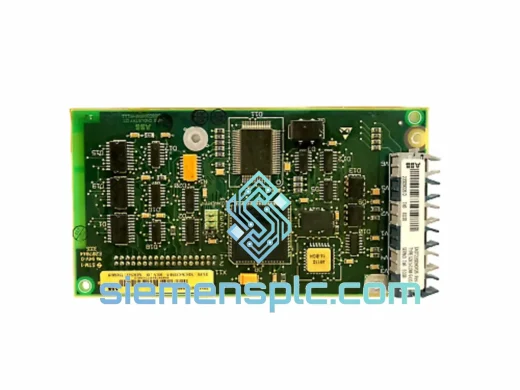
ABB SDCS-COM-5 3BSE006567R1 Fieldbus Communication Module
S800
Origin SE
Fieldbus Communication Module
ABB
RFQ Ready
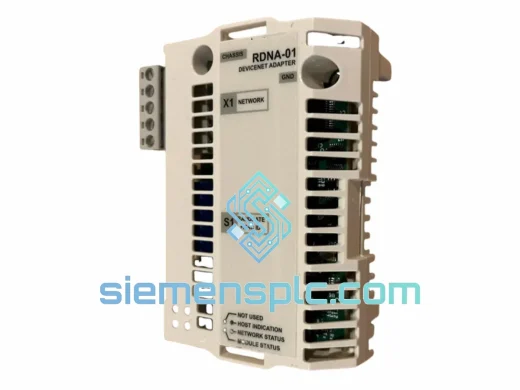
ABB RDNA-01 DeviceNet Adapter Module – ACS800 ACS600
S800
Origin SE
Fieldbus Communication Module
ABB
RFQ Ready
ABB RDCU-12C 3AUA0000036521 Drive Control Unit
S800
Origin SE
PLC & Drive Control Module