
ABB
In Stock OK
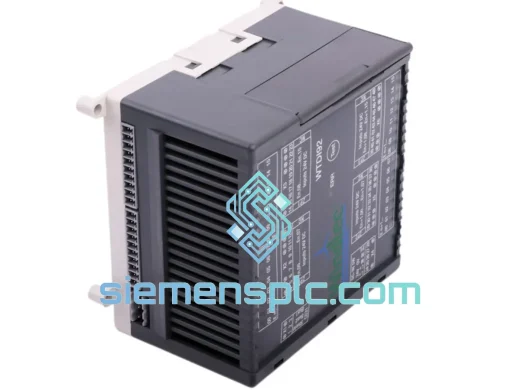
ABB NTU-7Q2-E Termination Unit – Advant MOD 300
Request verified availability, condition, replacement risk review, packing options and courier lead time for NTU-7Q2-E.
BrandABB
Part NumberNTU-7Q2-E
ConditionAvailability Check
Lead TimeRFQ Confirmation
DocumentsDatasheet / photos by RFQ
ShippingExport packing available
Auto-filled RFQ
NTU-7Q2-E
Click Request Quote and the part number is inserted into the inquiry form automatically.
- Reply by email: [email protected]
- WhatsApp / Tel: +86 18359268345
- Mon-Sat 9:00-18:00 GMT+8
Procurement Data
Key Product Information
Core fields for model confirmation and RFQ routing. Detailed product narrative remains below.
- Brand
- ABB
- Primary Part Number
- NTU-7Q2-E
- Product Type
- Termination Unit
- Series / Family
- Advant
- Manufacturer
- ABB
- Country of Origin
- SE
- Model Function
- Digital Output Relay Termination Unit
- Catalog Category
- I/O Modules
- Operating Temp.
- 0 °C to +60 °C (standard industrial cabinet)
- Warranty
- 12 months from date of shipment
Model confirmed for inquiry
NTU-7Q2-E
Send quantity, destination and urgency. The RFQ form keeps this part number attached.
Request Quote
Product Overview
ABB NTU-7Q2-E: Relay-Based Digital Output Termination Unit for Advant / MOD 300 DCS Field Wiring
The ABB NTU-7Q2-E is a dedicated termination unit engineered for relay-type digital output signals within the ABB Advant OCS and MOD 300 Distributed Control System architecture. Its primary function is to provide a structured, field-wiring interface between the DCS digital output I/O card and the physical field devices — motor starters, contactors, solenoid valves, and alarm annunciators — that require dry-contact relay switching. Unlike passive terminal blocks, the NTU-7Q2-E integrates relay contact hardware directly onto the termination board, eliminating the need for external relay panels and reducing panel wiring density by a measurable margin.
In a typical Advant / MOD 300 control loop, the CPU module issues a discrete command over the internal backplane bus to the digital output I/O card (e.g., NDIO-01 or NDIO-02). That card drives the NTU-7Q2-E via a dedicated ribbon or multi-pin cable connector. The NTU-7Q2-E then switches its onboard relay contacts, completing or interrupting the field circuit. This architecture isolates the low-voltage DCS logic side from the higher-voltage field side, a critical design requirement in process plants where field loads may operate at 110 V AC or 24 V DC with inductive characteristics.
The NTU-7Q2-E is not a generic relay board. It is factory-matched to the ABB Advant I/O subsystem’s electrical and mechanical specifications, meaning connector pinout, relay coil drive voltage, contact rating, and board dimensions are all pre-validated against the corresponding I/O module. This eliminates the field adaptation work — custom cable assemblies, relay socket wiring, and contact rating verification — that would be required if a generic relay panel were substituted.
For procurement engineers and plant maintenance teams managing aging Advant or MOD 300 installations, maintaining an inventory of NTU-7Q2-E units is a standard practice. The module’s role in the output chain means a failed termination unit directly disables the associated field device, with no software workaround available. Mean time to repair is therefore directly tied to spare parts availability. siemensplc.com maintains verified stock of genuine ABB NTU-7Q2-E units, sourced through traceable supply channels, and ships globally from Xiamen, China with documented lead times.
Real-time Stock & RFQ: [email protected] | WhatsApp: +86 18359268345
Technical Parameters
| Parameter | Specification |
|---|---|
| Part Number | NTU-7Q2-E |
| Manufacturer | ABB |
| Series | Advant OCS / MOD 300 Termination Units |
| Function | Digital Output Relay Termination Unit |
| Output Signal Type | Relay contact (dry contact switching) |
| Compatible I/O Modules | NDIO-01, NDIO-02 (ABB Advant / MOD 300) |
| Relay Contact Configuration | Multi-channel relay array (Q2 variant) |
| Field-Side Isolation | Galvanic isolation between DCS logic and field circuit |
| Mounting | DIN-rail / rack-mount termination panel |
| Operating Temperature | 0 °C to +60 °C (standard industrial cabinet) |
| Storage Temperature | -25 °C to +70 °C |
| Weight | Approx. 700 g |
| Country of Origin | Germany |
| Warranty | 12 months from date of shipment |
Hardware Logical Analysis
The NTU-7Q2-E’s hardware architecture reflects ABB’s design philosophy for the Advant platform: deterministic signal routing with minimal active components in the field-wiring path. The relay coils on the termination board are driven directly by the output driver stage of the paired I/O card, which means coil energization timing is synchronized to the DCS scan cycle — typically 50 ms to 500 ms depending on controller configuration. This synchronization prevents relay chatter caused by asynchronous drive signals, a failure mode common in externally wired relay panels where cable capacitance and ground loops can introduce spurious transitions.
The board-level EMC design addresses two primary interference vectors. First, inductive kickback from relay coil de-energization is suppressed by flyback diodes integrated on the PCB, protecting the I/O card’s output driver transistors from reverse voltage spikes that would otherwise exceed their breakdown ratings over time. Second, the PCB layout maintains physical separation between the low-voltage logic connector (DCS side) and the high-voltage field terminal strip, with a creepage distance compliant with IEC 60664-1 for the applicable overvoltage category. This separation is not merely mechanical — the ground planes on the two sides of the board are intentionally isolated, with the only coupling path being through the relay coil-to-contact magnetic linkage.
The Q2 designation within the NTU-7Qx-E family indicates a specific relay channel density and contact configuration. Engineers replacing a Q2 unit with a Q1 or Q3 variant must verify that the I/O module’s channel-to-terminal mapping matches the replacement board’s pinout, as the Advant platform does not perform automatic remapping — a mismatch results in incorrect field device addressing at the software tag level.
Connector integrity is a common failure point in long-service termination units. The NTU-7Q2-E uses a keyed multi-pin connector on the DCS side, which prevents incorrect insertion but does not prevent connector wear over repeated mating cycles. Units with more than 10 years of service should have connector contact resistance measured before reinstallation; values exceeding 50 mΩ per contact indicate oxidation that will cause intermittent output faults under load.
System Integration Benefits
- Zero-adaptation installation: The NTU-7Q2-E connects directly to the NDIO-01/02 I/O card via the factory-specified cable assembly, with no field modification to connector pinout or wiring termination sequence required.
- Galvanic isolation maintained end-to-end: The relay contact architecture preserves the isolation barrier between DCS logic ground and field circuit ground, preventing ground loop currents from corrupting analog signal references elsewhere in the control system.
- Deterministic output switching: Relay actuation is synchronized to the DCS output scan cycle, ensuring that field device state changes occur within a predictable time window relative to the controller’s logic execution — a requirement for interlock and sequence logic with defined response time constraints.
- Reduced panel wiring complexity: Integrating relay hardware onto the termination board eliminates the external relay socket rail, reducing panel wire count, potential connection points, and associated failure modes.
- Diagnostic transparency: The Advant / MOD 300 platform’s I/O diagnostics can detect open-circuit and short-circuit conditions on the relay output channel, with fault status propagated to the operator station HMI without requiring field inspection.
- OEM traceability for compliance: Using the original ABB NTU-7Q2-E maintains the as-built documentation integrity of the control system, which is a requirement for functional safety audits, insurance assessments, and regulatory inspections in process industries.
- Interchangeability within the Advant platform: The NTU-7Q2-E is mechanically and electrically interchangeable across all Advant OCS and MOD 300 installations using the NDIO-01/02 I/O card, simplifying spare parts standardization across multi-site plant portfolios.
- Long-term availability support: siemensplc.com maintains stock of NTU-7Q2-E units specifically to support plants operating legacy Advant and MOD 300 systems beyond ABB’s standard product lifecycle, providing a reliable supply path without requiring a full I/O subsystem upgrade.
Quality Assurance & Global Logistics
Every ABB NTU-7Q2-E unit supplied by siemensplc.com is sourced through verified supply channels with documented provenance. Pre-shipment inspection covers physical integrity of the PCB and relay components, connector contact condition, and relay coil continuity. Units exhibiting mechanical damage, connector pin deformation, or relay coil resistance outside the manufacturer’s specified range are rejected before dispatch.
Shipments originate from Xiamen, China, with access to major international freight carriers including DHL Express, FedEx International Priority, and UPS Worldwide Expedited. Standard air freight transit times to Western Europe are 3–5 business days; to North America, 4–6 business days; to Southeast Asia, 2–3 business days. Sea freight consolidation is available for bulk orders where lead time permits. All units are packed in anti-static bags with foam-lined cartons rated for air freight handling. Export documentation — commercial invoice, packing list, and certificate of origin — is prepared for each shipment. A 12-month warranty covers manufacturing defects and premature component failure under normal operating conditions.
Contact Information
Email: [email protected]
WhatsApp: +86 18359268345
Web: siemensplc.com
Location: Xiamen, China
© 2026 siemensplc.com. All rights reserved.
Ready to quote
[email protected]
Send This Part Number to Sales
RFQ workflow
Quality workflow ->
Confirmation Process
01Model confirmation
We check the full part number, brand, series and visible nameplate information before quotation.
02Availability reply
Sales confirms stock path, condition option, quantity and realistic lead time for export dispatch.
03Packing & courier
DHL, FedEx, UPS or buyer courier arrangements can be reviewed with packing requirements.
Continue sourcing
Browse full catalog ->
Related Automation Parts
Similar brand or category products for fast comparison and multi-item RFQ lists.
ABB
RFQ Ready
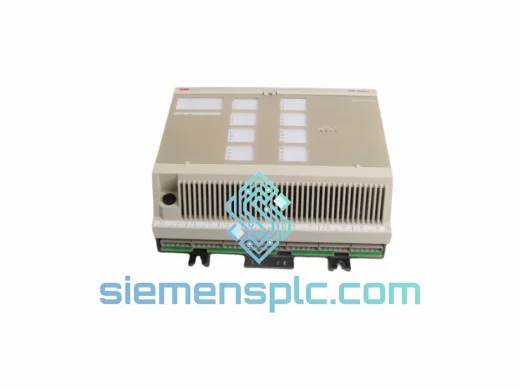
ABB DSAX452 Analog I/O Module – Advant Controller 450 Series
Advant
Origin SE
Analog I/O Module
ABB
RFQ Ready
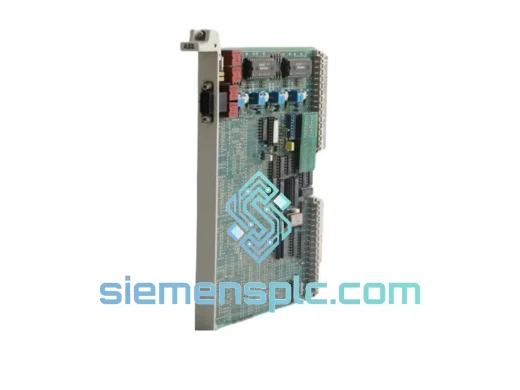
ABB GJR5143200R0001 35EK91 Analog Output Module – AC31 Advant Series
Advant
Origin SE
Analog Output Module
ABB
RFQ Ready
ABB 07DI92 GJR5252400R4101 Digital Input Module
Advant
Origin SE
PLC Digital Input Module