ABB
In Stock OK
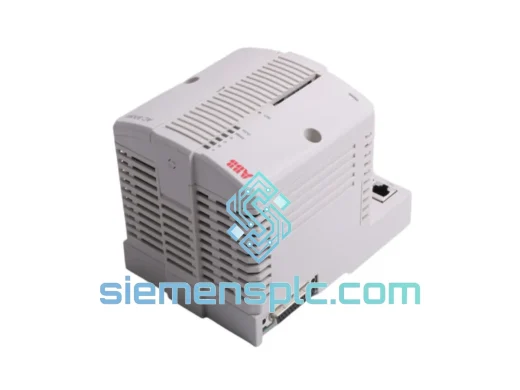
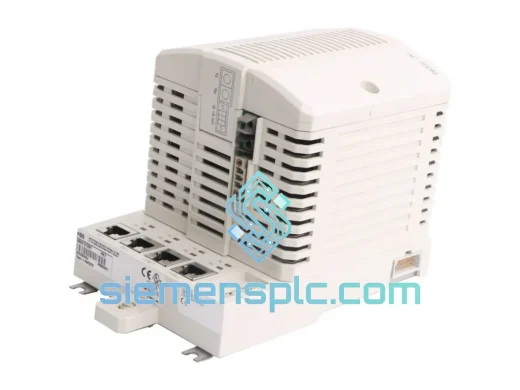
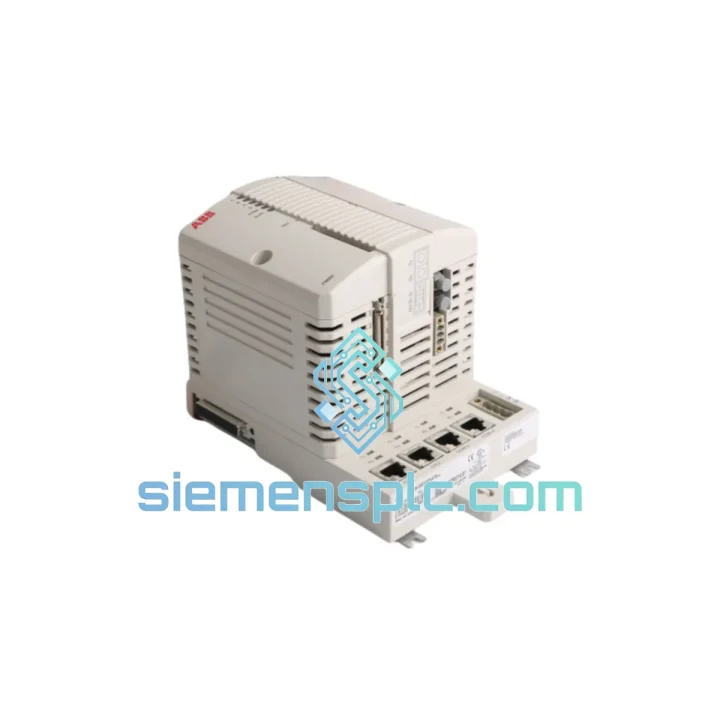
ABB PM866K02 PLC CPU Module – AC800M Series
Request verified availability, condition, replacement risk review, packing options and courier lead time for PM866k02.
BrandABB
Part NumberPM866k02
ConditionAvailability Check
Lead TimeRFQ Confirmation
DocumentsDatasheet / photos by RFQ
ShippingExport packing available
Auto-filled RFQ
PM866k02
Click Request Quote and the part number is inserted into the inquiry form automatically.
- Reply by email: [email protected]
- WhatsApp / Tel: +86 18359268345
- Mon-Sat 9:00-18:00 GMT+8
Procurement Data
Key Product Information
Core fields for model confirmation and RFQ routing. Detailed product narrative remains below.
- Brand
- ABB
- Primary Part Number
- PM866k02
- Product Type
- PLC CPU Module
- Series / Family
- AC800M
- Country of Origin
- SE
- Catalog Category
- DCS & Safety Modules
- Operating Temp.
- 0 °C to +55 °C
- Warranty
- 12 months against manufacturing defects from dispatch date
Model confirmed for inquiry
PM866k02
Send quantity, destination and urgency. The RFQ form keeps this part number attached.
Request Quote
Product Overview
ABB PM866K02: Redundant CPU Architecture for High-Availability Process Control
The ABB PM866K02 is a dual-processor central processing unit module within the AC800M controller family, purpose-built for continuous-process industries where unplanned downtime carries measurable financial and safety consequences. Its design premise is straightforward: separate the computational workload of real-time control execution from the overhead of communication stack management, and provide a hardware-enforced hot-standby redundancy path that does not depend on application software to initiate failover. The result is a controller platform that sustains deterministic scan-cycle behavior under variable supervisory load and recovers from primary CPU failure without operator intervention.
In large-scale DCS deployments — refinery crude units, ethylene crackers, LNG liquefaction trains, combined-cycle power blocks — the PM866K02 typically manages between 2,000 and 8,000 I/O tags per controller node, executing IEC 61131-3 function block programs at configurable cycle times ranging from 10 ms for fast regulatory loops to 1,000 ms for supervisory and reporting tasks. The preemptive real-time scheduler enforces strict priority ordering: a 10 ms PID loop will always preempt a 500 ms data aggregation task at the precise moment its cycle boundary arrives, regardless of where the lower-priority task is in its execution sequence. This behavior is not a software convention — it is enforced by the operating system kernel’s interrupt controller configuration and is verifiable through the module’s built-in task execution monitor.
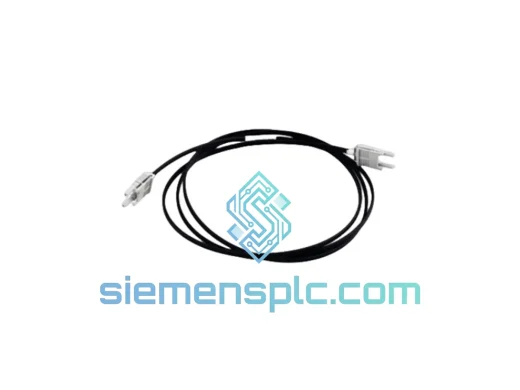
The hot-standby redundancy architecture pairs two PM866K02 modules via a dedicated synchronization link. The active module mirrors its complete execution state — all variable values, task cycle counters, communication session tables, and I/O image data — to the standby unit at sub-cycle intervals. Switchover upon primary failure completes in under 50 ms, a figure that falls within the dead-band tolerance of standard PID loops and below the trip threshold of most process safety interlocks. Critically, the switchover is initiated by hardware arbitration logic, not by a watchdog timer in the application program, eliminating the risk that a hung application task could delay or prevent failover.
The module’s dual Ethernet ports provide physical separation between the plant control network and the engineering or supervisory LAN. This dual-homed topology satisfies the network zone segmentation requirements of IEC 62443-3-3 without requiring VLAN configuration on managed switches or additional network interface hardware at the controller level. Each port maintains an independent MAC address and IP stack, and routing between the two interfaces is disabled by default — enforcing the zone boundary in hardware rather than relying on switch ACL rules that can be misconfigured during maintenance.
Memory architecture on the PM866K02 partitions application program storage, data variable memory, and historian buffer space into separate address regions. This partitioning prevents a historian bulk-read operation — triggered by an 800xA data collection cycle or an OPC UA subscription burst — from competing with real-time variable access for memory bus bandwidth. The application data RAM is protected by ECC logic implemented in the memory controller ASIC, correcting single-bit errors transparently in hardware and flagging multi-bit errors as unrecoverable faults before they can propagate into control output calculations.
Real-time Stock & RFQ: [email protected] | WhatsApp: +86 18359268345
Technical Parameters
| Parameter | Specification |
|---|---|
| Part Number | PM866K02 (3BSE050198R1) |
| Controller Series | ABB AC800M (Advant Controller 800M) |
| Module Function | Central Processing Unit — dual-processor architecture |
| Processor 1 Role | IEC 61131-3 application execution, task scheduling, I/O image management |
| Processor 2 Role | Ethernet communication stack, OPC UA/DA, inter-CPU synchronization |
| Redundancy Mode | Hot-standby CPU pair; hardware-arbitrated switchover <50 ms |
| Ethernet Ports | 2 × RJ45, 10/100 Mbps, independently routable, dual-homed |
| Serial Interface | RS-232 (service/maintenance port) |
| Backplane Bus | AC800M S800 I/O bus — TDM protocol, deterministic polling |
| Local I/O Capacity | Up to 12 S800 I/O modules per controller housing |
| Remote I/O | S800 remote stations via PROFIBUS DP or Ethernet ModuleBus |
| Programming Languages | IEC 61131-3: LD, FBD, ST, IL, SFC |
| Engineering Software | ABB Control Builder M (CBM) Professional / Basic |
| Task Cycle Range | 10 ms – 1,000 ms (configurable per task, priority-preemptive) |
| Memory Protection | ECC on application data RAM (single-bit correction, multi-bit detection) |
| Operating Temperature | 0 °C to +55 °C |
| Storage Temperature | −40 °C to +70 °C |
| Relative Humidity | 5–95% RH, non-condensing |
| Power Input | Via AC800M backplane (3.3 V / 5 V internal rails) |
| EMC Compliance | EN 61000-4 series: ESD (Level 3), EFT (Level 3), surge ±2 kV L-E |
| Certifications | CE, UL, cUL, ATEX Zone 2 (with rated enclosure) |
| Weight | Approx. 2.9 kg (module + housing) |
| Warranty | 12 months against manufacturing defects from dispatch date |
| Lead Time | In-stock units: 3–7 business days worldwide; non-stock: 2–4 weeks |
Hardware Logical Analysis
The PM866K02’s PCB uses a six-layer stackup with dedicated ground planes interleaved between signal layers. This construction reduces radiated emissions from the dual-processor clock distribution network and attenuates capacitively coupled interference from adjacent cabinet wiring. All external connectors — both Ethernet RJ45 ports and the RS-232 service port — are protected by transient voltage suppression arrays rated to absorb IEC 61000-4-5 surge pulses of ±2 kV line-to-earth without component damage or latch-up. This protection level is relevant in motor control centers and substation environments where high-voltage contactor switching generates transients that couple into control cabinet signal wiring through parasitic capacitance.
The watchdog arbitration between the two onboard processors operates at a 1 ms heartbeat interval. Each processor independently monitors the other’s heartbeat assertion. If either processor fails to assert within a 3 ms configurable timeout, the arbitration logic asserts a hardware reset on the faulted core and logs a diagnostic event with a microsecond-resolution timestamp. This mechanism handles transient processor faults — including single-event upsets caused by cosmic ray ionization of SRAM cells — without triggering a full module restart or initiating a hot-standby switchover, provided the fault is isolated to one processor core.
The inter-module synchronization link between paired PM866K02 units uses a proprietary serial protocol with CRC-32 error detection on every frame. Corrupted frames are discarded rather than applied to the standby module’s memory. If frame error rates exceed a configurable threshold over a rolling time window, the system automatically demotes the standby to a non-synchronized state and raises a maintenance alarm — preventing a degraded standby from executing a switchover with stale or partially corrupted state data. This fail-safe demotion logic is implemented in firmware on the communication processor, independent of the application program.
The S800 backplane bus uses time-division multiplexing with a fixed polling schedule. Each I/O module slot is allocated a deterministic time slot in the bus cycle, and the bus arbitration logic enforces slot boundaries in hardware. No single module can extend its bus occupancy beyond its allocated slot, regardless of the data volume it needs to transfer. This property guarantees that a high-resolution analog input module performing a 24-bit ADC conversion cannot delay the polling of a fast digital output module — a failure mode that can cause output jitter in motion control and burner management applications.
System Integration Benefits
- Deterministic Scan-Cycle Enforcement: Hardware interrupt controller enforces task priority preemption, guaranteeing fast loop execution times are met regardless of supervisory communication load or historian activity.
- Quantifiable CPU Load Margins: The task execution monitor logs actual versus scheduled cycle times per task, providing engineers with hard data on CPU headroom during commissioning and capacity planning — no estimation required.
- Hardware-Arbitrated Failover: Hot-standby switchover is initiated by dedicated arbitration logic, not application software, eliminating the risk that a hung task delays failover beyond the 50 ms window.
- IEC 62443-Compliant Network Topology: Dual Ethernet ports with hardware-disabled inter-port routing enforce control/supervisory zone separation at the controller level, reducing the attack surface without additional network infrastructure.
- Online Program Download: Application changes are downloaded to a running controller without halting execution, eliminating planned downtime windows for software updates in continuous-process plants operating 24/7.
- ECC Memory Integrity: Hardware error correction on application data RAM prevents silent data corruption from single-bit memory faults — a failure mode that is undetectable without ECC and can produce incorrect control outputs without triggering any alarm.
- Transparent Fault Logging: All hardware events — processor watchdog trips, ECC corrections, synchronization frame errors, bus communication faults — are logged with timestamps in the controller event log, accessible via Control Builder M or 800xA Asset Monitor for root-cause analysis.
- Scalable Remote I/O: PROFIBUS DP and Ethernet ModuleBus connectivity to remote S800 I/O stations extends the I/O count beyond the local backplane limit without adding CPU modules, preserving a single point of control logic per process unit.
- Native 800xA Integration: Direct integration with ABB System 800xA provides unified alarm management, batch management, and asset health monitoring without OPC gateway configuration or third-party middleware.
- Multi-Protocol Field Device Support: Optional communication modules (CI854 PROFIBUS DP, CI857 HART, CI858 DeviceNet, CI860 FF HSE) connect field instruments using their native protocols, eliminating protocol conversion latency and preserving device diagnostic data.
Quality Assurance & Global Logistics
Each ABB PM866K02 unit shipped from our Xiamen, China facility passes a structured pre-dispatch inspection. Serial numbers and date codes are verified against ABB authorized distribution records. PCB assemblies, connector housings, and label markings are compared against reference-genuine units to identify remarked or refurbished modules — a necessary step given the volume of non-genuine components circulating in the secondary industrial hardware market.
Functional verification includes a full power-on self-test sequence. Both processors, all memory banks, and all communication interfaces must pass their built-in diagnostic routines before the unit is cleared for dispatch. Units that fail any diagnostic step are quarantined. Packaging follows IEC 61340-5-1 ESD protection requirements: conductive anti-static bag, 50 mm closed-cell polyethylene foam inserts, double-wall corrugated carton rated for international air freight. Each shipment includes a certificate of conformity and an inspection report.
Xiamen is a designated free-trade port with direct air freight connections to major hubs in Europe, North America, the Middle East, and Southeast Asia. Express shipments via DHL Express, FedEx International Priority, and UPS Worldwide Express typically reach European and North American destinations in 3–5 business days. Full export documentation — commercial invoice, packing list, certificate of origin, HS code declaration — is prepared for every international order to support customs clearance. Bulk orders are eligible for consolidated sea freight with competitive rates and full cargo insurance.
Contact Information
Email: [email protected]
WhatsApp: +86 18359268345
Web: siemensplc.com
Location: Xiamen, China
© 2026 siemensplc.com. All rights reserved.
Ready to quote
[email protected]
Send This Part Number to Sales
RFQ workflow
Quality workflow ->
Confirmation Process
01Model confirmation
We check the full part number, brand, series and visible nameplate information before quotation.
02Availability reply
Sales confirms stock path, condition option, quantity and realistic lead time for export dispatch.
03Packing & courier
DHL, FedEx, UPS or buyer courier arrangements can be reviewed with packing requirements.
Continue sourcing
Browse full catalog ->
Related Automation Parts
Similar brand or category products for fast comparison and multi-item RFQ lists.
ABB
RFQ Ready
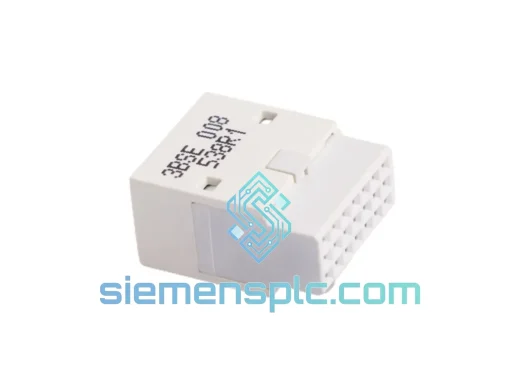
ABB TB807 3BSE008538R1 DCS Modulebus Terminator
AC800M
Origin SE
DCS Backplane Terminator