ABB
In Stock OK
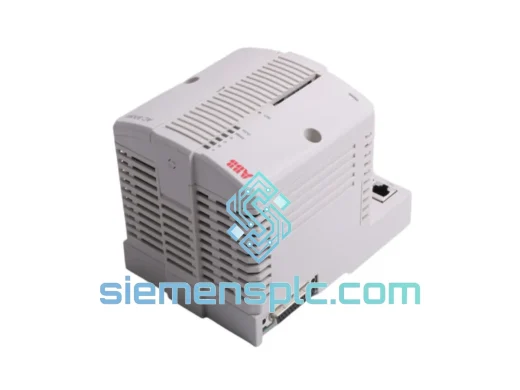
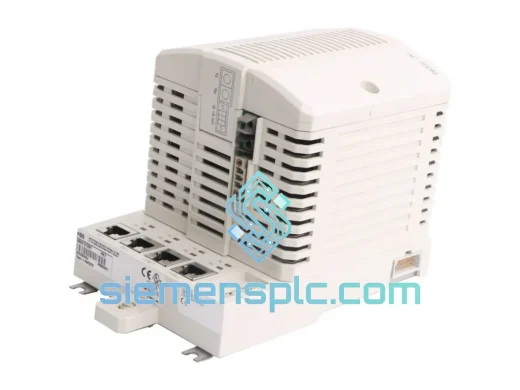
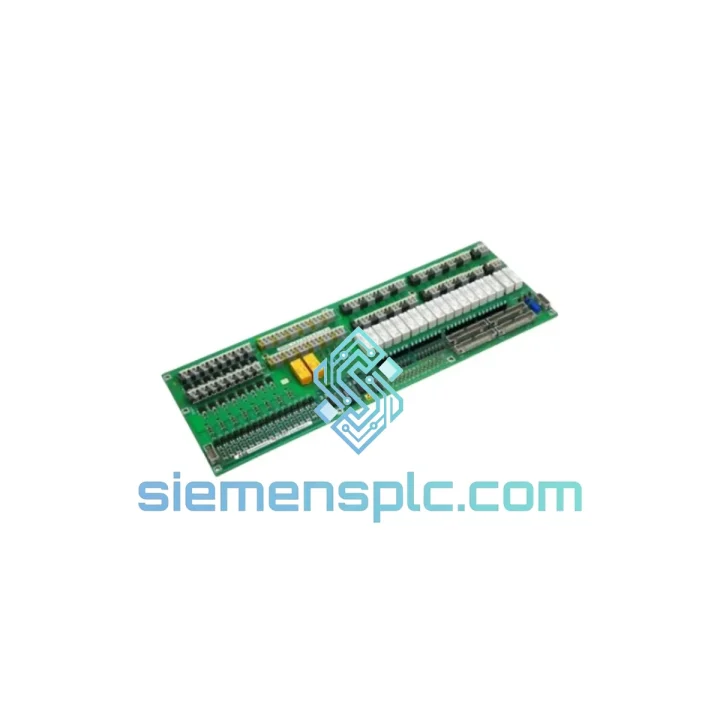
ABB PP B624 A01 HIET404828R0001 PCB Control Module
Request verified availability, condition, replacement risk review, packing options and courier lead time for PP B624 A01 HIET404828R0001.
BrandABB
Part NumberPP B624 A01 HIET404828R0001
ConditionAvailability Check
Lead TimeRFQ Confirmation
DocumentsDatasheet / photos by RFQ
ShippingExport packing available
Auto-filled RFQ
PP B624 A01 HIET404828R0001
Click Request Quote and the part number is inserted into the inquiry form automatically.
- Reply by email: [email protected]
- WhatsApp / Tel: +86 18359268345
- Mon-Sat 9:00-18:00 GMT+8
Procurement Data
Key Product Information
Core fields for model confirmation and RFQ routing. Detailed product narrative remains below.
- Brand
- ABB
- Primary Part Number
- PP B624 A01 HIET404828R0001
- Product Type
- PCB Control Module
- Series / Family
- HIET Series
- Manufacturer
- ABB
- Country of Origin
- SE
- Catalog Category
- DCS & Safety Modules
- Operating Temp.
- 0°C to +55°C
Model confirmed for inquiry
PP B624 A01 HIET404828R0001
Send quantity, destination and urgency. The RFQ form keeps this part number attached.
Request Quote
Product Overview
ABB PP B624 A01 HIET404828R0001 — Cut the Downtime Before It Cuts Your Margin
The alarm is live. Your DCS screen is throwing faults you’ve already traced to the PP B624 A01 HIET404828R0001. The board is dead, the rack slot is empty, and procurement is quoting you a 12-week lead time from the OEM. That gap between now and restart is where production losses compound — idle operators, missed shipments, contractual penalties, and a maintenance manager who needs answers by the next shift handover.
We carry the ABB PP B624 A01 HIET404828R0001 in stock at our Xiamen facility. Confirmed orders placed before 15:00 CST ship the same day via DHL or FedEx international express. No waiting on factory allocation. No back-and-forth with a distributor who has to check with their distributor. You call, we ship.
URGENT REQUIREMENT? Contact: [email protected] | WhatsApp: +86 18359268345
Quick Technical Datasheet
| Parameter | Specification |
|---|---|
| Full Part Number | PP B624 A01 HIET404828R0001 |
| Manufacturer | ABB |
| Product Series | HIET Series |
| Module Category | Printed Circuit Board — Process Control |
| Supply Voltage | 24 VDC (backplane bus powered) |
| Operating Temperature | 0°C to +55°C |
| Storage Temperature | −25°C to +70°C |
| Relative Humidity | 5–95% RH, non-condensing |
| PCB Substrate | High-Tg FR4 laminate |
| Conformal Coating | Yes — component side |
| Vibration Rating | IEC 60068-2-6, Profile Fc (10–150 Hz) |
| Weight | 900 g |
| Country of Origin | China |
| Condition | New / Tested-Surplus |
| Stock Status | ✅ Ready to Ship — Xiamen Warehouse |
| Dispatch Cutoff | Same-day on orders confirmed before 15:00 CST |
Troubleshooting & Replacement Tips
Ten years of field work on ABB HIET-series platforms teaches you that the failure modes are predictable — and that most replacement mistakes are avoidable. Here’s what to watch for before, during, and after swapping the PP B624 A01 HIET404828R0001.
Fault Signatures That Point to This Board:
- Control bus communication dropout — intermittent or sustained. Engineers often chase the cable first. If swapping the bus cable doesn’t clear the alarm within two scan cycles, the board’s bus transceiver is the failure point. The PP B624 A01 uses a dedicated transceiver IC that degrades under sustained voltage spikes from inductive loads on the same bus segment.
- Solid red CPU fault LED at power-on. This means the board failed its internal self-test before it ever attempted to join the network. Do not reset more than twice — repeated power cycles on a board in this state can corrupt the EEPROM configuration block, which stores the module’s address and calibration offsets. A corrupted EEPROM means the replacement board will also need reconfiguration from scratch.
- Analog output drift exceeding ±2% of span. Caused by degraded onboard voltage reference regulators. This failure mode is temperature-accelerated — cabinets running above 45°C ambient with poor airflow will see this within 3–5 years. The drift is gradual and often masked by process variability until a quality audit catches it.
- Watchdog timeout (WDT) fault tripping within 30 seconds of power-on. If the watchdog fires that fast, the firmware image on the module is either corrupted or mismatched with the system controller’s firmware revision. Check the firmware version label on the board edge before assuming the hardware is faulty.
- Backplane slot not recognized after insertion. Almost always a DIP switch addressing mismatch. The HIET series uses hardware address selection — if the switch positions on the replacement board don’t match the slot assignment defined in the system configuration, the controller ignores the module entirely. No fault code, no LED, just silence.
Replacement Field Checklist:
- Before removing the failed board, photograph the DIP switch positions and any jumper settings. Do this even if you think you know the configuration — address mismatches after a swap are the single most common cause of a second callout to the same fault.
- Verify firmware compatibility. The HIET series requires the replacement board’s embedded firmware major revision to match the system controller. Cross-reference the version label on the board edge with the system’s firmware manifest. A minor revision mismatch is usually tolerable; a major revision mismatch will cause the controller to reject the module.
- Use an ESD wrist strap. The analog front-end on this PCB — particularly the ADC input stage — is sensitive to electrostatic discharge. A single ungrounded touch to the component side can cause latent damage that passes a bench power-on test but fails under load within weeks.
- After seating the replacement, allow a full 90-second initialization cycle before reading status LEDs. The HIET module runs a self-calibration routine on first power-up that holds outputs at their last known state. Pulling the board during this window will corrupt the calibration data.
- If the system still shows a fault after a clean swap, inspect the backplane connector pins with a flashlight. High-vibration environments cause repeated board insertions that bend the female connector pins — a fault that’s invisible until you look for it.
Reliability in Harsh Conditions
The PP B624 A01 HIET404828R0001 was built for environments that destroy consumer-grade electronics in months. ABB’s HIET series design brief was industrial plant floors — not climate-controlled server rooms — and the engineering choices reflect that.
The PCB substrate is high-Tg FR4 laminate, which resists delamination under the thermal cycling that occurs every time a cabinet heats up during production and cools overnight. Standard FR4 boards in the same environment develop micro-cracks at the via walls within 18–24 months; the high-Tg variant extends that service life significantly. Conformal coating on the component side creates a barrier against condensation and airborne corrosives — H₂S in oil and gas installations, SO₂ in chemical processing, salt mist in coastal facilities. These contaminants attack uncoated PCB traces and cause resistive shorts that are nearly impossible to diagnose without lab equipment.
The power supply section uses 105°C-rated industrial electrolytic capacitors throughout. This matters because cabinet temperatures in tropical climates or near heat-generating equipment routinely exceed 50°C ambient, which puts the capacitor junction temperature well above what 85°C-rated consumer parts can sustain. Premature capacitor failure is the leading cause of power supply section faults on boards that were otherwise mechanically intact.
Vibration performance meets IEC 60068-2-6 test profile Fc, covering sinusoidal vibration from 10 to 150 Hz at specified acceleration levels. This covers the vibration spectrum generated by most pump skids, reciprocating compressors, and rotating machinery in the 1,500–3,000 RPM range. Every unit we dispatch is inspected for solder joint integrity under magnification — because a board that passes a bench power-on test with a hairline solder crack will fail again within weeks once it’s back in a vibrating rack.
Global Express Logistics
Our warehouse is in Xiamen, Fujian — one of China’s primary industrial export hubs with direct daily connections to DHL Express, FedEx International Priority, and UPS Worldwide Express. When your order is confirmed, here is exactly what happens:
- Same-day dispatch on orders confirmed before 15:00 CST. The module is picked, inspected, and handed to the carrier the same afternoon.
- ESD-safe packaging: Anti-static bag, foam-cushioned insert, double-wall export carton rated for air freight drop and compression loads. The board arrives in the same condition it left our shelf.
- Export documentation: Commercial invoice, packing list, and HS code declaration are prepared and attached to the shipment. We handle customs paperwork — you focus on the repair.
- Express transit times: Southeast Asia 1–2 days | Middle East 3–4 days | Europe 3–5 days | Australia 3–5 days | North America 4–6 days.
- Tracking notification: AWB number sent via email and WhatsApp within 2 hours of carrier pickup. Real-time tracking link included so your team can plan the installation window.
- Customs hold support: If your shipment is detained at customs, our logistics team provides supplementary documentation and HS code clarification within 4 business hours — no waiting on a third-party freight forwarder.
We have shipped ABB HIET series modules to petrochemical facilities in the Middle East, automotive plants in Central Europe, and power generation sites across Southeast Asia — all on emergency timelines where the standard OEM channel had already failed the customer. Downtime doesn’t negotiate. Neither do we.
Contact Information
📧 Email: [email protected]
💬 WhatsApp: +86 18359268345
🌐 Web: siemensplc.com
© 2026 siemensplc.com. All rights reserved.
Ready to quote
[email protected]
Send This Part Number to Sales
RFQ workflow
Quality workflow ->
Confirmation Process
01Model confirmation
We check the full part number, brand, series and visible nameplate information before quotation.
02Availability reply
Sales confirms stock path, condition option, quantity and realistic lead time for export dispatch.
03Packing & courier
DHL, FedEx, UPS or buyer courier arrangements can be reviewed with packing requirements.
Continue sourcing
Browse full catalog ->
Related Automation Parts
Similar brand or category products for fast comparison and multi-item RFQ lists.
ABB
RFQ Ready
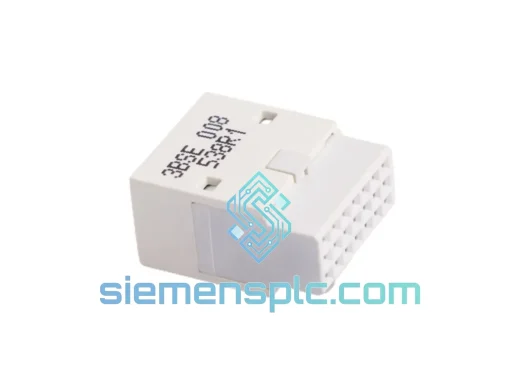
ABB TB807 3BSE008538R1 DCS Modulebus Terminator
AC800M
Origin SE
DCS Backplane Terminator