ABB
In Stock OK
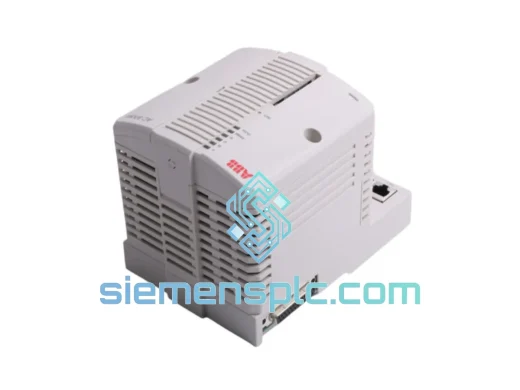
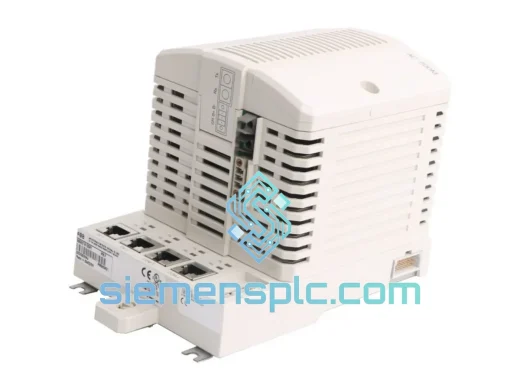
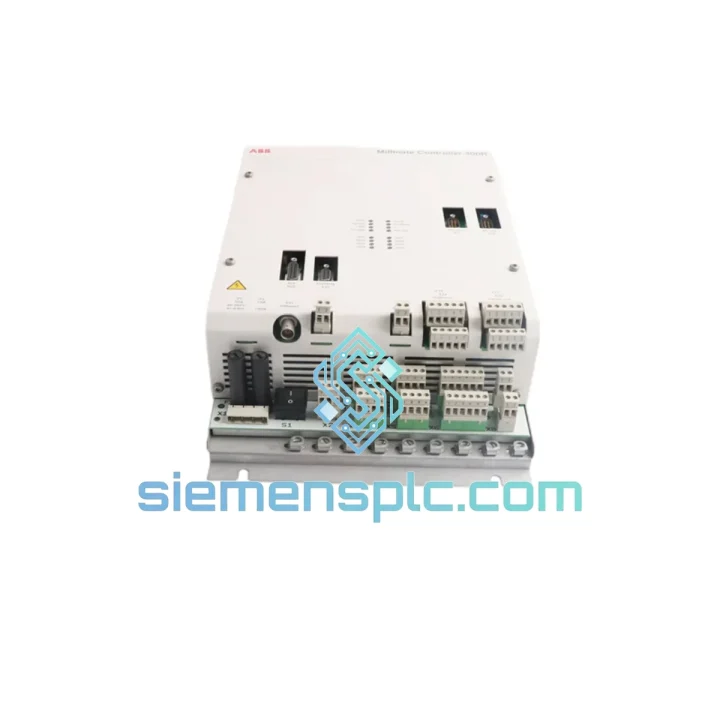
ABB PXAA401 3BSE017233R1 PLC CPU Module – AC800M Series
Request verified availability, condition, replacement risk review, packing options and courier lead time for PXAA401-3BSE017233R1.
BrandABB
Part NumberPXAA401-3BSE017233R1
ConditionAvailability Check
Lead TimeRFQ Confirmation
DocumentsDatasheet / photos by RFQ
ShippingExport packing available
Auto-filled RFQ
PXAA401-3BSE017233R1
Click Request Quote and the part number is inserted into the inquiry form automatically.
- Reply by email: [email protected]
- WhatsApp / Tel: +86 18359268345
- Mon-Sat 9:00-18:00 GMT+8
Procurement Data
Key Product Information
Core fields for model confirmation and RFQ routing. Detailed product narrative remains below.
- Brand
- ABB
- Primary Part Number
- PXAA401-3BSE017233R1
- Product Type
- PLC CPU Module
- Series / Family
- AC800M
- Manufacturer
- ABB Ltd.
- Country of Origin
- SE
- Catalog Category
- DCS & Safety Modules
- Warranty
- 12 months functional warranty from confirmed dispatch date
Model confirmed for inquiry
PXAA401-3BSE017233R1
Send quantity, destination and urgency. The RFQ form keeps this part number attached.
Request Quote
Product Overview
ABB PXAA401 3BSE017233R1 — Deterministic Control Execution Core for AC800M Distributed Automation Systems
The ABB PXAA401, catalog reference 3BSE017233R1, is the Central Processing Unit of the AC800M controller family — ABB’s flagship platform for continuous-process and hybrid automation. Within a deployed control node, this module carries sole responsibility for application task scheduling, ModuleBus cycle arbitration, and the maintenance of a coherent process image across all connected I/O and communication interface modules. It is not an auxiliary component; it is the computational authority from which every control decision in the local controller domain originates.
The AC800M architecture was designed around a hard real-time execution model. The PXAA401 implements a fixed-priority preemptive scheduler that partitions execution time into discrete task classes: fast cyclic tasks (minimum configurable period: 10 ms), normal cyclic tasks, event-driven tasks, and background tasks. The scheduler enforces strict temporal isolation between these classes — a burst of event-driven interrupts cannot consume CPU cycles allocated to a fast cyclic PID loop. This property is not incidental; it is the architectural guarantee that makes the AC800M suitable for closed-loop control of processes with tight stability margins, including turbine speed governors, boiler drum-level controllers, and compressor anti-surge systems where control latency above 50 ms can initiate a process trip.
The module interfaces with the AC800M rack via the internal ModuleBus — a synchronous, token-passing serial bus that operates at a fixed cycle rate independent of application load. The Central Unit acts as ModuleBus master, issuing timed polling frames to each co-located communication interface module (CI854A for PROFIBUS DP, CI857 for FOUNDATION Fieldbus, CI858 for HART, CI867 for IEC 61850). All modules must complete their data exchange within a single bus cycle; the PXAA401’s firmware enforces this constraint through a bus timeout mechanism that flags non-responding modules in the diagnostic data object without halting the controller scan. This design ensures that a failed communication module does not propagate a fault into the process control execution path.
Memory architecture on the PXAA401 separates application program storage, data memory, and retain memory into distinct address spaces. Application code and configuration data reside in non-volatile flash, allowing the controller to execute a warm restart — resuming process control from the last known state — within seconds of a power restoration event. Retain memory preserves selected process variables and setpoints across power cycles without requiring a download from the engineering workstation, a critical capability in facilities where the engineering workstation may not be physically accessible during an emergency restart sequence.
📩 Real-time Stock & RFQ: [email protected] | WhatsApp: +86 18359268345
Technical Parameters
| Parameter | Specification |
|---|---|
| Manufacturer | ABB Ltd. |
| Part Number | PXAA401 |
| Catalog Reference | 3BSE017233R1 |
| Module Function | Central Processing Unit — AC800M Controller |
| Platform Compatibility | AC800M (PM851, PM856, PM860, PM861, PM864, PM866 rack series) |
| Internal Communication Bus | ModuleBus — synchronous, master-arbitrated, deterministic cycle |
| Minimum Fast Task Cycle | 10 ms (application-configurable) |
| Programming Languages | IEC 61131-3: LD, FBD, ST, IL, SFC |
| Engineering Tool | ABB Control Builder M Professional |
| Supported Fieldbus Protocols | PROFIBUS DP, FOUNDATION Fieldbus H1, HART, Modbus TCP, IEC 61850, OPC UA (via CI modules) |
| Operating Temperature Range | 0 °C to +55 °C |
| Storage Temperature Range | −40 °C to +70 °C |
| Relative Humidity | 5–95% RH, non-condensing (IEC 60068-2-78) |
| Vibration Resistance | IEC 60068-2-6: 2–150 Hz, 1 g |
| Shock Resistance | IEC 60068-2-27: 15 g, 11 ms half-sine |
| EMC Immunity | IEC 61000-4-2 (ESD ±4 kV contact), IEC 61000-4-4 (EFT 2 kV), IEC 61000-4-5 (Surge 1 kV) |
| Regulatory Compliance | CE Mark, RoHS 2011/65/EU, IEC 61131-2 |
| Mounting | AC800M controller rack, DIN rail compatible |
| Supply Condition | Genuine ABB OEM — new sealed or surplus tested |
| Warranty | 12 months functional warranty from confirmed dispatch date |
Hardware Logical Analysis
PCB Ground-Plane Architecture and EMC Containment: The PXAA401’s printed circuit board employs a multi-layer ground-plane topology that physically separates the digital processing domain from the ModuleBus interface circuitry. This segmentation prevents high-frequency switching noise generated by the processor and memory subsystems from coupling into the backplane bus lines — a failure mode that manifests as intermittent communication errors in high-EMI cabinet environments. Transient voltage suppression (TVS) diodes and common-mode chokes are placed at all external interface boundaries, providing a first line of defense against IEC 61000-4-4 electrical fast transient bursts (2 kV peak, 5/50 ns rise time) and IEC 61000-4-5 combination wave surges (1 kV line-to-earth). In industrial installations where variable-frequency drives, large contactor banks, and high-current bus bars share the same cabinet infrastructure, these transients are routine operating conditions, not exceptional events.
Hardware Watchdog and Fail-Safe Execution: An independent hardware watchdog timer — implemented in dedicated logic separate from the main processor — monitors the application task execution cycle. If the processor fails to service the watchdog within the configured timeout window (indicating a software exception, memory access fault, or bus hang), the watchdog asserts a controlled shutdown signal. This signal places all connected I/O modules in their pre-configured fail-safe output states before the controller halts, preventing uncontrolled process actuator states during a controller fault. This behavior satisfies the fail-safe-on-fault requirement for SIL 1 and SIL 2 rated process safety applications under IEC 61511.
Redundancy Arbitration Logic: In a redundant controller configuration, the PXAA401 participates in a continuous state-synchronization protocol with its standby counterpart. The active unit transmits a compressed process image delta to the standby unit at each scan cycle boundary. The standby unit maintains a shadow copy of the process image and application state, enabling a bumpless switchover — transfer of control authority — within a single scan cycle upon detection of an active unit fault. The arbitration logic uses a hardware-level heartbeat signal rather than a software polling mechanism, ensuring that a software hang on the active unit does not prevent the standby from detecting the fault and asserting control.
Non-Volatile Memory and Warm Restart Capability: Application program, configuration parameters, and retain variable values are stored in separate non-volatile memory regions. On power restoration, the boot sequence verifies the integrity of each memory region via CRC checksum before loading the application. A failed CRC on the retain memory region triggers a configurable fallback behavior — either a cold start with default values or a halt pending operator intervention — rather than executing with corrupted process data. This deterministic boot behavior is a prerequisite for facilities operating under IEC 61511 functional safety management requirements.
System Integration Benefits
- Hard real-time task isolation: The fixed-priority preemptive scheduler guarantees that fast cyclic control tasks execute within their configured period regardless of communication load, event queue depth, or background diagnostic activity — eliminating scan-cycle jitter as a variable in control loop tuning.
- Structured diagnostic transparency: The module continuously populates a typed diagnostic data object accessible via Control Builder M and the AC800M OPC DA/UA server, exposing CPU load percentage, memory utilization, individual task execution times, ModuleBus error counters, and watchdog event history — without requiring a separate diagnostic instrument or a controller halt.
- Bumpless redundancy switchover: State-synchronization at each scan cycle boundary enables control authority transfer within one scan period, with no detectable step change at the process I/O level — meeting the bumpless transfer requirement for continuous-process applications where a control output step during switchover would trigger a process alarm or trip.
- Multi-protocol fieldbus integration: Through co-located CI-series interface modules, a single PXAA401-based controller node can simultaneously manage PROFIBUS DP field devices, FOUNDATION Fieldbus H1 segments, HART multiplexers, and IEC 61850 substation automation networks — consolidating what would otherwise require multiple protocol gateways into a single controller domain.
- Scalable I/O architecture: The ModuleBus supports expansion to remote S800 I/O clusters via TB820V2 and TB840A optical bus adapters, extending the controller’s I/O domain to several hundred points without modifying the Central Unit hardware or application task structure.
- Zero-impact engineering access: Control Builder M supports online program modification — adding, modifying, or deleting function block instances — while the controller remains in RUN mode, without interrupting the scan cycle or requiring a process shutdown. This capability reduces planned maintenance windows and eliminates the need for a controller halt during incremental application updates.
- ISA-18.2-compatible alarm data: The controller’s diagnostic framework generates alarm objects with ISO 8601 timestamps, severity classifications (Advisory, Critical, Fatal), and suppression state flags, providing the structured alarm data required for ISA-18.2-compliant alarm rationalization and historian integration at the SCADA layer.
- Established platform lifecycle: The AC800M platform carries ABB’s Extended Lifecycle Support designation, with committed spare parts availability and firmware maintenance through the mid-2030s. Stocking a verified PXAA401 spare reduces mean time to repair (MTTR) for an unplanned controller failure from days (lead time for a new unit) to hours (swap and warm restart).
Quality Assurance & Global Logistics
Every ABB PXAA401 3BSE017233R1 unit dispatched by siemensplc.com is sourced through traceable supply channels: authorized distributor surplus stock, OEM-certified reseller inventory, and documented industrial decommissioning projects with verifiable asset histories. No unit enters the dispatch inventory without completing a structured physical inspection protocol covering PCB surface condition, connector pin integrity, firmware version label verification, and holographic authenticity marking cross-referenced against ABB’s published label specifications.
Units classified as surplus-tested undergo a bench power-up sequence using AC800M-compatible rack infrastructure, followed by a self-diagnostic verification cycle that confirms processor initialization, ModuleBus master arbitration, and non-volatile memory integrity. Inspection records — including technician ID, test date, firmware version confirmed, and pass/fail criteria — are retained in our quality management system and are available to customers upon request under standard NDA terms.
Logistics operations are based in Xiamen, China, with established accounts across DHL Express, FedEx International Priority, and UPS Worldwide Express for time-critical shipments. Standard in-stock orders are dispatched within 1–3 business days of order confirmation. Complete export documentation is prepared for every international shipment: commercial invoice, detailed packing list, certificate of origin, and HS code declaration (HS 8537.10 for programmable controllers; 8538.90 for spare parts). All electronic modules are packed in ESD-safe anti-static bags, cushioned within double-wall corrugated cartons rated for international air freight handling. Consolidated freight and project-quantity pricing are available for multi-unit orders — contact us for a tailored logistics proposal.
Contact Information
📧 Email: [email protected]
📱 WhatsApp: +86 18359268345
🌐 Web: siemensplc.com
📍 Location: Xiamen, China
© 2026 siemensplc.com. All rights reserved.
Ready to quote
[email protected]
Send This Part Number to Sales
RFQ workflow
Quality workflow ->
Confirmation Process
01Model confirmation
We check the full part number, brand, series and visible nameplate information before quotation.
02Availability reply
Sales confirms stock path, condition option, quantity and realistic lead time for export dispatch.
03Packing & courier
DHL, FedEx, UPS or buyer courier arrangements can be reviewed with packing requirements.
Continue sourcing
Browse full catalog ->
Related Automation Parts
Similar brand or category products for fast comparison and multi-item RFQ lists.
ABB
RFQ Ready
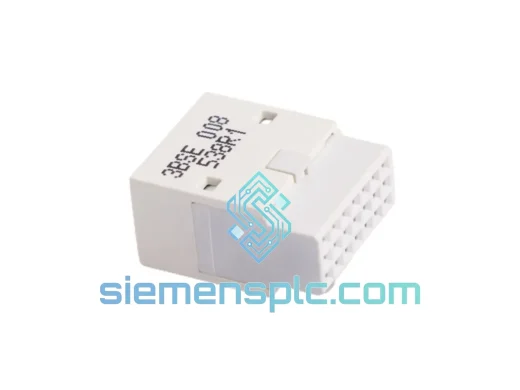
ABB TB807 3BSE008538R1 DCS Modulebus Terminator
AC800M
Origin SE
DCS Backplane Terminator