
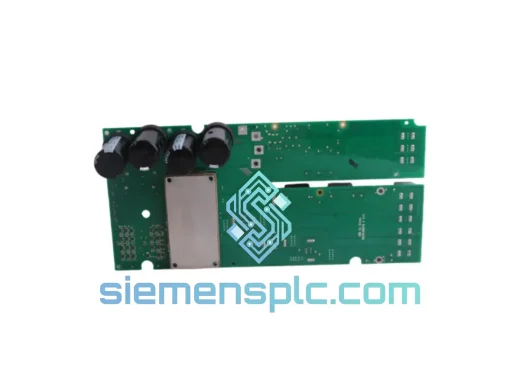
ABB
In Stock OK
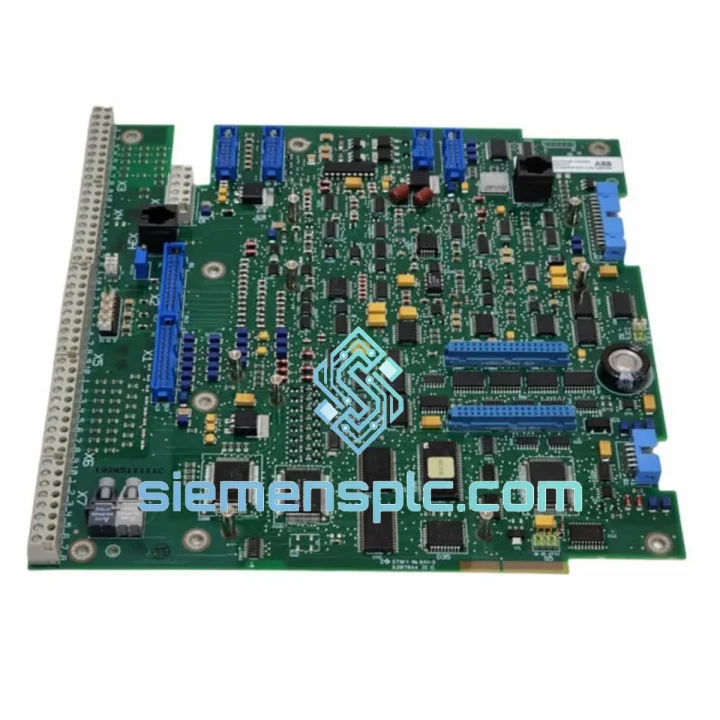
ABB SDCS-CON-2B Control Board – DCS 400 Series
Request verified availability, condition, replacement risk review, packing options and courier lead time for SDCS-CON-2B.
BrandABB
Part NumberSDCS-CON-2B
ConditionAvailability Check
Lead TimeRFQ Confirmation
DocumentsDatasheet / photos by RFQ
ShippingExport packing available
Auto-filled RFQ
SDCS-CON-2B
Click Request Quote and the part number is inserted into the inquiry form automatically.
- Reply by email: [email protected]
- WhatsApp / Tel: +86 18359268345
- Mon-Sat 9:00-18:00 GMT+8
Procurement Data
Key Product Information
Core fields for model confirmation and RFQ routing. Detailed product narrative remains below.
- Brand
- ABB
- Primary Part Number
- SDCS-CON-2B
- Product Type
- Control Board
- Series / Family
- DCS 400 Series
- Manufacturer
- ABB Ltd.
- Country of Origin
- SE
- Catalog Category
- Motor Drives
- Operating Temp.
- 0 °C to +55 °C (ambient, drive enclosure)
- Humidity
- 5–95% RH, non-condensing
- Warranty
- 12 months from date of shipment
Model confirmed for inquiry
SDCS-CON-2B
Send quantity, destination and urgency. The RFQ form keeps this part number attached.
Request Quote
Product Overview
ABB SDCS-CON-2B DC Drive Control Board – Closed-Loop Regulation Core for DCS 400 Series
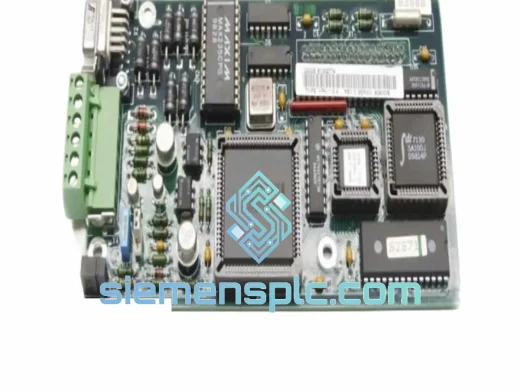
The ABB SDCS-CON-2B is the dedicated control and regulation board for the ABB DCS 400 family of fully digital DC drive systems. Positioned at the heart of the drive’s closed-loop architecture, this board executes all speed and current regulation algorithms, manages the firing pulse generation for the thyristor bridge, and handles the real-time communication interface between the drive and external supervisory systems. Its role is not peripheral — without a correctly functioning SDCS-CON-2B, the DCS 400 drive cannot perform armature current control, field weakening, or encoder-based speed feedback processing.
In a DCS 400 drive topology, the SDCS-CON-2B interfaces directly with the SDCS-POW-1 or SDCS-POW-4 power supply board via a dedicated internal bus, receives analog and digital I/O signals through the SDCS-IOB-1 or SDCS-IOB-3 I/O expansion boards, and communicates with field excitation boards such as the SDCS-FEX-1 and SDCS-FEX-2. This tightly integrated architecture means the control board must maintain deterministic cycle times — typically in the sub-millisecond range — to sustain stable torque and speed regulation across the full operating envelope of the connected DC motor.
Units available at siemensplc.com are sourced through verified industrial supply channels, inspected against ABB reference standards, and dispatched from Xiamen, China with full export documentation. Stock is maintained for immediate dispatch on in-demand part numbers.
Real-time Stock & RFQ: [email protected] | WhatsApp: +86 18359268345
Technical Parameters
| Parameter | Specification |
|---|---|
| Part Number | SDCS-CON-2B |
| Manufacturer | ABB Ltd. |
| Compatible Drive Series | ABB DCS 400 (DCS401, DCS402, DCS404) |
| Board Function | Speed & Current Regulation, Firing Pulse Generation, Drive Communication |
| Regulation Cycle Time | Armature current loop: ≤ 3.3 ms; Speed loop: configurable, typically 10–20 ms |
| Encoder Interface | Incremental encoder input (TTL-level, 5 V), max 10,000 ppr |
| Analog Inputs | 2 × differential, ±10 V, 12-bit resolution |
| Analog Outputs | 2 × ±10 V, 12-bit resolution |
| Digital I/O | Via SDCS-IOB expansion board (6 DI / 3 DO base configuration) |
| Fieldbus Options | PROFIBUS-DP, Modbus RTU, DeviceNet (via optional adapter modules) |
| Internal Communication Bus | Proprietary ABB SDCS backplane bus to power and I/O boards |
| Supply Voltage (from POW board) | ±15 V DC, +5 V DC (internally regulated) |
| Operating Temperature | 0 °C to +55 °C (ambient, drive enclosure) |
| Storage Temperature | -40 °C to +70 °C |
| Humidity | 5–95% RH, non-condensing |
| PCB Protection Class | IEC 60721-3-3 Class 3C2 (chemical), 3S2 (mechanical) |
| EMC Compliance | EN 61800-3 Category C2 (as part of DCS 400 system) |
| Weight (board only) | Approx. 350 g |
| Country of Origin | Finland (ABB manufacturing) |
| Warranty | 12 months from date of shipment |
Hardware Logical Analysis
The SDCS-CON-2B implements a dual-loop digital regulation structure. The inner armature current loop samples the current feedback signal — derived from the SDCS-POW board’s current transducer output — at a fixed interrupt rate synchronized to the thyristor firing frequency (typically 300 Hz for a 6-pulse bridge on a 50 Hz supply). The DSP-based controller calculates the firing angle α using a PI regulator with anti-windup logic, then outputs the firing pulse commands to the thyristor gate drive circuits on the power board. This architecture ensures that armature current transients are suppressed within two to three firing cycles, preventing overcurrent trips during load steps.
The outer speed loop operates on a slower interrupt cadence and accepts feedback from either a tachogenerator (analog, ±10 V) or an incremental encoder. The encoder interface on the SDCS-CON-2B includes a hardware quadrature decoder with a 16-bit counter register, providing position and velocity data without software overhead. Speed error is processed through a configurable PID structure with separate ramp generators for acceleration and deceleration, allowing smooth speed transitions even under variable load inertia.
From an EMC design standpoint, the SDCS-CON-2B employs optical isolation on all digital I/O signal paths crossing the power/control boundary. The isolation barrier sustains a minimum of 500 V DC working voltage, protecting the low-voltage control logic from transients generated by thyristor commutation on the power side. The PCB layout routes high-frequency clock signals in a dedicated inner layer with continuous ground plane shielding, minimizing radiated emissions that could interfere with co-located instrumentation. Decoupling capacitors are placed within 2 mm of each IC power pin, and bulk capacitance is distributed across the board to suppress supply rail noise during rapid switching events.
The board also incorporates a watchdog timer circuit that monitors the main control processor’s execution loop. If the processor fails to reset the watchdog within the defined timeout window — typically 100 ms — the watchdog asserts a hardware fault signal that disables the firing pulse outputs and triggers a controlled drive shutdown. This hardware-level safety mechanism operates independently of the firmware, ensuring that a software hang cannot result in uncontrolled thyristor conduction.
System Integration Benefits
- Deterministic current loop timing: Fixed interrupt-driven current regulation at the thyristor firing frequency eliminates jitter in armature current control, maintaining torque accuracy within ±0.5% across the speed range.
- Dual feedback compatibility: Accepts both analog tachogenerator and digital incremental encoder feedback without hardware modification, simplifying retrofits on legacy DC motor installations.
- Transparent fault diagnostics: The board logs fault codes with timestamps to a non-volatile memory register accessible via the drive’s keypad or DriveWindow PC tool, enabling root-cause analysis without oscilloscope instrumentation.
- Fieldbus-ready architecture: The SDCS-CON-2B’s communication interface supports optional PROFIBUS-DP, Modbus RTU, and DeviceNet adapter modules, allowing direct integration into existing PLC-based supervisory control architectures without additional gateway hardware.
- Scalable I/O expansion: The backplane bus supports stacking of SDCS-IOB-1 and SDCS-IOB-3 I/O boards, allowing the control system to be expanded for multi-motor coordination or process interlocking without replacing the control board.
- Field weakening control: The board manages the transition from constant-torque to constant-power operation by coordinating armature voltage limiting with field current reduction via the SDCS-FEX excitation board, enabling extended speed range operation above base speed.
- Parameter non-volatility: All drive parameters — PID gains, ramp times, limit values, and I/O assignments — are stored in onboard EEPROM. Parameters survive power cycling without requiring re-commissioning, reducing restart time after planned maintenance shutdowns.
- Hardware interlock outputs: Dedicated relay output contacts on the I/O board, controlled by the SDCS-CON-2B’s logic, provide hardwired interlock signals to upstream circuit breakers and motor contactors, satisfying safety relay requirements in SIL-rated machine control applications.
Quality Assurance & Global Logistics
Every SDCS-CON-2B dispatched from siemensplc.com is an ABB-manufactured original component. Boards are sourced through traceable industrial supply channels and subjected to a structured incoming inspection protocol: visual examination of PCB traces, component date codes, and connector pin integrity; continuity testing of critical signal paths; and verification of board markings against ABB part number databases. Units that do not pass inspection are quarantined and not offered for sale.
Packaging follows ESD-safe handling procedures throughout. Each board is placed in a conductive anti-static bag, cushioned with foam inserts rated for IEC 61340-5-1 compliance, and packed in a double-wall corrugated carton. For international shipments, cartons are labeled with HS code 8537.10 and accompanied by a commercial invoice, packing list, and certificate of origin — documentation required for smooth customs clearance in most jurisdictions.
Dispatch is from Xiamen, China, with access to DHL Express, FedEx International Priority, and UPS Worldwide Expedited services. In-stock units are typically dispatched within 1–2 business days of order confirmation. Transit times to major industrial hubs: Europe 3–5 days, Southeast Asia 2–3 days, Middle East 3–4 days, North America 4–6 days. Bulk orders can be consolidated for sea freight dispatch with full container load or LCL options. All shipments include tracking numbers provided at the time of dispatch.
A 12-month warranty covers defects in materials and workmanship from the date of shipment. Warranty claims are processed by submitting the order reference, fault description, and photographic evidence to [email protected]. Confirmed warranty cases are resolved by replacement dispatch or credit note, at the buyer’s preference.
Contact Information
Email: [email protected]
WhatsApp: +86 18359268345
Web: siemensplc.com
Location: Xiamen, China
© 2026 siemensplc.com. All rights reserved.
Ready to quote
[email protected]
Send This Part Number to Sales
RFQ workflow
Quality workflow ->
Confirmation Process
01Model confirmation
We check the full part number, brand, series and visible nameplate information before quotation.
02Availability reply
Sales confirms stock path, condition option, quantity and realistic lead time for export dispatch.
03Packing & courier
DHL, FedEx, UPS or buyer courier arrangements can be reviewed with packing requirements.
Continue sourcing
Browse full catalog ->
Related Automation Parts
Similar brand or category products for fast comparison and multi-item RFQ lists.
ABB
RFQ Ready
ABB ZINT-592 Fieldbus Interface Board – ZINT Series
ACS Drive
Origin SE
Interface Board
ABB
RFQ Ready
ABB YPK113A 61002774 Drive Control Board
In-Stock Xiamen
Origin SE
Drive Control Board