ABB
RFQ Ready
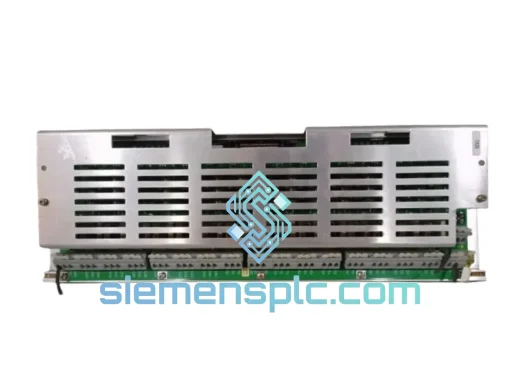
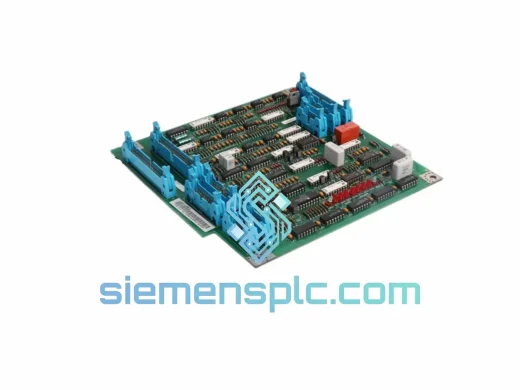
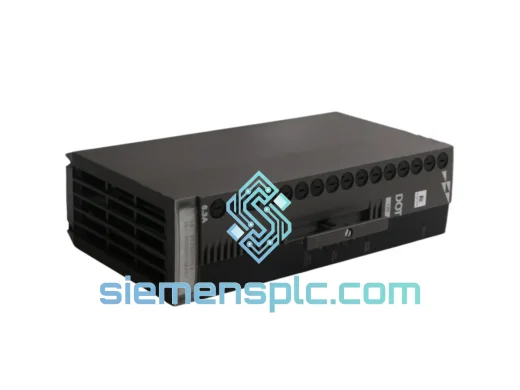
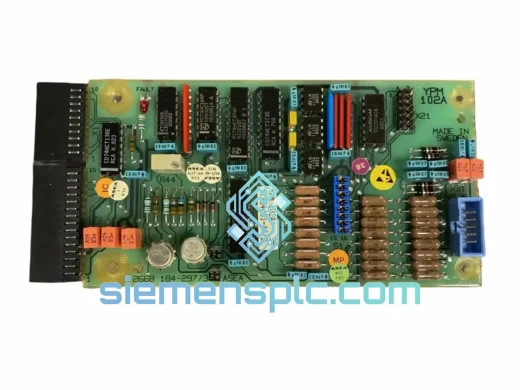
ABB YPM102A YT204001-AA Analog Output Module – AC 800M S800 I/O
S800
Origin SE
Analog Output Module
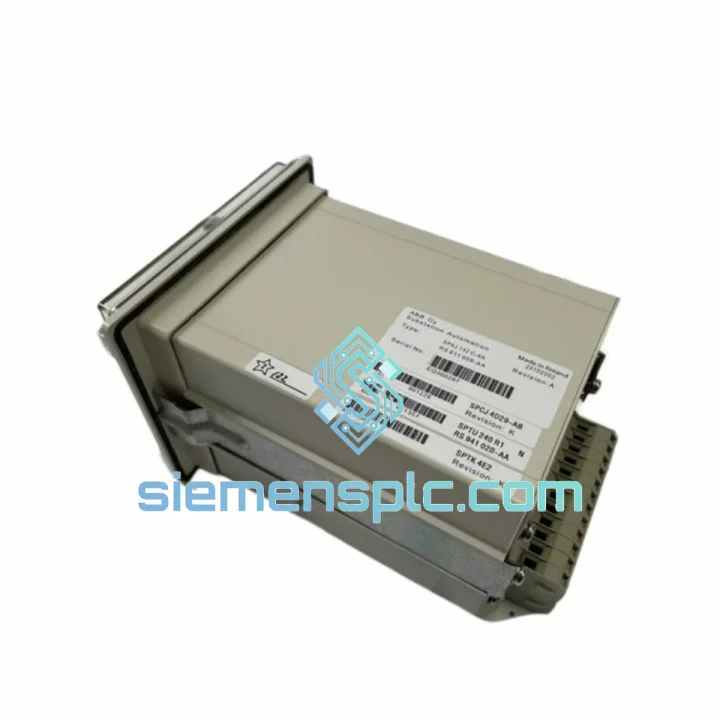
Request verified availability, condition, replacement risk review, packing options and courier lead time for SPAJ 142C.
Click Request Quote and the part number is inserted into the inquiry form automatically.
Core fields for model confirmation and RFQ routing. Detailed product narrative remains below.
The ABB SPAJ 142C is a dedicated relay terminal module engineered to interface directly with ABB’s SPAJ-series overcurrent and earth-fault protection relays. Within a medium-voltage protection scheme, the terminal module occupies the mechanical and electrical boundary between the relay’s internal signal processing circuitry and the external field wiring — a position that demands zero-tolerance dimensional accuracy, rated insulation integrity, and long-term contact stability under cyclic thermal and vibration stress.
In a typical 6 kV–35 kV feeder protection panel, the SPAJ 142C mounts to the rear of the SPAJ relay housing and provides organized, labeled screw-type terminal blocks for binary inputs (BI), trip output contacts (TO), signal output contacts (SO), and auxiliary power supply connections. The module’s mechanical keying prevents incorrect relay-to-terminal mating, eliminating a common commissioning error in multi-relay cubicles where several SPAJ variants are installed side by side.
Real-time Stock & RFQ: [email protected] | WhatsApp: +86 18359268345
| Parameter | Value |
|---|---|
| Manufacturer | ABB (Asea Brown Boveri) |
| Part Number / SKU | SPAJ 142C |
| Module Type | Relay Terminal Module (Rear Wiring Interface) |
| Compatible Relay Series | ABB SPAJ 140C, SPAJ 141C, SPAJ 143C |
| Terminal Block Type | Screw-clamp, self-lifting cage clamp |
| Conductor Cross-Section | 0.5 mm² – 4.0 mm² (solid or stranded) |
| Rated Insulation Voltage (Ui) | 250 V AC/DC |
| Rated Impulse Withstand Voltage (Uimp) | 4 kV (per IEC 60664-1) |
| Auxiliary Supply Range | 24–250 V DC / 100–230 V AC (relay-dependent) |
| Binary Input Voltage Range | 18–265 V DC / 80–265 V AC |
| Trip Output Contact Rating | 5 A / 250 V AC; 5 A / 30 V DC (resistive) |
| Signal Output Contact Rating | 1 A / 250 V AC; 1 A / 30 V DC |
| Operating Temperature | −10 °C to +55 °C (storage: −40 °C to +70 °C) |
| Relative Humidity | ≤ 95% RH, non-condensing |
| Mounting | Rear-mount to SPAJ relay housing; DIN rail compatible |
| Degree of Protection | IP 40 (module body); IP 20 (terminal area) |
| Standards Compliance | IEC 60255-1, IEC 60664-1, EN 50263 |
| Country of Origin | Finland (ABB Oy, Relay Products) |
| Weight | Approx. 85 g |
| Warranty | 12 months from date of shipment |
The SPAJ 142C’s physical architecture reflects ABB’s design philosophy for protection relay accessories: mechanical robustness takes precedence over miniaturization, and field-serviceability is treated as a first-order requirement rather than an afterthought.
Terminal Block Construction: The screw-clamp terminals use a dual-pressure-plate design that maintains consistent clamping force on the conductor even after repeated thermal cycling between −10 °C and +55 °C. This is critical in outdoor switchgear where ambient temperature swings of 40 °C across a 24-hour period are common. The cage-clamp variant maintains contact integrity independent of operator torque application, eliminating the resistive heating failures associated with under-torqued conventional screw terminals during high fault-current events.
Creepage and Clearance Geometry: The PCB-free, all-mechanical terminal block architecture achieves a minimum creepage distance of 8 mm and clearance of 6 mm between adjacent circuits at 250 V rated insulation voltage — exceeding IEC 60664-1 Category III requirements for industrial environments at pollution degree 2. In substation environments where SF₆ decomposition products or transformer oil vapors may be present, this margin prevents surface tracking failures that would compromise protection selectivity.
EMC Architecture: The SPAJ 142C does not incorporate active EMC filtering at the terminal level. ABB’s system-level EMC strategy assigns filtering responsibility to the relay’s internal input circuits, where binary inputs pass through RC snubber networks providing common-mode rejection ratios exceeding 60 dB at frequencies up to 1 MHz. The terminal module maintains low-impedance, low-inductance connections through short conductor paths and minimal loop area — preserving the relay’s internal filtering performance without adding parasitic impedance.
Contact Material and Endurance: Trip output contacts use silver-nickel (AgNi) alloy with minimum contact force of 0.5 N, rated for 10,000 mechanical operations and 2,000 electrical operations at rated load. Signal output contacts use silver-cadmium oxide (AgCdO) for arc-quenching performance at low-current, high-inductance loads typical of annunciator and SCADA interface circuits.
Mechanical Keying: A polarized guide pin on the module’s mating face prevents 180° reversal during installation — a failure mode that would connect trip outputs to binary input circuits, potentially causing uncontrolled relay operation during commissioning energization.
Every ABB SPAJ 142C unit supplied through siemensplc.com is processed through a structured pre-shipment inspection protocol at our Xiamen, China operations facility.
Incoming Inspection: Each unit is visually inspected for mechanical damage, terminal block integrity, and label legibility. Lot traceability is verified against ABB production batch documentation. Units without verifiable batch documentation are quarantined and not offered for sale.
Functional Verification: Terminal contact resistance is measured at each screw position using a four-wire milliohm meter. Contacts exceeding 5 mΩ at rated clamping torque are rejected. Insulation resistance between adjacent terminal circuits is verified at 500 V DC (minimum 100 MΩ required).
Packaging: Units are individually wrapped in anti-static polyethylene film, placed in foam-lined corrugated cartons rated for 1.2 m drop test per ISTA 1A, and sealed with tamper-evident tape. Each carton includes a packing slip with part number, batch reference, inspection date, and inspector ID.
Shipping from Xiamen, China: Standard dispatch via DHL Express, FedEx International Priority, or UPS Worldwide Expedited — transit times of 3–7 business days to Europe, North America, Southeast Asia, and the Middle East. Sea freight consolidation available for orders exceeding 50 units. Export documentation includes commercial invoice, packing list, and certificate of origin (HS Code: 8538.90). All shipments are fully insured at declared value.
Warranty Terms: 12 months from date of shipment. Covers manufacturing defects and premature contact failure under normal operating conditions. RMA process: contact [email protected] with order reference and failure description; replacement or credit issued within 5 business days of confirmed defect.
Email: [email protected]
WhatsApp: +86 18359268345
Web: siemensplc.com
Location: Xiamen, China
© 2026 siemensplc.com. All rights reserved.
We check the full part number, brand, series and visible nameplate information before quotation.
Sales confirms stock path, condition option, quantity and realistic lead time for export dispatch.
DHL, FedEx, UPS or buyer courier arrangements can be reviewed with packing requirements.
Similar brand or category products for fast comparison and multi-item RFQ lists.