ABB
In Stock OK
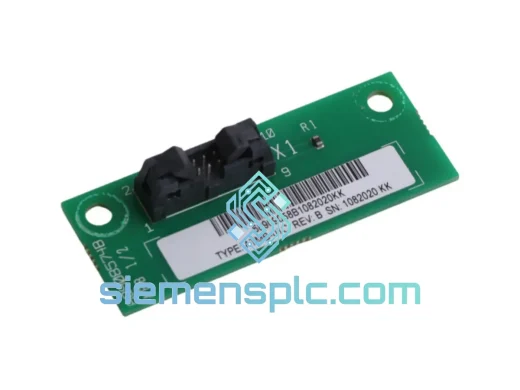
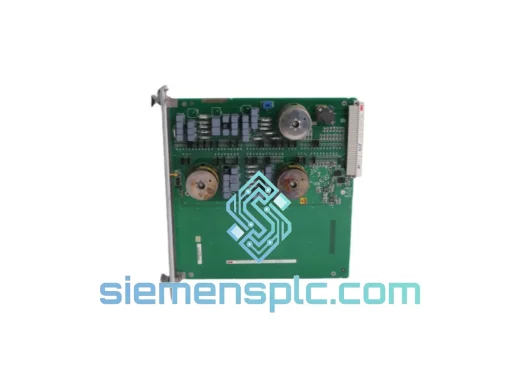
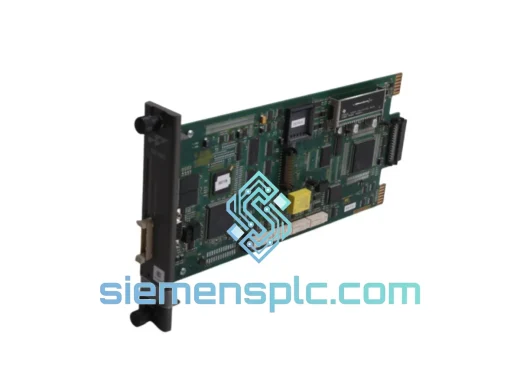
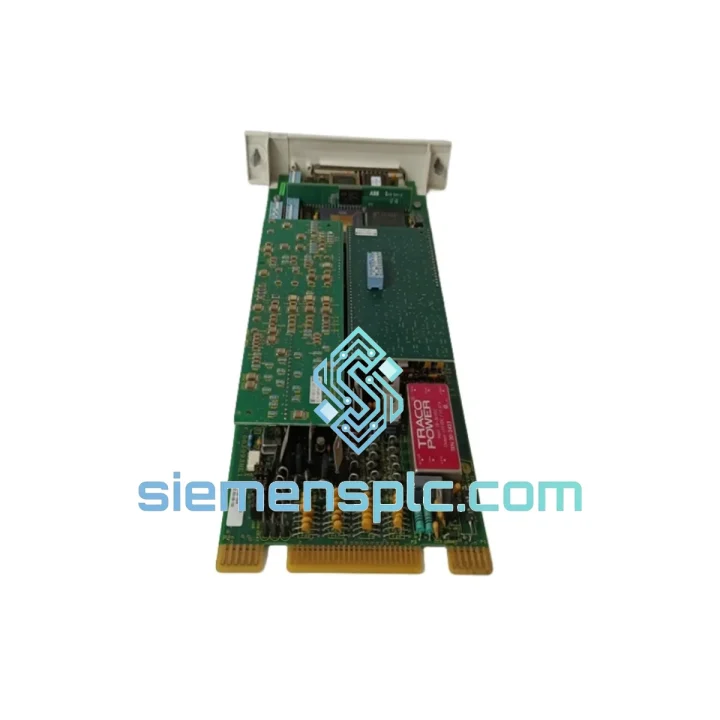
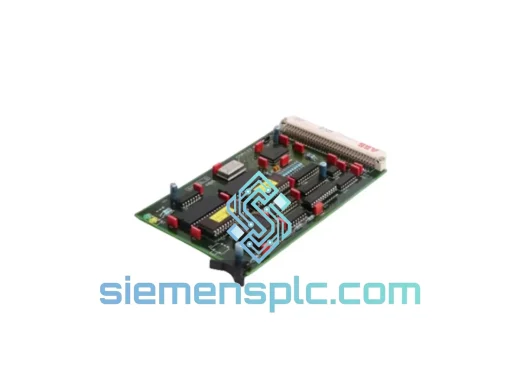
ABB SPHSS03 PLC Module – AC500 Series
Request verified availability, condition, replacement risk review, packing options and courier lead time for SPHSS03.
BrandABB
Part NumberSPHSS03
ConditionAvailability Check
Lead TimeRFQ Confirmation
DocumentsDatasheet / photos by RFQ
ShippingExport packing available
Auto-filled RFQ
SPHSS03
Click Request Quote and the part number is inserted into the inquiry form automatically.
- Reply by email: [email protected]
- WhatsApp / Tel: +86 18359268345
- Mon-Sat 9:00-18:00 GMT+8
Procurement Data
Key Product Information
Core fields for model confirmation and RFQ routing. Detailed product narrative remains below.
- Brand
- ABB
- Primary Part Number
- SPHSS03
- Product Type
- PLC Module
- Series / Family
- AC500
- Manufacturer
- ABB
- Country of Origin
- SE
- Catalog Category
- PLCs & Controllers
- Operating Temp.
- 0 °C to +55 °C
- Warranty
- 12 months against manufacturing defects
Model confirmed for inquiry
SPHSS03
Send quantity, destination and urgency. The RFQ form keeps this part number attached.
Request Quote
Product Overview
ABB SPHSS03 AC500 DCU Hydraulic Servo Control Module — Closed-Loop Axis Management for Demanding Industrial Processes
The ABB SPHSS03 is a dedicated Drive Control Unit (DCU) hydraulic servo module engineered for integration within the ABB AC500 programmable logic controller platform. Its primary function is deterministic closed-loop control of hydraulic servo axes — governing both position and velocity through a direct servo valve interface. Unlike generic analog output modules repurposed for hydraulic duty, the SPHSS03 carries onboard logic specifically architected for the timing constraints and feedback resolution demands of hydraulic motion control. In a typical control loop, the module receives setpoint data from the AC500 CPU over the internal backplane bus, executes the PID or state-space control algorithm locally, and drives the servo valve command signal — all within a fixed, bounded cycle time that eliminates the jitter inherent in software-only implementations.
The module occupies a single slot on the AC500 backplane and draws its 24 VDC operating power directly from the rack power bus, eliminating the need for an external auxiliary supply. Its servo valve output is a ±10 V differential analog signal with 16-bit resolution, providing 0.015% full-scale command granularity — sufficient for sub-millimeter positioning in press and forming applications. Position feedback is accepted via a high-resolution encoder or SSI absolute encoder interface, with the module performing real-time interpolation to maintain loop bandwidth independent of CPU scan cycle variation.
In hydraulic systems, the relationship between valve spool displacement and actuator velocity is nonlinear, particularly near null. The SPHSS03 addresses this through configurable dead-band compensation and gain scheduling parameters, which are set during commissioning via ABB Automation Builder. This allows the control engineer to linearize the valve characteristic across the operating range without external signal conditioning hardware. The result is a tighter velocity profile during ramp transitions and reduced overshoot at position targets — measurable improvements in cycle time and part quality for press and injection molding applications.
From a system architecture perspective, the SPHSS03 reduces the node count in a hydraulic servo system. A conventional approach requires a separate motion controller, an analog output card, and a feedback input card — three hardware nodes with associated wiring, cabinet space, and failure points. The SPHSS03 consolidates these functions into a single backplane module, directly reducing panel complexity and mean time to repair (MTTR) when a fault occurs.
Real-time Stock & RFQ: [email protected] | WhatsApp: +86 18359268345
Technical Parameters
| Parameter | Specification |
|---|---|
| Part Number | SPHSS03 |
| Manufacturer | ABB |
| Platform | AC500 PLC Series |
| Module Classification | DCU — Drive Control Unit, Hydraulic Servo |
| Backplane Bus Interface | AC500 internal parallel backplane bus |
| Supply Voltage | 24 VDC ±15% via backplane rail |
| Servo Valve Output | ±10 V differential analog, 16-bit DAC resolution |
| Position Feedback Input | Incremental encoder (TTL/RS-422) or SSI absolute encoder |
| Control Loop Cycle Time | Configurable; minimum 1 ms deterministic execution |
| Operating Temperature | 0 °C to +55 °C |
| Storage Temperature | −25 °C to +70 °C |
| Relative Humidity | 5% to 95%, non-condensing |
| Protection Class | IP20 (IEC 60529) |
| EMC Compliance | EN 61000-6-2 (immunity), EN 61000-6-4 (emission) |
| Certifications | CE, RoHS 2011/65/EU |
| Mounting | AC500 backplane slot, DIN rail via AC500 rack |
| Weight | Approx. 600 g |
| Warranty | 12 months against manufacturing defects |
Hardware Logical Analysis
The SPHSS03’s internal architecture separates the communication layer from the control execution layer using a dual-processor design. A communication processor handles all backplane transactions — receiving setpoints, transmitting status words, and servicing diagnostic read requests from the AC500 CPU — while a dedicated real-time processor executes the servo control algorithm. This separation ensures that backplane traffic spikes, which occur during multi-module polling cycles, do not introduce latency into the servo loop. The control processor operates on a hardware timer interrupt, not a software polling loop, guaranteeing fixed-interval execution regardless of communication load.
The analog output stage uses a 16-bit sigma-delta DAC followed by a differential output amplifier with a slew rate matched to the bandwidth of industrial servo valves (typically 50–150 Hz at −3 dB). The output is short-circuit protected and includes a watchdog-driven safe-state circuit: if the communication processor detects a backplane timeout exceeding the configured limit, the DAC output is driven to 0 V within one control cycle, placing the servo valve at null and stopping actuator motion. This hardware-enforced safe state operates independently of the CPU — the module does not rely on a software command to achieve a safe output condition.
EMC design on the SPHSS03 follows a layered approach. The PCB uses a four-layer stackup with dedicated ground planes separating the analog output circuitry from the digital logic. Ferrite beads are placed on all I/O lines at the board edge, and the encoder input lines are terminated with matched impedance to suppress reflections on cable runs up to 50 m. The module housing is conductive and bonds to the AC500 rack ground rail, providing a low-impedance return path for shield currents from encoder cables — a detail that matters in environments with variable-frequency drives or large contactors generating conducted interference on the ground plane.
The feedback interpolation engine accepts encoder signals at up to 1 MHz quadrature frequency and performs 4× interpolation in hardware, yielding an effective position resolution four times the physical encoder line count. For a 2,500 PPR encoder, this produces 10,000 counts per revolution — adequate for sub-0.1 mm linear positioning on a 10 mm/rev ballscrew without requiring a higher-resolution encoder. This reduces sensor cost in applications where the mechanical system, not the feedback device, is the limiting factor in positioning accuracy.
System Integration Benefits
- Deterministic servo loop execution: Hardware timer-driven control cycle eliminates software jitter; loop timing is bounded to ±5 µs regardless of CPU scan load, ensuring consistent valve command delivery across all operating conditions.
- Reduced panel wiring complexity: Consolidation of servo command output, encoder feedback input, and control logic into one backplane module eliminates inter-device cabling between a standalone motion controller and I/O cards, reducing wiring errors and cabinet space by an estimated 30–40% compared to a three-component equivalent.
- Native AC500 diagnostic transparency: Module status, servo error, encoder fault, and watchdog state are mapped directly into the AC500 process image, accessible to the CPU program without additional communication configuration. Fault codes are readable in Automation Builder’s online diagnostic view without a separate tool.
- Configurable dead-band and gain scheduling: Valve nonlinearity compensation is parameterized in engineering units, not raw DAC counts, allowing commissioning engineers to characterize the valve and enter the dead-band width directly from the valve datasheet. Gain scheduling across position zones reduces overshoot at target without manual PID retuning.
- Hardware safe-state output: Independent watchdog circuit drives servo valve command to null on backplane timeout, providing a hardware-enforced safe condition that does not depend on CPU program execution — compliant with functional safety design principles for hydraulic axis hold-to-run applications.
- SSI absolute encoder support: Eliminates homing cycles on machine startup. The module reads absolute position at power-on and immediately provides a valid position reference to the CPU, reducing cycle time loss at shift changes and after emergency stops.
- Scalable multi-axis architecture: Multiple SPHSS03 modules can be installed in the same AC500 rack, each operating its own independent servo loop. The CPU coordinates axes through the process image without requiring a separate motion bus, simplifying the network topology for multi-cylinder hydraulic systems.
- Engineering software integration: Full parameterization and online monitoring through ABB Automation Builder. Pre-defined function blocks for hydraulic axis control (position move, velocity move, homing) reduce application programming time and standardize the control structure across machine variants.
Quality Assurance & Global Logistics
Every ABB SPHSS03 unit supplied by siemensplc.com is sourced through verified channels and subjected to incoming inspection before dispatch. Physical inspection covers label integrity, housing condition, connector pin geometry, and the absence of counterfeit indicators including re-marking, sanding, and resin fill on IC packages. Where test equipment is available, modules are powered and checked for backplane communication response and self-diagnostic pass status.
All units are packaged in anti-static ESD-safe bags per IEC 61340-5-1, placed in foam-lined cartons rated for international air freight handling. A quality inspection record accompanies each shipment. The 12-month warranty covers manufacturing defects under normal operating conditions; dead-on-arrival units are replaced without charge upon photographic confirmation of the fault condition.
Logistics operations are based in Xiamen, China, with direct access to Xiamen Gaoqi International Airport and Xiamen Port for both air and sea freight. Standard in-stock orders are dispatched within 1–3 business days via DHL Express, FedEx International Priority, or UPS Worldwide, with door-to-door transit times of 3–7 business days to most destinations in Europe, North America, Southeast Asia, and the Middle East. Sea freight consolidation is available for bulk project orders. Commercial invoices, packing lists, and certificates of origin are provided for customs clearance. Export compliance review is conducted on all shipments prior to dispatch.
Contact Information
Email: [email protected]
WhatsApp: +86 18359268345
Web: siemensplc.com
Location: Xiamen, China
© 2026 siemensplc.com. All rights reserved.
Ready to quote
[email protected]
Send This Part Number to Sales
RFQ workflow
Quality workflow ->
Confirmation Process
01Model confirmation
We check the full part number, brand, series and visible nameplate information before quotation.
02Availability reply
Sales confirms stock path, condition option, quantity and realistic lead time for export dispatch.
03Packing & courier
DHL, FedEx, UPS or buyer courier arrangements can be reviewed with packing requirements.
Continue sourcing
Browse full catalog ->
Related Automation Parts
Similar brand or category products for fast comparison and multi-item RFQ lists.
ABB
RFQ Ready
ABB 1SVR427075R0000 CP-A CM PLC CPU Module – AC500 Compact Series
AC500
Origin SE
PLC CPU Module