Alfa Laval
RFQ Ready
Alfa Laval EPC50 3183045463 DCS Communication Module – Advant AF100
Origin Germany
DCS Communication Module
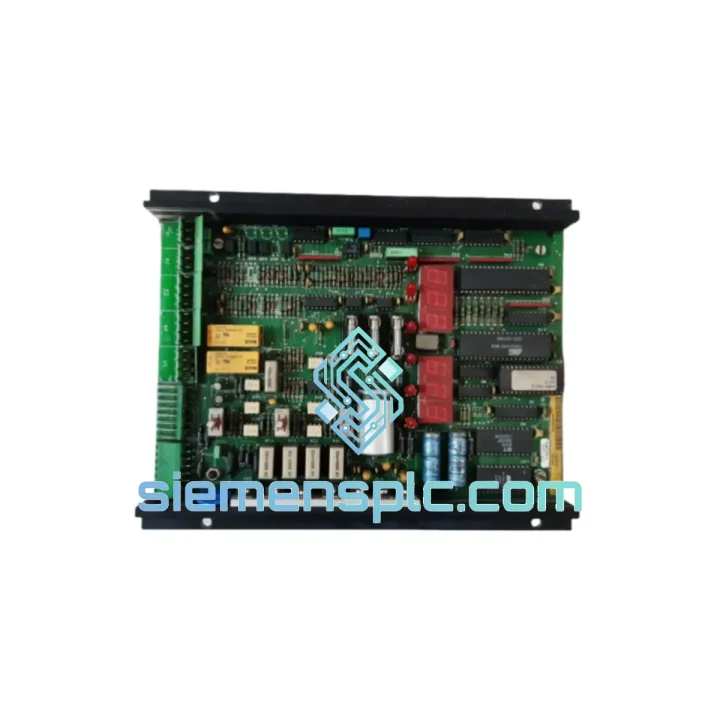
Request verified availability, condition, replacement risk review, packing options and courier lead time for 3183034171.
Click Request Quote and the part number is inserted into the inquiry form automatically.
Core fields for model confirmation and RFQ routing. Detailed product narrative remains below.
The Alfa Laval 3183034171 is a purpose-built thermal control module designed exclusively for the HEATPAC series of compact plate heat exchangers. Its operational mandate is precise: govern the closed-loop temperature regulation of primary-to-secondary heat transfer circuits by continuously computing valve positioning commands from measured supply and return temperature deviations. In district heating substations, central plant HVAC installations, and industrial process conditioning loops, this module functions as the deterministic control layer that translates sensor data into actuator commands — independent of upstream building management system (BMS) polling cycles.
The 3183034171 is not a repurposed general-purpose PID controller. Its internal parameter architecture — gain coefficients, integral time constants, derivative filter settings, and setpoint boundary conditions — is factory-configured against the thermal mass characteristics and hydraulic resistance profiles of HEATPAC plate pack assemblies. This OEM-matched configuration eliminates the iterative field tuning that accompanies third-party controller substitutions, where engineers must empirically derive process gain from scratch against an unfamiliar thermal plant. The result is a module that reaches stable closed-loop operation within the first commissioning cycle, with no manual gain adjustment required under standard HEATPAC hydraulic conditions.
In substation applications where multiple HEATPAC units serve parallel heating circuits, the 3183034171 maintains independent control loop integrity per unit. Each module’s PID execution is isolated at the scheduler level from its communication stack, meaning that BMS polling traffic — whether Modbus RTU or BACnet MS/TP — cannot introduce scan-cycle jitter that would manifest as valve hunting or temperature oscillation at the secondary circuit. This architectural separation is a measurable reliability advantage in installations where BMS network congestion is a documented operational risk.
The module interfaces directly with PT100 and PT1000 resistance temperature detectors positioned at HEATPAC supply and return ports. Its differential input amplification stage rejects common-mode electrical noise generated by variable-frequency drives, transformer switching, and power distribution equipment sharing the same mechanical plant room — environments where single-ended sensor inputs routinely produce measurement errors of 1–3 °C that accumulate into sustained setpoint deviation. The 3183034171’s signal conditioning architecture holds RTD measurement repeatability to within ±0.2 °C under standard EMC test conditions, preserving the temperature differential accuracy that district heating energy metering and process quality control depend on.
Valve output control uses a pulse-width modulated drive signal with configurable stroke time compensation. This parameter allows the module to account for actuator mechanical hysteresis — the positional dead-band that develops in aging valve packing — without requiring manual dead-band recalibration during each maintenance interval. The compensation algorithm continuously adjusts effective drive pulse width based on the difference between commanded and feedback-confirmed valve position, maintaining modulating accuracy across the full actuator service life. For installations operating 24/7 with annual valve maintenance cycles, this feature directly reduces the frequency of thermal setpoint excursions attributable to actuator wear.
Self-diagnostic routines execute continuously in the background without consuming PID scan-cycle time. RTD circuit continuity, valve feedback signal integrity, and power supply voltage are monitored at each execution frame. Fault conditions — open-circuit sensor, short-circuit sensor, actuator feedback loss — are flagged to the local operator interface and simultaneously reported via the active fieldbus protocol to the upstream BMS. Critically, fault detection does not halt the control loop: the module transitions to a configurable fallback strategy (last-known-good valve position or fixed safe-state output) that maintains thermal output during sensor degradation events. This fail-operational behavior allows maintenance teams to schedule sensor replacement during planned downtime rather than responding to emergency shutdowns.
Parameter storage uses EEPROM with a write-cycle endurance specification exceeding 100,000 operations. Setpoints, tuning coefficients, and communication configuration survive power cycling without battery backup — a relevant consideration for seasonal plant shutdowns where control panels may be de-energized for weeks. On power restoration, the module resumes closed-loop operation with the last-saved parameter set within the normal startup sequence, eliminating recommissioning overhead after planned outages.
Real-time Stock & RFQ: [email protected] | WhatsApp: +86 18359268345
| Part Number | 3183034171 |
| Manufacturer | Alfa Laval |
| Product Series | HEATPAC |
| Module Function | Closed-loop thermal regulation, plate heat exchanger control |
| Compatible Platform | Alfa Laval HEATPAC compact plate heat exchanger units |
| Supply Voltage | 24 VDC ±10% |
| Power Consumption | ≤ 8 W (typical operating load) |
| Sensor Input Types | PT100 / PT1000 RTD, 2-wire or 3-wire configuration |
| Measurement Repeatability | ±0.2 °C under standard EMC conditions |
| Control Algorithm | PID with pre-tuned HEATPAC-matched gain coefficients |
| Valve Output Signal | PWM modulating drive with stroke time compensation |
| Fieldbus Protocols | Modbus RTU / BACnet MS/TP (variant-dependent) |
| Enclosure Rating | IP20, panel-mount DIN rail installation |
| Operating Temperature | 0 °C to +55 °C ambient |
| Storage Temperature | -20 °C to +70 °C |
| Relative Humidity | 5–95% RH, non-condensing |
| EEPROM Endurance | > 100,000 write cycles |
| Weight | Approx. 1,500 g |
| Country of Origin | Sweden |
| Compliance | CE, RoHS, ISO 9001:2015 |
| Warranty | 12 months from dispatch date, manufacturing defects |
The 3183034171’s control architecture separates three execution domains at the firmware scheduler level: the PID control task, the self-diagnostic task, and the fieldbus communication stack. Each domain operates on an independent time slice with the PID task assigned the highest scheduler priority. This priority hierarchy ensures that Modbus or BACnet polling requests — which are inherently aperiodic and subject to network-induced latency — cannot preempt the control scan cycle. In practical terms, a BMS polling burst that saturates the fieldbus for 200 ms will not cause a corresponding 200 ms gap in valve positioning commands. The PID task continues executing at its fixed scan rate, and the communication stack services the queued requests in the subsequent idle period.
The RTD input stage uses a three-op-amp instrumentation amplifier topology with a common-mode rejection ratio (CMRR) specification appropriate for industrial plant room environments. Differential measurement eliminates the ground potential differences that develop between sensor mounting points and the control panel earth reference — a noise source that single-ended ADC inputs cannot reject. The input stage also incorporates RC low-pass filtering ahead of the ADC sampling point, attenuating high-frequency switching noise from adjacent VFD output stages that would otherwise alias into the measurement bandwidth.
Transient voltage suppression on the 24 VDC supply rail uses bidirectional TVS diodes with a clamping voltage selected to protect the microcontroller’s I/O interface below its absolute maximum rating. Inductive load switching — motorized valve actuators, contactor coils, solenoids — generates voltage spikes with rise times in the nanosecond range and peak amplitudes that can exceed 10× the nominal supply voltage on unprotected rails. The TVS network clamps these transients before they reach the microcontroller core, preventing the parameter corruption in non-volatile memory that would otherwise require a full recommissioning cycle to recover from.
The valve output PWM stage incorporates a feedback comparison loop that measures actual actuator travel time against the configured stroke time parameter. When the measured travel time deviates from the configured value — indicating actuator wear, increased packing friction, or mechanical obstruction — the module adjusts its effective pulse width to compensate, maintaining modulating resolution across the actuator’s degraded mechanical range. This adaptive compensation extends the interval between actuator recalibration events and provides an early indicator of actuator mechanical condition that maintenance teams can trend over time.
Each Alfa Laval 3183034171 unit dispatched from siemensplc.com is sourced through verified OEM supply channels with full part number cross-reference validation against Alfa Laval documentation. Incoming inspection covers physical integrity assessment, label and serial number verification, and anti-static packaging condition check prior to storage. Batch traceability records are maintained and available on request for quality-critical procurement processes subject to ISO 9001 or equivalent quality management requirements.
Dispatch operations are managed from Xiamen, China, with direct carrier access to DHL Express, FedEx International Priority, and UPS Worldwide Expedited services. Standard export documentation — commercial invoice, packing list, certificate of origin, and packing declaration — is prepared for all international shipments. HS code classification support is available for buyers in the EU, UK, United States, Southeast Asia, and Middle East regions. Time-critical requirements can be fulfilled under next-flight-out arrangements, with transit times of 2–5 business days to major industrial centers in Europe, North America, and the Asia-Pacific region. All units are dispatched in manufacturer-grade anti-static packaging with shock-absorbing outer cartons rated for international air freight handling.
A 12-month warranty against manufacturing defects applies from the date of dispatch. Warranty claims are processed with direct technical liaison to minimize replacement lead times for production-critical applications. Documentation support for warranty claims — including dispatch records, inspection reports, and part number verification — is provided as standard.
Email: [email protected]
WhatsApp: +86 18359268345
Web: siemensplc.com
Location: Xiamen, China
© 2026 siemensplc.com. All rights reserved.
We check the full part number, brand, series and visible nameplate information before quotation.
Sales confirms stock path, condition option, quantity and realistic lead time for export dispatch.
DHL, FedEx, UPS or buyer courier arrangements can be reviewed with packing requirements.
Similar brand or category products for fast comparison and multi-item RFQ lists.