Alfa Laval
RFQ Ready
Alfa Laval 3183034171 Heat Exchanger Control Module – HEATPAC Series
Origin Sweden
Heat Exchanger Control Module
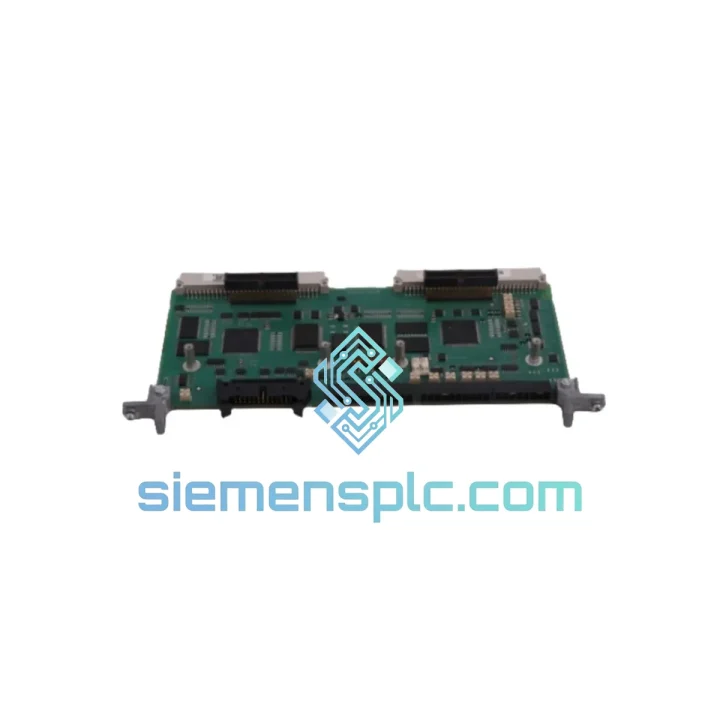
Request verified availability, condition, replacement risk review, packing options and courier lead time for EPC50 3183045463.
Click Request Quote and the part number is inserted into the inquiry form automatically.
Core fields for model confirmation and RFQ routing. Detailed product narrative remains below.
The Alfa Laval EPC50 (Part No. 3183045463) is a rack-mounted Ethernet Process Communication module purpose-built for the Advant AF100 Distributed Control System. The AF100 platform employs a deterministic token-passing fieldbus as its process data backbone, interconnecting AC-series controllers, I/O stations, and operator workstations in a time-bounded communication fabric. The EPC50 occupies the gateway layer of this architecture: it terminates the AF100 fieldbus on one side and presents a standard 10 Mbps Ethernet interface on the other, enabling supervisory systems, historian servers, and engineering workstations to exchange process data with field-level nodes without disrupting the deterministic scan cycle that governs closed-loop control.
The module’s design premise is that the communication gateway must not become a variable-latency element in the control chain. To satisfy this constraint, the EPC50 embeds native AF100 bus arbitration logic in dedicated firmware rather than delegating token management to a host processor. As a first-class AF100 node, the module participates in the token-passing cycle autonomously — forwarding tokens, acknowledging data frames, and maintaining bus timing — even when the Ethernet uplink is under load or temporarily unavailable. This architectural separation means that upper-network congestion events do not propagate into the fieldbus scan cycle, preserving loop response times for applications such as boiler drum level control, turbine speed regulation, and compressor surge protection where millisecond-level timing deviations carry process consequences.
Physically, the EPC50 mounts directly into the AF100 system chassis backplane. Power and bus signals are sourced from the rack bus connector, eliminating the need for external wiring to the communication layer. The module’s connector footprint and hardware revision marking are standardized across the AF100 product generation, allowing a verified replacement unit to restore communication function without re-parameterizing adjacent I/O stations or modifying controller node address tables — a critical operational advantage in installations where system downtime carries significant cost.
The EPC50 3183045463 has been deployed across a broad range of AF100-based installations: marine vessel automation systems, offshore platform distributed control, onshore refinery and petrochemical process control, and power generation plant automation. In each context, the module’s role is identical — to provide a reliable, electrically isolated, diagnostically transparent bridge between the deterministic AF100 fieldbus and the supervisory Ethernet network layer.
📩 Real-time Stock & RFQ: [email protected] | WhatsApp: +86 18359268345
| Parameter | Specification |
|---|---|
| Manufacturer | Alfa Laval (Advant / ABB lineage) |
| Part Number | EPC50 / 3183045463 |
| Product Series | Advant AF100 DCS |
| Module Function | Ethernet Process Communication Gateway |
| Fieldbus Protocol | AF100 proprietary token-passing (deterministic) |
| Ethernet Interface | 10BASE-T, RJ-45 connector |
| Backplane Interface | AF100 system bus (rack-mounted, direct backplane) |
| Supply Voltage | 24 V DC via backplane bus |
| Power Consumption | ≤ 5 W (typical operating load) |
| Isolation Voltage | 1.5 kV common-mode (fieldbus to Ethernet domain) |
| Operating Temperature | 0 °C to +55 °C |
| Storage Temperature | −25 °C to +70 °C |
| Relative Humidity | 5 % to 95 % RH, non-condensing |
| EMC Compliance | EN 61000-4-2 (ESD), EN 61000-4-4 (EFT), EN 61000-4-5 (Surge), EN 61000-4-6 (Conducted RF) |
| Mounting | AF100 system chassis, DIN-rail compatible rack |
| Weight | 440 g (approximate) |
| Country of Origin | Germany |
| Warranty | 12 months from dispatch date |
Dual-domain galvanic isolation: The EPC50 maintains electrical separation between the AF100 fieldbus interface and the Ethernet network port via optocoupler isolation rated to 1.5 kV common-mode. In marine and offshore environments, ground potential differences between the control room and field junction boxes routinely reach several hundred volts during fault conditions or lightning events. Without this isolation barrier, a transient on the Ethernet side could inject noise into the AF100 token-passing cycle, causing frame corruption and triggering bus recovery sequences that interrupt the control scan. The EPC50’s isolation architecture contains such events at the domain boundary.
Embedded AF100 arbitration state machine: Token management for the AF100 bus is handled by a dedicated state machine implemented in the module’s ASIC, not by the main application processor. This design choice has a concrete operational consequence: the module can sustain its bus participation — forwarding tokens, acknowledging data frames, maintaining the scan cycle — during periods when the Ethernet uplink is processing a burst of supervisory traffic. The fieldbus scan cycle is decoupled from upper-network load conditions, which is the correct architecture for any gateway that sits between a deterministic control network and a non-deterministic supervisory network.
Hardware watchdog with autonomous recovery: An independent watchdog timer monitors the firmware execution thread. If the main processor stalls — due to a memory fault, stack overflow, or corrupted configuration sector — the watchdog asserts a hardware reset within a configurable timeout window (typically 100–500 ms). The module re-initializes, rejoins the AF100 bus, and generates a structured diagnostic event logged in the system event journal. This behavior prevents a silent communication loss that could persist undetected through multiple operator shifts, a failure mode with serious implications in unmanned or remotely monitored installations.
Four-layer PCB with segregated ground planes: The EPC50 PCB uses a four-layer stackup with dedicated ground planes separating the digital logic layer from the analog signal conditioning layer. High-frequency switching nodes are routed away from the fieldbus receiver input traces to prevent capacitive coupling that would degrade the signal-to-noise margin on the bus receive path. The module housing provides shielding continuity through the chassis backplane ground connection, contributing to the system-level EMC performance required for IEC 61850 compliance and marine classification society certifications (DNV, Lloyd’s Register, Bureau Veritas).
Firmware-resident bus configuration: AF100 node address, scan cycle participation parameters, and diagnostic threshold settings are stored in non-volatile memory on the module. This means the EPC50 retains its configuration through power cycling and hardware reset events without requiring a connected engineering workstation — a practical requirement for installations where the engineering tool is not permanently connected to the system.
Every EPC50 3183045463 unit dispatched from our Xiamen facility passes a documented pre-shipment inspection sequence. Physical examination covers PCB surface condition, connector pin integrity and seating, label authenticity cross-referenced against OEM part marking databases, and hardware revision verification against the customer’s specified revision requirement. Where bench test equipment is available, functional testing confirms AF100 bus handshake initiation and Ethernet link auto-negotiation prior to packaging.
Units are sealed in anti-static bags, placed in foam-lined inner cartons, and packed in double-wall corrugated outer cartons rated for air freight handling per IATA standards. Each shipment includes a Konmask inspection certificate, part traceability record, commercial invoice with HS code classification (HS 8537.10 or 8473.30 as applicable), and a detailed packing list — documentation sufficient for customs clearance in most jurisdictions and for regulated-industry procurement audit trails.
Outbound logistics from Xiamen operate via DHL Express, FedEx International Priority, and SF International, with typical transit times of 3–5 business days to Europe and North America, and 2–4 business days to Southeast Asia and the Middle East. Sea freight consolidation is available for multi-unit orders where air freight cost is a constraint. In-stock units are dispatched within 1–3 business days of payment confirmation. A tracking number and complete shipping documentation set are transmitted by email within 24 hours of dispatch.
All units carry a 12-month warranty from the dispatch date. Dead-on-arrival claims must be submitted within 7 days of receipt with photographic documentation and a written fault description. Replacement or credit is processed in accordance with our published returns policy. For orders requiring third-party inspection certificates or specific country-of-origin documentation, please specify requirements at the time of inquiry.
📧 Email: [email protected]
📱 WhatsApp: +86 18359268345
🌐 Web: siemensplc.com
📍 Location: Xiamen, China
© 2026 siemensplc.com. All rights reserved.
We check the full part number, brand, series and visible nameplate information before quotation.
Sales confirms stock path, condition option, quantity and realistic lead time for export dispatch.
DHL, FedEx, UPS or buyer courier arrangements can be reviewed with packing requirements.
Similar brand or category products for fast comparison and multi-item RFQ lists.