Allen-Bradley
RFQ Ready
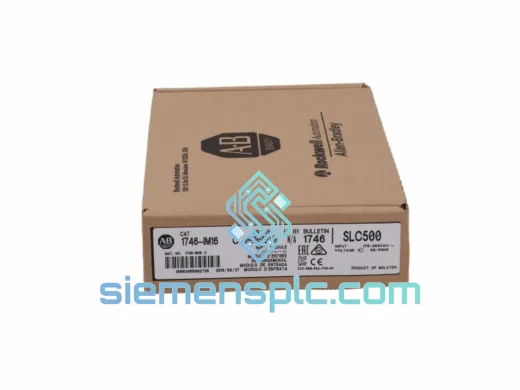
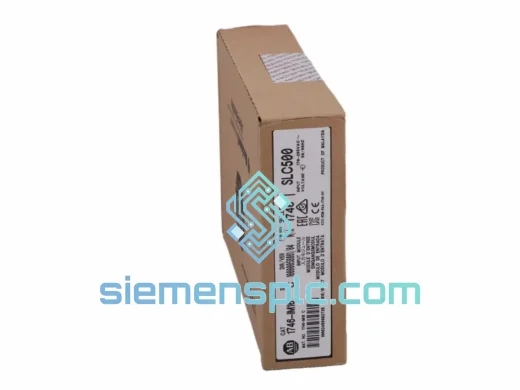
Allen-Bradley DIM16 Discrete Input Module
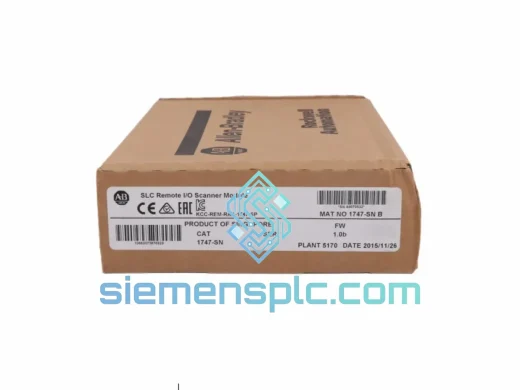
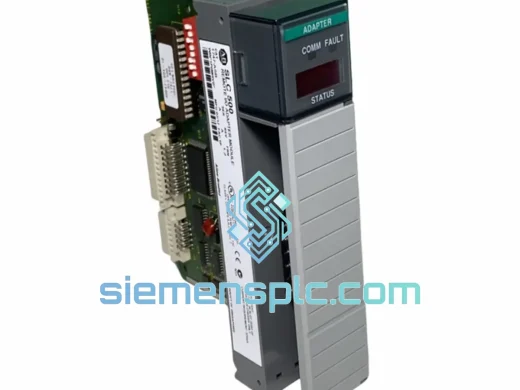
SLC 500
Origin US
Discrete Input Module
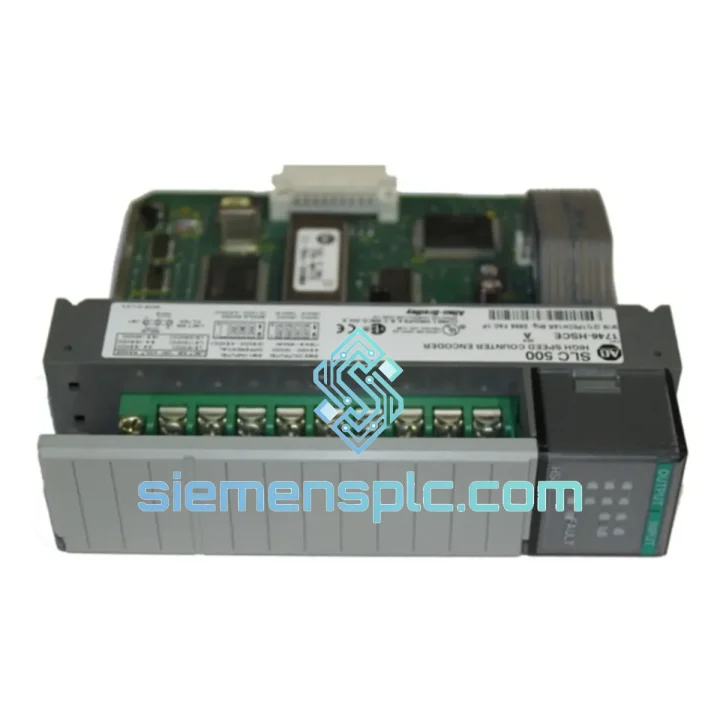
Request verified availability, condition, replacement risk review, packing options and courier lead time for 1746-HSCE.
Click Request Quote and the part number is inserted into the inquiry form automatically.
Core fields for model confirmation and RFQ routing. Detailed product narrative remains below.
The Allen-Bradley 1746-HSCE is a single-slot, dedicated high-speed counter module engineered for the SLC 500 modular I/O platform (1746 chassis). Unlike software-based counter instructions executed within the CPU scan cycle, the 1746-HSCE implements counting logic in dedicated on-board hardware — an ASIC-driven counter circuit that operates asynchronously from the processor’s ladder scan. This architectural separation is the defining characteristic of the module: pulse acquisition accuracy is not subject to scan time jitter, making it suitable for encoder feedback, flow metering, and spindle speed measurement where missed edges translate directly into positional error or process deviation.
The module accepts quadrature (A/B/Z) incremental encoder signals, pulse/direction inputs, and simple up/down pulse trains. Its 32-bit signed accumulator supports position ranges of ±2,147,483,647 counts — sufficient for long-travel linear axes or high-resolution rotary applications without rollover management overhead. Two on-board solid-state sourcing outputs (24 V DC) execute preset-triggered responses in hardware, decoupled from CPU intervention, enabling sub-millisecond machine reactions to count thresholds.
Real-time Stock & RFQ: [email protected] | WhatsApp: +86 18359268345
| Parameter | Specification |
|---|---|
| Catalog Number | 1746-HSCE |
| Platform | SLC 500 — 1746 Modular Chassis |
| Chassis Slot Requirement | 1 slot (any I/O slot) |
| Counter Channels | 1 independent high-speed channel |
| Maximum Input Frequency | 1 MHz (single-ended TTL); 250 kHz (differential RS-422) |
| Input Signal Types | Quadrature A/B/Z, Pulse/Direction, Up/Down Pulse |
| Input Voltage — TTL Mode | 5 V DC (logic-level compatible) |
| Input Voltage — DC Mode | 12–24 V DC selectable via jumper |
| Counter Register Width | 32-bit signed integer (±2,147,483,647) |
| Preset Registers | 2 programmable presets (Preset 1, Preset 2) |
| On-Board Outputs | 2 × solid-state sourcing, 24 V DC, 0.5 A max per point |
| Output Response to Preset | Hardware-triggered, independent of CPU scan |
| Backplane Current Draw | 250 mA @ 5 V DC |
| Field-Side Power | 24 V DC (user-supplied, for outputs and DC input mode) |
| Operating Temperature | 0 °C to +60 °C |
| Storage Temperature | −40 °C to +85 °C |
| Relative Humidity | 5–95% non-condensing |
| Vibration Rating | 2 g @ 10–500 Hz (IEC 68-2-6) |
| Shock Rating | 30 g operational (IEC 68-2-27) |
| Isolation | Optical isolation, field side to backplane |
| Certifications | UL Listed, CE Marked, CSA Certified, C-Tick |
| Programming Environment | RSLogix 500 v8.0+ (HSC configuration file block) |
| Compatible Chassis | 1746-A4, A7, A10, A13 (all SLC 500 modular chassis) |
| Compatible Processors | SLC 5/03 (OS302), SLC 5/04, SLC 5/05 |
| Weight | Approx. 300 g |
| Warranty | 12 months — covers defects in materials and workmanship |
Asynchronous Counter ASIC Architecture
The core of the 1746-HSCE is a dedicated counter ASIC that operates on its own clock domain, independent of the SLC 500 backplane scan cycle. Incoming encoder pulses are latched and accumulated in hardware registers at the full rated frequency (up to 1 MHz for TTL inputs). The backplane interface logic transfers the current count value to the SLC I/O image table at each scan update — but the counting itself never pauses during this transfer. This eliminates the fundamental limitation of software counters, where any pulse arriving during a scan cycle longer than the pulse period is silently lost.
Quadrature Decode Logic
For incremental encoder inputs, the module implements hardware quadrature decode: the phase relationship between the A and B channels is evaluated in real time to determine direction. The Z (index) channel can be configured to reset the accumulator or latch a marker position — a function critical for homing routines and absolute position recovery after power loss. This decode logic operates at the full 1 MHz rate, meaning the module can track a 1000 PPR encoder spinning at 60,000 RPM without count loss.
EMC Design and Signal Conditioning
The input stage incorporates optical isolation between field wiring and the backplane logic. This galvanic barrier suppresses common-mode noise, ground loop currents, and transient spikes that are endemic in industrial environments with variable-frequency drives, solenoid switching, and long cable runs. The input hysteresis circuit (Schmitt trigger topology) rejects slow-edge transitions and noise-induced false triggering — a critical feature when using passive sensors or long cable runs where signal integrity degrades. For differential RS-422 inputs, the module’s line receiver provides common-mode rejection exceeding 7 V, accommodating ground potential differences between encoder and panel.
Preset Output Arbitration
The two on-board solid-state outputs are driven directly by the hardware comparator logic — not by ladder rung evaluation. When the accumulator value matches Preset 1 or Preset 2, the corresponding output switches within the hardware response time of the ASIC, typically under 100 µs. This is the correct architecture for applications where the machine must respond to a count threshold faster than the CPU scan period (typically 5–20 ms for a loaded SLC 5/04). The output state is also reflected in the I/O image table, allowing the ladder program to monitor output status without additional wiring.
Rate Measurement Capability
Beyond position counting, the 1746-HSCE supports frequency/rate measurement mode. The module measures the time between successive pulses using an internal timebase and computes a rate value accessible in the I/O image. This enables direct RPM or flow rate readout without external tachometers or frequency-to-analog converters — reducing BOM cost and panel wiring complexity in speed monitoring applications.
Genuine Allen-Bradley Origin
All 1746-HSCE units supplied are sourced from verified channels: authorized distributor surplus, decommissioned OEM equipment, and factory-sealed new-old-stock. Each unit is cross-referenced against Rockwell Automation’s published catalog data. Counterfeit screening is applied at intake — including label verification, PCB marking inspection, and firmware version confirmation where applicable. Units are never remarked, refurbished without disclosure, or represented as a condition other than their verified state.
Pre-Shipment Inspection Protocol
Every unit undergoes a structured inspection sequence before dispatch: visual examination for physical damage and label integrity; backplane connector pin inspection for corrosion or mechanical deformation; functional bench test (counter accuracy, output switching, backplane communication) for refurbished units; and ESD-safe handling throughout. Inspection records are retained and available on request for quality-critical procurement.
Packaging and Export Compliance
Units ship in anti-static bags within foam-lined export cartons. Export documentation — including commercial invoice, packing list, and certificate of origin — is prepared for all international shipments. ECCN classification and HTS code documentation available for US import compliance. Dangerous goods declarations are not required for this product class.
Global Express Logistics from Xiamen, China
Our Xiamen warehouse provides direct access to DHL Express, FedEx International Priority, and UPS Worldwide Express services. Typical transit times: 2–4 business days to Europe and North America; 1–3 business days to Southeast Asia and Australia. In-stock units are dispatched within 24 hours of payment confirmation. Tracking numbers are provided at the time of dispatch. For time-critical plant shutdowns, same-day dispatch is available for orders confirmed before 14:00 CST.
Warranty Terms
12-month warranty against defects in materials and workmanship from the date of shipment. Warranty covers functional failure under normal operating conditions. Physical damage, incorrect installation, or operation outside rated parameters is excluded. RMA process: contact [email protected] with fault description and order reference; replacement or credit issued within 5 business days of confirmed receipt of returned unit.
Email: [email protected]
WhatsApp: +86 18359268345
Web: siemensplc.com
Location: Xiamen, China
© 2026 siemensplc.com. All rights reserved.
We check the full part number, brand, series and visible nameplate information before quotation.
Sales confirms stock path, condition option, quantity and realistic lead time for export dispatch.
DHL, FedEx, UPS or buyer courier arrangements can be reviewed with packing requirements.
Similar brand or category products for fast comparison and multi-item RFQ lists.