Allen-Bradley
RFQ Ready
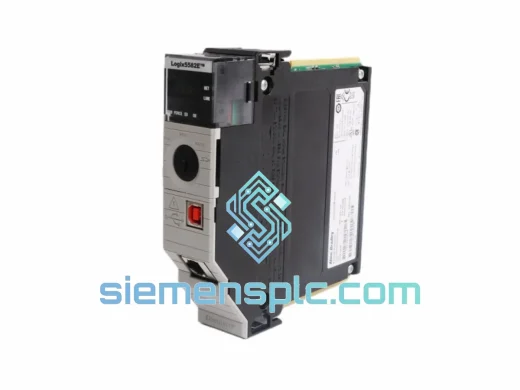
Allen-Bradley 1756-L81E ControlLogix Controller
ControlLogix
Origin US
PLC Controller
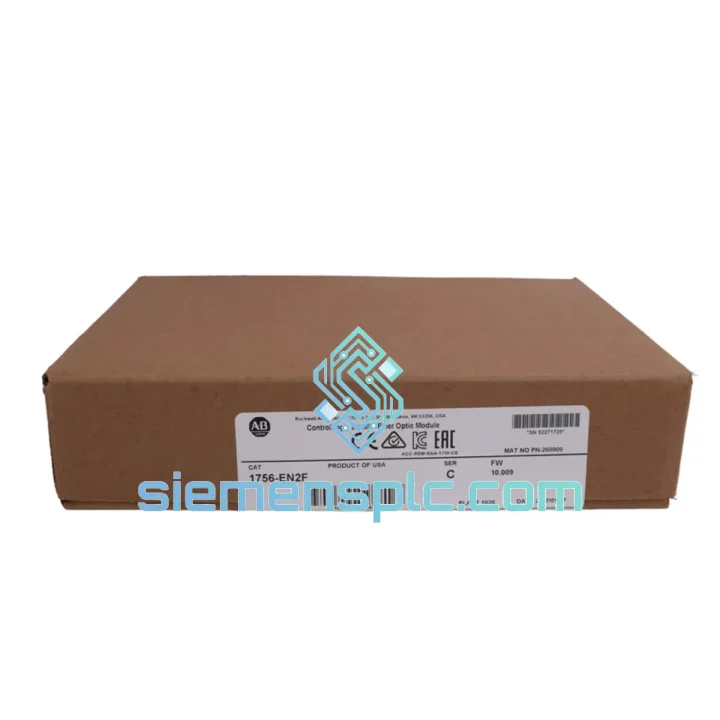
Request verified availability, condition, replacement risk review, packing options and courier lead time for 1756-EN2F.
Click Request Quote and the part number is inserted into the inquiry form automatically.
Core fields for model confirmation and RFQ routing. Detailed product narrative remains below.
You’re reading this because a line is stopped, a process is frozen, or a maintenance window is closing fast. The Allen-Bradley 1756-EN2F EtherNet/IP Fiber Optic Communication Module is a load-bearing node in your ControlLogix architecture — when it fails, the entire network segment it anchors goes dark. No I/O. No controller visibility. No production. We stock verified, shelf-ready 1756-EN2F units and ship same-day from Xiamen via DHL Express or FedEx International Priority. Your replacement module can be on-site within 24–72 hours depending on your region. Stop calculating downtime cost. Start the replacement process now.
URGENT REQUIREMENT? Contact: [email protected] | WhatsApp: +86 18359268345
| Parameter | Specification |
|---|---|
| Part Number | 1756-EN2F |
| Brand | Allen-Bradley / Rockwell Automation |
| Series | ControlLogix 1756 |
| Protocol | EtherNet/IP (CIP over Ethernet) |
| Physical Interface | 100BASE-FX Fiber Optic — SC connector, multi-mode |
| Data Rate | 100 Mbps Full Duplex |
| Max Fiber Distance | 2 km (OM1/OM2 multi-mode, 62.5/125 µm) |
| Backplane Current | 1.0 A @ 5 VDC | 3.0 mA @ 24 VDC |
| Power Dissipation | 5.1 W max |
| Operating Temperature | 0°C to 60°C |
| Humidity | 5–95% non-condensing |
| Chassis Compatibility | All 1756 ControlLogix chassis (A4 / A7 / A10 / A13 / A17) |
| Firmware Update | ControlFLASH utility (field-upgradeable) |
| Certifications | UL, CE, ATEX Zone 2, C-Tick, RoHS, ODVA EtherNet/IP Conformance |
| Weight | ~450 g |
| Country of Origin | USA |
| Stock Status | ✅ Ready to Ship — Same-Day Dispatch Available |
Common failure signatures that point to a dead 1756-EN2F:
Hot-swap replacement procedure (ControlLogix chassis, powered):
The 1756-EN2F was engineered for environments that destroy consumer-grade networking hardware. Its fiber optic physical layer provides inherent galvanic isolation — ground loops, common-mode noise, and high-voltage transients that corrupt copper Ethernet links simply do not propagate through glass fiber. In weld shops, motor drive rooms, and switchgear enclosures where EMI levels routinely exceed IEC 61000-4-3 test limits, the 1756-EN2F maintains deterministic communication where copper-based modules fail.
Mechanically, the module is designed to IEC 60068-2-6 vibration standards — 2g, 10–500 Hz swept sine — making it suitable for compressor skids, pump stations, and mobile equipment platforms where chassis vibration is continuous. The conformal-coated PCB assembly resists condensation ingress in applications cycling between cold outdoor ambient and warm enclosure interior temperatures, a failure mode that kills uncoated boards within months in coastal or tropical installations.
Thermal management is passive — no fans, no moving parts. The module dissipates 5.1 W maximum through its aluminum housing directly into the chassis backplane structure. In properly ventilated 1756 chassis with functioning power supply fans, the 1756-EN2F operates well within its 60°C rated limit even in 45°C ambient enclosures. Units that fail prematurely in high-temperature installations are almost always in chassis with blocked ventilation slots or failed power supply cooling fans — check these before condemning the module.
The ATEX Zone 2 certification (Group IIC, Temperature Class T4) means the 1756-EN2F can be deployed in classified hazardous areas where flammable gas concentrations may be present under abnormal conditions — refineries, chemical plants, offshore platforms. This is not a marketing claim; it requires specific installation practices (appropriate enclosure, certified cable glands, bonding) per IEC 60079-14. Verify your installation meets these requirements before deploying in classified areas.
Our dispatch hub is in Xiamen, China — a major international freight gateway with direct DHL Express and FedEx International Priority flight connections to hubs in Hong Kong, Shanghai, and Guangzhou. This geography gives us competitive transit times to virtually every industrial region on the planet.
Every shipment includes: commercial invoice, packing list, COO declaration, and HS code documentation (HS 8537.10 for PLC modules). For urgent orders, we can provide airway bill number and tracking link within 2 hours of dispatch. We do not consolidate urgent single-unit orders with other shipments — your replacement module goes out in its own dedicated carton, packed in anti-static ESD foam with a shock indicator label, the moment payment clears.
For bulk procurement or standing orders, sea freight (LCL) from Xiamen port is available with 18–25 day transit to major ports. Contact us for volume pricing and freight terms.
📧 Email: [email protected]
💬 WhatsApp: +86 18359268345
🌐 Web: siemensplc.com
© 2026. All rights reserved.
We check the full part number, brand, series and visible nameplate information before quotation.
Sales confirms stock path, condition option, quantity and realistic lead time for export dispatch.
DHL, FedEx, UPS or buyer courier arrangements can be reviewed with packing requirements.
Similar brand or category products for fast comparison and multi-item RFQ lists.