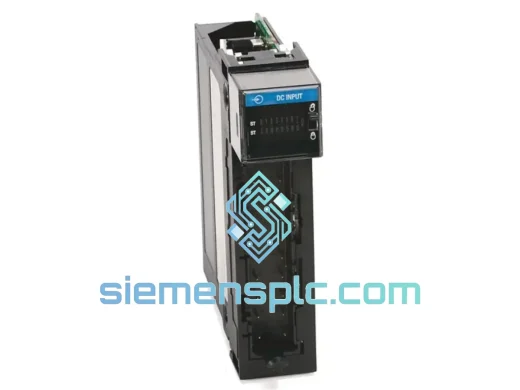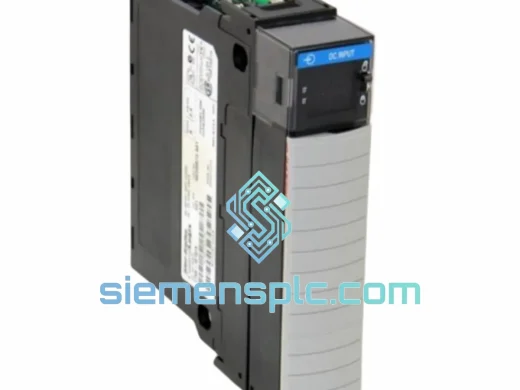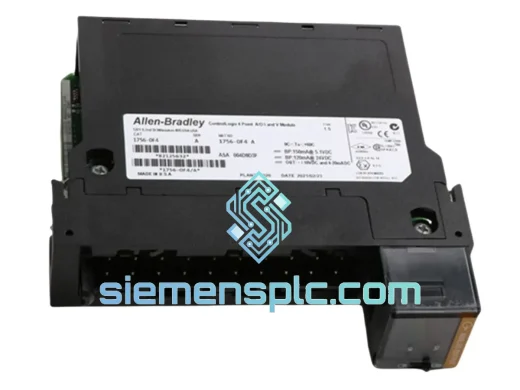
Allen-Bradley
RFQ Ready
Allen-Bradley 1756-OF4 PLC Analog Output Module
ControlLogix
Origin US
PLC Analog Output Module
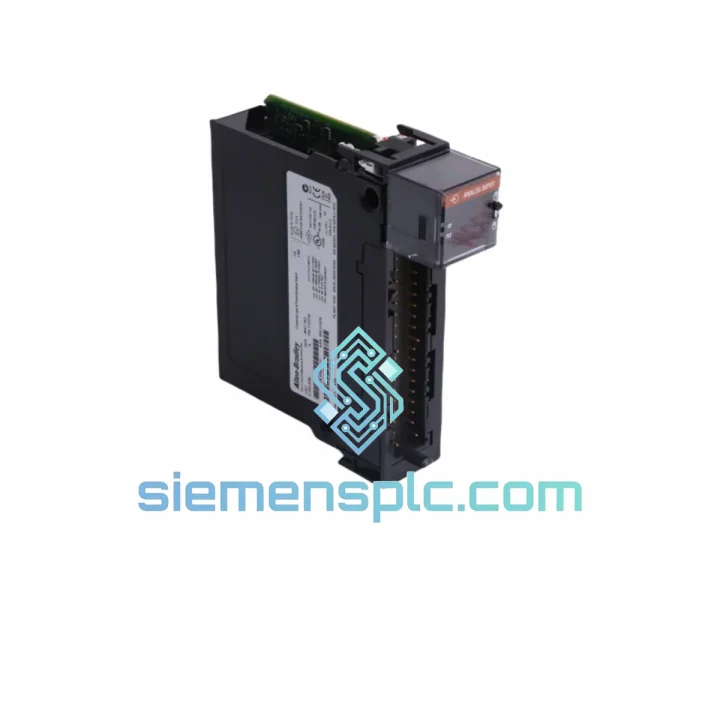
Request verified availability, condition, replacement risk review, packing options and courier lead time for 1756-IF8I.
Click Request Quote and the part number is inserted into the inquiry form automatically.
Core fields for model confirmation and RFQ routing. Detailed product narrative remains below.
In process-critical environments — petroleum refining columns, pharmaceutical bioreactors, or high-voltage power generation switchgear — analog field signals rarely share a common ground reference. Pressure transmitters on isolated pipe segments, thermocouple arrays spanning multiple equipment frames, and 4–20 mA loops powered by independent field supplies all introduce differential ground potentials that, without proper isolation, manifest as common-mode noise, ground loop currents, and systematic measurement offset. The Allen-Bradley 1756-IF8I addresses this at the hardware level: each of its eight input channels is galvanically isolated from every other channel and from the ControlLogix backplane, with a channel-to-channel isolation rating of 250 V AC continuous and a channel-to-backplane isolation of 250 V AC continuous. This is not software-filtered noise rejection — it is a physical barrier implemented through transformer-coupled or optocoupler-based signal paths that prevent ground loop currents from ever entering the measurement circuit.
Within the ControlLogix 1756 platform architecture, the 1756-IF8I communicates over the proprietary ControlBus backplane at a sustained data rate of 200 Mbps. The module operates as a scheduled I/O device under the Logix tag-based programming model, with configurable RPI (Requested Packet Interval) values as low as 1 ms per channel group, enabling deterministic data delivery to the controller’s scan cycle. Each channel independently configures its input range — voltage modes of ±10 V, 0–10 V, 0–5 V, 1–5 V, or current modes of 0–20 mA and 4–20 mA — without affecting adjacent channels, a flexibility that eliminates the need for external signal conditioning hardware in mixed-signal field installations.
Real-time Stock & RFQ: [email protected] | WhatsApp: +86 18359268345
| Parameter | Specification |
|---|---|
| Part Number | 1756-IF8I |
| Brand / Manufacturer | Allen-Bradley / Rockwell Automation |
| Series | ControlLogix 1756 |
| Module Category | Isolated Analog Input |
| Number of Channels | 8 (individually isolated) |
| Input Signal — Voltage | ±10 V, 0–10 V, 0–5 V, 1–5 V (per channel, software-selectable) |
| Input Signal — Current | 0–20 mA, 4–20 mA (per channel, software-selectable) |
| A/D Resolution | 16-bit (65,536 counts full scale) |
| Overall Accuracy (25 °C) | ±0.1% of full scale |
| Channel-to-Channel Isolation | 250 V AC continuous |
| Channel-to-Backplane Isolation | 250 V AC continuous |
| Input Impedance — Voltage | > 1 MΩ |
| Input Impedance — Current | 249 Ω (burden resistor) |
| Backplane Current Draw | 250 mA @ 5 V DC; 3 mA @ 24 V DC |
| Operating Temperature | 0 °C to +60 °C |
| Storage Temperature | −40 °C to +85 °C |
| Relative Humidity | 5% to 95% non-condensing |
| Dimensions (H × W × D) | 94.0 × 94.0 × 58.0 mm |
| Approximate Weight | 220 g |
| Compatible Chassis | 1756-A4, 1756-A7, 1756-A10, 1756-A13, 1756-A17 |
| Field Wiring Arm | 1756-TBNH (cage clamp) / 1756-TBSH (screw clamp), 36-pin |
| Certifications | UL Listed, CE Marked, C-Tick |
| Warranty | 12 months from date of shipment |
The isolation architecture of the 1756-IF8I is implemented at the per-channel level using DC-to-DC converter-based power isolation combined with optocoupler-coupled signal paths. Each channel’s analog front-end — comprising the input protection network, burden resistor (for current mode), and anti-aliasing filter — operates from a locally regulated, isolated power rail derived from the module’s internal DC-DC converter bank. This means that a fault condition on one channel, including a sustained overvoltage up to the isolation rating, does not propagate to adjacent channels or to the backplane logic supply. The practical consequence in a multi-loop process installation is that a wiring fault on a single field instrument does not compromise the measurement integrity of the remaining seven channels.
The analog-to-digital conversion stage employs a sigma-delta (ΣΔ) converter topology operating at 16-bit resolution. Sigma-delta converters inherently provide high oversampling ratios — typically 64× to 256× the Nyquist rate — which yields superior rejection of high-frequency noise components without requiring steep external anti-aliasing filters. The module’s internal digital filter then applies a configurable notch filter at 50 Hz or 60 Hz (selectable per channel via Studio 5000 configuration) to attenuate power-line frequency interference, a critical requirement in industrial environments where 50/60 Hz pickup from adjacent power cabling is a persistent noise source.
EMC performance is addressed through a multi-layer PCB design with dedicated ground planes separating the analog signal layer from the digital processing layer. Ferrite bead arrays on the backplane interface lines suppress conducted emissions in the 30 MHz to 1 GHz range, and the module’s metal housing provides shielding attenuation consistent with IEC 61000-4-3 radiated immunity requirements at 10 V/m field strength. The result is a module that maintains its ±0.1% accuracy specification in environments with simultaneous ESD, EFT/burst, and surge transients at the levels defined by IEC 61000-4-2, IEC 61000-4-4, and IEC 61000-4-5 respectively.
Hot-swap insertion and removal is managed by a controlled power sequencing circuit that ramps the backplane interface lines before enabling the module’s internal logic, preventing transient current spikes that could disturb adjacent modules in the same chassis. The module’s firmware performs a self-calibration cycle on power-up, referencing an internal precision voltage reference (temperature coefficient < 5 ppm/°C) to compensate for offset and gain drift across the operating temperature range.
Every 1756-IF8I unit supplied by siemensplc.com is sourced through verified supply chains with full traceability to authorized distribution channels. Prior to shipment from our Xiamen, China facility, each module undergoes a structured inspection protocol: label and date-code authentication against Rockwell Automation’s published serialization format, visual examination of the PCB edge connector for pin deformation or oxidation, and a powered functional check verifying backplane communication handshake and channel self-calibration completion. Units that do not pass all inspection stages are quarantined and not offered for sale.
Packaging follows ESD-sensitive device handling standards: each module is sealed in a static-dissipative bag with desiccant, placed in a foam-lined inner carton, and outer-packed in double-wall corrugated cartons rated for international air and sea freight. Shipments from Xiamen reach major industrial hubs in Southeast Asia within 3–5 business days via express air freight, European destinations within 5–7 business days, and North American destinations within 5–8 business days. All shipments include a commercial invoice, packing list, and certificate of conformity. DDP (Delivered Duty Paid) terms are available for select destinations upon request. The 12-month warranty covers defects in materials and workmanship under normal operating conditions, with advance replacement available for qualified B2B accounts to minimize process downtime.
Email: [email protected]
WhatsApp: +86 18359268345
Web: siemensplc.com
Location: Xiamen, China
© 2026 siemensplc.com. All rights reserved.
We check the full part number, brand, series and visible nameplate information before quotation.
Sales confirms stock path, condition option, quantity and realistic lead time for export dispatch.
DHL, FedEx, UPS or buyer courier arrangements can be reviewed with packing requirements.
Similar brand or category products for fast comparison and multi-item RFQ lists.