Allen-Bradley
RFQ Ready
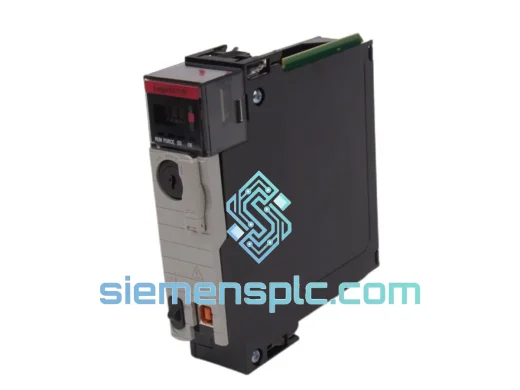
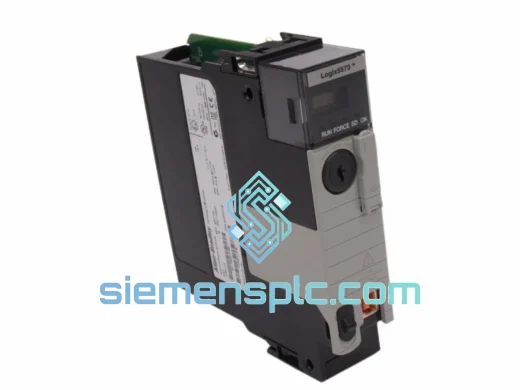
Allen-Bradley 1756-L73 PLC Processor Module – ControlLogix Logix5573
ControlLogix
Origin US
PLC Processor Module
Request verified availability, condition, replacement risk review, packing options and courier lead time for 1756-A13.
Click Request Quote and the part number is inserted into the inquiry form automatically.
Core fields for model confirmation and RFQ routing. Detailed product narrative remains below.
The Allen-Bradley 1756-A13 is a 13-slot backplane chassis within Rockwell Automation’s ControlLogix platform, engineered to serve as the physical and electrical foundation for large-scale, multi-module control systems. In distributed manufacturing environments — automotive body shops, refinery compressor trains, pharmaceutical batch reactors — the chassis is not a passive enclosure. It is an active backplane that arbitrates inter-module communication, distributes DC power rails, and provides the mechanical registration that determines connector integrity over a 10-to-20-year service life. Selecting the correct chassis slot count and understanding its backplane architecture is a prerequisite for any serious ControlLogix system design.
The 1756-A13 occupies the mid-to-high density position in the ControlLogix chassis family, sitting between the 1756-A10 (10-slot) and the 1756-A17 (17-slot). With 13 available slots — one of which is consumed by the power supply, leaving 12 for modules — it accommodates a processor, multiple communication bridges, analog and digital I/O, motion axes, and a safety co-processor within a single chassis footprint. This consolidation eliminates inter-chassis ControlNet or EtherNet/IP bridge hops for intra-system data, reducing scan-cycle latency and simplifying network topology. For system integrators designing IEC 61511-compliant safety instrumented systems or ISA-88 batch control architectures, the 1756-A13 provides the slot budget to co-locate GuardLogix safety processors with standard process I/O without requiring a second chassis.
The ControlLogix backplane operates on a proprietary high-speed serial bus. Each module slot presents a standardized 94-pin DIN connector to the backplane. The backplane controller — embedded in the chassis PCB — manages slot addressing, module identification via electronic keying (E-keying), and power distribution monitoring. When a module is inserted, the backplane controller reads the module’s identity object and compares it against the processor’s configured module definition. Mismatches trigger a fault condition rather than silent data corruption, a design choice that directly supports IEC 61508 SIL 2 diagnostic coverage requirements. Hot-swap capability is implemented at the backplane level: the chassis power rails are sequenced to de-energize a slot’s connector before mechanical disengagement, protecting both the module and the backplane from transient inrush damage during live insertion.
Real-time Stock & RFQ: [email protected] | WhatsApp: +86 18359268345
| Parameter | Specification |
|---|---|
| Catalog Number | 1756-A13 |
| Platform | Allen-Bradley ControlLogix (Logix5000) |
| Total Slots | 13 (1 reserved for power supply; 12 available for modules) |
| Backplane Bus | Proprietary ControlLogix high-speed serial backplane |
| Slot Connector | 94-pin DIN, gold-plated contacts |
| Power Supply Interface | Slot 0 (dedicated); compatible with all 1756-Pxxx series PSUs |
| Compatible Power Supplies | 1756-PA72, 1756-PB72, 1756-PA75, 1756-PB75, 1756-PH75 |
| Module Compatibility | All 1756-series: processors, I/O, communication, motion, safety |
| Operating Temperature | 0 °C to +60 °C (32 °F to 140 °F) |
| Storage Temperature | -40 °C to +85 °C |
| Relative Humidity | 5% to 95% non-condensing |
| Vibration (Operating) | 2 g @ 10–500 Hz (per IEC 60068-2-6) |
| Shock (Operating) | 30 g, 11 ms half-sine (per IEC 60068-2-27) |
| Mounting | Panel mount or DIN rail (with adapter) |
| Chassis Weight | Approx. 2,250 g (without modules or PSU) |
| Enclosure Rating | Open type; requires installation in NEMA 4 or IP54 enclosure minimum |
| Certifications | UL Listed, CE Marked, CSA Certified, C-Tick |
| Hot-Swap Support | Yes — all module slots support live insertion and removal |
| Electronic Keying | Supported — exact match, compatible match, or disabled per slot |
| Warranty | 12 months from date of shipment |
The 1756-A13 backplane PCB implements a distributed power architecture. The 1756-series power supply connects to a dedicated bus bar running the full chassis width, delivering +5 VDC (logic), +24 VDC (field I/O), and +/-15 VDC (analog reference) to each slot independently. Each slot’s power feed is fused at the backplane level, meaning a short-circuit fault on one module’s internal supply does not collapse the bus for adjacent modules. This per-slot fusing is a hardware-level fault containment boundary that is distinct from the software-level fault isolation provided by the processor’s module fault handling.
The backplane serial bus uses a token-passing arbitration scheme. The chassis controller grants each module a deterministic time window to place data on the bus, preventing any single module from monopolizing backplane bandwidth. This is particularly relevant in motion-intensive configurations where multiple 1756-M02AE or 1756-M08SE servo drive interface modules must exchange position feedback and torque commands with the processor within a single 1 ms motion task period. The backplane’s arbitration latency is specified at sub-microsecond levels, ensuring that the processor’s motion planner receives consistent, time-stamped data from all axes without jitter-induced following error accumulation.
EMC performance of the 1756-A13 is addressed at the PCB layout level. The backplane ground plane is segmented into analog and digital domains, with the split point located at the power supply slot. High-frequency switching noise from the PSU’s DC-DC converter stages is shunted to chassis ground through low-impedance copper pours before it can couple into the signal traces serving the module slots. The chassis frame itself is constructed from die-cast aluminum, providing a Faraday shield effect against radiated emissions from external sources — a relevant consideration in installations near variable-frequency drives, arc welders, or high-current bus bars. Rockwell Automation’s EMC testing for the ControlLogix platform covers conducted emissions per CISPR 11 Class A and radiated immunity per IEC 61000-4-3 at 10 V/m field strength.
The mechanical design of the module guides deserves specific attention. Each slot incorporates a dual-rail guide system with a positive-stop detent that ensures the module’s 94-pin connector is fully seated before the module latch engages. Partial insertion — a common source of intermittent backplane faults in field-serviced systems — is mechanically prevented by the guide geometry. The connector pins are gold-plated to a minimum of 30 microinches, providing corrosion resistance in environments with H2S or SO2 contamination levels up to the limits specified in ISA-71.04 Severity Level G2.
Every 1756-A13 unit supplied through siemensplc.com is sourced as genuine Allen-Bradley / Rockwell Automation product. Prior to shipment from our Xiamen, China facility, each chassis undergoes a structured pre-shipment verification protocol:
Logistics from Xiamen port to global destinations is managed via DHL Express, FedEx International Priority, or UPS Worldwide Expedited for time-critical orders, with typical transit times of 3–5 business days to Europe, 4–6 days to North America, and 2–4 days to Southeast Asia. For volume orders, sea freight via Xiamen port (CNXMN) to major global ports is available with full export documentation including commercial invoice, packing list, certificate of origin (Form A or CO), and HS code 8537.10 classification. All shipments are covered by cargo insurance. A 12-month warranty against manufacturing defects is provided from the date of shipment.
Email: [email protected]
WhatsApp: +86 18359268345
Web: siemensplc.com
Location: Xiamen, China
© 2026 siemensplc.com. All rights reserved.
We check the full part number, brand, series and visible nameplate information before quotation.
Sales confirms stock path, condition option, quantity and realistic lead time for export dispatch.
DHL, FedEx, UPS or buyer courier arrangements can be reviewed with packing requirements.
Similar brand or category products for fast comparison and multi-item RFQ lists.