Allen-Bradley
RFQ Ready
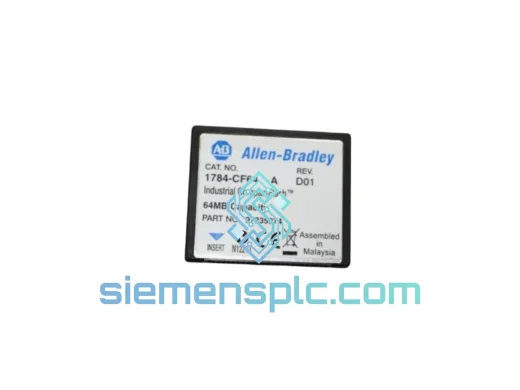
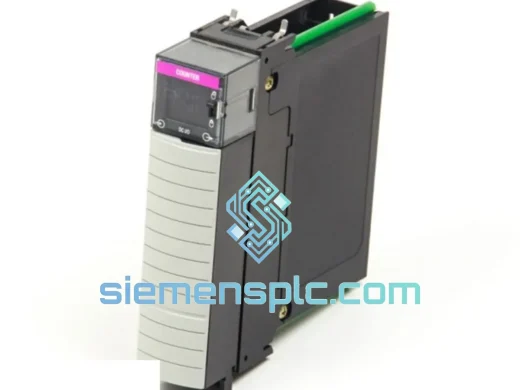
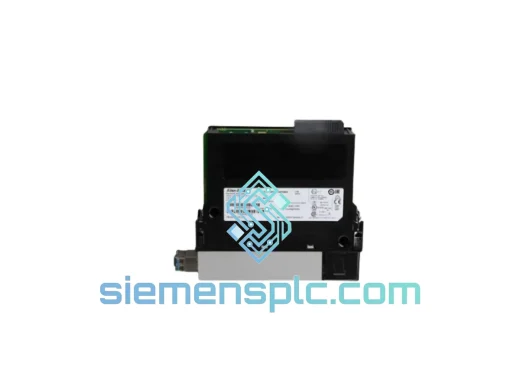
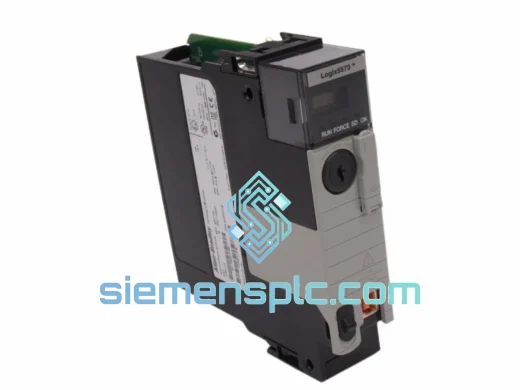
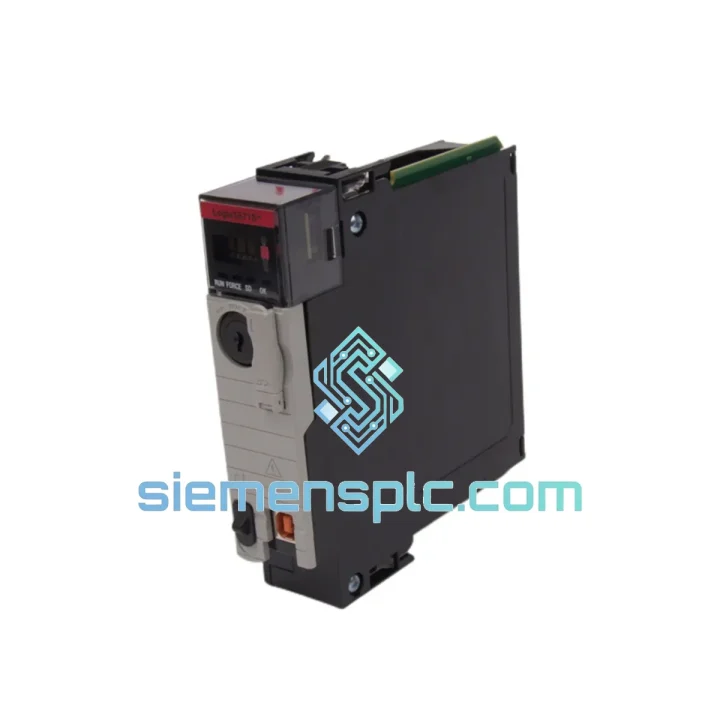
Allen-Bradley 1756-L73 PLC Processor Module – ControlLogix Logix5573
ControlLogix
Origin US
PLC Processor Module
Request verified availability, condition, replacement risk review, packing options and courier lead time for 1756-L71.
Click Request Quote and the part number is inserted into the inquiry form automatically.
Core fields for model confirmation and RFQ routing. Detailed product narrative remains below.
The 1756-L71 (catalog designation: Logix5571) is a single-slot CPU module within Rockwell Automation’s ControlLogix 1756 platform — a controller family that has accumulated over two decades of deployment across automotive, oil & gas, pharmaceutical, and utility infrastructure. With 2 MB of user program memory, the L71 occupies the mid-tier of the fifth-generation Logix controller lineup, positioned above the L61/L62 and below the L72/L73 in memory capacity, while sharing identical backplane form factor, firmware architecture, and I/O compatibility across the entire 1756 chassis ecosystem.
In a distributed control architecture, the CPU is the deterministic arbiter of all I/O scan cycles, task scheduling, and inter-controller communication. The 1756-L71 executes up to 32 concurrent tasks — one continuous and 31 periodic or event-driven — with each task maintaining independent scan rate configuration down to 1 ms resolution. This multi-tasking model, combined with the ControlBus backplane operating at 100 Mbps effective throughput, allows the L71 to sustain deterministic response times even under peak I/O load conditions that would cause scan overruns in lower-tier controllers.
Real-time Stock & RFQ: [email protected] | WhatsApp: +86 18359268345
| Parameter | Specification |
|---|---|
| Catalog Number | 1756-L71 (Logix5571) |
| Platform | ControlLogix 1756 Series |
| User Memory | 2 MB (2,097,152 bytes) |
| I/O Memory | 478 KB |
| Max Tasks | 32 (1 continuous + 31 periodic/event) |
| Programs per Task | Up to 100 |
| Coordinated Motion Axes | Up to 100 (CIP Motion over EtherNet/IP) |
| Communication Connections | Up to 256 |
| Backplane Current Draw | 1.2 A @ 5 VDC; 3.0 mA @ 24 VDC |
| Power Dissipation | 6.1 W (typical) |
| Backplane Interface | ControlBus (proprietary, 100 Mbps effective) |
| SD Card Slot | Yes — nonvolatile program/firmware storage |
| Operating Temperature | 0 °C to 60 °C |
| Storage Temperature | −40 °C to 85 °C |
| Relative Humidity | 5% to 95% non-condensing |
| Vibration Rating | 2 g @ 10–500 Hz (IEC 60068-2-6) |
| Shock Rating | 30 g operational (IEC 60068-2-27) |
| Chassis Compatibility | 1756-A4, A7, A10, A13, A17 (all slot counts) |
| Dimensions (H × W × D) | 94.0 mm × 34.5 mm × 128.3 mm |
| Weight | Approx. 0.4 kg |
| Certifications | UL Listed, CE Marked, RCM, KC, ATEX Zone 2 |
| Programming Standard | IEC 61131-3 (LD, FBD, ST, SFC, IL) |
| Programming Software | Studio 5000 Logix Designer v21.00+ |
| Warranty | 12 months from shipment date — Ready to Ship |
Backplane Bus Architecture and Scan Determinism
The 1756-L71 communicates with I/O and communication modules via the ControlBus backplane — a time-division multiplexed bus that allocates bandwidth slots to each chassis module based on configured RPI (Requested Packet Interval) values. Unlike polled-bus architectures where a single slow module can degrade overall scan performance, the ControlBus isolates module communication latency so that a module with a 100 ms RPI does not consume bandwidth reserved for a 2 ms motion feedback module. This architectural separation is critical in mixed-application chassis where motion control and process I/O coexist.
EMC Design and Electrical Isolation
The L71 CPU board employs multi-layer PCB construction with dedicated ground planes separating the processor core, backplane interface circuitry, and SD card controller. The backplane connector uses differential signaling with common-mode rejection, providing inherent immunity to conducted noise from adjacent power supply modules or high-current output modules sharing the same chassis. The module housing is fully grounded to the chassis rail, creating a Faraday enclosure that attenuates radiated EMI from external sources — a design requirement for installations near variable frequency drives (VFDs) or high-voltage switchgear.
Nonvolatile Memory and Firmware Integrity
Program and firmware storage on the removable SD card uses a wear-leveling flash controller that distributes write cycles across the memory array, extending card service life beyond 100,000 write cycles under normal operational patterns. On power-up, the L71 performs a CRC checksum verification of the stored program image before loading it into execution RAM. If the checksum fails — indicating SD card corruption or partial write — the controller enters a faulted state and logs a Type 1 Major Fault (code 71), preventing execution of a corrupted program. This integrity check mechanism is the primary reason the L71 can be restored to full operation from an SD card without a programming terminal on-site.
Task Scheduler and Priority Arbitration
The L71’s real-time operating system implements a preemptive priority scheduler. Event tasks carry the highest execution priority and can interrupt both continuous and periodic tasks mid-scan. Periodic tasks are scheduled by a hardware timer with ±0.1 ms jitter tolerance. The continuous task runs at background priority, consuming only the CPU cycles not claimed by higher-priority tasks. This three-tier scheduling model allows the L71 to simultaneously manage time-critical motion feedback loops at 1 ms intervals while executing slower process control logic at 100 ms intervals — without requiring separate hardware for each function.
CIP Motion Integration
The L71 implements the CIP Motion specification over EtherNet/IP, coordinating up to 100 axes through a 1756-EN2T or equivalent communication module. The motion planner executes within the controller’s periodic task context, generating position, velocity, and torque reference values at the configured coarse update period (typically 2–8 ms). Servo drive feedback is returned via the same EtherNet/IP connection using the Integrated Motion on EtherNet/IP (IME) protocol, eliminating the need for a dedicated motion network and reducing wiring infrastructure in multi-axis installations.
Genuine Allen-Bradley / Rockwell Automation Hardware
Every 1756-L71 unit shipped from siemensplc.com is sourced through verified industrial supply channels. Units are inspected across four stages: visual and physical examination of housing, connector pins, and manufacturer labels; firmware revision verification and documentation; functional power-on test in a 1756 chassis with backplane communication and self-diagnostic confirmation; and ESD-safe packaging with desiccant. Available documentation includes Certificate of Conformance, functional test report, firmware revision record, and pre-shipment photographs. The 12-month warranty covers manufacturing defects and functional failure under rated operating conditions.
Xiamen Export Operations
Shipments originate from our Xiamen, China warehouse, positioned within 60 km of Xiamen Gaoqi International Airport — a primary DHL and FedEx hub for South China export freight. Standard export documentation includes commercial invoice, packing list, and Country of Origin declaration. HS Code 8537.10 applies to this product category. Typical transit times: DHL Express 2–4 business days to Europe and North America; FedEx International Priority 3–5 business days to Southeast Asia and the Middle East. Bulk orders above 5 units qualify for sea freight consolidation with LCL booking through Xiamen Port.
ESD packaging protocol: anti-static bag → foam-lined inner carton → double-wall corrugated outer box with fragile and orientation labeling. All units are individually photographed before sealing for pre-shipment verification records.
Email: [email protected]
WhatsApp: +86 18359268345
Web: siemensplc.com
Location: Xiamen, China
© 2026 siemensplc.com. All rights reserved.
We check the full part number, brand, series and visible nameplate information before quotation.
Sales confirms stock path, condition option, quantity and realistic lead time for export dispatch.
DHL, FedEx, UPS or buyer courier arrangements can be reviewed with packing requirements.
Similar brand or category products for fast comparison and multi-item RFQ lists.