Allen-Bradley
RFQ Ready
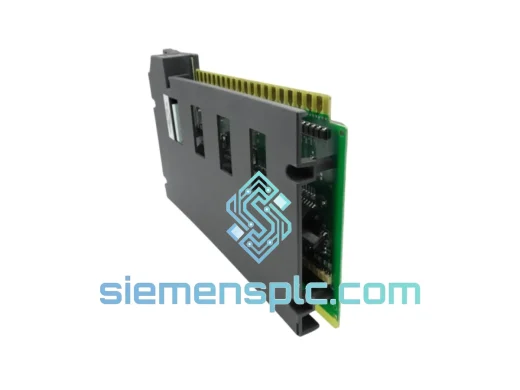
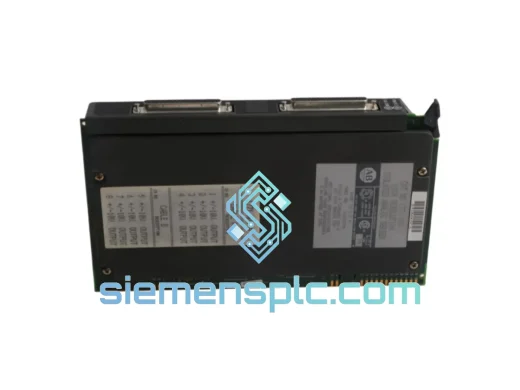
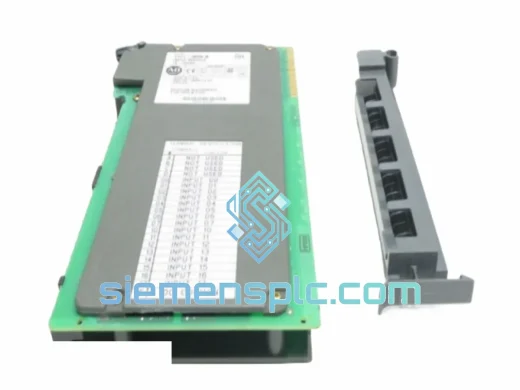
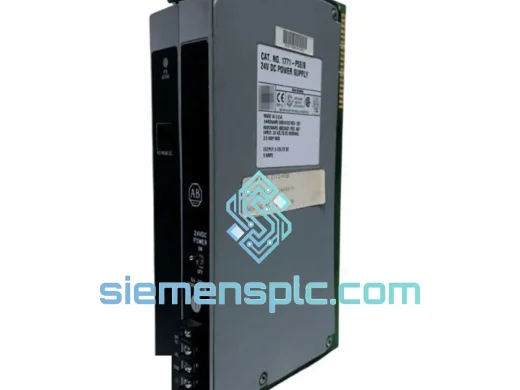
Allen-Bradley 1771-P5E Power Supply Interface Module – PLC-5
PLC-5
Origin US
Power Supply Interface Module
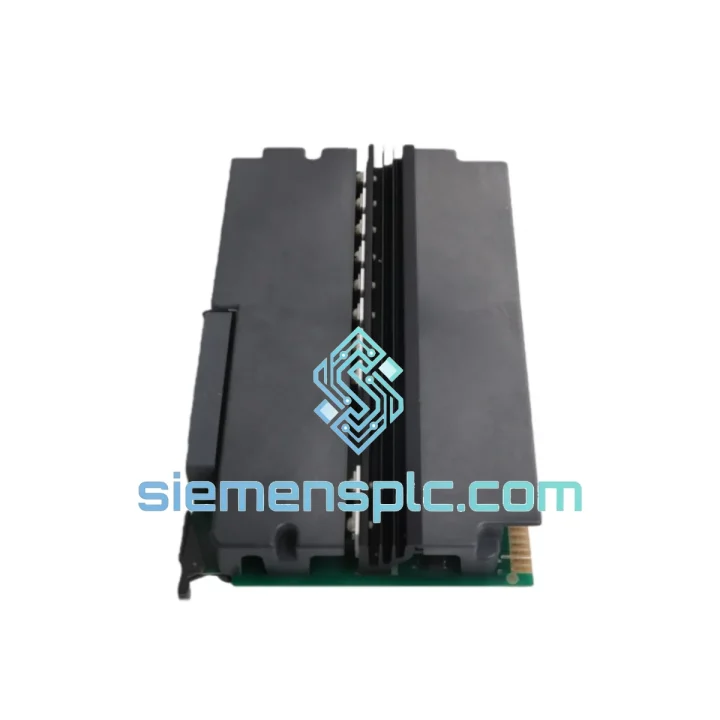
Request verified availability, condition, replacement risk review, packing options and courier lead time for 1771-OB.
Click Request Quote and the part number is inserted into the inquiry form automatically.
Core fields for model confirmation and RFQ routing. Detailed product narrative remains below.
The Allen-Bradley 1771-OB is a 16-point, 24V DC transistor-based digital output module designed for installation in the 1771 I/O chassis family. Within a PLC-5 control architecture, this module occupies a single I/O slot and interfaces directly with the 1771 backplane bus, translating processor-issued output image table data into discrete 24V DC switching signals at the field terminal level. Its role in the control loop is deterministic: each output point is driven by a dedicated NPN or PNP transistor stage (revision-dependent), with switching response times in the sub-millisecond range — a characteristic that makes it suitable for high-cycle solenoid valve actuation, indicator lamp control, and relay coil driving in time-critical sequences.
The module communicates with the PLC-5 processor via the 1771 parallel backplane, which operates at a fixed I/O scan rate governed by the processor’s RPI (Requested Packet Interval) configuration. Unlike later EtherNet/IP-based I/O platforms, the 1771 backplane uses a synchronous, slot-addressed communication scheme: the processor writes the output image table word corresponding to the 1771-OB’s slot address during each I/O scan, and the module latches the 16-bit output state immediately. This architecture eliminates network-layer latency and ensures output state consistency across all 16 points within a single scan cycle — a property that remains operationally significant in legacy process control and interlock applications where output simultaneity is a design requirement.
The 1771-OB’s installed base spans automotive body-in-white lines, oil and gas wellhead panels, food and beverage filling systems, pulp and paper winder controls, and water treatment pump stations. Despite the PLC-5 platform reaching end-of-life status with Rockwell Automation, the global installed base of 1771 I/O chassis remains substantial, and the 1771-OB continues to be one of the highest-velocity MRO replacement modules in the industrial automation aftermarket. Procurement engineers and maintenance teams sourcing this module require verified authenticity, accurate revision identification, and reliable logistics — all of which are addressed in the supply chain and quality processes described below.
Real-time Stock & RFQ: [email protected] | WhatsApp: +86 18359268345
| Parameter | Specification |
|---|---|
| Part Number / SKU | 1771-OB |
| Manufacturer | Allen-Bradley / Rockwell Automation |
| Series | 1771 PLC-5 I/O |
| Module Type | Digital DC Output (Transistor) |
| Number of Output Points | 16 |
| Output Voltage Range | 10–30V DC (nominal 24V DC) |
| Output Current per Point | 0.5A continuous (verify per revision) |
| Total Module Current | 4A maximum (all points energized) |
| Output Technology | Transistor (sourcing/sinking — revision-dependent) |
| Backplane Compatibility | 1771 I/O chassis: A1B, A2B, A3B, A4B |
| Form Factor | Single-slot 1771 I/O module |
| Backplane Communication | 1771 parallel slot-addressed bus |
| Operating Temperature | 0°C to +60°C |
| Storage Temperature | -40°C to +85°C |
| Relative Humidity | 5–95% non-condensing |
| Isolation | Optical isolation between field and backplane circuits |
| Indicators | Per-point LED output status indicators |
| Module Weight | Approx. 620 g |
| Warranty | 12 months from date of shipment |
The 1771-OB’s internal architecture is structured around three functional layers: the backplane interface logic, the optical isolation barrier, and the transistor output stage.
Backplane Interface and Latch Logic: The module’s backplane receiver decodes the slot address assigned by the chassis keying band and accepts the 16-bit output word from the PLC-5 processor during each I/O scan. This word is latched into an output register on the module side of the isolation barrier. The latch architecture ensures that field-side output states are held stable between scan cycles — a critical behavior in applications where output coil hold-in time must exceed the processor scan period.
Optical Isolation Mechanism: Each of the 16 output channels passes through an individual optocoupler stage. The LED side of the optocoupler is driven by the backplane-side latch logic at 5V DC logic levels; the phototransistor side operates at field voltage (10–30V DC). This galvanic separation provides a minimum isolation voltage of 1500V AC between the backplane bus and the field wiring, protecting the processor and backplane from field-side transients, ground loops, and inductive kickback from solenoid loads. The per-channel isolation architecture also means that a field-side fault on one output point does not propagate to adjacent channels through a shared isolation stage — a design characteristic that simplifies fault isolation during maintenance.
Transistor Output Stage and EMC Design: Each output transistor is protected by a transient voltage suppressor (TVS) diode across the collector-emitter junction, clamping inductive load flyback to a defined voltage level and preventing transistor avalanche breakdown during solenoid de-energization. The module’s PCB layout routes field-side and logic-side traces on separate copper layers with a defined clearance gap, reducing capacitive coupling between high-frequency backplane signals and field wiring. The metal module housing provides a Faraday shield effect, attenuating radiated EMI ingress from adjacent high-current drives or contactors in the same panel enclosure. These design measures collectively support operation in environments with conducted and radiated EMI levels consistent with IEC 61000-4 test categories applicable to industrial control equipment.
Per-Point LED Diagnostics: Each output channel has a dedicated front-panel LED that illuminates when the corresponding output transistor is in the ON state. This hardware-level diagnostic is independent of the processor’s software status — it reflects the actual transistor gate state, not the output image table value. This distinction is operationally significant: if a discrepancy exists between the LED state and the expected output image table value, it indicates a module-level fault rather than a program logic error, directing maintenance personnel to the correct diagnostic path without requiring a laptop or programming terminal.
Every Allen-Bradley 1771-OB unit supplied by siemensplc.com is sourced through verified industrial distribution channels and OEM surplus networks. The supply chain explicitly excludes grey-market and counterfeit sources. Pre-shipment inspection covers physical condition assessment (connector pin integrity, housing condition, label authenticity, and revision marking verification), functional bench verification against known-good reference units where applicable, and ESD-safe packaging in anti-static foam-lined cartons with moisture barrier bags.
Shipments originate from Xiamen, China — a major logistics hub with direct access to international express carriers including DHL Express, FedEx International Priority, and UPS Worldwide Expedited. Standard transit times to destinations in Southeast Asia are 2–4 business days; to Europe and North America, 5–8 business days. Expedited same-day dispatch is available for orders confirmed before 14:00 CST. Full export documentation — including commercial invoice, packing list, and certificate of origin — is provided with every shipment to support customs clearance in all major import jurisdictions. For orders requiring ECCN classification or end-user declarations, our logistics team provides pre-shipment documentation review.
All units are covered by a 12-month warranty from the date of shipment. Warranty claims are processed within 5 business days of receipt of the returned unit. Replacement units are dispatched from Xiamen stock upon claim approval, with no minimum order quantity requirement for warranty replacements.
Email: [email protected]
WhatsApp: +86 18359268345
Web: siemensplc.com
Location: Xiamen, China
© 2026 siemensplc.com. All rights reserved.
We check the full part number, brand, series and visible nameplate information before quotation.
Sales confirms stock path, condition option, quantity and realistic lead time for export dispatch.
DHL, FedEx, UPS or buyer courier arrangements can be reviewed with packing requirements.
Similar brand or category products for fast comparison and multi-item RFQ lists.