Allen-Bradley
RFQ Ready
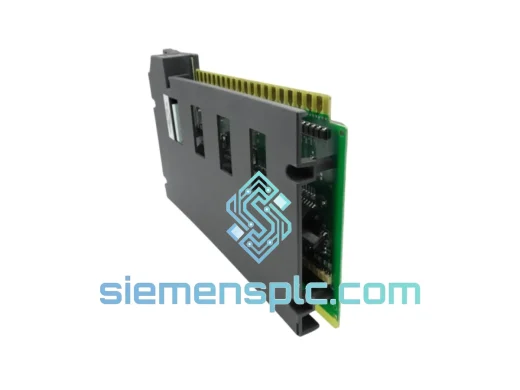
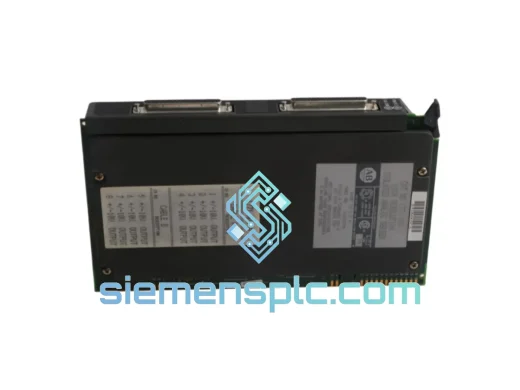
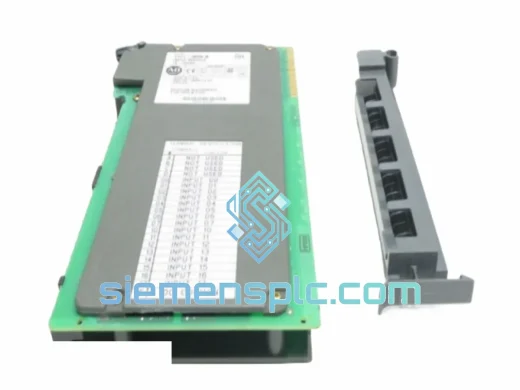
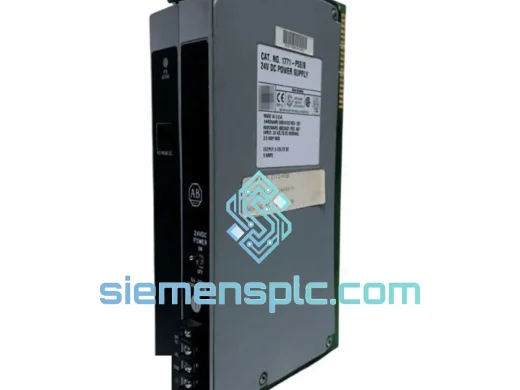
Allen-Bradley 1771-P5E Power Supply Interface Module – PLC-5
PLC-5
Origin US
Power Supply Interface Module
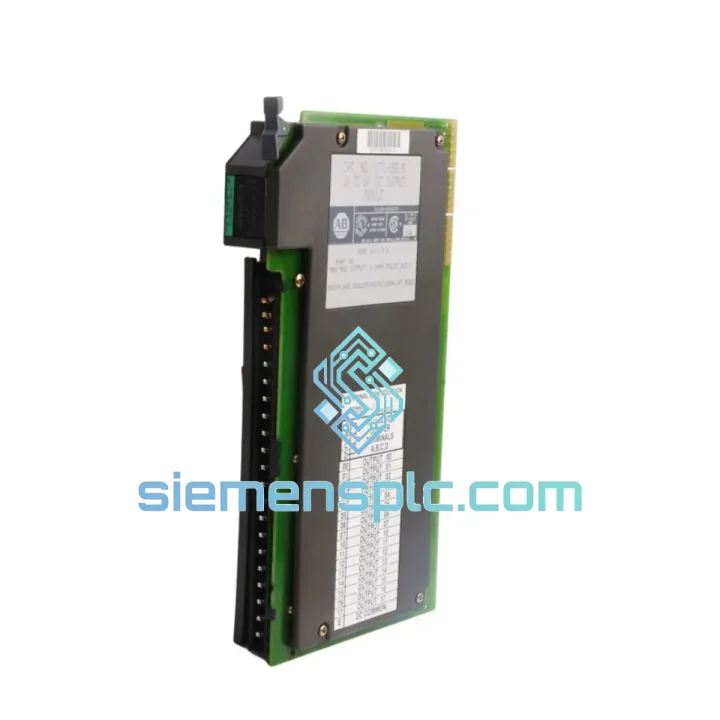
Request verified availability, condition, replacement risk review, packing options and courier lead time for 1771-OBD.
Click Request Quote and the part number is inserted into the inquiry form automatically.
Core fields for model confirmation and RFQ routing. Detailed product narrative remains below.
You’re not here to compare specs. You’re here because a 1771-OBD has gone dark in your PLC-5 rack and every hour it stays that way has a dollar figure attached to it. We stock the Allen-Bradley 1771-OBD in our Xiamen warehouse — physically on the shelf, ESD-packed, bench-verified in a live 1771 chassis before it ever gets boxed. Confirm your order before 15:00 CST and it leaves today via DHL Express or FedEx Priority. No back-order promises. No lead-time estimates. It ships.
Over the past decade we’ve executed emergency dispatches to automotive stamping lines in Germany, LNG terminals in Qatar, pharmaceutical packaging halls in Singapore, and pulp mills in Scandinavia. The pattern is always the same: the module fails at the worst possible time, procurement channels are too slow, and the plant needs a trusted source that can move faster than the OEM distribution network. That’s exactly what we do.
⚡ URGENT REQUIREMENT? Contact: [email protected] | WhatsApp: +86 18359268345
| Parameter | Specification | Field Note |
|---|---|---|
| Catalog Number | 1771-OBD | ✅ Ready to Ship — Xiamen Stock |
| Platform | Allen-Bradley PLC-5 / 1771 I/O | Direct backplane swap, no adapter |
| Output Type | Discrete DC Sourcing (current source) | Drives loads referenced to common negative |
| Output Points | 16 points, single-slot form factor | One slot in any 1771 chassis |
| Rated Output Voltage | 24 VDC (operating range 18–26.4 VDC) | Standard 24 V field wiring — no rewiring |
| Output Current Capacity | 1 A per point / 8 A module continuous max | Direct solenoid valve drive without interposing relay |
| OFF-State Leakage | < 1 mA per point | Prevents false energization of sensitive loads |
| ON/OFF Response Time | < 1 ms | Synchronized to PLC-5 scan cycle |
| Field-to-Backplane Isolation | Optical, 1500 V transient rated | Blocks field-side EMI and ground loops |
| Compatible Chassis | 1771-A1B / A2B / A3B / A4B (all sizes) | Universal — no chassis restriction |
| Wiring Arm | 1771-WN (keyed, sold separately) | Keying prevents wrong-slot insertion |
| Operating Temperature | 0 °C to 60 °C ambient | Standard industrial panel rated |
| Humidity | 5–95% RH, non-condensing | Food, pharma, and washdown-adjacent environments |
| Status Indicators | 16 × green LED (one per output point) | Visual fault isolation without test equipment |
| Vibration Rating | IEC 61131-2: 10–57 Hz / 0.075 mm; 57–150 Hz / 1 g | Press, compressor, and conveyor environments |
| Agency Approvals | UL, CE, CSA | North America and EU customs clearance accepted |
| Module Weight | 420 g | — |
| Series Compatibility | Series B through D — all backward compatible | Current production is Series D |
| Dispatch Location | Xiamen, Fujian, China | ✅ In Stock — Same-Day Dispatch Available |
Most field calls on a “dead” 1771-OBD turn out to be something else entirely. Work through this before you condemn the card — you may save the swap and the downtime.
Fault LED solid red / Processor Fault Code 71 hex: Pull the 1771-WN wiring arm off the module face. If the fault clears immediately, the module itself is fine — the problem is in your field wiring or a shorted load device. Measure each output channel with a clamp meter while the arm is disconnected. A shorted solenoid coil will pull the channel into current limit and latch the module fault. Identify the shorted load, replace it, clear the fault in RSLogix 5, re-seat the wiring arm, and you’re back online. No module swap required.
Intermittent output chatter, especially on points 9–16: This is almost never the module. The 1771-OBD field side is powered independently from the backplane — it draws from your 24 VDC field supply, not from the chassis power supply. If that field supply sags below 18 VDC during simultaneous multi-output actuation (common when driving multiple solenoid banks), you’ll see random output toggling that looks exactly like a failing output card. Scope the field supply rail during a fault event before ordering a replacement. A 10 A supply running six solenoids simultaneously is the usual culprit.
Step-by-step module replacement procedure:
Addressing — no DIP switches on this module: The 1771-OBD carries no physical address switches. Slot addressing is resolved entirely by the 1771 chassis backplane and the processor I/O configuration table. If you’re replacing a module in a remote I/O rack, the rack address is set on the 1771-ASB remote I/O adapter — not on the output card. Verify the ASB address switches match the processor’s I/O configuration before going online.
Inductive load suppression — not optional: Every solenoid valve, relay coil, contactor, and motor starter wired to a 1771-OBD output requires a suppressor across its coil terminals. Without suppression, back-EMF spikes on de-energization degrade the output driver ICs progressively. The failure mode is insidious: the module passes bench test, works fine for months, then starts producing intermittent faults under load. A MOV rated for 39 V clamping or a diode-resistor snubber across each inductive load costs less than a dollar per point. The 1771-OBD you’re replacing right now may have died from exactly this cause.
The 1771-OBD was engineered for environments that would destroy consumer-grade electronics in an afternoon. Allen-Bradley designed this module to operate where PLC-5 systems actually live: electrical rooms in steel mills running at 55 °C ambient, automotive body shops saturated with weld spatter and electromagnetic interference from 400 A resistance welders, food processing facilities with daily high-pressure washdown cycles pushing ambient humidity to 95% RH, and offshore platform control panels subject to continuous salt-air corrosion.
The optical isolation barrier between the field side and the backplane is the engineering decision that defines this module’s durability. Field-side transients — inductive spikes from large motor starters, ground loops from poorly bonded cable trays, capacitive coupling from adjacent 480 V power cables — are blocked at the isolation boundary. The backplane, the processor, and every other module in the rack never see them. This is why 1771-OBD modules pulled from decommissioned automotive plants after 20 years of three-shift continuous operation still bench-test within original Allen-Bradley specification.
The solid-state output drivers contain no mechanical wear components. There are no relay contacts to pit, no springs to fatigue, no contact resistance creeping upward with each switching cycle. MTBF for solid-state output modules of this class exceeds 1,000,000 hours under rated conditions. Vibration performance meets IEC 61131-2 requirements across the full industrial spectrum: 10–57 Hz at 0.075 mm displacement and 57–150 Hz at 1 g — covering reciprocating compressors, hydraulic presses, and high-speed conveyor drives.
Every unit dispatched from our Xiamen warehouse has been bench-tested in a live 1771 chassis under resistive load. We measure leakage current and switching response time on all 16 output channels individually. Units that do not meet Allen-Bradley original specification are not shipped. This is not a marketing claim — it is the only way we can stand behind same-day dispatch on emergency orders.
Our warehouse operates out of Xiamen, Fujian — a city with direct DHL and FedEx hub access and one of the most efficient export logistics corridors in Asia. Here is exactly what happens from the moment you confirm your order to the moment the module arrives at your facility.
Same business day (orders confirmed before 15:00 CST): Order confirmation received → module pulled from ESD-controlled storage → anti-static bag sealed → foam-lined export carton packed → desiccant sachet added → commercial invoice and packing list generated with correct HS code → handed to DHL or FedEx courier at our scheduled daily pickup. AWB tracking number transmitted to your email within two hours of dispatch.
Estimated transit times from Xiamen by region:
All shipments include a commercial invoice with the correct HS code for customs clearance, a detailed packing list, and insurance coverage up to the declared commercial value. Certificate of origin is available on request at no additional charge. Proforma invoices for import clearance and letter of credit purposes are issued as standard — no separate request required.
For next-flight-out routing on critical shutdowns where standard express transit is too slow, contact us directly before placing your order. We can arrange DHL Express Priority with same-day airline booking and door-to-door tracking from our warehouse to your receiving dock.
📧 Email: [email protected]
📱 WhatsApp: +86 18359268345
🌐 Web: siemensplc.com
© 2026 siemensplc.com. All rights reserved.
We check the full part number, brand, series and visible nameplate information before quotation.
Sales confirms stock path, condition option, quantity and realistic lead time for export dispatch.
DHL, FedEx, UPS or buyer courier arrangements can be reviewed with packing requirements.
Similar brand or category products for fast comparison and multi-item RFQ lists.