Allen-Bradley
RFQ Ready
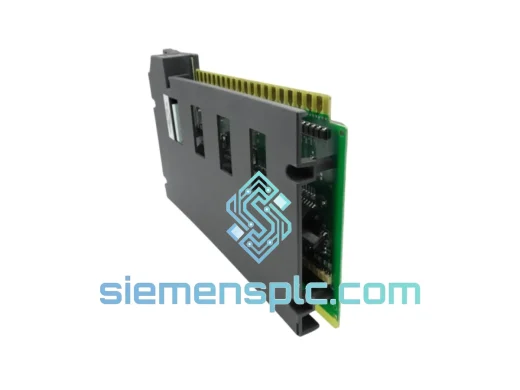
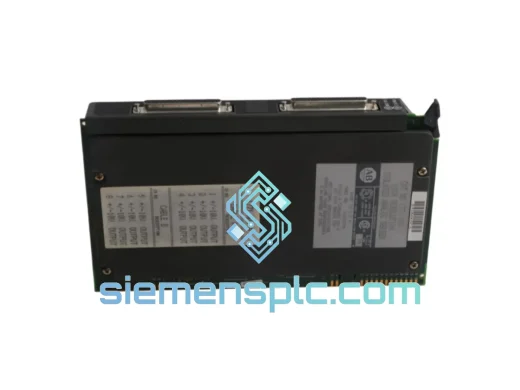
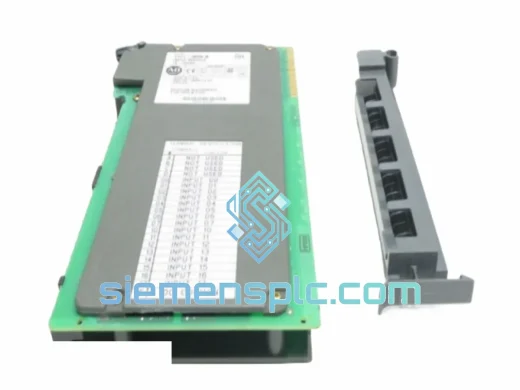
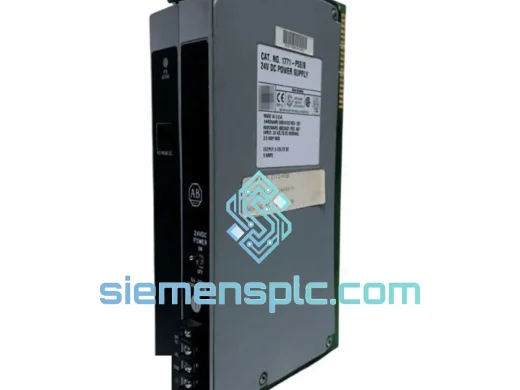
Allen-Bradley 1771-P5E Power Supply Interface Module – PLC-5
PLC-5
Origin US
Power Supply Interface Module
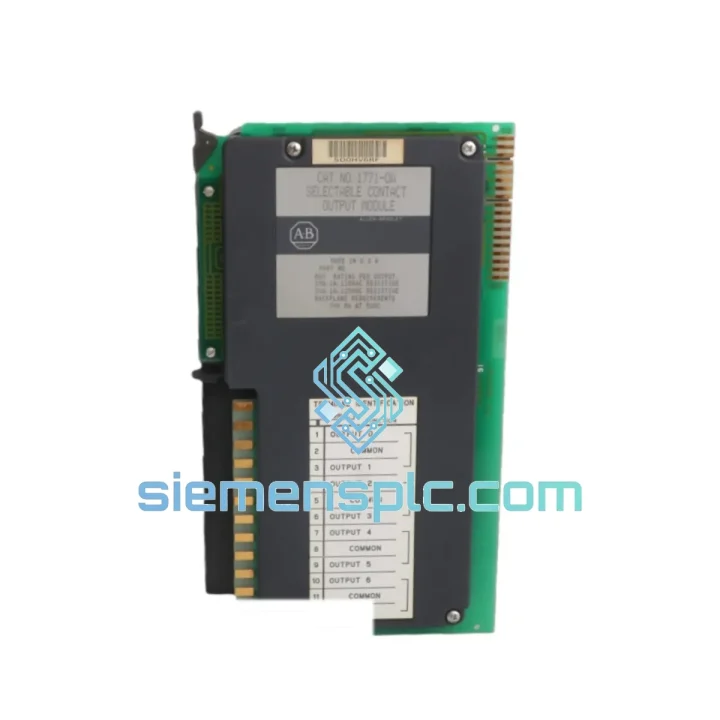
Request verified availability, condition, replacement risk review, packing options and courier lead time for 1771-OW.
Click Request Quote and the part number is inserted into the inquiry form automatically.
Core fields for model confirmation and RFQ routing. Detailed product narrative remains below.
Every minute your PLC-5 system sits idle, the losses compound. A failed 1771-OW relay output module doesn’t just halt one machine — it can cascade across an entire production cell. We stock the Allen-Bradley 1771-OW specifically for this scenario: verified, tested, and ready to ship from Xiamen within hours of your order. No waiting on distributor lead times. No back-and-forth on availability. Just a confirmed unit on its way to your facility.
This is not a listing built for browsing. It’s built for the engineer who just pulled a dead module from a 1771 chassis at 2 AM and needs a confirmed replacement before the morning shift starts.
⚡ URGENT REQUIREMENT? Contact: [email protected] | WhatsApp: +86 18359268345
| Parameter | Specification |
|---|---|
| Part Number | 1771-OW |
| Manufacturer | Allen-Bradley (Rockwell Automation) |
| Series | 1771 PLC-5 I/O |
| Module Type | Relay Output Module |
| Output Points | 16 isolated relay contacts |
| Output Voltage Range | 5–265V AC/DC |
| Max Load Current | 2A per output (resistive load) |
| Backplane Current Draw | 800 mA @ 5V DC |
| Operating Temperature | 0°C to 60°C |
| Chassis Slot Width | Single-slot (standard 1771 I/O) |
| Compatible Controllers | PLC-5/10, /15, /20, /25, /30, /40, /60, /80 |
| Programming Software | RSLogix 5 / 6200 Series |
| Certifications | UL, CSA, CE |
| Weight | ~400 g |
| Stock Status | ✅ Ready to Ship — Xiamen Warehouse |
The 1771-OW fails in predictable ways. Here’s what field experience tells you before you even pull the module:
Fault Code 71 / Output Fault LED solid red: This is the most common indicator of a relay contact weld or coil driver failure. Don’t reset and retry — the contact is gone. Pull the module, verify with a continuity check across the suspect output terminals with power removed. If you’re reading continuity on a de-energized output, the contact has welded closed. Replace immediately.
Intermittent output dropout under inductive load: The 1771-OW is rated 2A resistive. Inductive loads — motor starters, solenoids — generate back-EMF spikes that degrade relay contacts over time. If you’re seeing random output faults on inductive circuits, check for suppression (MOV or RC snubber) across the load. If suppression is absent or failed, contact life drops dramatically. The 1771-OX (5A, with arc suppression) is the correct long-term fix; the 1771-OW is the correct immediate fix to restore production.
Replacement procedure — step by step:
No-output condition after replacement (module appears healthy): Verify the output image table in RSLogix 5. If the processor was in fault state when the module failed, the output image may have been zeroed. A forced I/O test will confirm whether the issue is the module or the program state.
The 1771-OW was engineered for the environments where PLC-5 systems actually live — not climate-controlled server rooms, but foundry floors, chemical processing plants, and offshore platforms. The relay contact isolation architecture means each output is electrically independent, which matters when you’re switching mixed AC/DC loads across the same module in a noisy industrial environment.
Vibration tolerance is a real-world concern for any module mounted in a panel near heavy machinery. The 1771 form factor uses a positive-locking backplane connector that maintains contact integrity under continuous vibration loads that would cause edge-connector modules to intermittently fault. Field installations in steel mills and paper machines running 24/7 for over a decade are not unusual for this module family.
Thermal performance holds to spec at 60°C ambient — but the practical ceiling in a sealed enclosure with poor airflow is lower. If your panel runs hot, verify the chassis power supply’s derating curve. The module itself is not the weak point; the power supply thermal derating is where most high-ambient failures originate. Units we supply are inspected for capacitor condition on the internal driver board, which is the component most affected by cumulative thermal stress in aged modules.
Humidity and condensation are handled by the conformal coating on the PCB. However, modules that have been stored improperly — particularly surplus units that have seen temperature cycling in uncontrolled warehouses — can develop coating failures. Every unit we ship is visually inspected under magnification for coating integrity and corrosion on the relay coil terminals before it leaves our facility.
Our warehouse is located in Xiamen, Fujian, China — one of the most logistics-efficient export hubs on the Chinese coast, with direct access to DHL, FedEx, and UPS international gateways. This is not incidental. It was a deliberate operational choice to minimize the gap between order confirmation and delivery to your facility, wherever that facility is.
Standard export process: Orders confirmed before 15:00 CST are processed for same-day dispatch. Export documentation — commercial invoice, packing list, and certificate of origin — is prepared in parallel with packaging. Modules are packed in anti-static bags, foam-lined boxes, and outer cartons rated for air freight handling. We do not use bubble wrap alone for electronics — every shipment is packed to survive the handling chain.
DHL Express: Transit times to most of Europe and North America run 3–5 business days door-to-door. Southeast Asia typically 1–2 days. Middle East 3–4 days. DHL is our default carrier for urgent shipments because of their industrial parts handling experience and real-time tracking granularity.
FedEx International Priority: Available as an alternative for destinations where FedEx has stronger last-mile coverage. Transit times are comparable to DHL. We select the carrier based on your destination and current network performance — not on margin.
Customs and duties: We declare accurately. HS code 8537.10 applies to this module category. We do not under-declare to reduce your import duties — this creates customs holds that defeat the entire purpose of express shipping. If your facility requires DDP (Delivered Duty Paid) terms, contact us before ordering and we will arrange accordingly.
Tracking: You receive a tracking number within 2 hours of dispatch. For urgent shipments, we proactively monitor the first 24 hours of transit and flag any customs or routing anomalies before they become delays.
For stock confirmation, urgent quotes, or technical questions before ordering:
© 2026 siemensplc.com. All rights reserved.
We check the full part number, brand, series and visible nameplate information before quotation.
Sales confirms stock path, condition option, quantity and realistic lead time for export dispatch.
DHL, FedEx, UPS or buyer courier arrangements can be reviewed with packing requirements.
Similar brand or category products for fast comparison and multi-item RFQ lists.