Allen-Bradley
RFQ Ready
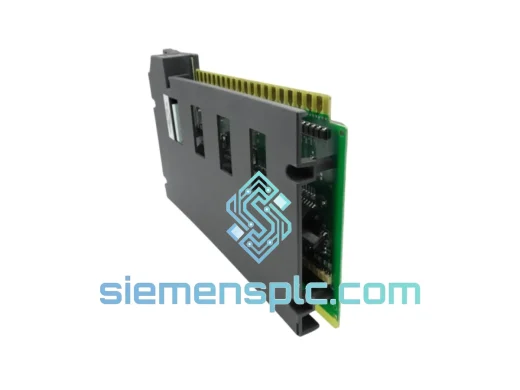
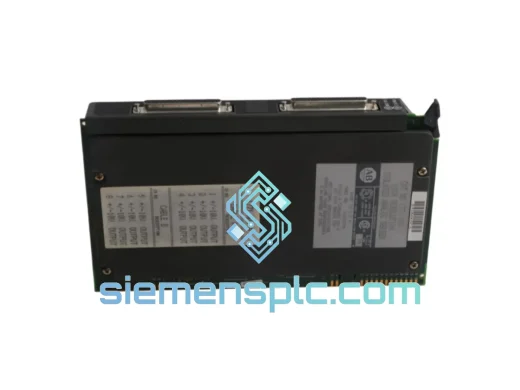
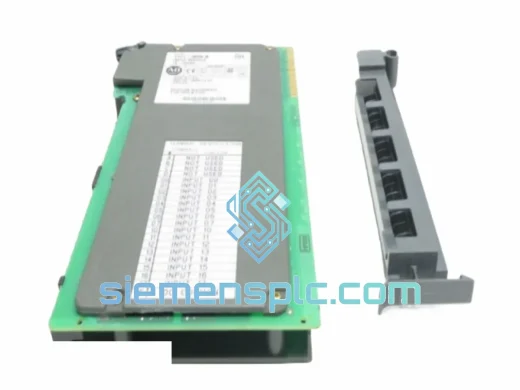
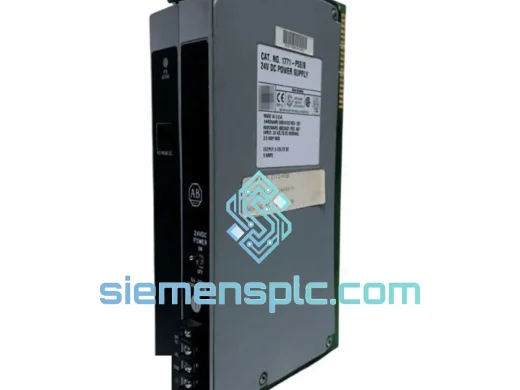
Allen-Bradley 1771-P5E Power Supply Interface Module – PLC-5
PLC-5
Origin US
Power Supply Interface Module
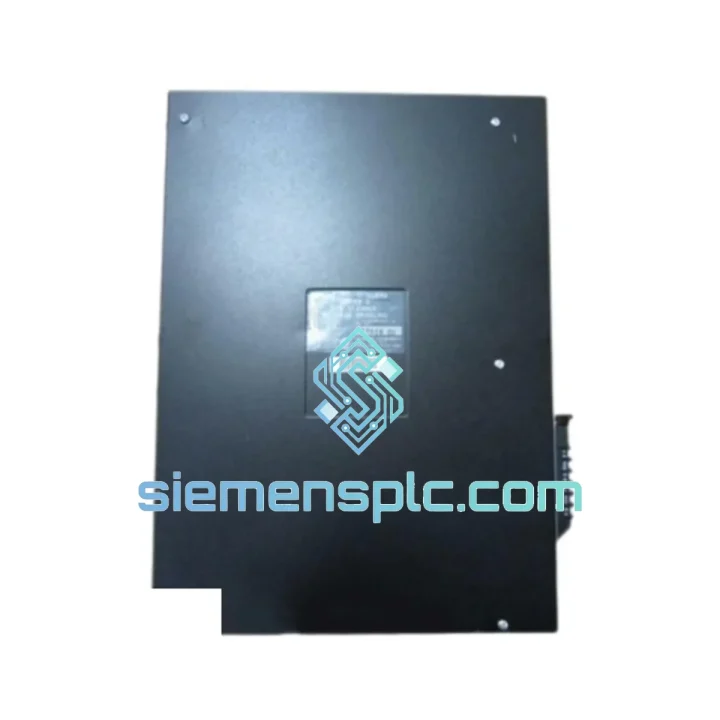
Request verified availability, condition, replacement risk review, packing options and courier lead time for 1775-S4B.
Click Request Quote and the part number is inserted into the inquiry form automatically.
Core fields for model confirmation and RFQ routing. Detailed product narrative remains below.
The Allen-Bradley 1775-S4B is a rack-mounted I/O Scanner and Message Handling module engineered specifically for the PLC-5 programmable controller platform. Its primary function is to offload the cyclic I/O scan and inter-controller MSG instruction execution from the main processor, allowing the PLC-5 CPU to dedicate its scan cycle exclusively to ladder logic execution and deterministic control loop processing. In distributed automation architectures where remote I/O racks are geographically dispersed across a plant floor, the 1775-S4B acts as the dedicated communication engine that maintains synchronous data exchange between the processor and field devices without burdening the CPU’s instruction cycle.
The module operates within the Allen-Bradley 1771 I/O chassis backplane and communicates with the PLC-5 processor via the 1771 backplane bus. It manages the Remote I/O (RIO) link — a token-passing, half-duplex serial network operating at 57.6 kbps, 115.2 kbps, or 230.4 kbps — and handles the scheduling of I/O image table updates independently of the processor scan. This architectural separation is critical in applications where I/O update rates must remain consistent regardless of processor program complexity or scan time variability.
Real-time Stock & RFQ: [email protected] | WhatsApp: +86 18359268345
| Parameter | Specification |
|---|---|
| Manufacturer | Allen-Bradley (Rockwell Automation) |
| Part Number | 1775-S4B |
| Product Series | PLC-5 / 1775 |
| Module Function | I/O Scanner & Message Handling |
| Backplane Interface | Allen-Bradley 1771 I/O chassis backplane bus |
| Remote I/O Link Speed | 57.6 kbps / 115.2 kbps / 230.4 kbps (selectable) |
| Max Remote I/O Racks | Up to 32 logical rack addresses |
| MSG Instruction Support | Yes — peer-to-peer and block transfer messaging |
| Supply Voltage | 5 VDC (backplane supplied) |
| Power Consumption | Approx. 1.5 A @ 5 VDC (backplane draw) |
| Operating Temperature | 0°C to +60°C |
| Storage Temperature | -40°C to +85°C |
| Relative Humidity | 5% to 95% non-condensing |
| Form Factor | Single-slot 1771 rack module |
| Weight | Approx. 2,300 g |
| Country of Origin | USA |
| Warranty | 12 months — functional defect coverage |
The 1775-S4B implements a dual-port memory architecture that allows simultaneous read/write access from both the backplane bus controller and the module’s onboard scanner processor. This eliminates bus contention latency that would otherwise occur if the PLC-5 CPU had to arbitrate every I/O image table update directly. The scanner processor — a dedicated microcontroller embedded on the module PCB — executes the RIO link protocol state machine independently, maintaining its own token-rotation timer and rack address polling table without any intervention from the main CPU scan cycle.
From an EMC design standpoint, the 1775-S4B employs optocoupler-based galvanic isolation on the RIO serial interface lines. This isolation barrier, rated to withstand common-mode transients typical of industrial environments (motor drive switching noise, contactor coil suppression spikes), prevents ground loop currents from corrupting the serial data stream. The RIO cable shield is terminated at the module’s chassis ground lug through a defined impedance path, ensuring that high-frequency noise is shunted to chassis rather than propagating into the signal conductors.
The module’s onboard EEPROM stores the rack configuration table — including rack address assignments, I/O group sizes, and block transfer definitions — which is retained across power cycles without battery backup. This non-volatile configuration approach eliminates the risk of scanner reconfiguration loss during unexpected power interruptions, a failure mode that has historically caused extended downtime in plants relying on volatile RAM-based scanner configurations.
Block transfer operations — used for analog I/O modules, encoder interfaces, and specialty modules that require more than 16 bits of data per rack slot — are managed entirely by the 1775-S4B without consuming PLC-5 processor scan time. The module queues block transfer read and write requests, arbitrates access to the RIO link, and signals completion to the processor via a status bit in the shared dual-port memory. This handshake mechanism ensures data integrity without requiring the processor to poll the RIO link directly.
Every Allen-Bradley 1775-S4B unit supplied through siemensplc.com is sourced from traceable industrial supply channels and subjected to a structured verification process prior to dispatch. Physical inspection covers PCB board integrity, connector pin condition, label authenticity, and date code verification against known OEM production records. Functional verification is conducted in a live 1771 rack environment, confirming RIO link initialization, rack polling, and MSG instruction execution against documented performance parameters.
Shipments originate from our warehouse in Xiamen, China, a logistics hub with direct access to international express carriers including DHL Express, FedEx International Priority, and UPS Worldwide Expedited. Standard in-stock orders are dispatched within 1–3 business days of order confirmation. Full export documentation — commercial invoice, packing list, certificate of origin, and HS code classification — is prepared for every shipment to ensure smooth customs clearance in destination countries across Asia-Pacific, the Middle East, Europe, North America, and South America. Bulk order pricing and consolidated freight options are available for orders of 5 or more units.
Email: [email protected]
WhatsApp: +86 18359268345
Web: siemensplc.com
Location: Xiamen, China
© 2026 siemensplc.com. All rights reserved.
We check the full part number, brand, series and visible nameplate information before quotation.
Sales confirms stock path, condition option, quantity and realistic lead time for export dispatch.
DHL, FedEx, UPS or buyer courier arrangements can be reviewed with packing requirements.
Similar brand or category products for fast comparison and multi-item RFQ lists.