Bently Nevada
RFQ Ready
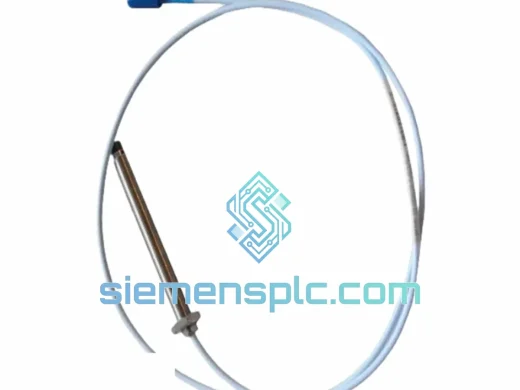
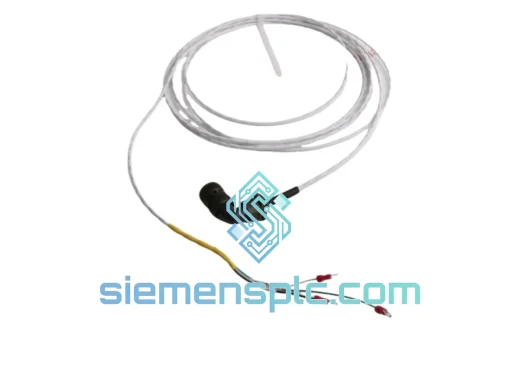
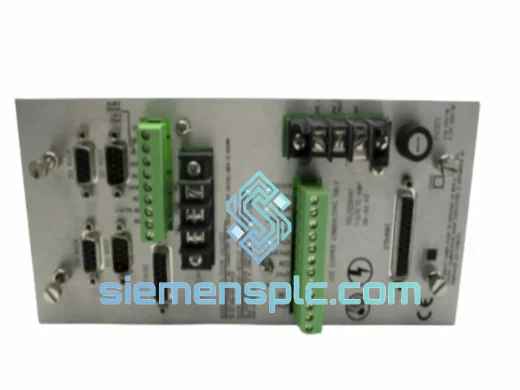
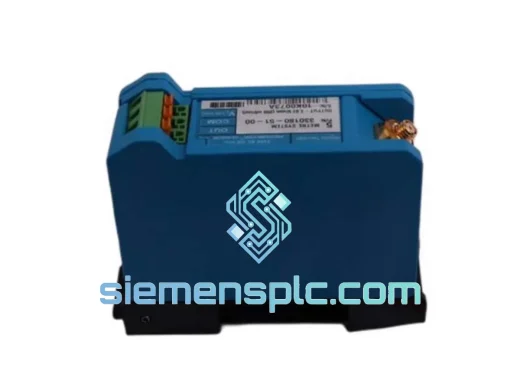
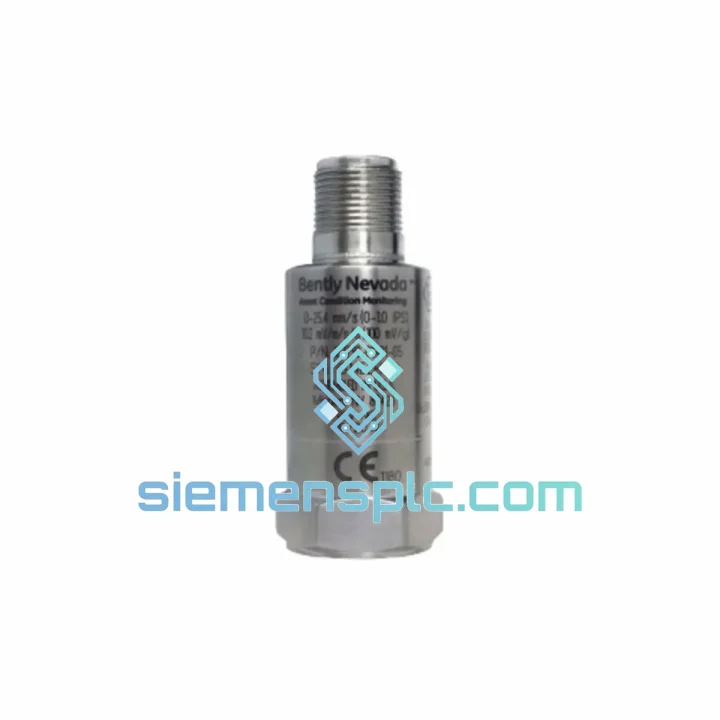
Bently Nevada 991-25-50-01-00 Thrust Transmitter – 3500 Series
3500 Series
Origin US
Thrust Transmitter
Request verified availability, condition, replacement risk review, packing options and courier lead time for 177230-00-01-05.
Click Request Quote and the part number is inserted into the inquiry form automatically.
Core fields for model confirmation and RFQ routing. Detailed product narrative remains below.
Within a continuous rotating-machinery protection loop, the seismic transmitter occupies the measurement node responsible for absolute casing motion — the vibration component that shaft-relative proximity probes cannot capture. The Bently Nevada 177230-00-01-05 fulfills this role inside the 3500 Series Machinery Protection System, converting mechanical velocity signals from a casing-mounted transducer into a conditioned 4–20 mA analog output that feeds directly into the rack’s monitor card. This signal path is deterministic: from transducer excitation through signal conditioning to the analog output terminal, the module introduces no software-mediated latency, ensuring that alarm and trip thresholds respond to real machine state within the hardware scan cycle of the 3500 rack — typically under 20 ms for alert evaluation.
The 3500 platform was designed around the principle of hardware-enforced protection. Unlike software-only condition monitoring systems, the 3500 rack executes trip logic in dedicated monitor hardware. The 177230-00-01-05 feeds this architecture by delivering a stable, low-noise analog signal that the paired monitor card — typically a 3500/42M Proximitor/Seismic Monitor — uses to evaluate against configurable alert and danger setpoints. The module’s internal signal conditioning chain includes a velocity-to-voltage conversion stage, a selectable integration network (velocity or acceleration output depending on transducer type), and an output driver stage rated for standard 4–20 mA loop loads up to 600 Ω. This output is galvanically isolated from the rack backplane, preventing ground loop interference from corrupting the measurement signal in installations where multiple earthing points exist across the machine train.
In gas turbine and steam turbine applications, absolute casing vibration is the primary indicator of bearing housing deterioration, foundation looseness, and structural resonance. The 177230-00-01-05 is specified in API 670 Fifth Edition compliant installations, where seismic measurement on critical machines is mandatory alongside shaft-relative displacement monitoring. Its compatibility with Velomitor CT piezoelectric velocity sensors and standard industrial accelerometers gives plant engineers flexibility in transducer selection without requiring module substitution.
Real-time Stock & RFQ: [email protected] | WhatsApp: +86 18359268345
| Parameter | Value / Specification |
|---|---|
| Part Number | 177230-00-01-05 |
| Manufacturer | Bently Nevada (Baker Hughes) |
| Series | 3500 Machinery Protection System |
| Module Function | Seismic (Absolute Casing Vibration) Transmitter |
| Output Signal | 4–20 mA analog, two-wire loop-powered |
| Output Load Capacity | Up to 600 Ω loop resistance |
| Measurement Type | Absolute casing vibration — velocity (mm/s or in/s) |
| Compatible Transducers | Velomitor CT, standard industrial accelerometers (ICP/IEPE) |
| Rack Compatibility | Bently Nevada 3500 Rack System (all standard frame sizes) |
| Monitor Card Pairing | 3500/42M Proximitor/Seismic Monitor |
| Signal Isolation | Galvanic isolation between transducer input and 4–20 mA output |
| Operating Temperature | 0 °C to +60 °C (module ambient) |
| Storage Temperature | -40 °C to +85 °C |
| Power Supply | Supplied via 3500 rack backplane (no external PSU required) |
| Compliance Standard | API 670 Fifth Edition (Machinery Protection Systems) |
| Form Factor | Single-slot 3500 rack module |
| Approximate Weight | 300 g |
| Warranty | 12 months from date of shipment |
| Condition Available | New / Surplus / Refurbished (specify at RFQ) |
| Country of Origin | United States |
The 177230-00-01-05 implements a three-stage analog signal chain. The first stage is the transducer interface: a constant-current excitation source (typically 4 mA for ICP/IEPE sensors) biases the piezoelectric velocity transducer and returns the AC vibration signal superimposed on the DC bias voltage. A coupling capacitor strips the DC component, passing only the AC vibration signal to the second stage.
The second stage is the signal conditioning network. Depending on the module’s internal configuration, this stage applies either a velocity-flat frequency response (for direct velocity measurement) or an integration network that converts acceleration input to velocity output. The integration is performed in the analog domain using a passive RC network with defined corner frequencies, avoiding the quantization noise and group delay artifacts associated with digital integration. The conditioned signal is then amplitude-scaled to match the 4–20 mA output span, where 4 mA corresponds to zero vibration and 20 mA corresponds to the full-scale velocity range configured for the application.
The third stage is the output driver. A precision voltage-to-current converter drives the 4–20 mA loop with a compliance voltage sufficient to maintain regulation across the specified 600 Ω maximum load. The output stage is galvanically isolated from both the transducer input and the rack backplane using transformer-coupled or optocoupler-based isolation barriers. This isolation architecture eliminates common-mode interference paths that would otherwise allow ground potential differences between the machine structure, the control room, and the DCS input card to corrupt the measurement signal — a critical design requirement in large rotating machinery installations where earthing impedances across a machine train can reach several ohms at power-line frequencies.
EMC performance is addressed at the PCB layout level. The analog signal path is routed away from the backplane communication traces, and the module housing provides shielding continuity through the rack frame. The result is a module that maintains measurement accuracy in environments with high-frequency switching noise from variable-frequency drives and high-voltage bus bars — conditions common in compressor stations and power plant auxiliary buildings.
Every 177230-00-01-05 unit dispatched from our Xiamen, China facility is sourced through verified supply channels with full part traceability. Authenticity verification includes cross-referencing the module’s serial number and revision code against manufacturer records prior to shipment. Each unit undergoes visual inspection covering connector pin integrity, PCB surface condition, label legibility, and housing mechanical integrity. Functional verification confirms that the module powers up correctly and that the output signal responds to a simulated transducer input within the specified 4–20 mA range.
Packaging follows ESD-safe protocols: anti-static bags, foam-lined cartons, and moisture barrier packaging for ocean freight shipments. Export documentation — commercial invoice, packing list, and certificate of conformance — is prepared for all international shipments. Customs HS code classification is provided to facilitate clearance in major import markets including the EU, USA, Southeast Asia, and the Middle East.
Logistics from Xiamen port connect to major global hubs via express air freight (DHL, FedEx, UPS) with typical transit times of 3–5 business days to Europe and North America, and 1–3 business days to Southeast Asia. For urgent plant shutdowns, same-day dispatch is available for in-stock units when orders are confirmed before 14:00 CST. A 12-month warranty covers manufacturing defects and premature failure under normal operating conditions. Warranty claims are processed with a replacement-first policy to minimize plant downtime.
Email: [email protected]
WhatsApp: +86 18359268345
Web: siemensplc.com
Location: Xiamen, China
© 2026 siemensplc.com. All rights reserved.
We check the full part number, brand, series and visible nameplate information before quotation.
Sales confirms stock path, condition option, quantity and realistic lead time for export dispatch.
DHL, FedEx, UPS or buyer courier arrangements can be reviewed with packing requirements.
Similar brand or category products for fast comparison and multi-item RFQ lists.