Bently Nevada
RFQ Ready
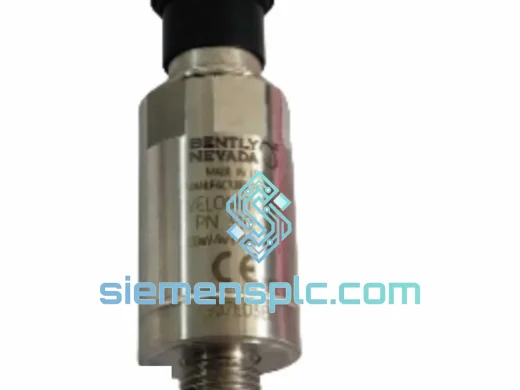
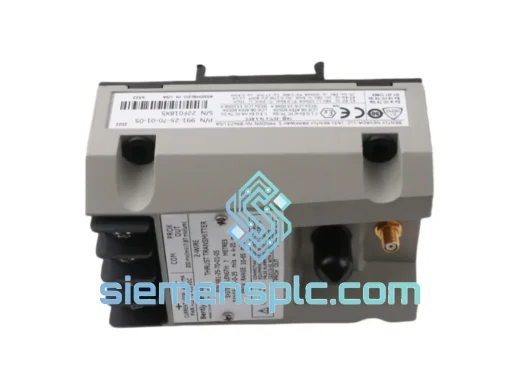
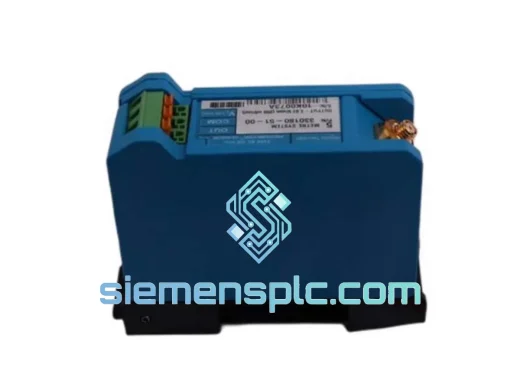
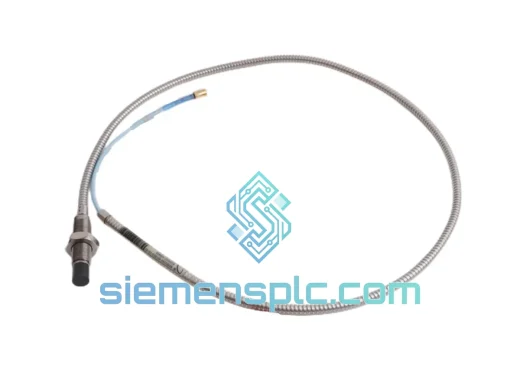
Bently Nevada RS901104-03-050-10-01 Proximitor Sensor – 3300 XL Series
3300 XL
Origin US
Proximitor Sensor
Request verified availability, condition, replacement risk review, packing options and courier lead time for 177230-02.
Click Request Quote and the part number is inserted into the inquiry form automatically.
Core fields for model confirmation and RFQ routing. Detailed product narrative remains below.
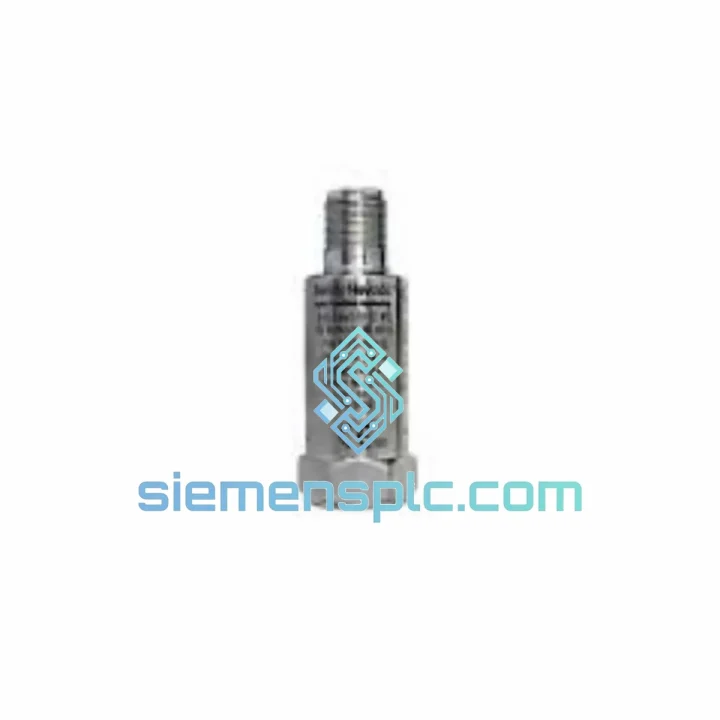
The Bently Nevada 177230-02 is a 2-wire, loop-powered seismic velocity transmitter designed for continuous absolute vibration measurement on rotating and reciprocating machinery. Within a machinery protection architecture, this module occupies the sensing boundary between the mechanical asset and the monitoring system — converting casing or bearing-housing velocity into a standardized 4–20 mA signal that feeds directly into DCS analog input cards, safety instrumented systems (SIS), or Bently Nevada’s own System 1 condition monitoring platform. Its design philosophy prioritizes signal fidelity, installation simplicity, and long-term field reliability over a wide range of industrial process environments.
Unlike proximity probe systems that measure shaft relative displacement via eddy-current coupling, the 177230-02 measures absolute structural velocity using an internal geophone element. This distinction is operationally significant: seismic transmitters capture casing-borne vibration energy that proximity probes cannot detect, making the 177230-02 indispensable for API 670-compliant machinery protection schemes on turbines, compressors, pumps, and motors where both shaft and casing vibration must be independently monitored.
📦 Real-time Stock & RFQ: [email protected] | WhatsApp: +86 18359268345
| Parameter | Specification |
|---|---|
| Part Number | 177230-02 |
| Manufacturer | Bently Nevada (Baker Hughes) |
| Module Classification | Seismic Velocity Transmitter |
| Output Signal | 4–20 mA, 2-wire loop-powered |
| Measurement Quantity | Absolute seismic velocity (mm/s or in/s RMS) |
| Frequency Response | 2 Hz – 1,000 Hz (–3 dB points, typical) |
| Supply Voltage | 18–30 VDC |
| Loop Load Resistance | ≤ 600 Ω at 24 VDC nominal |
| Operating Temperature | –40 °C to +85 °C |
| Storage Temperature | –55 °C to +100 °C |
| Enclosure Protection | IP66 / NEMA 4X |
| Connector Interface | 2-pin MIL-spec / terminal block (application-dependent) |
| Housing Material | Stainless steel / anodized aluminum alloy |
| Approximate Weight | ~1,020 g (with housing) |
| Compliance Standards | API 670, CE, RoHS |
| Country of Origin | USA |
| Warranty | 12 months against manufacturing defects |
The 177230-02 is built around a moving-coil geophone transducer — a mass-spring-damper system in which a coil suspended within a permanent magnetic field generates a voltage proportional to the relative velocity between the coil and the housing. This voltage is inherently proportional to vibration velocity, which means no differentiation or integration stage is required in the signal chain for velocity output, preserving phase accuracy and minimizing noise amplification that would otherwise accompany mathematical differentiation of a displacement signal.
The internal signal conditioning circuit performs three primary functions: (1) impedance transformation to buffer the high-impedance geophone output against cable capacitance effects over long field runs; (2) frequency shaping via passive and active filter networks to enforce the 2–1,000 Hz passband and attenuate DC drift and high-frequency electrical noise; and (3) V-to-I conversion to drive the 4–20 mA current loop with a compliance voltage sufficient to overcome field cable resistance up to 600 Ω.
EMC Design: The stainless steel / aluminum housing provides a Faraday enclosure that attenuates radiated electromagnetic interference common in switchgear rooms and motor control centers. The 2-wire loop topology inherently rejects common-mode noise because the measurement signal is encoded as a current rather than a voltage — a 50 Hz or 60 Hz interference voltage induced equally on both conductors produces no differential current error at the receiving end. This makes the 177230-02 suitable for installation in cable trays shared with power conductors, provided standard separation practices are observed.
Mechanical Resonance Management: The geophone’s natural frequency is engineered well below the 2 Hz lower measurement limit, and the damping ratio is set near 0.6–0.7 critical — the optimal range for maximizing flat frequency response above resonance while preventing oscillatory overshoot. This means the transmitter’s amplitude response is flat within ±3 dB across the entire 2–1,000 Hz measurement band without requiring external compensation networks.
Loop-Powered Architecture: By drawing operating power from the 4–20 mA loop itself, the 177230-02 eliminates the need for a separate 24 VDC auxiliary supply at the field junction box. This reduces wiring complexity, eliminates a potential ground loop path, and simplifies intrinsic safety barrier selection for hazardous area installations where the number of energy sources entering the hazardous zone must be minimized.
Every Bently Nevada 177230-02 unit supplied through siemensplc.com is sourced as a genuine, original-manufacture component. Bently Nevada’s manufacturing processes for seismic transmitters include 100% electrical functional testing, environmental stress screening, and calibration verification before shipment from the factory. Units supplied by siemensplc.com retain original factory labeling, serial number traceability, and packaging integrity — no repackaging or relabeling is performed.
For project and critical-application orders, the following documentation is available upon request: manufacturer’s certificate of conformance, factory calibration record, material test reports for pressure-wetted components (where applicable), and third-party inspection reports. Pre-shipment inspection by a nominated third-party inspection agency (SGS, Bureau Veritas, Intertek) can be arranged for volume orders.
Logistics from Xiamen, China: siemensplc.com operates from Xiamen, a major southeastern China port city with direct access to international express carriers and ocean freight consolidators. In-stock units are dispatched within 1–3 business days of order confirmation. Standard export documentation — commercial invoice, packing list, certificate of origin, and HS code declaration — is prepared for every shipment. Carrier options include DHL Express (3–5 days to most destinations), FedEx International Priority, UPS Worldwide Express, and sea freight LCL/FCL for bulk orders. All shipments are fully tracked and insured. Export compliance screening is performed on every order in accordance with applicable trade regulations.
📧 Email: [email protected]
📱 WhatsApp: +86 18359268345
🌐 Web: siemensplc.com
📍 Location: Xiamen, China
© 2026 siemensplc.com. All rights reserved.
We check the full part number, brand, series and visible nameplate information before quotation.
Sales confirms stock path, condition option, quantity and realistic lead time for export dispatch.
DHL, FedEx, UPS or buyer courier arrangements can be reviewed with packing requirements.
Similar brand or category products for fast comparison and multi-item RFQ lists.