Bently Nevada
RFQ Ready
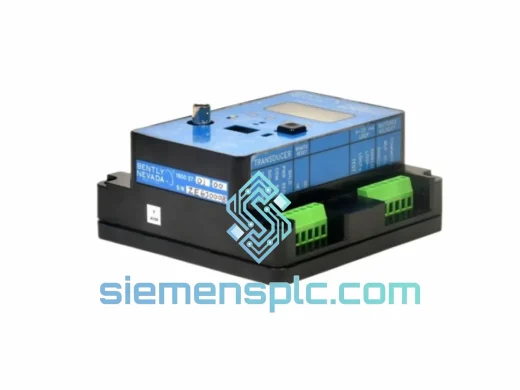
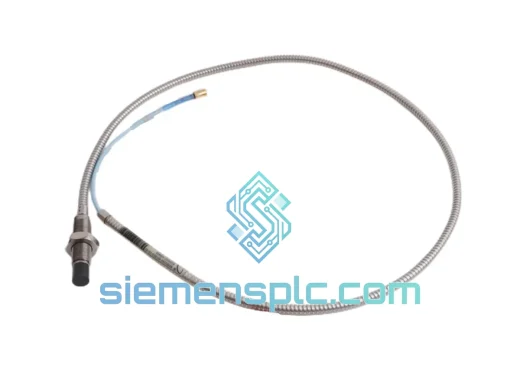
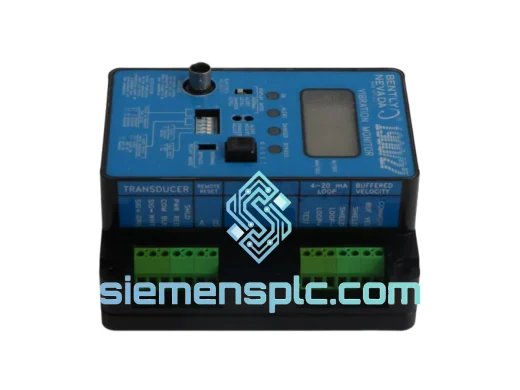
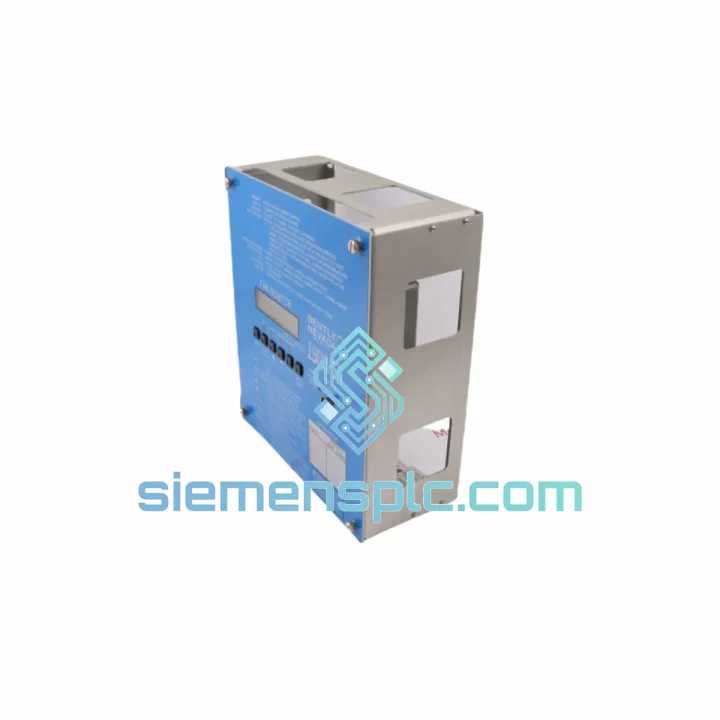
Bently Nevada 1900/27-02-00 Vibration Monitor
1900 Series
Origin US
Vibration Monitor
Request verified availability, condition, replacement risk review, packing options and courier lead time for 1900/55.
Click Request Quote and the part number is inserted into the inquiry form automatically.
Core fields for model confirmation and RFQ routing. Detailed product narrative remains below.
Your induced-draft fan just tripped. The DCS alarm is screaming. Production is at zero. You’ve already called three suppliers and gotten three voicemails. This is exactly the scenario the Bently Nevada 1900/55 Fan Monitor replacement stock at siemensplc.com was built for. We hold physical inventory in Xiamen, China — not a broker promise, not a lead-time estimate — and we ship the same business day via DHL Express or FedEx International Priority.
The 1900/55 is a dedicated fan machinery protection module within the Bently Nevada 1900 Series platform. It monitors vibration, speed, and related parameters on rotating fan equipment — forced-draft fans, induced-draft fans, primary air fans, process blowers — and triggers alarm and danger relay outputs before a bearing failure or rotor imbalance becomes a catastrophic event. When this module fails or needs replacement during a scheduled outage, there is zero tolerance for a 6-week OEM lead time. You need it now. We have it.
URGENT REQUIREMENT? Contact: [email protected] | WhatsApp: +86 18359268345
| Parameter | Detail |
|---|---|
| Part Number / SKU | 1900/55 |
| Brand | Bently Nevada (Baker Hughes) |
| Series | 1900 Series Machinery Protection System |
| Module Function | Fan Monitor – vibration & speed protection |
| Rack Compatibility | Bently Nevada 1900 Series rack architecture |
| Output Signals | 4–20 mA analog, relay alarm/danger outputs |
| Alarm Setpoints | Configurable Alert and Danger thresholds |
| Input Channels | Dual-channel vibration input (transducer-driven) |
| Power Supply | 24 VDC (rack-supplied) |
| Operating Temperature | 0°C to +65°C |
| Humidity | 5% to 95% RH, non-condensing |
| Mounting | Rack-mount, 1900 Series card slot |
| Weight | ~3,220 g (module + packaging) |
| Origin | USA (Bently Nevada / Baker Hughes) |
| Condition | New / Surplus / Tested (specify on inquiry) |
| Stock Status | Ready to Ship – Xiamen Warehouse |
After ten years of field work on rotating machinery, here is what actually goes wrong with the 1900/55 and what you need to watch when you swap it out.
Common Failure Modes:
Replacement Procedure – Critical Steps:
The 1900 Series was not designed for a clean server room. It was designed for the turbine deck of a coal-fired power plant, the compressor bay of an offshore platform, and the raw mill building of a cement plant — environments where ambient temperature swings 40°C between seasons, where vibration from adjacent machinery is constant, and where humidity condenses on every surface during a cold startup.
The 1900/55 module construction reflects this reality. The PCB is conformally coated to resist moisture ingress and corrosive atmospheres. The card-edge connector is gold-plated to maintain contact integrity through thousands of insertion cycles and years of thermal cycling. The internal power supply is designed to ride through the voltage transients common in industrial 24 VDC distribution systems — the kind of transients that kill consumer-grade electronics but that the 1900/55 absorbs without a fault.
Vibration immunity is built into the rack-mount form factor itself. The card locks into the rack backplane with a positive mechanical latch, eliminating the connector micro-motion that causes intermittent faults on vibrating machinery. In field experience, 1900 Series modules installed on fan pedestals with 15 mm/s background vibration have run continuously for 8+ years without a single nuisance trip attributable to the monitor hardware.
For high-temperature environments — induced-draft fans on coal boilers where ambient at the fan bearing can reach 55°C — the 1900/55 operates within specification up to 65°C continuous. If your installation exceeds this, the solution is improved local ventilation for the control panel, not a different monitor.
Our warehouse is located in Xiamen, Fujian, China — one of China’s primary export hubs with direct access to Xiamen Gaoqi International Airport and the Port of Xiamen. This geography is not accidental. It gives us same-day handoff to DHL Express and FedEx International Priority for urgent shipments, and competitive sea freight rates for planned procurement.
Typical transit times from Xiamen:
Every shipment includes a commercial invoice, packing list, and certificate of origin for customs clearance. For orders requiring specific country import permits, contact us in advance — we handle export documentation daily and know the requirements for most industrial import markets.
For non-urgent procurement, sea freight via Xiamen Port to major global ports (Rotterdam, Houston, Singapore, Jebel Ali) is available with full FCL/LCL options. Lead time for sea freight is 18–35 days depending on destination port and vessel schedule.
All shipments are tracked end-to-end. You receive a tracking number within 2 hours of dispatch. For critical emergency shipments, we provide direct WhatsApp updates at each logistics milestone — pickup confirmation, departure scan, customs clearance, and delivery.
Email: [email protected]
WhatsApp: +86 18359268345
Web: siemensplc.com
© 2026 siemensplc.com. All rights reserved.
We check the full part number, brand, series and visible nameplate information before quotation.
Sales confirms stock path, condition option, quantity and realistic lead time for export dispatch.
DHL, FedEx, UPS or buyer courier arrangements can be reviewed with packing requirements.
Similar brand or category products for fast comparison and multi-item RFQ lists.