Bently Nevada
RFQ Ready
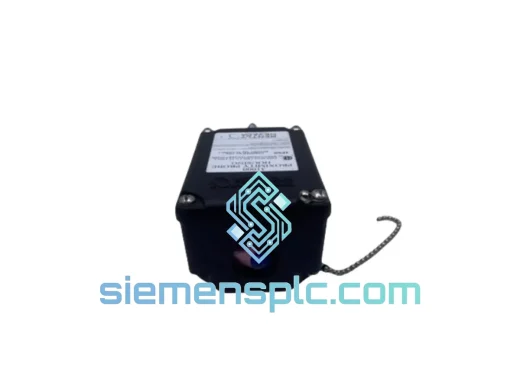
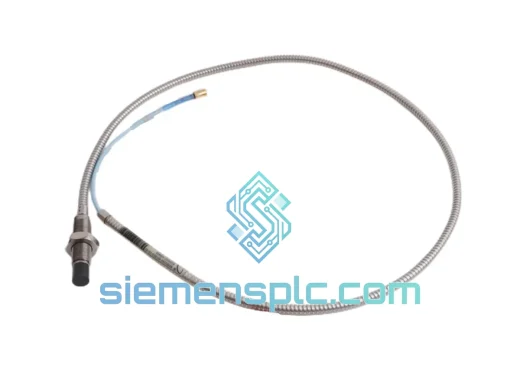
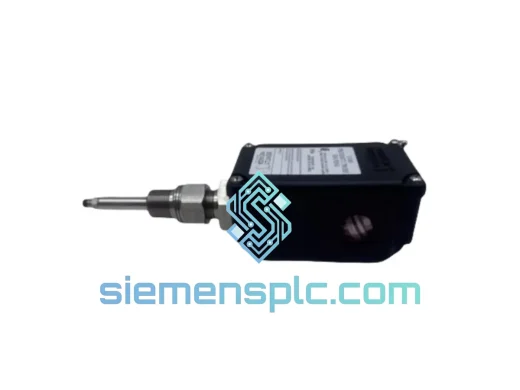
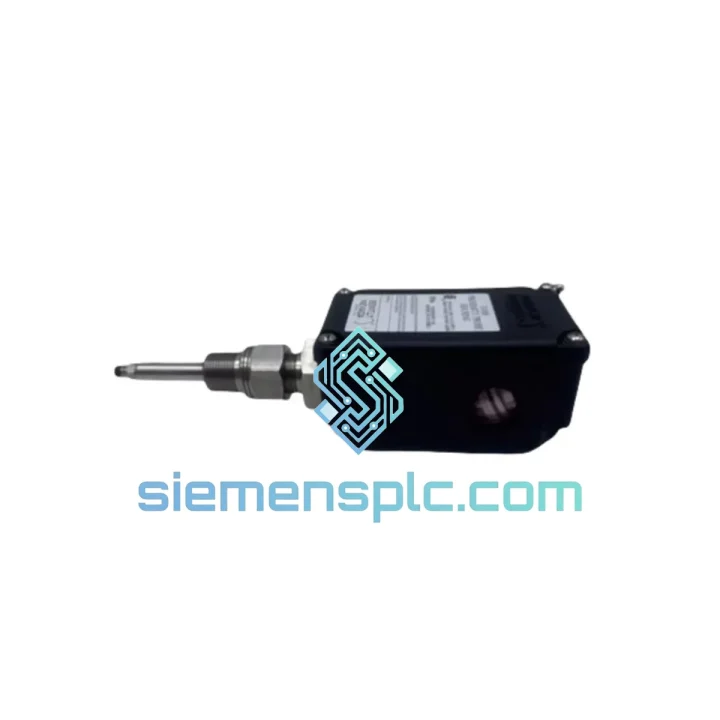
Bently Nevada 32000-29-05-10-072-07-02 Proximity Probe Assembly
32000 Series
Origin US
Proximity Probe Assembly
Request verified availability, condition, replacement risk review, packing options and courier lead time for 31000-16-05-00-059-02-02.
Click Request Quote and the part number is inserted into the inquiry form automatically.
Core fields for model confirmation and RFQ routing. Detailed product narrative remains below.
Every hour a turbine, compressor, or critical rotating machine sits idle costs real money — production losses, penalty clauses, emergency labor. When the proximity probe housing fails or goes missing during a forced outage, you don’t have days to wait on OEM lead times. The Bently Nevada 31000-16-05-00-059-02-02 is in stock at our Xiamen warehouse. We ship DHL/FedEx Express within 24 hours of order confirmation. That’s the difference between a 3-day outage and a 3-week one.
This housing assembly is the mechanical backbone of the Bently Nevada 31000 and 32000 Series eddy-current proximity probe measurement chain. It locks the probe at the exact radial position required for accurate shaft displacement and vibration readings. A worn, cracked, or incorrectly threaded housing introduces gap error — your 3500 rack sees false vibration amplitude, alarm setpoints drift, and the machinery protection system either trips unnecessarily or, worse, fails to trip when it should. Neither outcome is acceptable in a power plant, refinery, or offshore platform.
We’ve shipped this part to maintenance teams in Southeast Asia, the Middle East, and Europe on emergency basis. The engineers who call us at 2 AM aren’t looking for a sales pitch — they need the part number confirmed, stock verified, and a DHL tracking number in their inbox before the morning shift meeting. That’s exactly what we deliver.
URGENT REQUIREMENT? Contact: [email protected] | WhatsApp: +86 18359268345
| Parameter | Specification |
|---|---|
| Part Number | 31000-16-05-00-059-02-02 |
| OEM Brand | Bently Nevada (Baker Hughes) |
| Compatible Series | 31000 Series & 32000 Series Proximity Probes |
| Housing Thread | M16 × 1.0 metric thread |
| Probe Tip Clearance | 5 mm nominal gap configuration |
| Body Material | 316 Stainless Steel (corrosion-resistant) |
| Retention Method | Threaded locknut — vibration-proof |
| Compliance Standard | API 670 Machinery Protection |
| Gross Weight | Approx. 1,700 g (assembly with hardware) |
| Origin | USA (OEM) |
| Stock Status | ✔ Ready to Ship — Xiamen Warehouse |
| Lead Time | Ships within 24 hrs of order confirmation |
| Export Documentation | Commercial Invoice, Packing List, COC included |
Common failure indicators that point to this housing:
Step-by-step replacement procedure (field-verified):
Configuration notes: The 31000-16-05-00-059-02-02 does not have DIP switches or firmware — it is a passive mechanical component. However, confirm that the replacement housing matches the probe series (31000 = 8 mm probe body, 32000 = 11 mm probe body). Mixing series will result in incorrect gap geometry and unreliable measurements. If your installation uses a custom gap target (e.g., for a non-standard shaft material or surface finish), recalibrate gap voltage against the actual target gap using feeler gauges, not the standard nominal value.
Proximity probe housings in turbomachinery applications don’t live in a lab. They sit inside bearing pedestals, lube oil mist environments, and steam-saturated casings where temperatures can exceed 120°C and vibration levels routinely run at 50–100 g broadband. The 31000-16-05-00-059-02-02 is built to survive exactly these conditions.
The 316 stainless steel body resists chloride-induced stress corrosion cracking — a real failure mode in coastal power plants and offshore platforms where salt-laden air infiltrates bearing housings. The M16 thread form is machined to tight tolerances, ensuring full thread engagement without galling during installation or removal. The locknut retention system is designed to maintain probe position under continuous vibration without requiring thread-locking compounds that can make future removal a destructive exercise.
In high-temperature applications — gas turbine bearing pedestals, for example — thermal expansion of the housing body is predictable and accounted for in the OEM gap specification. Unlike aftermarket housings machined from inferior alloys, the OEM 31000-16-05-00-059-02-02 maintains dimensional stability across the full operating temperature range, so your gap voltage doesn’t drift as the machine heats up to steady-state. This matters when your alarm setpoints are tight and your operations team has zero tolerance for nuisance trips.
Humidity and condensation are equally destructive. Bearing pedestals on machines that cycle on and off — peaking units, standby compressors — experience repeated condensation cycles that accelerate corrosion on inferior materials. The stainless construction of this housing assembly handles those cycles without pitting or seizing, which means the next planned outage won’t turn into an emergency because a corroded housing won’t release the probe.
Our warehouse is located in Xiamen, Fujian Province — one of China’s primary export hubs with direct access to international freight lanes via Xiamen Gaoqi International Airport and Xiamen Port. This geography is not accidental. It gives us access to daily DHL Express and FedEx International Priority departures to every major industrial hub globally.
Standard express delivery timelines from Xiamen:
Every shipment includes a full commercial invoice, packing list, and certificate of conformance — the documentation your customs broker and plant records department require. For orders requiring expedited customs clearance, we can provide HS code pre-classification and shipper’s export declaration support. If your plant has a preferred freight account (DHL, FedEx, or UPS), we can ship on your account number to consolidate billing and leverage your negotiated rates.
Emergency orders placed before 14:00 CST are processed same day. Parts are packed in anti-static, foam-cushioned, moisture-resistant packaging — not thrown in a bubble mailer. The housing arrives at your site in the same condition it left our warehouse.
Email: [email protected]
WhatsApp: +86 18359268345
Web: siemensplc.com
© 2026 siemensplc.com. All rights reserved.
We check the full part number, brand, series and visible nameplate information before quotation.
Sales confirms stock path, condition option, quantity and realistic lead time for export dispatch.
DHL, FedEx, UPS or buyer courier arrangements can be reviewed with packing requirements.
Similar brand or category products for fast comparison and multi-item RFQ lists.