Bently Nevada
RFQ Ready
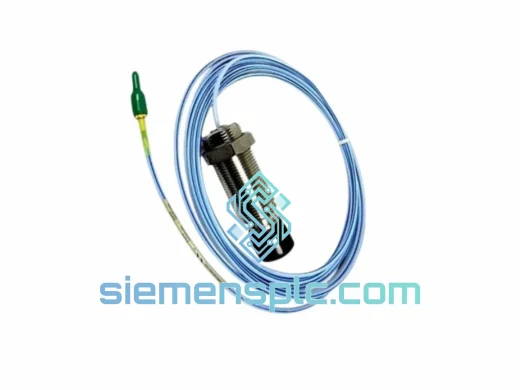
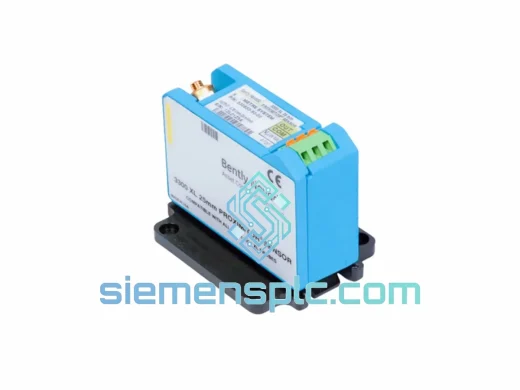
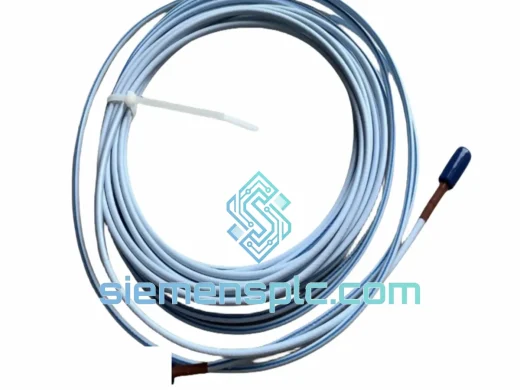
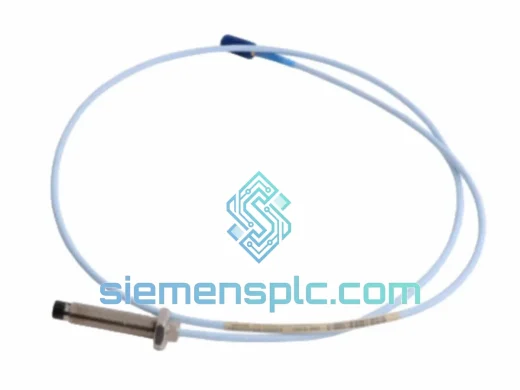
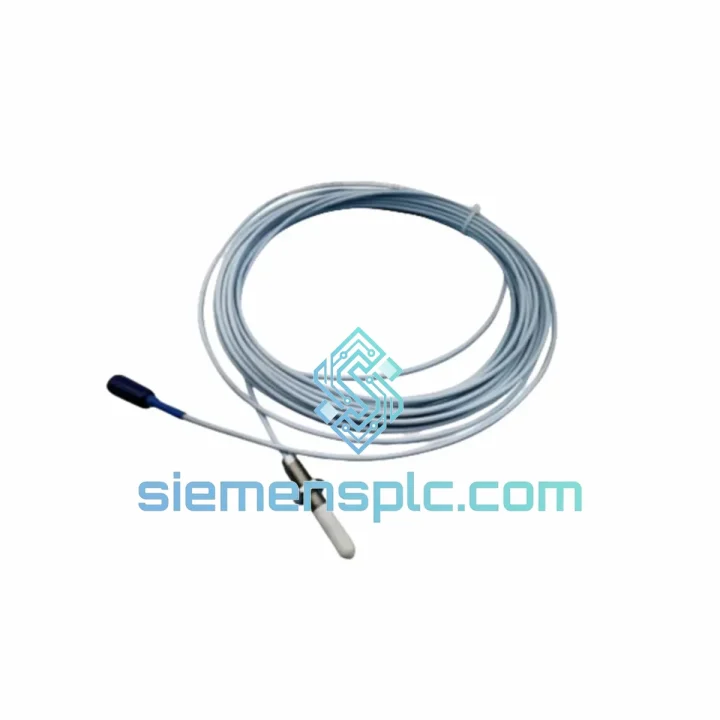
Bently Nevada 330877-080-37-00 Extension Cable – 3300 XL
3308
Origin US
Extension Cable
Request verified availability, condition, replacement risk review, packing options and courier lead time for 330854-080-24-05.
Click Request Quote and the part number is inserted into the inquiry form automatically.
Core fields for model confirmation and RFQ routing. Detailed product narrative remains below.
You already know what a dead proximity channel costs. The 3500 rack is throwing a Not OK on the shaft monitor. Operations has inhibited the trip — which means you are now running a critical machine with zero vibration protection. Every minute you spend sourcing the Bently Nevada 330854-080-24-05 FluidLoc Extension Cable is a minute of unquantified risk. We have it in stock in Xiamen. We ship today.
The 330854-080-24-05 is the 80 cm, high-temperature (-05 suffix) armored extension cable that bridges the eddy-current probe to the Proximitor® driver in 3300 XL and 7200 Series transducer systems. It is not interchangeable with standard-temperature variants. It is not replaceable with generic coaxial cable. The system impedance, capacitance per meter, and connector geometry are all factory-matched to the Proximitor® calibration. Install the wrong cable and your gap voltage shifts — your alarm setpoints are now wrong even if the system shows green.
We do not sell substitutes. We stock OEM-specification 330854-080-24-05 units, inspected before dispatch, shipped in protective packaging that maintains the minimum bend radius. If your plant is down, this is the call you make first.
URGENT REQUIREMENT? Contact: [email protected] | WhatsApp: +86 18359268345
| Part Number | 330854-080-24-05 |
| Manufacturer | Bently Nevada (Baker Hughes) |
| Cable Family | 330854 FluidLoc Extension Cable Series |
| Compatible Systems | 3300 XL, 7200 Series Eddy-Current Proximity Transducer |
| Nominal Length | 80 cm (approx. 24 in) — suffix -080-24 |
| Temperature Suffix | -05 = High-Temperature variant, rated to +177°C / +350°F continuous |
| Low-Temp Rating | -50°C / -58°F (cold-start outdoor installations) |
| Jacket Material | PTFE (Teflon) — chemically inert, non-swelling in lube oil and seal gas |
| Armor | Stainless steel interlocked armor — vibration fatigue resistant |
| Characteristic Impedance | 50 Ω nominal |
| Connector Type | Factory-terminated coaxial, FluidLoc sealed, both ends |
| Compliance | API 670, CE, RoHS |
| Country of Origin | USA |
| Stock Status | ✔ Ready to Ship — Xiamen Warehouse, Same-Day Dispatch |
Field reality: the extension cable fails more often than the probe or Proximitor®, and it is the last thing engineers check.
Symptom: Proximitor® output locked at -24 VDC (full-scale negative). This is an open circuit in the transducer chain. Before you condemn the probe or the Proximitor® module — which are both more expensive and harder to source — disconnect the 330854-080-24-05 at both ends and measure center-conductor-to-shield DC resistance with a multimeter. On an 80 cm run, anything above 3–4 Ω indicates a broken conductor. The PTFE jacket can look perfect externally while the inner conductor has fractured at a connector crimp point from thermal cycling. Replace the cable first. It takes 15 minutes and costs a fraction of the alternatives.
Symptom: Intermittent vibration spikes with no correlated process change. This is the failure mode that generates the most unnecessary work orders. The machine gets pulled for inspection, bearings look fine, the probe gap checks out — and the problem comes back two weeks later. The culprit is almost always a micro-fracture in the cable armor or a hairline crack at the connector solder joint. To confirm: flex the cable body near each connector while watching the Proximitor® DC output on a meter. A spike of more than 200 mV during flexing confirms the cable. The -05 high-temperature variant is particularly susceptible to this after 5+ years of thermal cycling in turbine hot zones where temperatures swing 100°C between startups and shutdowns.
Symptom: Gap voltage shifts after cable replacement — system shows OK but alarm setpoints feel wrong. This catches experienced engineers. If you installed a non-OEM cable or the wrong temperature suffix, the capacitance per meter will differ from the Proximitor® calibration certificate. The output will shift 1–4 mV/mil from the original commissioning value. Always verify gap voltage at the Proximitor® output terminal immediately after any cable swap. Your target is within ±50 mV of the original commissioning record. If it is outside that window, check total system cable length (probe cable + extension cable) against the Proximitor® calibration data sheet — the system is calibrated for a specific total capacitance.
Step-by-step replacement procedure — verified in the field, under 20 minutes:
Configuration note — no address switches or firmware matching required. The 330854-080-24-05 is a passive cable assembly. There are no DIP switches, no firmware, no self-addressing. The only configuration requirement is matching the total system cable length to the Proximitor® calibration certificate. If you are replacing a cable of a different length, you will need to recalibrate the Proximitor® — contact your instrumentation team before proceeding.
The 330854-080-24-05 was not designed for a clean instrument room. It was designed for the space between a turbine bearing housing and a junction box — a space that sees lube oil mist, steam condensate, broadband mechanical vibration from 10 Hz to 10 kHz, and temperature swings that would destroy standard instrumentation cable within a single operating season.
The PTFE jacket is chemically inert to every fluid found in a typical turbomachinery installation: mineral lube oil, synthetic PAO lubricants, seal gas condensate, glycol-water coolant, and steam. It does not swell, soften, or lose dielectric strength on contact with any of these. At +177°C continuous — the rated maximum — the jacket remains dimensionally stable and the impedance stays within specification. At -50°C, it does not embrittle or crack during cold-start flexing, which is the failure mode that kills standard PVC-jacketed cables in outdoor installations in northern climates.
The stainless interlocked armor serves two functions that are both critical. First, it provides mechanical protection against abrasion from adjacent piping, cable trays, and maintenance traffic. Second — and more importantly for signal integrity — it acts as a vibration decoupler. The armor absorbs the broadband vibration energy that would otherwise be transmitted directly to the copper conductor and the connector solder joints. Fatigue fractures in proximity system cables almost always initiate at the conductor-to-connector interface. The armor reduces the strain amplitude at that interface by an order of magnitude, which is why OEM FluidLoc cables outlast generic armored cables by a factor of three to five in high-vibration installations.
The FluidLoc connector sealing system prevents moisture migration along the cable core — the failure mode that dominates in coastal power plants, offshore platforms, and tropical petrochemical facilities. Moisture ingress is insidious: it does not cause an immediate fault. It causes a slow drift in the Proximitor® output over weeks or months, which gets attributed to bearing wear or process changes until the signal finally drops out entirely. The factory-sealed FluidLoc connectors eliminate this failure mode. Units from our Xiamen warehouse are stored in climate-controlled conditions and individually inspected for connector seal integrity before dispatch.
Our warehouse is in Xiamen, Fujian Province — one of the highest-throughput export hubs in Asia, with daily DHL Express and FedEx International Priority departures to every major industrial region. When you confirm an order before 14:00 CST, the part ships the same day. You receive the airway bill number within two hours of pickup.
Indicative transit times from Xiamen:
We prepare all export documentation in-house: commercial invoice, packing list, certificate of origin, and — where required — a proforma invoice for your procurement team. Turnaround on documentation is under 30 minutes from order confirmation. For shipments requiring an end-user certificate, dangerous goods declaration, or customs pre-clearance letter for a critical plant shutdown, contact us directly and we will prepare the documents the same business day.
For situations where standard air freight transit time is still too long, we can arrange airport-to-airport express freight with local courier pickup at the destination airport. This option reduces effective delivery time by 12–24 hours in most regions. Specify this requirement when you place the order and we will quote it alongside the standard option.
All shipments are fully tracked. You receive real-time tracking access from pickup through customs clearance to final delivery. We monitor international shipments actively and will contact you proactively if a customs hold or weather delay is detected — you will not be chasing us for updates.
Email: [email protected]
WhatsApp: +86 18359268345
Web: siemensplc.com
© 2026 siemensplc.com. All rights reserved.
We check the full part number, brand, series and visible nameplate information before quotation.
Sales confirms stock path, condition option, quantity and realistic lead time for export dispatch.
DHL, FedEx, UPS or buyer courier arrangements can be reviewed with packing requirements.
Similar brand or category products for fast comparison and multi-item RFQ lists.