Bently Nevada
RFQ Ready
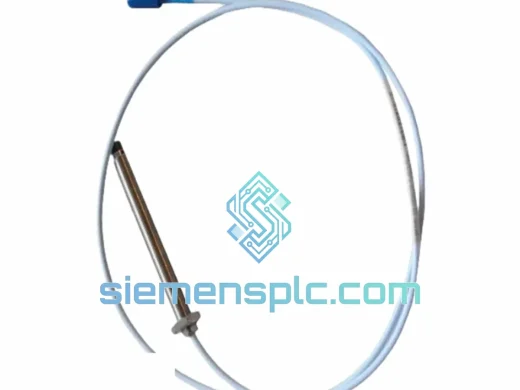
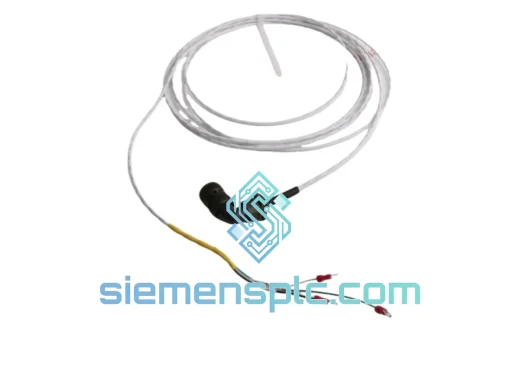
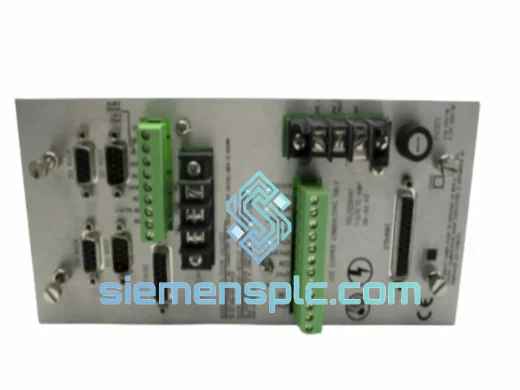
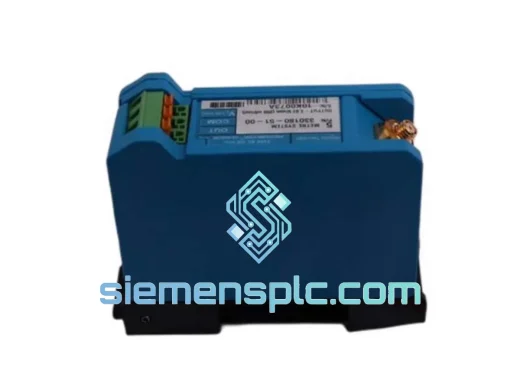
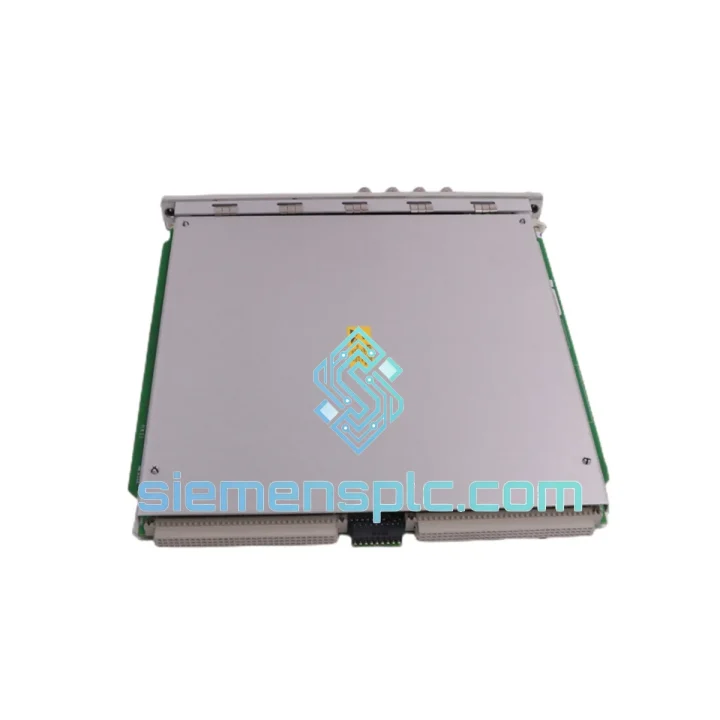
Bently Nevada 991-25-50-01-00 Thrust Transmitter – 3500 Series
3500 Series
Origin US
Thrust Transmitter
Request verified availability, condition, replacement risk review, packing options and courier lead time for 3500/70M.
Click Request Quote and the part number is inserted into the inquiry form automatically.
Core fields for model confirmation and RFQ routing. Detailed product narrative remains below.
The 3500/70M is a two-channel seismic velocity monitor module designed for installation within the Bently Nevada 3500 Machinery Protection System rack. Its functional position in a protection loop is that of a hardware-resident signal processor and threshold enforcer: it accepts analog voltage outputs from velocity-type transducers, converts those signals into calibrated velocity amplitude values in mm/s or in/s RMS, and executes setpoint comparison entirely within the module’s local firmware — independent of host software, network state, or rack communication bus availability. When a configured Alert or Danger threshold is crossed, the module drives its dedicated relay output within a bounded response window, enabling direct hardwired integration with turbine trip systems, emergency shutdown (ESD) panels, and DCS interlock inputs without introducing software-layer latency into the protection decision path.
The module occupies a single slot in the 3500 rack and communicates over the proprietary backplane to the Rack Interface Module (RIM), which aggregates channel data and exposes it to System 1 condition monitoring software or third-party historians via Modbus TCP, OPC-DA, or the 3500 communication gateway. This architecture enforces a clean functional separation between the protection layer — hardware relay, deterministic, locally processed — and the monitoring layer — software-polled, non-deterministic — satisfying the partitioning requirements of IEC 61511 for safety instrumented systems. The 3500/70M is therefore applicable in installations where the protection function must remain available even during planned or unplanned communication outages between the rack and the supervisory system.
Real-time Stock & RFQ: [email protected] | WhatsApp: +86 18359268345
| Parameter | Value / Specification |
|---|---|
| Part Number | 3500/70M |
| Manufacturer | Bently Nevada (Baker Hughes) |
| Product Series | 3500 Machinery Protection System |
| Module Function | Dual-channel seismic velocity monitor with hardware relay output |
| Number of Input Channels | 2 (independent, individually configurable) |
| Compatible Transducers | Velomitor® CT, 330500-series velocity transducers, geophone-type sensors |
| Measurement Range | 0–50 mm/s RMS (metric); 0–2.0 in/s RMS (imperial); configurable full-scale |
| Frequency Response | 2 Hz – 1,000 Hz (–3 dB, application-dependent filter selection) |
| Input Impedance | >10 kΩ differential |
| ADC Resolution | 16-bit per channel |
| Setpoints per Channel | Alert (1) + Danger (1); independently configurable via RCS software |
| Relay Output Type | Normally energized (NE); fail-safe de-energize on trip or power loss |
| Relay Contact Rating | 2 A @ 30 VDC / 0.5 A @ 125 VAC resistive |
| Rack Supply Voltage | 18–32 VDC (from 3500 rack power module) |
| Module Power Consumption | ≤3.5 W |
| Operating Temperature | –30°C to +65°C |
| Storage Temperature | –40°C to +85°C |
| Relative Humidity | 5%–95% non-condensing |
| Vibration Tolerance | IEC 60068-2-6 compliant |
| EMC Classification | EN 61326-1 (industrial); FM Class I Div 2; CSA certified |
| Functional Safety | SIL 1 capable (per Bently Nevada SIL certificate) |
| Form Factor | Single-slot, 3500 rack compatible |
| Approximate Weight | 850 g |
| Warranty | 12 months from shipment date against manufacturing defects |
At the analog front-end, differential velocity transducer signals enter a passive protection network consisting of transient voltage suppressors (TVS diodes) and series current-limiting resistors. This stage clamps field-induced surges to safe levels — the protection threshold is rated for ±1,500 V peak on a 1.2/50 µs waveform per IEC 61000-4-5 — before any active circuitry is reached. This is a fixed hardware characteristic, not a firmware parameter, meaning it remains active regardless of module configuration state or software version.
The protected signal feeds an instrumentation amplifier (INA) stage with a common-mode rejection ratio (CMRR) exceeding 80 dB at 50/60 Hz. In field installations where velocity transducer cables share conduit with power conductors, induced common-mode noise at power-line frequencies is the dominant interference source. The 80 dB CMRR specification translates to a rejection factor of 10,000:1 — a 1 V common-mode disturbance appears as 0.1 mV at the differential output, well below the noise floor of the subsequent ADC stage. Following amplification, a hardware anti-aliasing low-pass filter removes frequency content above the Nyquist limit before the 16-bit successive-approximation ADC samples the signal at a rate providing adequate margin above the 1,000 Hz upper measurement frequency.
Setpoint comparison and relay drive logic execute on the module’s dedicated local processor, not on the rack’s central Rack Interface Module CPU. This distributed processing model is architecturally significant: a fault in the RIM, a communication gateway timeout, or a System 1 software crash does not interrupt the 3500/70M’s protection function. The relay output uses a normally energized topology — the relay coil is continuously powered during normal operation, and a trip condition or module power loss de-energizes the coil, opening the contact. This fail-safe design ensures that loss of module power produces a protective trip rather than a silent loss of protection coverage, a fundamental requirement of API Standard 670, Fifth Edition.
The module’s PCB layout employs multi-layer ground planes, ferrite bead filtering on all backplane interface lines, and shielded internal signal routing between the analog and digital sections. These measures collectively achieve EN 61326-1 industrial EMC classification, permitting operation in environments with radiated field strengths up to 10 V/m and conducted disturbances up to 10 V per IEC 61000-4-6 — conditions representative of switchgear rooms and motor control centers where machinery protection racks are commonly installed.
Each 3500/70M unit supplied through siemensplc.com is sourced from verified supply channels with full traceability to Bently Nevada (Baker Hughes) authorized distribution networks. Before dispatch, every module undergoes a structured pre-shipment inspection: physical label and firmware revision verification against OEM records, connector and housing integrity assessment, and a powered bench test in a 3500 rack environment confirming channel signal response, relay actuation under simulated trip conditions, and backplane communication handshake. Inspection records are retained and available upon request for quality-critical procurement processes or incoming inspection documentation requirements.
Logistics operations are based in Xiamen, China, with direct access to DHL Express, FedEx International Priority, and UPS Worldwide Expedited services. In-stock units are dispatched within 1–3 business days of confirmed order. Standard export documentation — commercial invoice, packing list, certificate of origin, and HS code declaration (HS 9030.89) — is prepared for every international shipment. For project-volume requirements (5 or more units), consolidated quotations with confirmed lead times and volume-adjusted pricing are available upon request. All shipments are processed in compliance with applicable export control regulations.
A 12-month warranty against manufacturing defects applies from the date of shipment. Dead-on-arrival (DOA) units are replaced or credited within 30 days of confirmed receipt, supported by test documentation to minimize operational impact on the buyer’s facility.
Email: [email protected]
WhatsApp: +86 18359268345
Web: siemensplc.com
Location: Xiamen, China
© 2026 siemensplc.com. All rights reserved.
We check the full part number, brand, series and visible nameplate information before quotation.
Sales confirms stock path, condition option, quantity and realistic lead time for export dispatch.
DHL, FedEx, UPS or buyer courier arrangements can be reviewed with packing requirements.
Similar brand or category products for fast comparison and multi-item RFQ lists.