
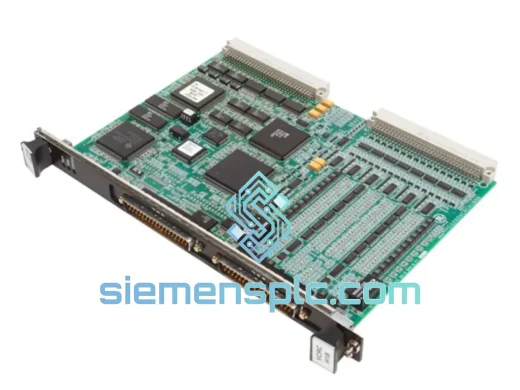
GE
In Stock OK
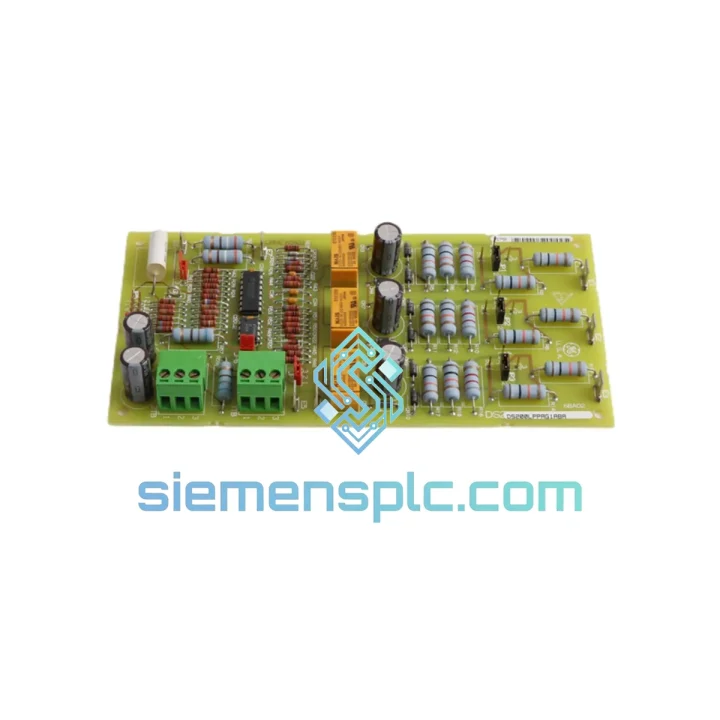
GE DS200LPPAG1A Line Protection Board
Request verified availability, condition, replacement risk review, packing options and courier lead time for DS200LPPAG1A.
BrandGE
Part NumberDS200LPPAG1A
ConditionAvailability Check
Lead TimeRFQ Confirmation
DocumentsDatasheet / photos by RFQ
ShippingExport packing available
Auto-filled RFQ
DS200LPPAG1A
Click Request Quote and the part number is inserted into the inquiry form automatically.
- Reply by email: [email protected]
- WhatsApp / Tel: +86 18359268345
- Mon-Sat 9:00-18:00 GMT+8
Procurement Data
Key Product Information
Core fields for model confirmation and RFQ routing. Detailed product narrative remains below.
- Brand
- GE
- Primary Part Number
- DS200LPPAG1A
- Product Type
- Line Protection Board
- Series / Family
- Mark VI
- Manufacturer
- General Electric (GE)
- Country of Origin
- US
- Model Function
- Line Protection — OV / UV / Hz / Phase
- Catalog Category
- Relays & Protection
Model confirmed for inquiry
DS200LPPAG1A
Send quantity, destination and urgency. The RFQ form keeps this part number attached.
Request Quote
Product Overview
GE DS200LPPAG1A Line Protection Board: Stop the Clock on Your Downtime — Ship Today
Your turbine tripped at 02:40. The Mark V panel is dark. Every hour offline costs you five figures in lost generation or production penalties. You’ve already pulled the board — it’s the DS200LPPAG1A, and you need an exact replacement, not a promise. We stock it. It ships today from Xiamen via DHL Express. That’s the only thing that matters right now.
The DS200LPPAG1A is the line protection board at the heart of GE’s Mark V turbine control architecture. It monitors three-phase line voltage, frequency deviation, and phase angle in real time, feeding protection logic to the TCCA and TCQC processors. When this board fails — or when a nuisance trip corrupts its calibration registers — the entire unit goes to protective shutdown. There is no workaround. You need the board.
We carry 100% original GE DS200LPPAG1A units, sourced through verified supply chains, bench-tested before dispatch, and shipped with full traceability documentation. No grey market. No remarked parts. No surprises on arrival.
URGENT REQUIREMENT? Contact: [email protected] | WhatsApp: +86 18359268345
Quick Technical Datasheet
| Parameter | Value | Status |
|---|---|---|
| Part Number | DS200LPPAG1A | ✅ Ready to Ship |
| Manufacturer | General Electric (GE) | OEM Original |
| Series | DS200 / Mark V Turbine Control | — |
| Function | Line Protection — OV / UV / Hz / Phase | — |
| Form Factor | PCB module, Mark V rack-mount | — |
| Backplane Interface | GE Mark V VME-style bus | — |
| Operating Voltage | +5 VDC / ±15 VDC (rack-supplied) | — |
| Input Voltage Range | 0–150 VAC (line sense inputs) | — |
| Operating Temp | 0°C to +60°C | — |
| Weight | ~140 g | — |
| Condition | New OEM / Tested Exchange | ✅ Ready to Ship |
| Lead Time | Same-day dispatch (order before 15:00 CST) | ✅ Ready to Ship |
| Origin | United States (GE OEM) | — |
Troubleshooting & Replacement Tips
Most common failure signatures for DS200LPPAG1A:
- Fault code L30LV / L30HV: Undervoltage or overvoltage trip latched — board’s analog front-end has drifted or the precision reference (U5, LM336) has failed. Replacing the board clears this faster than chasing component-level repair on a live plant.
- Fault code L4 (Loss of Excitation) false trip: Often traced to the DS200LPPAG1A’s phase-angle measurement circuit losing sync. Check J1 connector seating first; if reseating doesn’t clear it within two attempts, swap the board.
- Intermittent 125 VDC bus faults with no upstream cause: The LPPA board’s isolated DC-DC converter section can develop high-frequency noise that bleeds into the protection bus. Scope the +5 V rail on the board edge — if you see >50 mV ripple, the board is the source.
- No-fault trip during load pickup: Transient voltage sag during breaker close can push the LPPA’s undervoltage comparator below threshold if the trip delay timer capacitor (C12) has aged. Board swap is the field fix.
Replacement procedure — field checklist:
- De-energize the Mark V panel and follow your site LOTO procedure. The LPPA board carries live line-sense voltages at J3 even when the rack is in standby — verify with a meter before touching.
- Note the DIP switch positions on SW1 (line voltage range selection: 120 V / 240 V / 480 V tap) before removing the old board. Photograph them. The new board ships in factory default (240 V position); set it to match your system before insertion.
- Check the revision letter on the board label. G1A and G1B are pin-compatible in Mark V. If your system runs Mark VI firmware ≥ R04.02, confirm with GE that G1A is still supported — some later Mark VI builds require the IS200-series equivalent.
- After insertion, perform a RESET from the Mark V operator panel before re-energizing. The LPPA board self-initializes on power-up; forcing a reset clears any stale protection latches in the TCCA processor that referenced the old board’s last state.
- Verify L30LV and L30HV setpoints in the Mark V configuration tool (GE ToolboxST or legacy Mark V configurator) match your site protection relay coordination study. A board swap does not reset these — they live in the TCCA EEPROM — but confirm them anyway.
- Run a 15-minute no-load observation period before returning the unit to service. Watch for any recurrence of the original fault code on the Mark V alarm printer or HMI.
Reliability in Harsh Conditions
Power generation environments are not kind to electronics. The DS200LPPAG1A was designed for exactly this: turbine control rooms where ambient temperature swings from 5°C at night to 55°C during summer peak load, where diesel generators kick in and create voltage transients that would kill consumer-grade hardware in minutes, and where vibration from the turbine deck transmits through the floor into the control cabinet.
GE’s DS200-series boards use conformal coating on all PCB surfaces, military-grade connector contacts rated for 500+ insertion cycles, and component derating to 70% of maximum ratings — standard practice for industrial control hardware expected to run continuously for 10–20 years. The line-sense input circuit on the LPPA board includes transient voltage suppressors (TVS diodes) on all three phase inputs, protecting the analog front-end from the kind of switching transients that occur during breaker operations and fault clearance events.
Units we ship have been stored in climate-controlled, ESD-safe environments. Every board is inspected for corrosion on connector pins, cracked solder joints at high-stress components, and capacitor bulge before it leaves our facility. We do not ship boards that have been sitting in a humid warehouse for five years and cleaned up with a brush. If a board doesn’t pass visual and functional bench test, it doesn’t ship.
Global Express Logistics
We ship from Xiamen, China — one of the most logistics-connected export hubs on the mainland, with direct DHL Express and FedEx International Priority lanes to every major industrial region globally.
- Order cutoff: 15:00 CST (UTC+8) for same-day dispatch
- Packaging: Anti-static bag → foam-lined rigid box → outer carton with fragile labeling. Connector pins are protected with plastic covers. No exceptions.
- DHL Express: Europe 2–3 business days, North America 2–4 business days, Southeast Asia 1–2 business days, Middle East 3–4 business days
- FedEx International Priority: Available on request for destinations with stronger FedEx coverage
- Customs documentation: Commercial invoice, packing list, and HS code 8537.10 pre-filled. We can provide a certificate of origin on request for duty preference programs.
- Tracking: AWB number sent within 2 hours of dispatch. We monitor shipments and proactively flag any customs holds.
- Emergency freight: If your plant is down and standard express isn’t fast enough, contact us directly — we have access to charter freight options for critical plant outages.
We’ve shipped DS200-series boards to power plants in Germany, refineries in Saudi Arabia, paper mills in Canada, and compressor stations in Australia. The logistics process is not new to us. Your board will arrive in the condition it left in.
Contact Information
Email: [email protected]
WhatsApp: +86 18359268345
Web: siemensplc.com
© 2026. All rights reserved.
Ready to quote
[email protected]
Send This Part Number to Sales
RFQ workflow
Quality workflow ->
Confirmation Process
01Model confirmation
We check the full part number, brand, series and visible nameplate information before quotation.
02Availability reply
Sales confirms stock path, condition option, quantity and realistic lead time for export dispatch.
03Packing & courier
DHL, FedEx, UPS or buyer courier arrangements can be reviewed with packing requirements.
Continue sourcing
Browse full catalog ->
Related Automation Parts
Similar brand or category products for fast comparison and multi-item RFQ lists.
GE
RFQ Ready
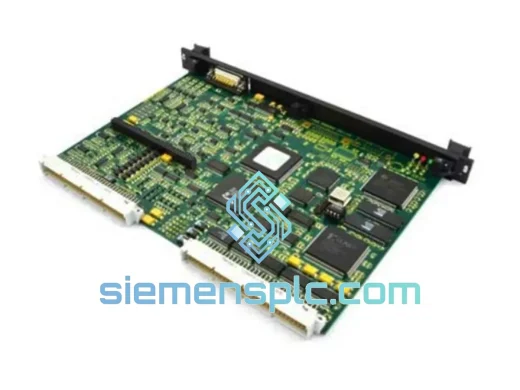
GE IS200VTURH1BAC Turbine Protection Card – Mark VI
Mark VI
Origin US
Turbine Protection Card
GE
RFQ Ready
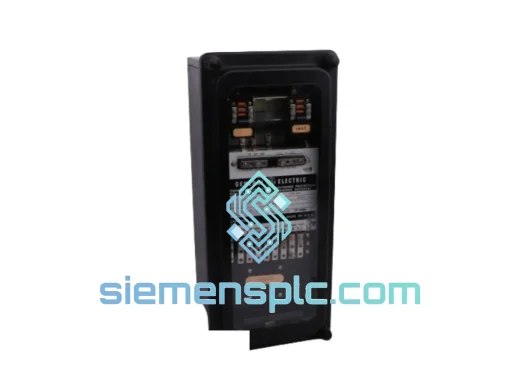
GE IS200TRLYH2C Relay Output Terminal Board
Mark VI
Origin US
Relay Output Terminal Board