GE
RFQ Ready
GE IS210MVRBH1A I/O Interface Board – Mark VIe Series
Mark VI
Origin US
I/O Interface Board
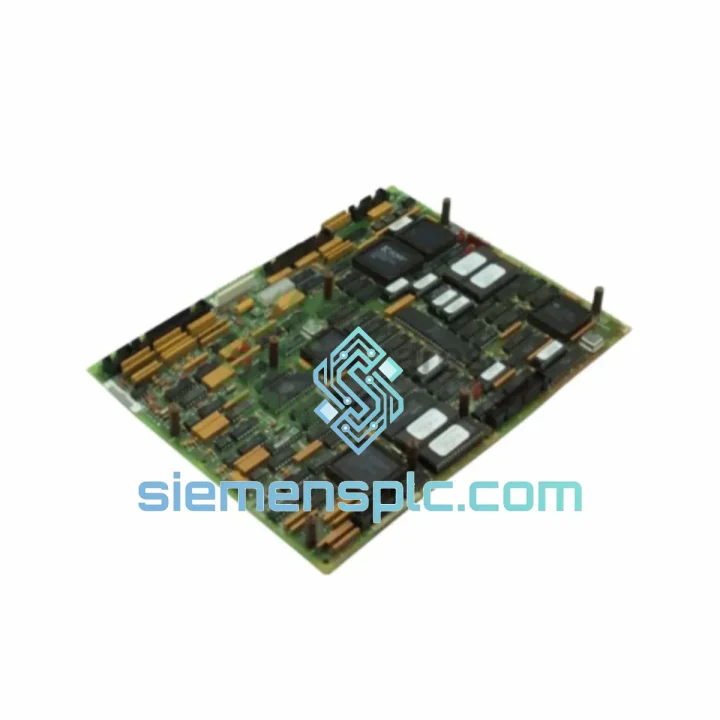
Request verified availability, condition, replacement risk review, packing options and courier lead time for DS200SDCCGSAHD.
Click Request Quote and the part number is inserted into the inquiry form automatically.
Core fields for model confirmation and RFQ routing. Detailed product narrative remains below.
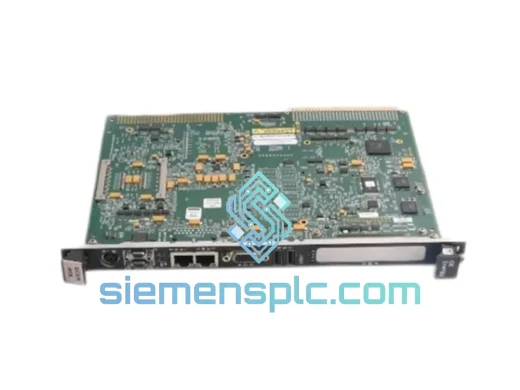
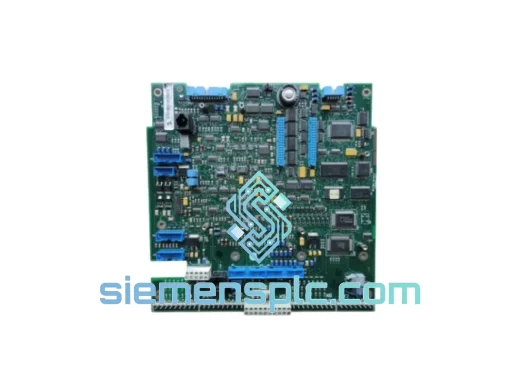
The DS200SDCCGSAHD is a discrete-channel signal conditioning and I/O interface board produced by General Electric for the Mark VI and Mark VIe turbine control platforms. Its functional position within the control architecture is precise: it occupies the electrical boundary between field-level discrete devices and the controller’s internal logic domain, performing the conditioning, isolation, and scan-synchronous transfer of discrete state information across that boundary without introducing variable latency into the protection execution cycle.
Field devices interfaced through this board span the full range of discrete instrumentation found in gas and steam turbine installations — dry-contact limit switches on valve actuators, proximity sensors on rotating components, solenoid valve position feedback contacts, relay coil drivers for ESD sequences, and annunciator panel output drivers. The board does not perform analog-to-digital conversion; its function is strictly discrete: it maps the binary state of field contacts to logic-level register bits on the Mark VI backplane bus, and maps backplane output register bits to energized or de-energized field output channels.
The architectural constraint that governs the DS200SDCCGSAHD’s design is the Mark VI’s fixed scan period structure. Protection-class functions execute on a 10 ms scan period; supervisory-class functions execute on a 40 ms period. Any I/O board that fails to complete its input sampling and output assertion within a single backplane arbitration window would force a scan period extension across the entire rack — an outcome that is architecturally prohibited in a turbine protection system. The DS200SDCCGSAHD achieves scan-synchronous operation through register-mapped I/O: input channel states are written to a fixed memory-mapped address block on the VME-derived backplane bus at the start of each scan, and output channel commands are read from a corresponding address block at the end of each scan. The bus transaction completes within one arbitration cycle, contributing no measurable jitter to the overall scan cycle timing.
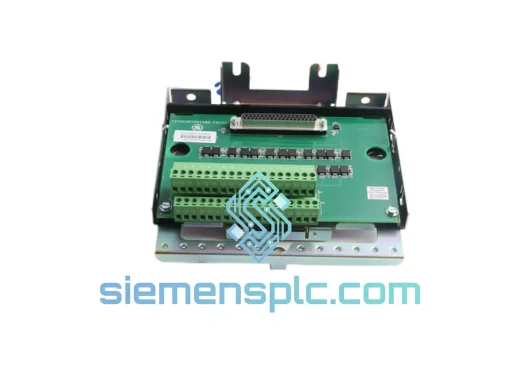
Physical installation follows GE’s terminal board separation architecture. Field wiring terminates on a dedicated terminal board — typically the TBCI (Terminal Board for Contact Inputs) or TBQC (Terminal Board for Quick Connect) — mounted separately within the control cabinet. The DS200SDCCGSAHD connects to the terminal board via a short direct-mate or ribbon interconnect. This two-layer physical architecture confines field-side wiring transients, ground potential differences, and inductive switching noise to the terminal board layer. Field-side disturbances do not reach the backplane bus, and the DS200SDCCGSAHD’s logic domain operates in a stable electrical environment regardless of the noise conditions present in the field cable tray.
In Triple Modular Redundant (TMR) Mark VI configurations, three DS200SDCCGSAHD boards operate in parallel within separate R, S, and T controller racks. Each board independently samples the same field input signals. The Mark VI controller performs a 2-of-3 majority vote on the digitized input states before passing the result to the protection algorithm. A single board failure — whether from optocoupler degradation, a logic rail fault, or connector intermittency — does not alter the voted input state seen by the turbine protection algorithm. Output channels in TMR configurations are driven by three independent boards simultaneously, with the field device responding to the energized majority. This architecture permits a degraded DS200SDCCGSAHD to be identified, alarmed, and replaced online without interrupting turbine operation, provided the remaining two TMR boards are confirmed healthy.
The board’s diagnostic register map exposes optocoupler health status, output latch state, and backplane communication status — all readable remotely through the Mark VI Toolbox HMI without physical access to the rack. In a TMR installation, a per-channel vote disagreement between boards generates a maintenance alarm in the Toolbox HMI before the fault escalates to a condition where the voted state itself is affected. This fault transparency mechanism gives operations staff a defined maintenance window rather than an unplanned outage.
Real-time Stock & RFQ: [email protected] | WhatsApp: +86 18359268345
| Part Number | DS200SDCCGSAHD |
| Manufacturer | General Electric (GE) |
| Series / Platform | Mark VI / Mark VIe Turbine Control System |
| Module Function | Discrete Channel Signal Conditioning & I/O Interface Board |
| Form Factor | PCB card module, card-cage rack insertion, VME-derived slot |
| Backplane Bus Protocol | Register-mapped I/O over VME-derived Mark VI backplane; single arbitration cycle per scan |
| Input Channel Type | Discrete digital inputs — dry/wet contact sensing, 24 VDC nominal field sensing voltage |
| Output Channel Type | Discrete digital outputs — relay coil drive, solenoid valve actuation, annunciator panel drivers |
| Isolation Architecture | Per-channel group optical isolation; galvanic break rated ≥1,500 V field-to-logic |
| Scan Cycle Compatibility | 10 ms protection class / 40 ms supervisory class Mark VI scan periods |
| Redundancy Configurations | Simplex, Dual, or TMR (Triple Modular Redundant) 2-of-3 voted I/O |
| Terminal Board Interface | TBCI / TBQC terminal board family (direct-mate or ribbon interconnect) |
| Compatible Turbine Frames | GE Frame 5, 6, 7, 9 gas turbines; combined-cycle steam turbine configurations |
| Operating Temperature | 0 °C to +60 °C (standard industrial control cabinet) |
| Hazardous Area Classification | Class I, Division 2 (non-incendive) per NEC / IEC 60079-15 |
| Bus Transaction Latency | <1 µs per arbitration cycle (negligible contribution to 10 ms scan budget) |
| Approximate Weight | 360 g |
| Supply Condition | New surplus / tested surplus (specify at RFQ) |
| Warranty | 12 months functional guarantee from date of shipment |
Per-Channel Optocoupler Isolation and Transient Suppression: Each discrete input channel routes through a dedicated optocoupler before entering the board’s CMOS logic domain. The LED side of the optocoupler is driven by the field-side sensing circuit through a current-limiting resistor network; the phototransistor side drives the internal logic rail. The galvanic separation — rated to withstand field-to-logic transients of ≥1,500 V — addresses a specific failure mode endemic to turbine control environments: inductive kickback from solenoid valve de-energization. When a solenoid valve coil is de-energized, the collapsing magnetic field generates a voltage spike that can reach several hundred volts on the field wiring. Without the optocoupler barrier, this spike would couple into the backplane logic rail through the input sensing resistor network, producing a spurious logic-high state and potentially triggering a false turbine trip. The DS200SDCCGSAHD’s per-channel isolation architecture absorbs field-side transients within the optocoupler’s isolation barrier before they can propagate to the controller logic domain.
Scan-Boundary Output Latch Architecture: Output channels are driven by latched registers updated exclusively at the defined scan boundary — the moment the Mark VI controller writes the new output command block to the backplane bus. Between scan boundaries, the latch holds its previous state regardless of any intermediate logic evaluation occurring within the controller. This prevents a class of output glitch failures where a partially evaluated protection algorithm could momentarily assert an incorrect output state during mid-scan computation. In turbine emergency shutdown (ESD) sequences, where a trip solenoid must transition from energized to de-energized in a single deterministic step, the latched output architecture is a fundamental safety requirement. The latch clock is derived from the backplane scan synchronization signal, ensuring all output channels on the board transition simultaneously at the scan boundary with no channel-to-channel skew.
TMR Vote Arbitration and Fault Transparency: In a TMR Mark VI rack, the DS200SDCCGSAHD boards in the R, S, and T controllers each independently digitize the same field input signals. The Mark VI’s vote arbitration logic compares the three digitized states on a per-channel basis. A disagreement on any single channel — where one board reports a different state than the other two — generates a maintenance alarm in the Mark VI Toolbox HMI without affecting the voted output state. This fault transparency mechanism allows maintenance engineers to identify a degraded DS200SDCCGSAHD before the fault escalates to a condition where the voted state itself is affected. The board’s diagnostic register map exposes optocoupler health status, output latch state, and backplane communication status, all readable remotely through the Mark VI Toolbox without physical access to the rack.
EMC Design and Cabinet Noise Environment: The DS200SDCCGSAHD’s PCB layout follows GE’s EMC partitioning guidelines for the Mark VI platform: field-side circuitry and logic-side circuitry are physically separated on the board with a ground plane break at the optocoupler isolation boundary. Decoupling capacitors are placed at each logic IC power pin to suppress high-frequency switching transients on the logic supply rail. The board’s metal faceplate provides a continuous shield connection to the rack chassis ground, reducing radiated susceptibility from adjacent high-current output boards in the same rack. These measures collectively allow the DS200SDCCGSAHD to maintain specified input threshold accuracy and output drive capability in the presence of the conducted and radiated noise levels typical of a gas turbine control enclosure.
All DS200SDCCGSAHD units supplied through siemensplc.com are sourced from verified decommissioned OEM installations or documented authorized surplus channels. Each unit passes a structured pre-shipment inspection protocol before dispatch:
All shipments originate from Xiamen, China. International dispatch is via DHL Express or FedEx International Priority, with typical transit times of 3–5 business days to Europe, North America, the Middle East, and Southeast Asia. Orders confirmed before 14:00 CST are eligible for same-day dispatch. Complete export documentation — commercial invoice, packing list, and Certificate of Origin — is prepared for every international shipment. A 12-month functional warranty covers all units from the date of shipment; RMA processing is initiated within 24 business hours of a warranty claim submission.
Email: [email protected]
WhatsApp: +86 18359268345
Web: siemensplc.com
Location: Xiamen, China
© 2026 siemensplc.com. All rights reserved.
We check the full part number, brand, series and visible nameplate information before quotation.
Sales confirms stock path, condition option, quantity and realistic lead time for export dispatch.
DHL, FedEx, UPS or buyer courier arrangements can be reviewed with packing requirements.
Similar brand or category products for fast comparison and multi-item RFQ lists.