
GE
In Stock OK
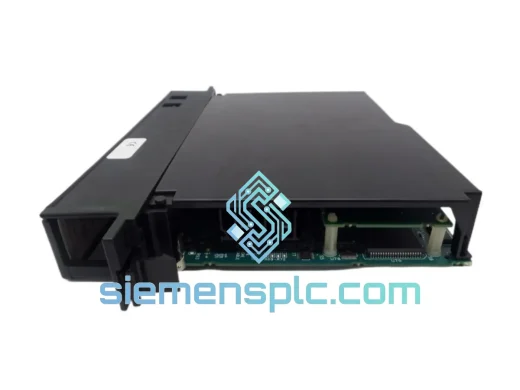
GE IC697MEM717 PLC Memory Module – Series 90-70
Request verified availability, condition, replacement risk review, packing options and courier lead time for IC697MEM717.
BrandGE
Part NumberIC697MEM717
ConditionAvailability Check
Lead TimeRFQ Confirmation
DocumentsDatasheet / photos by RFQ
ShippingExport packing available
Auto-filled RFQ
IC697MEM717
Click Request Quote and the part number is inserted into the inquiry form automatically.
- Reply by email: [email protected]
- WhatsApp / Tel: +86 18359268345
- Mon-Sat 9:00-18:00 GMT+8
Procurement Data
Key Product Information
Core fields for model confirmation and RFQ routing. Detailed product narrative remains below.
- Brand
- GE
- Primary Part Number
- IC697MEM717
- Product Type
- PLC Memory Module
- Series / Family
- 90-70
- Manufacturer
- General Electric (GE Automation & Controls)
- Country of Origin
- US
- Catalog Category
- PLCs & Controllers
- Operating Temp.
- 0°C to 60°C (32°F to 140°F)
- Warranty
- 12 months from date of shipment
- Compliance
- RoHS-compliant handling; ESD-safe packaging
Model confirmed for inquiry
IC697MEM717
Send quantity, destination and urgency. The RFQ form keeps this part number attached.
Request Quote
Product Overview
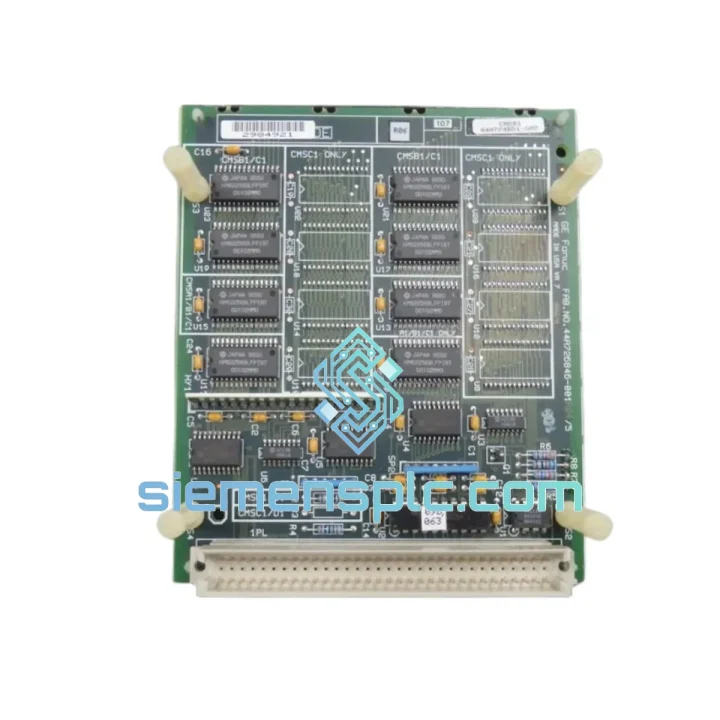
GE IC697MEM717 Series 90-70 Expansion RAM: Memory Architecture for Deterministic PLC Execution
The GE IC697MEM717 is a plug-in Expansion RAM module engineered for the General Electric Series 90-70 Programmable Logic Controller platform. Within a Series 90-70 control loop, the CPU’s scan cycle determinism is directly constrained by available user program memory and data table capacity. The IC697MEM717 addresses this constraint by extending the addressable RAM space accessible to the CPU backplane bus, allowing engineers to deploy larger ladder logic programs, expanded data tables, and more granular fault-logging routines without migrating to a higher-tier CPU module. In process control environments where scan time consistency is a hard requirement — such as continuous chemical dosing, coordinated multi-axis motion sequencing, or high-speed packaging line control — this memory expansion directly supports tighter loop closure and more deterministic I/O response windows.
The module installs directly into the CPU slot of a Series 90-70 rack, interfacing with the CPU via the VME-derived backplane bus architecture that GE standardized across the 90-70 family. No external wiring, no firmware reconfiguration, and no software licensing changes are required. The CPU automatically maps the additional RAM into its memory address space upon initialization, making the expansion transparent to the application program.
Real-time Stock & RFQ: [email protected] | WhatsApp: +86 18359268345
Technical Parameters
| Parameter | Specification |
|---|---|
| Manufacturer | General Electric (GE Automation & Controls) |
| Part Number | IC697MEM717 |
| Module Classification | Expansion RAM Memory Module |
| Compatible Platform | GE Series 90-70 PLC |
| Bus Interface | VME-derived Series 90-70 backplane bus |
| Installation Method | Direct plug-in to CPU module slot, no tools required |
| Operating Temperature | 0°C to 60°C (32°F to 140°F) |
| Storage Temperature | -40°C to 85°C |
| Relative Humidity | 5% to 95% non-condensing |
| Power Consumption | Supplied via CPU module backplane connector |
| Data Retention | Battery-backed SRAM; retains program and data on power loss |
| Form Factor | Single-slot plug-in card, Series 90-70 rack compatible |
| Weight | Approx. 100 g |
| Compliance | RoHS-compliant handling; ESD-safe packaging |
| Warranty | 12 months from date of shipment |
Hardware Logical Analysis
The IC697MEM717 operates within the Series 90-70’s VME-derived backplane architecture, where the CPU module acts as the bus master and all expansion cards — including memory modules — respond as bus slaves. The memory expansion card’s address decoder logic maps its SRAM array into a contiguous block within the CPU’s logical address space. This mapping is performed at the hardware level during the CPU’s power-on self-test (POST) sequence, which scans the backplane for installed modules and builds an internal memory map before the first scan cycle begins.
From an EMC standpoint, the Series 90-70 backplane uses differential signal pairs for address and data lines, with controlled impedance traces and ground plane shielding between signal layers. The IC697MEM717’s PCB design follows the same layer stack specification, ensuring that high-frequency switching transients on the data bus do not couple into adjacent I/O module slots. This is particularly relevant in installations where high-current output modules — such as relay or triac output cards — share the same rack, as their switching edges can generate broadband noise in the 10–100 MHz range.
The battery-backed SRAM architecture uses a low-power CMOS memory array with a dedicated lithium cell providing hold voltage during main power interruption. The switchover circuit monitors the backplane supply rail and transitions to battery within microseconds of detecting an undervoltage condition, well within the SRAM’s data retention hold time. This design eliminates the need for a separate UPS or capacitor-backed power supply in applications where program retention across power cycles is required but a full UPS is not justified by the installation budget.
The module does not incorporate any active logic beyond address decoding and bus interface circuitry, which contributes to its high mean time between failures (MTBF). With no microcontroller, no firmware, and no active cooling requirement, the failure modes are limited to SRAM cell degradation (a long-term wear mechanism) and battery depletion — both of which are predictable and manageable within a standard preventive maintenance schedule.
System Integration Benefits
- Extended Program Capacity Without CPU Replacement: Allows engineers to expand ladder logic complexity — adding interlocks, diagnostic rungs, and alarm management routines — without the cost and downtime of a CPU module swap.
- Deterministic Scan Time Preservation: By providing sufficient memory headroom, the module prevents the CPU from entering extended scan cycles caused by memory paging or overflow conditions, maintaining consistent I/O response latency.
- Larger Data Table Allocation: Supports expanded %R register files, %AI/%AQ analog data tables, and %M internal coil arrays, enabling more complex data-driven control strategies and historian buffering within the PLC itself.
- Transparent Integration: The CPU’s POST routine auto-detects and maps the expansion RAM with no manual configuration, reducing commissioning time and eliminating configuration mismatch errors.
- Fault Log Depth Increase: Additional memory allows the CPU to maintain a deeper fault queue, improving post-incident diagnostics and reducing the risk of fault records being overwritten before an engineer can retrieve them.
- Retrofit Compatibility: Fully backward-compatible with existing Series 90-70 rack assemblies, power supplies, and I/O modules — no rack modification or re-wiring required.
- Reduced System Downtime Risk: Stocking a spare IC697MEM717 as an MRO component provides a fast swap path in the event of memory module failure, minimizing unplanned production downtime.
- Support for Advanced HMI Data Exchange: Larger data tables facilitate richer data exchange with SCADA systems and HMI panels via SNP, SNP-X, or Modbus RTU protocols, supporting more detailed real-time process visualization.
- Battery-Backed Retention Eliminates Re-Download Dependency: Program and data retention across power cycles means the system can restart autonomously without requiring a programmer connection, critical for unmanned remote installations.
- Cost-Effective Capacity Scaling: Provides a lower total cost of ownership compared to upgrading to a higher-memory CPU variant, particularly in installations where the existing CPU’s processing speed is adequate and only memory capacity is the limiting factor.
Quality Assurance & Global Logistics
Every IC697MEM717 unit supplied through siemensplc.com is sourced from verified supply channels and subjected to a structured pre-shipment inspection protocol. Physical inspection covers housing integrity, backplane connector pin condition, PCB surface quality, and label authenticity cross-referenced against GE factory documentation. Functional verification confirms correct bus initialization behavior in a Series 90-70 rack environment prior to dispatch.
Units are packed in anti-static ESD-safe bags, placed in foam-lined cartons, and shipped with a full set of export documentation: commercial invoice, packing list, and certificate of origin. Our logistics operation is based in Xiamen, China, with direct access to international express carriers including DHL Express and FedEx International Priority. Standard express delivery reaches most destinations in Asia-Pacific, Europe, the Middle East, and North America within 3–7 business days. For volume orders, sea freight consolidation is available with full customs documentation support. A 12-month warranty covers all units against manufacturing defects and DOA conditions from the date of shipment.
Contact Information
Email: [email protected]
WhatsApp: +86 18359268345
Web: siemensplc.com
Location: Xiamen, China
© 2026 siemensplc.com. All rights reserved.
Ready to quote
[email protected]
Send This Part Number to Sales
RFQ workflow
Quality workflow ->
Confirmation Process
01Model confirmation
We check the full part number, brand, series and visible nameplate information before quotation.
02Availability reply
Sales confirms stock path, condition option, quantity and realistic lead time for export dispatch.
03Packing & courier
DHL, FedEx, UPS or buyer courier arrangements can be reviewed with packing requirements.
Continue sourcing
Browse full catalog ->
Related Automation Parts
Similar brand or category products for fast comparison and multi-item RFQ lists.
GE
RFQ Ready
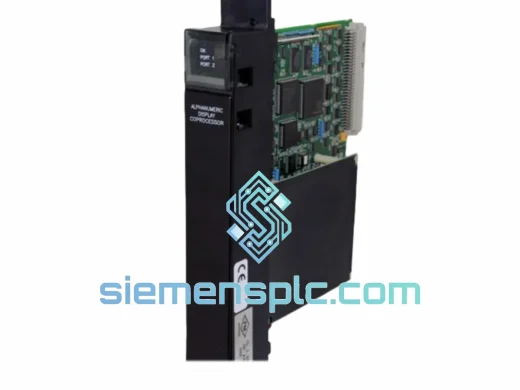
GE IC697CPM915 PLC Coprocessor Module – Series 90-70
90-70
Origin US
PLC Coprocessor Module