GE
RFQ Ready
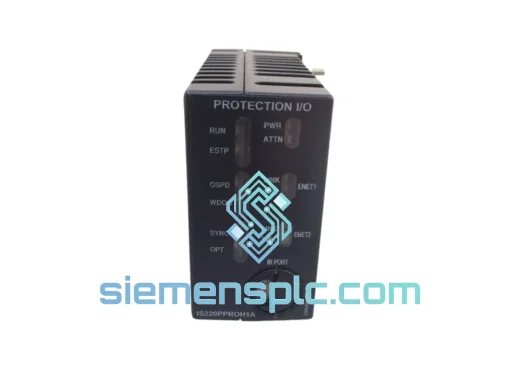
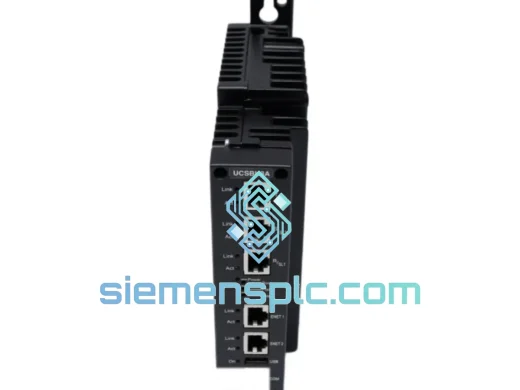
GE IS420UCSBH3A DCS Controller Module – Mark VIe
Mark VI
Origin US
DCS Controller Module
Request verified availability, condition, replacement risk review, packing options and courier lead time for IS210MACCH1AKH IS210BPPBH2CAA.
Click Request Quote and the part number is inserted into the inquiry form automatically.
Core fields for model confirmation and RFQ routing. Detailed product narrative remains below.
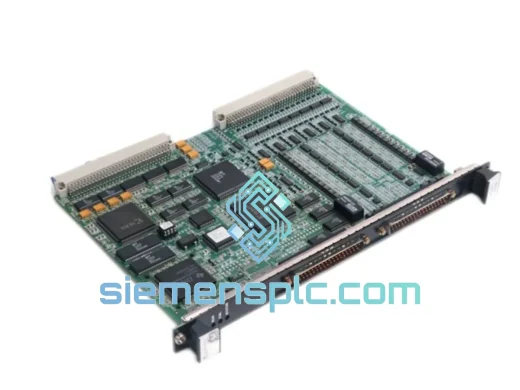
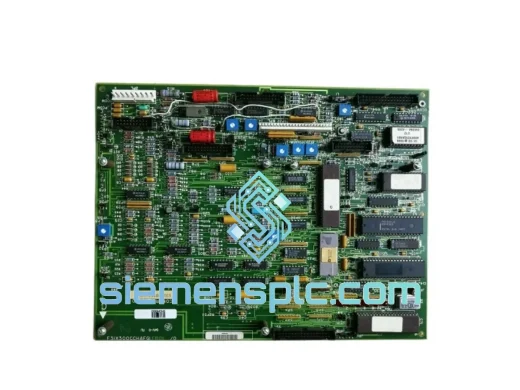
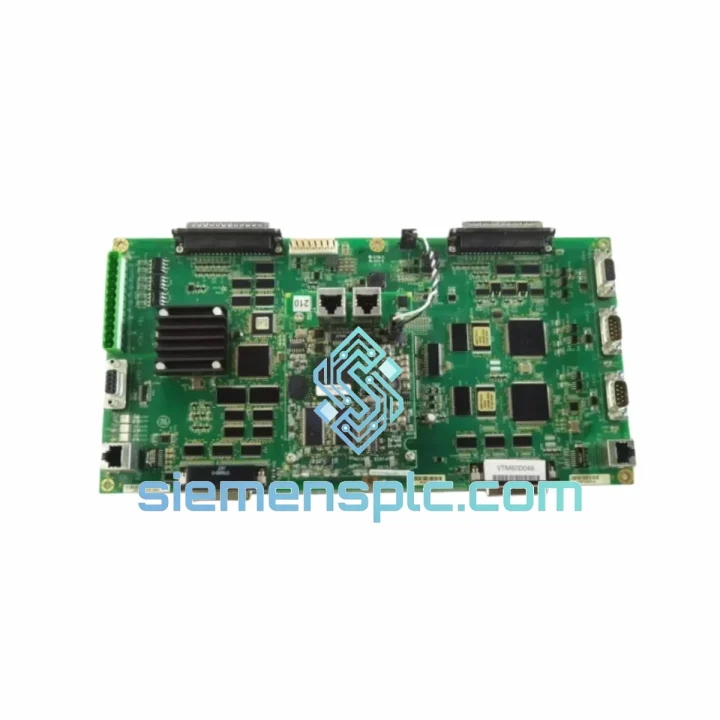
The IS210MACCH1AKH (MACC board) and IS210BPPBH2CAA (BPP board) operate as a tightly coupled hardware assembly within GE’s Mark VIe distributed control architecture. Their combined function is to maintain continuous protection-grade signal processing and trip-logic arbitration when the primary control path encounters a fault condition. In gas turbine, steam turbine, and combined-cycle plant environments, this assembly sits at the intersection of real-time protection execution and system-level redundancy management — a position that demands deterministic response latency measured in single-digit milliseconds and zero tolerance for spurious trip events.
The MACC board (IS210MACCH1AKH) serves as the master arbitration controller within the protection module set. It interfaces directly with the Mark VIe IONet backplane via a dedicated 100 Mbps Ethernet segment, maintaining synchronised state with the primary VCMI controller and peer protection modules. The BPP board (IS210BPPBH2CAA) provides the physical I/O conditioning layer — receiving discrete and analog trip signals from field-mounted sensors, applying hardware-level filtering, and presenting conditioned logic states to the MACC for final arbitration. Together, they implement a 2-out-of-3 (2oo3) voting architecture that is fundamental to SIL 2 / SIL 3 compliance in turbine protection loops.
Real-time Stock & RFQ: [email protected] | WhatsApp: +86 18359268345
| Parameter | Specification |
|---|---|
| Manufacturer | GE (General Electric) |
| Series | Mark VIe |
| Part Numbers | IS210MACCH1AKH (MACC) / IS210BPPBH2CAA (BPP) |
| Module Function | Backup Protection Module — trip arbitration & I/O conditioning |
| Backplane Interface | IONet (100 Mbps Ethernet, proprietary GE protocol) |
| Voting Architecture | 2oo3 hardware voting for SIL 2 / SIL 3 protection loops |
| Response Latency | < 10 ms end-to-end trip signal processing |
| Supply Voltage | 24 VDC nominal (18–32 VDC operating range) |
| Power Consumption | ≤ 15 W per module (MACC + BPP combined) |
| Operating Temperature | 0 °C to +60 °C (storage: −40 °C to +85 °C) |
| Relative Humidity | 5% to 95% non-condensing |
| Discrete Input Channels | 24 channels (BPP board, 24 VDC logic level) |
| Analog Input Channels | 4 channels, 4–20 mA / 0–10 V configurable |
| Isolation | Optical isolation on all field-side I/O channels, 1500 V RMS |
| EMC Compliance | IEC 61000-4-2 (ESD), IEC 61000-4-4 (EFT), IEC 61000-4-5 (Surge) |
| Mounting | Mark VIe IS200-series rack, dedicated protection slot |
| Configuration Software | GE ToolboxST (ControlST suite) |
| Firmware Revision | AKH / CAA suffix — verify against system BOM |
| Weight | Approx. 2,900 g (assembly) |
| Country of Origin | USA |
| Warranty | 12 months from date of shipment |
The IS210MACCH1AKH implements a dual-processor architecture: a primary RISC-based application processor handles protection algorithm execution, while a secondary supervisory processor manages IONet communication, self-diagnostics, and watchdog arbitration. Both processors share a common dual-port RAM segment, allowing state synchronisation at sub-millisecond intervals without introducing bus contention latency into the protection execution path.
The optical isolation barrier on the BPP board (IS210BPPBH2CAA) is implemented using high-speed optocouplers with a propagation delay of < 1 µs per channel. This design choice is deliberate: it ensures that field-side transients — common in turbine environments where inductive loads switch at high frequency — cannot couple into the logic-side circuitry. The isolation barrier is rated at 1500 V RMS continuous, with a 2500 V RMS one-minute dielectric withstand, exceeding the requirements of IEC 61131-2 for industrial I/O modules.
EMC hardening is applied at three levels. First, the PCB layout uses a split ground plane with a controlled impedance boundary between the field-side and logic-side domains. Second, all signal traces crossing the isolation boundary are routed through common-mode chokes rated at 100 µH. Third, the module enclosure provides a Faraday shield with a measured shielding effectiveness of > 40 dB at frequencies up to 1 GHz, consistent with IEC 61000-4-3 radiated immunity requirements at 10 V/m field strength.
The 2oo3 voting logic is implemented in hardware-configurable gate arrays (FPGA), not in firmware. This architectural decision eliminates the possibility of a software fault corrupting the voting outcome. The FPGA configuration is loaded from a dedicated flash memory device at power-up and verified against a stored CRC checksum before the module is permitted to enter the active protection state. Any CRC mismatch forces the module into a safe-state output condition and generates a diagnostic alarm on the IONet segment.
Every IS210MACCH1AKH / IS210BPPBH2CAA assembly offered through siemensplc.com is sourced from verified industrial supply channels and subjected to a structured incoming inspection process before entering stock. Inspection covers physical integrity of the PCB assembly, connector pin condition, firmware revision verification against the stated hardware suffix, and a functional power-on test confirming that the module completes its self-test sequence and presents a healthy status on the IONet diagnostic interface.
Units are stored in a temperature-controlled warehouse environment (20 °C ± 5 °C, RH < 60%) and packaged for international shipment in anti-static ESD bags within foam-lined cartons rated for 50 kg drop impact per ISTA 2A. All shipments originate from Xiamen, China, with access to major international freight carriers including DHL Express, FedEx International Priority, and UPS Worldwide Expedited. Typical transit times are 3–5 business days to Europe and North America, 2–4 business days to Southeast Asia and the Middle East.
Export documentation — including commercial invoice, packing list, and certificate of origin — is prepared for each shipment. HS code classification is provided to facilitate customs clearance. For projects requiring expedited delivery, air freight with next-flight-out options is available upon request. A 12-month warranty covers manufacturing defects and functional failures under normal operating conditions. Warranty claims are processed within 5 business days of receipt of the returned unit.
Email: [email protected]
WhatsApp: +86 18359268345
Web: siemensplc.com
Location: Xiamen, China
© 2026 siemensplc.com. All rights reserved.
We check the full part number, brand, series and visible nameplate information before quotation.
Sales confirms stock path, condition option, quantity and realistic lead time for export dispatch.
DHL, FedEx, UPS or buyer courier arrangements can be reviewed with packing requirements.
Similar brand or category products for fast comparison and multi-item RFQ lists.