
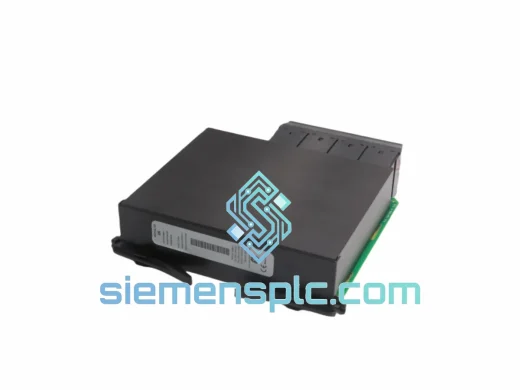
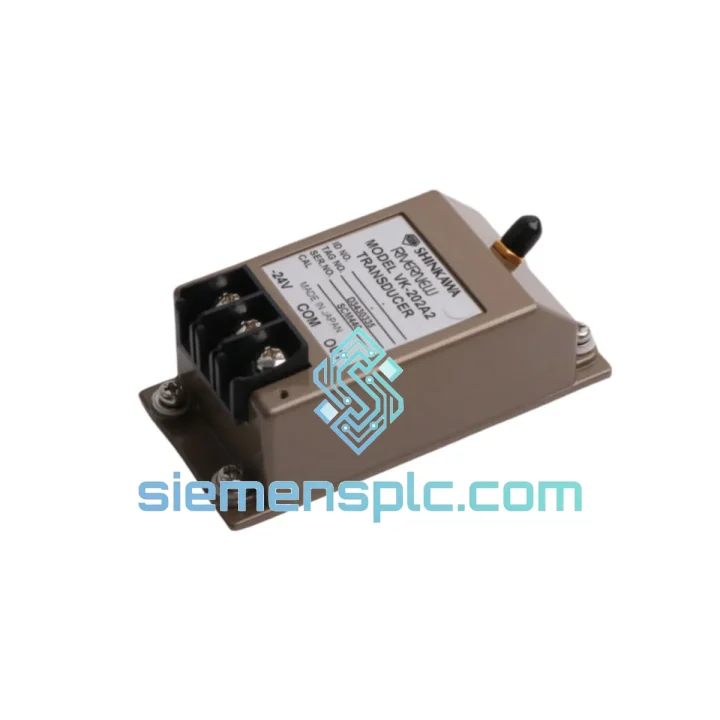
GE
In Stock OK
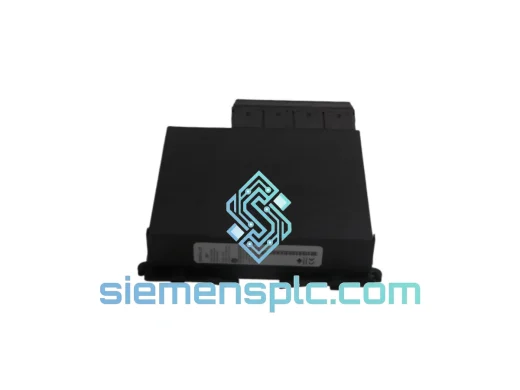
GE VK-202A2 Signal Transducer – VK Series
Request verified availability, condition, replacement risk review, packing options and courier lead time for VK-202A2.
BrandGE
Part NumberVK-202A2
ConditionAvailability Check
Lead TimeRFQ Confirmation
DocumentsDatasheet / photos by RFQ
ShippingExport packing available
Auto-filled RFQ
VK-202A2
Click Request Quote and the part number is inserted into the inquiry form automatically.
- Reply by email: [email protected]
- WhatsApp / Tel: +86 18359268345
- Mon-Sat 9:00-18:00 GMT+8
Procurement Data
Key Product Information
Core fields for model confirmation and RFQ routing. Detailed product narrative remains below.
- Brand
- GE
- Primary Part Number
- VK-202A2
- Product Type
- Signal Transducer
- Product Family
- Other series
- Manufacturer
- GE (General Electric)
- Country of Origin
- US
- Catalog Category
- I/O Modules
- Operating Temp.
- –20 °C to +60 °C
- Warranty
- 12 months from date of shipment
Model confirmed for inquiry
VK-202A2
Send quantity, destination and urgency. The RFQ form keeps this part number attached.
Request Quote
Product Overview
GE VK-202A2 Signal Transducer – Isolated Analog I/O Converter for Industrial Control Loops
The GE VK-202A2 is a DIN-rail-mounted analog signal transducer designed for continuous-duty deployment in process automation, power distribution, and discrete manufacturing environments. Its primary function within a control loop is to accept a raw analog input — voltage or current — perform three-way galvanic isolation, scale the signal to a defined output range, and deliver a clean, noise-immune analog output to downstream PLC or DCS analog input cards. This signal conditioning role is not cosmetic: in long-cable field installations, ground potential differences of several volts are common, and without isolation, common-mode interference corrupts the 4–20 mA loop, producing measurement errors that cascade into incorrect actuator commands. The VK-202A2 breaks this ground path electrically while maintaining full signal fidelity, making it a structural component of loop integrity rather than an optional accessory.
In a typical closed-loop PID architecture, the transducer sits between the field transmitter and the PLC analog input module. The transmitter — a pressure, flow, or temperature device — generates a 4–20 mA signal proportional to the measured variable. That signal enters the VK-202A2 input stage, is converted to an isolated internal representation, and exits as a scaled analog output matched to the PLC input card’s expected range. The isolation barrier prevents any fault current on the field side from reaching the controller backplane, protecting both the CPU and the I/O bus from damage. This architecture is standard practice in IEC 61511 functional safety designs where field-side faults must not propagate to the logic solver.
Real-time Stock & RFQ: [email protected] | WhatsApp: +86 18359268345
Technical Parameters
| Parameter | Specification |
|---|---|
| Model Number | VK-202A2 |
| Manufacturer | GE (General Electric) |
| Series | VK Series |
| Device Classification | Analog Signal Transducer / Isolator |
| Input Signal Type | Voltage and/or Current Analog (field-configurable) |
| Output Signal Type | Isolated Analog (4–20 mA / 0–10 V, range per configuration) |
| Isolation Architecture | 3-way galvanic isolation: Input / Output / Auxiliary Power |
| Isolation Voltage | ≥ 1,500 V AC (input-to-output, per VK Series standard) |
| Accuracy Class | ≤ 0.1% of full-scale span (typical) |
| Response Time | < 100 ms (10–90% step response, typical) |
| Auxiliary Supply Voltage | 24 V DC (±15%, ripple ≤ 5%) |
| Power Consumption | ≤ 2 W (typical at 24 V DC) |
| Operating Temperature | –20 °C to +60 °C |
| Storage Temperature | –40 °C to +85 °C |
| Relative Humidity | 5% to 95% RH, non-condensing |
| Mounting | 35 mm DIN Rail (EN 60715) |
| Housing Material | Flame-retardant thermoplastic (UL 94 V-0) |
| Protection Class | IP20 (panel-mounted) |
| Weight | 240 g |
| EMC Compliance | IEC 61000-4-2 / -4-4 / -4-5 (ESD, EFT, Surge) |
| Safety Compliance | CE Marked; RoHS Directive 2011/65/EU |
| Warranty | 12 months from date of shipment |
Hardware Logical Analysis
The VK-202A2’s internal architecture is built around a DC/DC converter-based isolation stage. The auxiliary 24 V DC supply feeds a high-frequency switching converter that generates an isolated internal rail, powering the output driver circuit without any direct electrical path between input and output commons. This topology — sometimes called a “floating power” design — is fundamentally different from optocoupler-only isolation, which degrades in accuracy over temperature and aging. The VK-202A2’s converter-based approach maintains isolation integrity across the full operating temperature range without the gain drift associated with LED-photodiode pairs.
On the input side, the signal conditioning circuit employs precision resistor networks and an instrumentation amplifier topology to achieve high common-mode rejection ratio (CMRR). In field installations where the signal cable runs parallel to power conductors, induced common-mode voltages can reach tens of millivolts. A CMRR of ≥ 80 dB at 50/60 Hz — typical for this class of transducer — attenuates a 100 mV common-mode interference to less than 10 µV at the measurement node, preserving sub-0.1% accuracy even in electrically noisy panel environments.
The output stage uses a precision voltage-to-current converter for 4–20 mA outputs, with a compliance voltage headroom designed to drive loads up to 600 Ω without output saturation. This is relevant in multi-drop wiring schemes where cable resistance and terminal block resistance accumulate. The output is short-circuit protected: a sustained short on the output terminals does not damage the output driver, a practical requirement in field commissioning where wiring errors are common.
EMC hardening is implemented at the PCB level through transient voltage suppression (TVS) diodes on all external terminals, π-filter networks on the power input, and a ground plane layout that minimizes high-frequency loop areas. The housing provides additional shielding against radiated interference. These measures collectively allow the VK-202A2 to meet IEC 61000-4-5 surge immunity at 1 kV (line-to-line) and 2 kV (line-to-earth) without auxiliary surge protection devices — a meaningful cost and space saving in panel design.
System Integration Benefits
- Ground Loop Elimination: Three-way galvanic isolation breaks the DC ground path between field instruments and control system commons, eliminating the most common source of 4–20 mA measurement offset in multi-panel installations.
- PLC Input Card Protection: Isolates the PLC analog input module from field-side fault voltages, preventing backplane damage and unplanned controller downtime during cable insulation failures or lightning events.
- Signal Range Scaling: Converts non-standard field signal ranges to the exact input range expected by the PLC or DCS analog card, eliminating software scaling workarounds that introduce rounding errors in the engineering unit conversion.
- Deterministic Loop Latency: With a step response under 100 ms, the transducer does not introduce meaningful latency into PID control loops operating at standard scan rates of 100–500 ms, preserving loop bandwidth.
- Diagnostic Transparency: The output signal faithfully tracks the input across the full span; any deviation from expected output at a known input is immediately attributable to a field-side fault rather than the transducer, simplifying fault isolation during maintenance.
- Multi-Protocol Compatibility: The standardized 4–20 mA or 0–10 V output is natively compatible with analog input modules from Siemens S7-300/400/1200/1500, Allen-Bradley ControlLogix/CompactLogix, ABB AC500, Schneider Modicon M340/M580, and all major DCS platforms without additional signal conditioning.
- Panel Space Efficiency: The compact DIN-rail form factor allows high-density installation — typically 6–8 units per 100 mm of rail — reducing panel footprint compared to bulkier isolation amplifier alternatives.
- Reduced Commissioning Risk: Factory calibration to traceable standards means the unit is measurement-ready on installation; no field calibration equipment or procedures are required before loop commissioning, reducing site labor hours.
Quality Assurance & Global Logistics
Every GE VK-202A2 unit supplied by siemensplc.com is sourced through verified industrial distribution channels. Units are inspected against OEM dimensional and labeling specifications upon receipt. Packaging integrity — anti-static bag, foam insert, original carton — is verified before dispatch. Counterfeit screening includes label authentication, date code cross-reference, and where applicable, functional verification against published electrical parameters.
Shipments originate from our Xiamen, China warehouse. Xiamen is a designated free-trade port with direct access to major international freight carriers including DHL Express, FedEx International Priority, UPS Worldwide Expedited, and SF International. Standard export documentation — commercial invoice, packing list, certificate of origin — is prepared for every international shipment. For orders requiring CITES, dual-use, or other regulatory documentation, our logistics team coordinates with the relevant authorities prior to dispatch.
Typical transit times: 3–5 business days to Southeast Asia and Northeast Asia; 5–7 business days to Europe and the Middle East; 7–10 business days to North America and South America. Air freight tracking numbers are provided within 24 hours of dispatch. For urgent project requirements, same-day dispatch is available for in-stock units ordered before 14:00 CST.
All units carry a 12-month warranty from the date of shipment. Warranty coverage includes manufacturing defects and functional failure under normal operating conditions. Out-of-warranty repair and exchange services are available. RMA procedures are initiated within one business day of a warranty claim submission.
Contact Information
Email: [email protected]
WhatsApp: +86 18359268345
Web: siemensplc.com
Location: Xiamen, China
© 2026 siemensplc.com. All rights reserved.
Ready to quote
[email protected]
Send This Part Number to Sales
RFQ workflow
Quality workflow ->
Confirmation Process
01Model confirmation
We check the full part number, brand, series and visible nameplate information before quotation.
02Availability reply
Sales confirms stock path, condition option, quantity and realistic lead time for export dispatch.
03Packing & courier
DHL, FedEx, UPS or buyer courier arrangements can be reviewed with packing requirements.
Continue sourcing
Browse full catalog ->
Related Automation Parts
Similar brand or category products for fast comparison and multi-item RFQ lists.
GE
RFQ Ready
GE UR6PH Digital I/O Module Protection Relay
Universal Relay Series
Origin US
Protection Relay Module