HITACHI
RFQ Ready
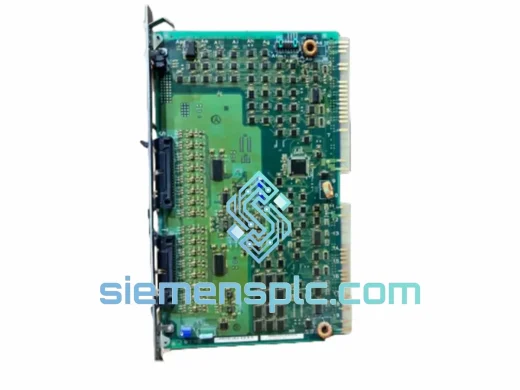
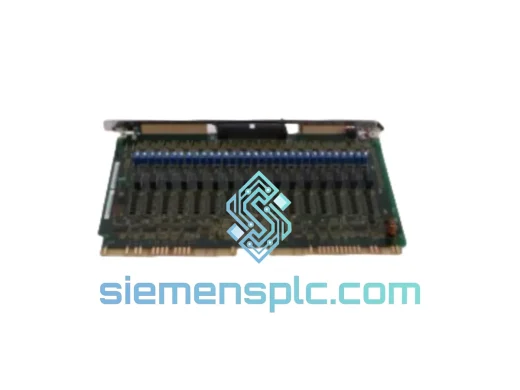
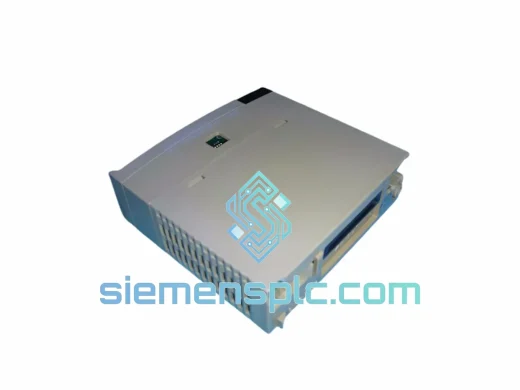
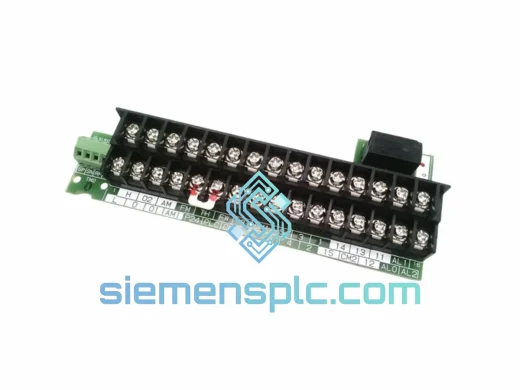
HITACHI SJ300TM 3B295619-3 VFD Control Terminal Board
SJ300 Series
Origin Japan
VFD Control Board
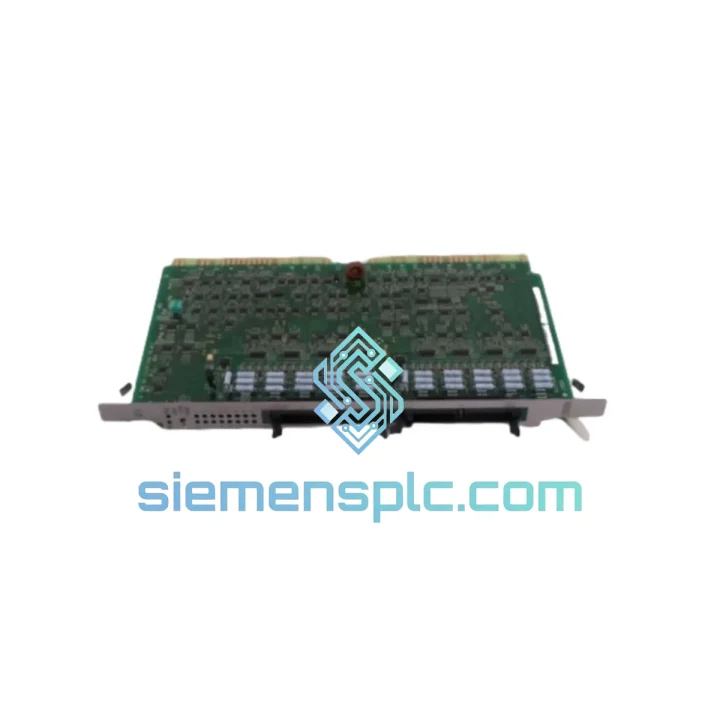
Request verified availability, condition, replacement risk review, packing options and courier lead time for AEH002A.
Click Request Quote and the part number is inserted into the inquiry form automatically.
Core fields for model confirmation and RFQ routing. Detailed product narrative remains below.
A failed analog input card in a HISEC or EX Series DCS rack doesn’t announce itself politely. One moment your process readings are stable; the next, a channel goes offline, an AI-ERR fault floods the alarm banner, and your operators are flying blind on a critical loop. Every hour that rack sits degraded is money walking out the door — lost throughput, idle labor, potential safety exposure, and a maintenance team under pressure to fix it yesterday.
The Hitachi AEH002A is a single-slot analog input I/O card purpose-built for the HISEC and EX Series distributed control platforms. We carry verified stock in our Xiamen warehouse. Not “available to order” — physically on the shelf, tested, and ready to pack the moment your purchase order clears. We’ve dispatched this exact part number to petrochemical complexes in Malaysia, power generation facilities in the UAE, and batch processing plants across Germany — all on emergency timelines where the alternative was extended unplanned downtime.
This page exists because procurement lead times for legacy DCS cards are measured in weeks, and your plant cannot wait weeks.
URGENT REQUIREMENT? Contact: [email protected] | WhatsApp: +86 18359268345
| Part Number | AEH002A |
| Manufacturer | Hitachi Industrial Equipment Systems |
| Module Function | Analog Input (AI) I/O Card |
| Compatible Platform | Hitachi HISEC Series / EX Series DCS |
| Input Signal | 4–20 mA / 1–5 V DC (field-selectable) |
| A/D Resolution | 12-bit |
| Channel Isolation | Channel-to-channel galvanic isolation |
| Power Source | DCS backplane bus — no external PSU |
| Form Factor | Single-slot plug-in, DCS rack-mount |
| Operating Temperature | 0°C to +55°C |
| Storage Temperature | -20°C to +70°C |
| Humidity Rating | 5%–95% RH, non-condensing |
| Certifications | CE, RoHS |
| Country of Origin | Japan |
| Stock Status | ✔ Ready to Ship — Xiamen Warehouse |
After handling enough emergency callouts involving HISEC rack failures, the AEH002A’s failure modes follow a recognizable pattern. Here’s what actually matters when you’re standing in front of the rack with a screwdriver:
Fault: AI-ERR / Channel Offline on DCS HMI
Before condemning the card, verify the field loop. Clamp a meter on the terminal block — if you’re reading a clean 4–20 mA signal at the card input but the DCS is reporting a channel fault or a pegged engineering-unit value, the A/D converter on that channel has failed. The card is done. There is no field repair for this fault. The only path forward is a replacement module.
Fault: Intermittent Signal Drift on One or Two Channels
Random EU jumps that appear mid-shift and clear on their own — especially in control rooms that heat up through the day — point to a degraded onboard filter capacitor or a marginal A/D voltage reference. This is a classic aging failure on HISEC-generation cards that have been in service for eight or more years. Chasing it with a scope is a time sink. Swap the card, verify readings, and send the failed unit for depot analysis if the budget allows.
Replacement Procedure — Step by Step
Firmware Sourcing Note: If you’re uncertain about the revision on your existing cards, contact us with your DCS controller model and software version. We can confirm the firmware revision on our warehouse stock before you commit to the order — eliminating the most common post-swap commissioning problem before it happens.
The AEH002A was not designed for a climate-controlled server room. It was designed for the same industrial environment where it lives — shared rack space with variable-frequency drives, power supply modules, and communication cards that generate continuous electrical noise across a broad frequency spectrum.
The card’s channel-to-channel galvanic isolation is the first line of defense. In plants where field wiring runs hundreds of meters through cable trays shared with medium-voltage power conductors, ground potential differences between field instruments and the DCS rack are a real and recurring problem. The AEH002A’s isolation barrier prevents those ground loops from corrupting signal readings — a feature that becomes critical in older facilities where cable routing was not designed with modern DCS sensitivity in mind.
Mechanical integrity under vibration is a legitimate concern in compressor houses, turbine halls, and pump skids where the DCS rack is mounted close to rotating equipment. The single-slot plug-in form factor, combined with the HISEC rack’s card-locking mechanism, keeps the backplane connection secure under sustained vibration loads. Cards pulled from compressor skid installations after five-plus years of service routinely show no mechanical degradation to the connector pins or PCB mounting hardware.
Thermal performance is where aging cards fail first. The AEH002A’s 0–55°C operating range covers the majority of industrial control room environments, but the real stress is the daily thermal cycle — cold startup at shift change, peak temperature by mid-afternoon. Every unit leaving our Xiamen warehouse undergoes a power-on thermal soak before packing. Cards that pass this soak have already survived the thermal stress that exposes marginal components. You are not receiving untested shelf stock.
PCB conformal coating protects the board assembly against humidity-driven corrosion and condensation during seasonal swings common in tropical and coastal plant locations. Warehouse storage in Xiamen uses climate-controlled conditions with desiccant packaging to preserve coating integrity from our shelf to your rack.
Our Xiamen warehouse sits 40 minutes from Xiamen Gaoqi International Airport — a primary cargo hub with direct freight lanes to Frankfurt, Dubai, Los Angeles, Singapore, and Sydney. That geography was chosen deliberately to support emergency industrial shipments to every major process industry region without intermediate hub delays.
Emergency Dispatch Process:
Remote locations — offshore platforms, island facilities, inland industrial zones outside standard express coverage — contact us before ordering. We route through regional freight forwarders for locations that DHL and FedEx do not serve directly on express timelines.
Email: [email protected]
WhatsApp: +86 18359268345
Web: siemensplc.com
© 2026 siemensplc.com. All rights reserved.
We check the full part number, brand, series and visible nameplate information before quotation.
Sales confirms stock path, condition option, quantity and realistic lead time for export dispatch.
DHL, FedEx, UPS or buyer courier arrangements can be reviewed with packing requirements.
Similar brand or category products for fast comparison and multi-item RFQ lists.