HITACHI
RFQ Ready
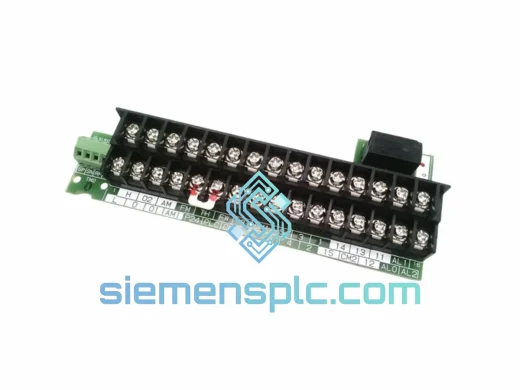
HITACHI SJ300TM 3B295619-3 VFD Control Terminal Board
SJ300 Series
Origin Japan
VFD Control Board
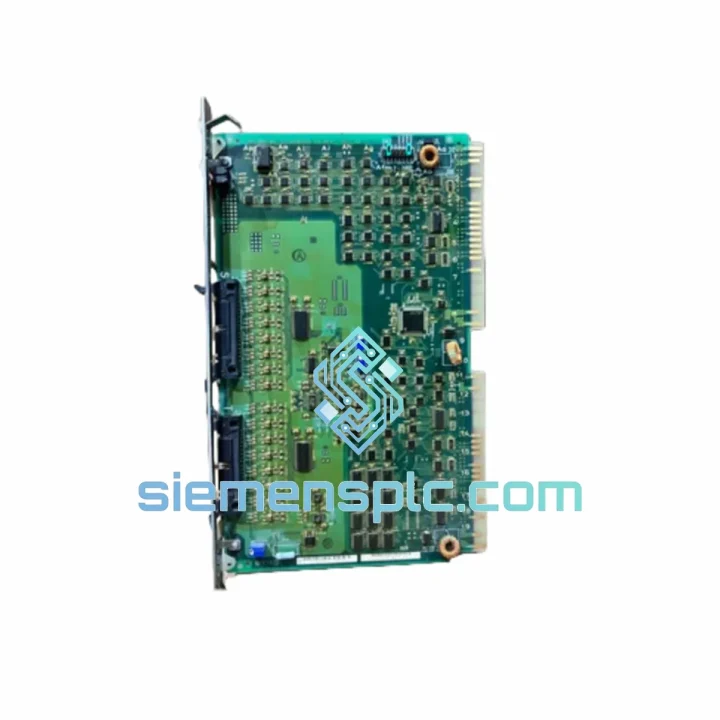
Request verified availability, condition, replacement risk review, packing options and courier lead time for LYA220A.
Click Request Quote and the part number is inserted into the inquiry form automatically.
Core fields for model confirmation and RFQ routing. Detailed product narrative remains below.
The HITACHI LYA220A is a dedicated Analog Input (AI) Communication Board engineered for integration within HITACHI’s EX Series Distributed Control System platform. Its primary function is the acquisition, conditioning, and transmission of analog field signals — predominantly 4–20 mA current loops and 1–5 V DC voltage inputs — from process instrumentation to the DCS controller layer. In continuous-process industries where control loop fidelity directly governs product quality and plant safety, the LYA220A occupies a structurally critical position: it is the first point of digitization in the measurement chain, and any error introduced at this stage propagates uncorrected through the entire control algorithm.
The module interfaces with the EX Series backplane via HITACHI’s proprietary high-speed parallel bus, which provides deterministic data transfer latency between the I/O tier and the CPU module. Unlike generic analog front-ends, the LYA220A is firmware-matched to the EX Series controller’s scan cycle, ensuring that analog samples are time-stamped and delivered within the controller’s defined I/O update window — a requirement for cascade and ratio control loops where inter-loop timing skew degrades performance.
Field-side signal conditioning on the LYA220A includes input filtering to attenuate high-frequency noise common in industrial environments — variable-frequency drive harmonics, relay switching transients, and ground loop interference. The analog-to-digital conversion stage employs successive-approximation architecture, providing the resolution and throughput balance appropriate for process-speed measurements (temperature, pressure, flow, level) without the latency overhead of sigma-delta converters used in metrology-grade instruments.
Optical isolation between the field terminal block and the backplane bus is a fundamental design requirement for any industrial AI module. The LYA220A implements galvanic isolation at the field boundary, preventing ground potential differences between field instruments and the DCS cabinet from inducing common-mode currents that would corrupt analog readings or damage backplane circuitry. This isolation barrier also limits the propagation of field-side fault energy — a wiring short or instrument failure cannot directly stress the backplane power rails or adjacent modules.
For MRO procurement teams managing aging EX Series installations, the LYA220A represents a direct replacement path that requires no controller reconfiguration, no I/O mapping changes, and no firmware updates. The module’s form factor, connector pinout, and backplane protocol are identical to the original factory specification, allowing hot-swap replacement during scheduled maintenance windows or unplanned outages without process interruption in redundant configurations.
Real-time Stock & RFQ: [email protected] | WhatsApp: +86 18359268345
| Parameter | Specification |
|---|---|
| Part Number | LYA220A |
| Manufacturer | HITACHI Industrial Equipment Systems Co., Ltd. |
| Compatible Platform | HITACHI EX Series DCS (HIZAC EX) |
| Module Function | Analog Input (AI) Communication Board |
| Input Signal Types | 4–20 mA DC current loop; 1–5 V DC voltage input (field-selectable) |
| A/D Conversion Architecture | Successive-approximation register (SAR) |
| Field Isolation | Optical isolation at field terminal boundary |
| Backplane Interface | HITACHI EX Series proprietary parallel bus |
| Operating Temperature | 0 °C to +55 °C (continuous operation) |
| Storage Temperature | −20 °C to +70 °C |
| Relative Humidity | 5% to 95% RH, non-condensing |
| Power Supply | Supplied via DCS backplane (5 VDC logic / 24 VDC field loop) |
| Compliance | CE (EMC Directive), RoHS |
| Country of Origin | Japan |
| Warranty | 12 months from date of shipment |
Optical Isolation Architecture: The LYA220A places the isolation barrier at the field terminal interface rather than at the backplane boundary. This topology means that each analog input channel’s signal path — from the terminal screw to the ADC input — is fully floating relative to the DCS common reference. The isolation voltage rating is sufficient to withstand the common-mode voltages encountered in large plant grounding systems, where potential differences between instrument earth and panel earth can reach tens of volts under fault conditions. This design choice protects both the measurement accuracy (common-mode rejection) and the hardware integrity of the backplane.
EMC Design Considerations: Industrial DCS cabinets are routinely co-located with variable-frequency drives, contactors, and high-current bus bars — all of which generate conducted and radiated electromagnetic interference. The LYA220A’s input filtering network attenuates differential-mode noise above the process signal bandwidth, and the PCB layout follows controlled-impedance practices to minimize susceptibility to radiated fields. The module’s metal faceplate and backplane connector shield provide a continuous Faraday enclosure when installed in the EX Series rack, reducing the effective antenna area of the internal circuitry.
Backplane Bus Timing: The EX Series backplane uses a synchronous, time-division multiplexed protocol to arbitrate data transfers between I/O modules and the CPU. The LYA220A’s local controller manages the ADC conversion cycle to complete within the backplane’s I/O slot service window, ensuring that the CPU always reads a current sample rather than a stale value from a previous scan. This deterministic behavior is essential for fast-loop applications — flow control, pressure control — where scan-to-scan data age directly affects loop stability margins.
Input Filtering and Signal Conditioning: The analog front-end includes a passive RC filter on each input channel, with a cutoff frequency selected to pass the process signal bandwidth (typically DC to a few Hz for temperature and level, up to tens of Hz for flow and pressure) while rejecting 50/60 Hz power-line interference and higher-frequency switching noise. This filtering is implemented in hardware, independent of the CPU, so it operates continuously regardless of controller scan state.
Every HITACHI LYA220A unit dispatched from our Xiamen, China facility undergoes a structured pre-shipment verification process. Physical inspection confirms label authenticity, connector integrity, and the absence of mechanical damage or counterfeit indicators. Firmware revision is verified against the customer’s specified EX Series platform version where documentation is available. Units are packaged in anti-static bags with foam cushioning inside double-wall corrugated cartons, meeting ISTA 2A transit testing standards for electronic equipment.
Our Xiamen location provides direct access to major international freight corridors — Xiamen Gaoqi International Airport for air freight and Xiamen Port for sea freight — enabling competitive transit times to Southeast Asia (2–5 days air), Europe (5–8 days air), and the Americas (6–10 days air). DHL Express, FedEx International Priority, and UPS Worldwide Express are standard carrier options. For sea freight consolidation on large MRO orders, we coordinate with licensed freight forwarders experienced in industrial equipment export documentation, including commercial invoices, packing lists, certificates of origin, and HS code classification for customs clearance.
All shipments are covered by cargo insurance. Export compliance is managed in accordance with Chinese export regulations and destination-country import requirements. For regulated industries requiring traceability documentation — batch records, inspection reports, or certificates of conformance — these are prepared upon request at the time of order confirmation.
The 12-month warranty covers manufacturing defects and functional failures under normal operating conditions as defined by HITACHI’s EX Series installation specifications. Warranty claims are processed with a target response time of 48 hours from receipt of the defective unit. Replacement units are dispatched from Xiamen stock upon claim approval.
Email: [email protected]
WhatsApp: +86 18359268345
Web: siemensplc.com
Location: Xiamen, China
© 2026 siemensplc.com. All rights reserved.
We check the full part number, brand, series and visible nameplate information before quotation.
Sales confirms stock path, condition option, quantity and realistic lead time for export dispatch.
DHL, FedEx, UPS or buyer courier arrangements can be reviewed with packing requirements.
Similar brand or category products for fast comparison and multi-item RFQ lists.