Honeywell
RFQ Ready
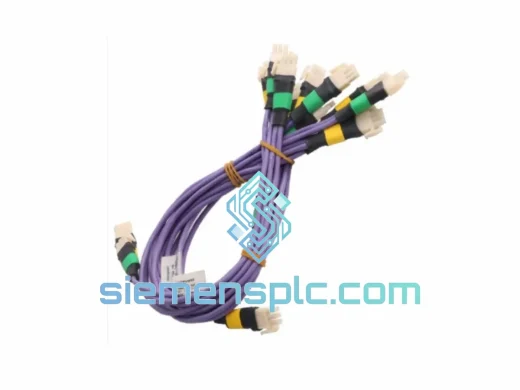
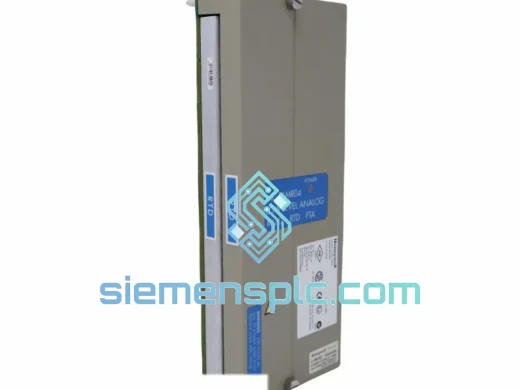
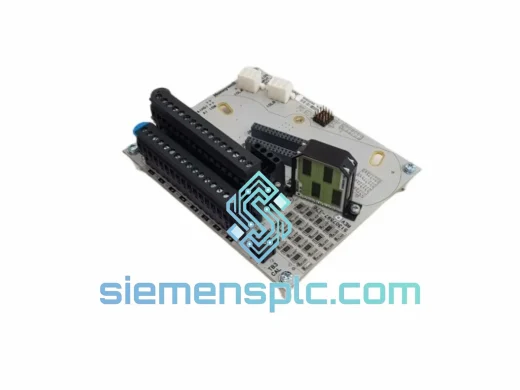
Honeywell DC-TAIX01 Analog Input Module
TDC 3000
Origin US
DCS Analog Input Module
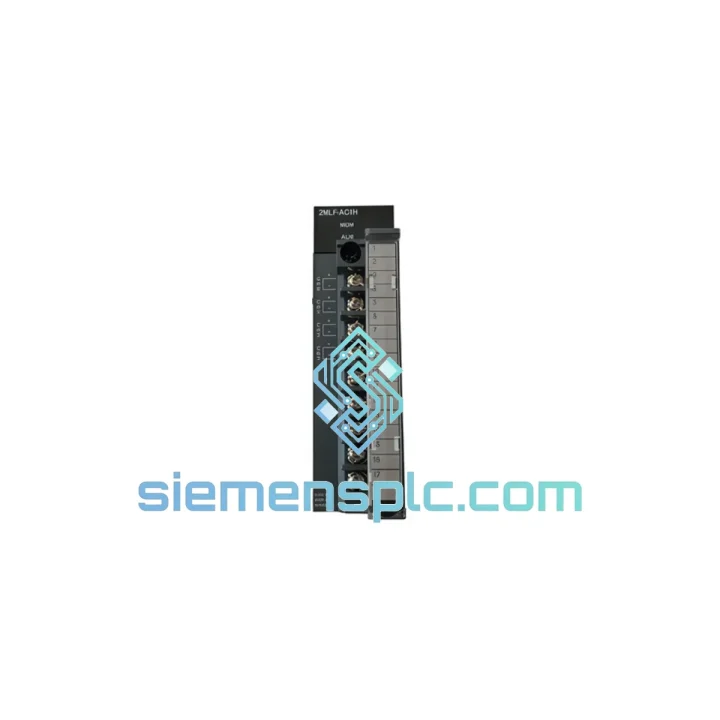
Request verified availability, condition, replacement risk review, packing options and courier lead time for 2MLF-AC4H.
Click Request Quote and the part number is inserted into the inquiry form automatically.
Core fields for model confirmation and RFQ routing. Detailed product narrative remains below.
The Honeywell 2MLF-AC4H is a four-channel analog input module designed for deployment within the Honeywell TDC 3000 and PlantScape distributed control system (DCS) platforms. Its primary function is the acquisition, conditioning, and digitization of field-level process signals — specifically 4–20 mA current loops and 1–5 VDC voltage signals — and the transmission of those values across the Honeywell Local Control Network (LCN) backplane bus to the controlling node for real-time PID execution, historian archiving, and alarm management.
In a typical continuous process control loop, the 2MLF-AC4H occupies the signal boundary between the field instrument layer and the control processor layer. A pressure transmitter, flow meter, or temperature transmitter wired to the module’s terminal block delivers a 4–20 mA signal proportional to the measured process variable. That signal passes through the module’s input protection network, through a per-channel optical isolator, and into a 12-bit successive-approximation analog-to-digital converter. The resulting digital word is placed on the LCN bus at the configured scan rate, where the High-Performance Process Manager (HPM) or Process Manager (PM) node reads it as an engineering-unit value for loop computation. This architecture keeps field wiring electrically separated from the control network at every stage, which is the foundational requirement for reliable operation in electrically noisy plant environments such as refineries, chemical reactors, and power generation facilities.
The module occupies a single card slot in the standard Honeywell I/O chassis and draws approximately 3.5 W from the 5 VDC backplane rail. Its compact single-slot form factor allows high-density I/O configurations without chassis expansion in most TDC 3000 installations. The 2MLF-AC4H is also compatible with legacy I/O retention architectures under Experion PKS migration projects, where existing TDC 3000 I/O cards are preserved while the supervisory layer is upgraded — a common cost-reduction strategy in brownfield refinery modernization programs.
Real-time Stock & RFQ: [email protected] | WhatsApp: +86 18359268345
| Parameter | Specification |
|---|---|
| Part Number | 2MLF-AC4H |
| Manufacturer | Honeywell Process Solutions |
| Platform Compatibility | TDC 3000, PlantScape, Experion PKS (legacy I/O retention) |
| Module Type | Analog Input (AI) |
| Number of Channels | 4, individually isolated |
| Input Signal Types | 4–20 mA (current); 1–5 VDC (voltage), configurable per channel |
| A/D Resolution | 12-bit successive approximation |
| Accuracy | ±0.1% of full scale at 25°C |
| Input Impedance | >10 MΩ (voltage mode); 250 Ω burden (current mode) |
| Common Mode Rejection Ratio | >120 dB at 50/60 Hz |
| Channel Isolation | Optical isolation, channel-to-channel and channel-to-backplane |
| Backplane Interface | Honeywell LCN / UCN proprietary bus |
| Power Consumption | 3.5 W typical from 5 VDC backplane rail |
| Operating Temperature | 0°C to +60°C |
| Storage Temperature | -40°C to +85°C |
| Relative Humidity | 5–95% RH, non-condensing |
| Form Factor | Single-slot card module |
| Approx. Weight | 150 g |
| Certifications | CE, UL (per platform system certification) |
| Country of Origin | Germany |
| Warranty | 12 months from date of shipment |
The 2MLF-AC4H implements a layered signal conditioning architecture that addresses the three primary failure modes of analog input acquisition in industrial DCS environments: ground loop interference, common-mode noise injection, and electrostatic discharge from field cable events.
Per-Channel Optical Isolation: Each of the four input channels is galvanically isolated from the backplane and from adjacent channels via a dedicated optocoupler stage. This eliminates ground loop currents that arise when field instruments and the DCS chassis reference different earth potentials — a condition that is structurally unavoidable in large-scale plant installations where field junction boxes may be hundreds of meters from the control room. The isolation barrier is rated to withstand transient voltages consistent with IEC 61000-4-5 surge immunity requirements.
Common Mode Rejection >120 dB: The differential input stage ahead of the A/D converter rejects common-mode voltages at 50 Hz and 60 Hz with a rejection ratio exceeding 120 dB. In practical terms, a 10 V common-mode interference signal at mains frequency produces less than 10 µV of differential error at the converter input — well below the 12-bit LSB threshold of approximately 1.2 mV for a 5 V full-scale range. This performance is achieved through a precision instrumentation amplifier topology with matched resistor networks and a guarded input layout on the PCB.
Input Protection Network: Each channel input is protected by a transient voltage suppressor (TVS) diode array and series current-limiting resistors. This network clamps inductive transients from field cable switching events to safe levels before they reach the optocoupler, extending the operational life of the isolation stage in environments where field wiring is routed near high-voltage motor drives or switchgear.
12-Bit SAR Conversion: The successive-approximation register (SAR) A/D converter provides 4,096 discrete counts across the input range. For a 4–20 mA span, this yields a resolution of approximately 3.9 µA per count — sufficient for process variables where transmitter accuracy is typically ±0.1% to ±0.5% of span. The converter’s sample-and-hold circuit is synchronized to the LCN bus scan cycle, ensuring that all four channels are sampled within a defined time window for consistent multi-variable loop calculations.
EMC Design Compliance: The module’s PCB layout follows Honeywell’s internal EMC design rules, including ground plane segmentation between the analog front end and the digital backplane interface, decoupling capacitors at each power supply pin, and shielded trace routing for high-impedance signal paths. These measures collectively support compliance with EN 61326-1 for industrial electromagnetic environments.
Every 2MLF-AC4H unit supplied by siemensplc.com is sourced exclusively from verified industrial channels — authorized distributors and documented surplus from decommissioned plant assets with traceable maintenance histories. Each module undergoes a structured pre-shipment inspection protocol: visual examination of the PCB for component damage, solder joint integrity, and connector pin condition; board-level continuity verification; and a functional power-on test confirming backplane communication and channel response within specification. Units that do not pass all inspection stages are quarantined and not offered for sale.
Packaging follows ESD-safe handling standards: each module is placed in a conductive anti-static bag, heat-sealed, and packed in a foam-lined corrugated carton dimensioned to prevent movement during air freight. For international shipments, commercial invoices, packing lists, and certificates of origin are prepared to facilitate customs clearance in major industrial import markets including the EU, Southeast Asia, the Middle East, and North America.
Dispatch from our Xiamen, China facility typically occurs within 1–3 business days of order confirmation. Express air freight via DHL, FedEx, or UPS delivers to most destinations within 3–7 business days. For urgent plant shutdown requirements, same-day dispatch can be arranged for orders confirmed before 14:00 CST. All shipments are covered by a 12-month functional warranty from the date of dispatch; DOA units are replaced at no charge within 7 days of confirmed receipt.
Email: [email protected]
WhatsApp: +86 18359268345
Web: siemensplc.com
Location: Xiamen, China
© 2026 siemensplc.com. All rights reserved.
We check the full part number, brand, series and visible nameplate information before quotation.
Sales confirms stock path, condition option, quantity and realistic lead time for export dispatch.
DHL, FedEx, UPS or buyer courier arrangements can be reviewed with packing requirements.
Similar brand or category products for fast comparison and multi-item RFQ lists.