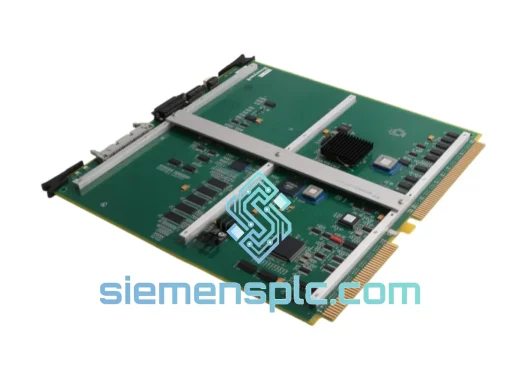
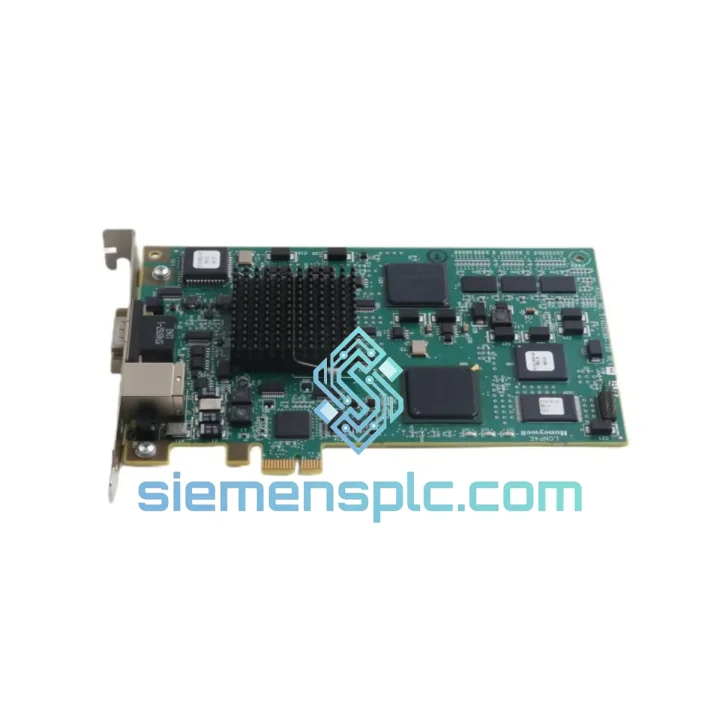
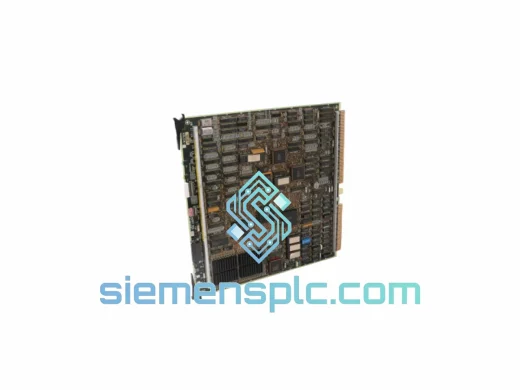
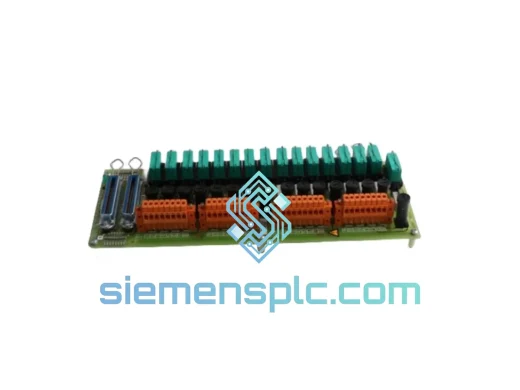
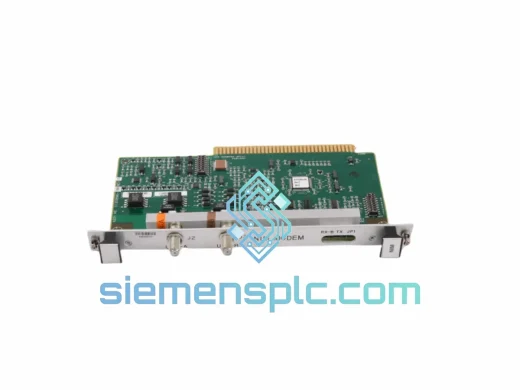
Product Overview
Honeywell 51405098-100 LCNP4E — Stop the Clock on Your Downtime
Every minute your TDC 3000 LCN is dark, you’re bleeding money. A failed LCNP4E card severs communication between your field controllers and operator stations — process loops go blind, alarms cascade, and production halts. We stock the Honeywell 51405098-100 LCNP4E specifically because this card fails without warning and lead times from OEM channels can stretch weeks. Our unit ships from Xiamen within 24 hours of order confirmation via DHL Express or FedEx International Priority. That’s the difference between a 4-hour fix and a 4-week nightmare.
URGENT REQUIREMENT? Contact: [email protected] | WhatsApp: +86 18359268345
Quick Technical Datasheet
| Parameter |
Detail |
| Manufacturer |
Honeywell |
| Part Number |
51405098-100 |
| Module Name |
LCNP4E — Local Control Network Processor, 4-Port Ethernet |
| Compatible Platform |
Honeywell TDC 3000 / PlantScape / Experion PKS |
| Network Protocol |
LCN Token-Passing (coaxial / fiber) |
| Form Factor |
Plug-in card, standard TDC 3000 backplane slot |
| Operating Voltage |
+5 VDC / ±15 VDC (backplane supplied) |
| Operating Temperature |
0 °C to +60 °C |
| Weight |
~160 g |
| Country of Origin |
USA |
| Condition |
New Surplus / Refurbished / Used-Tested |
| Stock Status |
✔ Ready to Ship — Xiamen Warehouse |
| Lead Time |
Ships within 24 h of order confirmation |
Troubleshooting & Replacement Tips
Fifteen years of field calls on TDC 3000 systems teach you one thing: when the LCN goes down, everyone panics and nobody reads the manual. Here’s what actually matters when you’re swapping an LCNP4E under pressure.
Common Fault Signatures That Point to the LCNP4E:
-
LCN Communication Fault (Alarm Code 0x4A / 0x4B) — Node drops off the LCN token ring. Other nodes continue operating but the affected node’s data is frozen at last-known value. First suspect: LCNP4E card or its coax tap.
-
Intermittent Node Timeouts — Card is partially functional but losing token arbitration. Often caused by capacitor degradation on the LCN driver circuit. Replace the card; don’t waste time re-seating it.
-
POST Failure on Boot (Red LED, no LCN activity) — Card fails its power-on self-test. The backplane slot is fine; the card is dead. Swap immediately.
-
Firmware Mismatch Warning in NIM/HM — If your system has been upgraded to a newer Experion PKS revision, verify the LCNP4E firmware revision matches the system’s compatibility matrix before insertion. Mismatched firmware causes silent data corruption, not a hard fault.
Step-by-Step Hot-Swap Procedure (TDC 3000):
- Notify the control room operator — place affected node in manual mode on all loops before pulling the card.
- Confirm the replacement card’s firmware revision against your system’s Hardware Reference Manual (document number 51-52-25-66). Do not skip this step.
- Check the DIP switch configuration on the replacement card. The LCNP4E uses onboard switches to set node address and LCN redundancy role (primary/secondary). Match exactly to the failed card’s settings — photograph the failed card before removal.
- Power down the card slot using the slot inhibit switch on the backplane (if equipped). On older TDC 3000 cabinets without slot inhibit, a brief LCN disruption is unavoidable during swap — coordinate with the control room.
- Insert the replacement card firmly until the ejector levers click. Partial seating causes intermittent faults that are harder to diagnose than a dead card.
- Monitor the LCN status display in the NIM for node re-registration. Normal re-join time is 15–45 seconds. If the node does not appear within 90 seconds, check the coax tap and cable continuity before suspecting the replacement card.
- Return loops to automatic mode one at a time, verifying PV tracking before each transfer.
Configuration Notes:
- Node address is set via onboard DIP switches — there is no auto-addressing on the LCNP4E. A duplicate node address will cause both nodes to drop off the LCN.
- If replacing a card in a redundant LCN pair, always replace the standby card first, verify it joins the ring, then fail over before replacing the primary.
- Firmware updates require the Honeywell LCN Firmware Loader utility and a direct serial connection to the card. Do not attempt firmware updates in the field during a live outage.
Reliability in Harsh Conditions
The LCNP4E was engineered for continuous duty in environments that would kill consumer-grade electronics inside a week. Honeywell’s design spec for TDC 3000 hardware targets 20+ years of operational life in the following conditions:
-
Vibration — Qualified to IEC 60068-2-6 sinusoidal vibration profiles. The card’s conformal coating protects solder joints from micro-cracking caused by pump and compressor vibration transmitted through control room floors and cabinets.
-
Thermal Cycling — Rated 0 °C to +60 °C operating, with components selected for stability across the full range. In practice, we’ve seen these cards pulled from cabinets in Middle Eastern refineries running at 55 °C ambient for over a decade without failure.
-
Humidity & Condensation — Conformal coating on the PCB provides protection against humidity up to 95% RH non-condensing. For installations in coastal or high-humidity environments, verify cabinet HVAC is functional before assuming the card is at fault.
-
EMI/RFI — The LCN coaxial interface provides inherent common-mode noise rejection. The LCNP4E’s shielded card cage further attenuates radiated interference from VFDs and high-voltage switchgear in adjacent panels.
-
Power Quality — Backplane-supplied power includes onboard filtering. The card tolerates ±10% supply voltage variation without performance degradation.
Every unit we ship has been visually inspected at board level, bench-tested for power-on and LCN communication response, and packed in ESD-safe anti-static bags with foam cushioning inside double-wall cartons. We don’t ship cards that we wouldn’t put in our own plant.
Global Express Logistics
Our warehouse is in Xiamen, China — one of the country’s primary export hubs with direct access to DHL and FedEx international gateways. Here’s exactly what happens after you confirm your order:
-
Hour 0–2: Order confirmed, unit pulled from shelf, final visual inspection completed, ESD packaging applied.
-
Hour 2–6: Commercial invoice, packing list, and HS code documentation prepared. Export declaration filed.
-
Hour 6–24: Shipment handed to DHL Express or FedEx International Priority at Xiamen Gaoqi International Airport cargo terminal.
-
Day 1–3 (most destinations): DHL/FedEx transit to Europe, Middle East, Southeast Asia, and North America. Tracking number provided immediately upon pickup scan.
-
Day 3–5 (remote destinations): South America, Africa, and Pacific Islands may require an additional 1–2 days depending on customs clearance speed.
We declare accurate commercial values and provide full HS code documentation (HS 8537.10) to minimize customs holds. For orders requiring formal import permits or end-user certificates, contact us before ordering so we can prepare the correct paperwork in advance. Sea freight is available for multi-unit orders where lead time permits.
Contact Information
Email: [email protected]
WhatsApp: +86 18359268345
Web: siemensplc.com
© 2026 siemensplc.com. All rights reserved.